
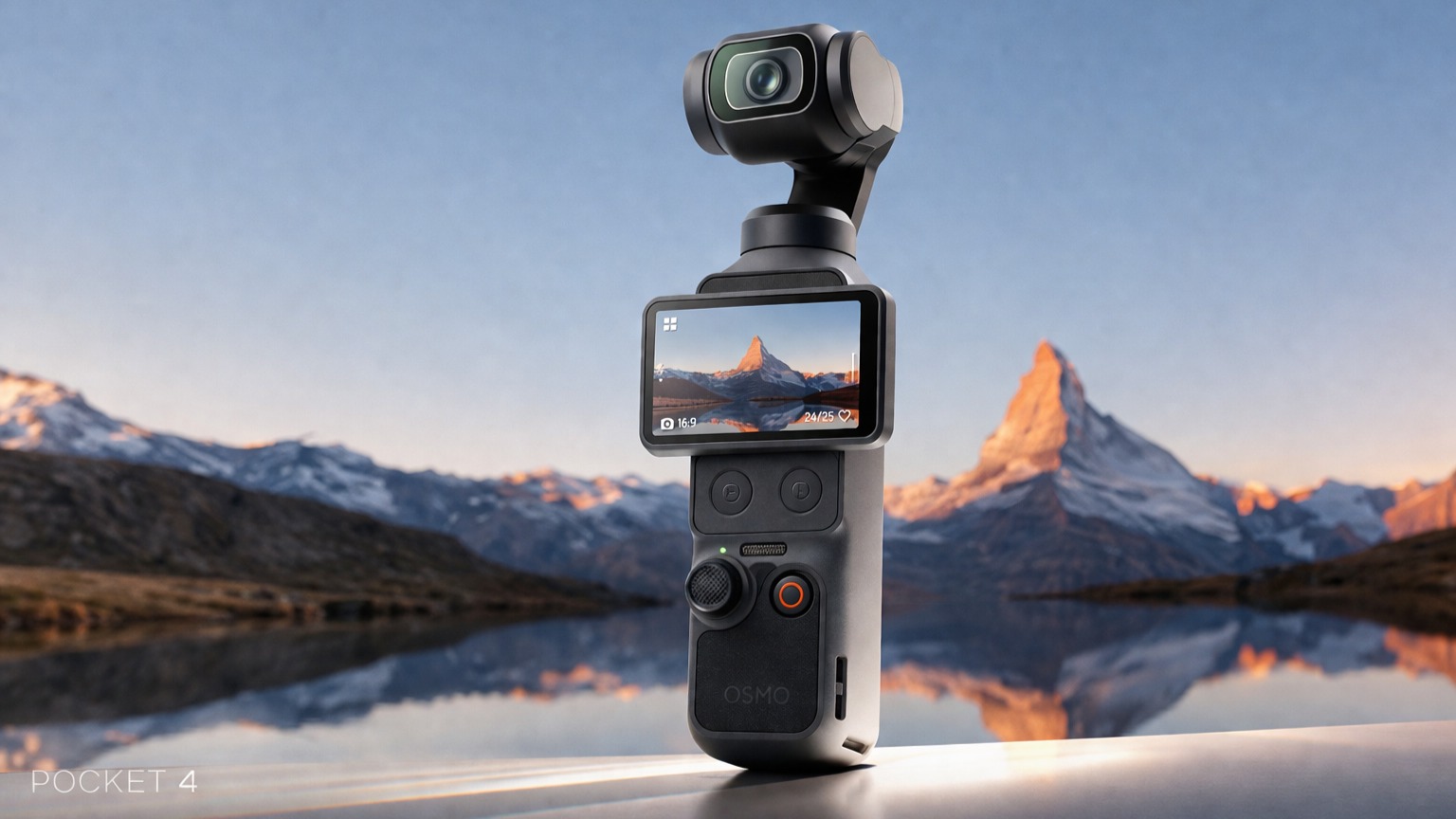
Yesterday, DJI finally unveiled the long-awaited Osmo Pocket 4. The tech community is currently buzzing with intense excitement. This compact gimbal camera officially replaces the legendary Pocket 3. Furthermore, it brings massive upgrades to an already successful formula. The launch event took place in Shenzhen on April 16.

Rumors suggested a minor incremental update for this year. However, DJI surprised everyone with a powerhouse of a device. Therefore, creators are now looking at a brand-new professional tool. Specifically, the company focused on improving image quality and speed. This release marks a significant milestone for handheld videography.
Sensing a New Reality
The heart of this device is an upgraded 1-inch CMOS sensor. It now offers a staggering 14 stops of dynamic range. This means highlights and shadows will retain incredible detail. Additionally, the sensor features a faster readout speed than before. Consequently, rolling shutter distortion is now almost entirely a thing of the past.
The new sensor architecture improves performance in dim environments. Therefore, night vlogs will look cleaner and more professional. Surprisingly, DJI managed this while keeping the camera body very slim. Thus, the physical footprint remains perfect for travel and daily use. This sensor sets a new gold standard for small cameras.
Redefining Frame Rates
Action enthusiasts will celebrate the new 4K capabilities. The Osmo Pocket 4 now supports 4K at 240fps. This doubles the maximum frame rate of its predecessor. You can capture incredibly smooth slow-motion footage in high resolution. This feature works perfectly with the 10-bit D-Log color profile.
However, processing such high data rates requires serious internal power. Therefore, DJI included a new high-speed image processor. The device stays cool even during extended high-speed recording sessions. Reliability remains high for professional shooters in the field. This makes it the fastest pocket camera on the market.
The Internal Storage Shift
One major change involves how the camera handles your data. Surprisingly, the Osmo Pocket 4 features 107GB of built-in storage. Consequently, you no longer strictly need a microSD card to start. This solves a common pain point for many forgetful creators. The internal memory also supports lightning-fast transfer speeds of 800MB/s.
The device still includes a traditional microSD card slot. You can expand your total storage up to 1TB. The camera can record to both locations for redundancy. Thus, your precious footage is safer than it ever was before. This dual-storage approach offers the best of both worlds.
Ergonomics and New Controls
DJI listened closely to user feedback regarding physical controls. They added two new dedicated hardware buttons. One button allows for immediate toggling of the zoom levels. You can jump between 1x and 2x zoom instantly. Meanwhile, the other button serves as a customizable preset trigger.
The iconic rotatable touchscreen is now even brighter. Viewing your shots in direct sunlight is much easier. The screen response time feels significantly faster and snappier. Thus, navigating the menus is a breeze even for beginners. The overall build quality feels more rugged and premium.
ActiveTrack 7.0 Mastery
Software remains a critical part of the DJI experience. The Osmo Pocket 4 debuts the new ActiveTrack 7.0 system. This version uses advanced AI to identify and follow subjects. Consequently, the gimbal stays locked onto you even in crowded spaces. It can now track subjects even at 4x digital zoom.
Additionally, the system recognizes pets and vehicles with high accuracy. Solo creators can film dynamic action without an assistant. Surprisingly, the AI can even predict movements behind brief obstacles. You will rarely lose focus during a complex shot. This makes the camera feel like a tiny robot cameraman.
The OsmoAudio Revolution
Audio quality often determines the success of a vlog. DJI introduced the OsmoAudio ecosystem with this release. This system supports a native 4-channel audio output. You can connect multiple DJI Mic transmitters directly. It works with the Mic 2, Mic 3, and Mic Mini.
Additionally, the internal microphone array features improved wind noise reduction. Outdoor interviews will sound much clearer than before. The camera can record ambient sound and vocals separately. Thus, you have more control during the post-production process. This eliminates the need for bulky external adapters.
Battery Life and Charging
Power management saw a healthy boost in this generation. The new battery offers up to 240 minutes of recording. You can film for four hours at 1080p resolution. The 4K recording time has also increased significantly. Therefore, you can tackle longer projects without swapping handles.
However, the real magic lies in the charging speed. The battery reaches 80% charge in just 18 minutes. A quick coffee break provides enough power for hours. The device also supports high-speed USB-C PD charging protocols. Thus, you can use your laptop or phone charger easily. The range anxiety is now a thing of the past.
The Shadow of the Pro
Interestingly, the standard model was not the only news. DJI teased a mysterious “Osmo Pocket 4 Pro” version. The rumor mill is spinning faster than a gimbal. This Pro model will likely feature a dual-lens system. Leaks suggest it will include a 3x optical zoom lens.
The Pro version is not launching until June 2026. Therefore, early adopters have a difficult choice to make now. The Pro price might sit significantly higher at $700. Thus, the standard Pocket 4 remains the value leader. DJI is clearly targeting the high-end iPhone market.
Comparing the Generations
Comparing the Pocket 4 to the Pocket 3 is fascinating. The Pocket 3 revolutionized the market with its sensor. However, the Pocket 4 refines every single technical detail. The move from 120fps to 240fps is a giant leap. Professional editors have much more creative freedom.
Furthermore, the inclusion of internal storage is a massive win. The user experience feels much more modern and streamlined. The 14-stop dynamic range beats many professional mirrorless cameras. Thus, the gap between pocket tools and big rigs narrows. This is a worthy successor in every possible way.
DJI Osmo Pocket 4: A Creator’s Paradise
This camera targets a very specific group of people. Vloggers and solo filmmakers will find it indispensable. The “Creator Combo” remains the most popular purchase option. This bundle includes a transmitter, tripod, and wide-angle lens. It adds a dedicated carrying bag for protection.
The new “Subject Lock” feature simplifies the filming process. Therefore, you can focus on your performance, not the settings. Surprisingly, the camera even supports gesture controls for hands-free operation. Thus, you can start recording by just showing your palm. This makes the device incredibly accessible for everyone.
Color and Professional Workflow
Color grading is often a chore for many creators. However, the 10-bit D-Log profile makes it a joy. This profile provides maximum latitude for professional colorists. Consequently, your footage can match high-end cinema cameras perfectly. Furthermore, DJI improved the “straight-out-of-camera” colors for casual users.
The skin tones look more natural and healthy now. You need less time in the editing suite. The 14-stop range prevents blown-out skies in your shots. Thus, every frame looks expensive and carefully crafted. This appeals to the growing market of professional YouTubers.
The Competitive Landscape
DJI does not exist in a vacuum, however. Insta360 is preparing to launch the Luna Ultra soon. Consequently, the competition in the gimbal space is heating up. Furthermore, GoPro just announced new cameras with 1-inch sensors. Therefore, buyers have several excellent options to consider this year.
DJI holds the crown for mechanical stabilization quality. Their software ecosystem is arguably the most polished currently. They remain the brand to beat in 2026. Their aggressive pricing keeps the pressure on other manufacturers. Ultimately, the consumers are the real winners of this battle.
Zooming into Innovation
The 2x lossless zoom is a major hardware addition. It uses the high-resolution sensor to crop intelligently. There is no noticeable loss in image quality. Furthermore, the dedicated zoom button makes this feature very intuitive. Therefore, you can frame your shots with much more variety.
The Pro model will take this even further. Its 3x optical zoom will change mobile filmmaking. DJI is moving beyond wide-angle vlogging into cinematography. We might see more short films shot on Pockets. Ultimately, the zoom capabilities are a game-changer for this series.
Zooming into Innovation (Continued)
The 2x lossless zoom is a major hardware addition. It uses the high-resolution sensor to crop intelligently. Consequently, there is no noticeable loss in image quality. The dedicated zoom button makes this feature very intuitive. Therefore, you can frame your shots with much more variety.
The Pro model will take this even further. Its 3x optical zoom will change mobile filmmaking. DJI is moving beyond wide-angle vlogging into cinematography. Consequently, we might see more short films shot on Pockets. The zoom capabilities are a game-changer for this series.
Design and Portability of DJI Osmo Pocket 4
Designers at DJI clearly prioritized the pocket-friendly form factor. The device weighs almost the same as before. It fits easily into a jacket or jeans. The gimbal lock mechanism also feels more secure and sturdy. You can toss it in a bag without worry.
The new finish resists fingerprints and scratches better. The camera stays looking new for much longer. The cooling vents are cleverly hidden within the body. Consequently, the aesthetic remains clean and very modern looking. This is a masterpiece of industrial engineering design.
Global Pricing and Value of DJI Osmo Pocket 4
Price is always a major factor for new gear. The standard Osmo Pocket 4 starts at $499. It remains relatively affordable for serious hobbyists. The Creator Combo is priced at approximately $669. Therefore, you get a lot of equipment for the money.
Regional prices might vary slightly due to local taxes. European buyers might pay around £445 for the base. The value proposition remains incredibly strong for this kit. The internal storage alone saves you about $50. DJI has priced this camera very competitively.
Firmware and Future Support of DJI Osmo Pocket 4
DJI has a great reputation for supporting their products. They frequently release firmware updates with new features. The Pocket 4 will likely improve over time. Furthermore, the hardware is powerful enough to handle future AI. This purchase is a solid long-term investment.
The DJI Mimo app is getting a massive update. The wireless connection will be faster and more stable. The app will also offer new AI-based editing templates. You can share your videos to social media faster. This end-to-end ecosystem is a huge advantage.
User Community Reaction to DJI Osmo Pocket 4
The initial reaction from the community has been positive. Professional reviewers praise the new high frame rates. Pre-orders are expected to break all previous records. Long-time fans appreciate the return of physical buttons. Therefore, the sentiment across social media is very high.
However, some users still want a larger physical screen. Others are waiting specifically for the Pro model’s zoom. There is a divide in the buyer base currently. Nevertheless, most agree that the Pocket 4 is a triumph. It solidifies DJI’s dominance in the vlogging world.
Final Verdict on the Launch of DJI Osmo Pocket 4
The Osmo Pocket 4 represents a massive technical achievement. It packs professional specs into a tiny frame. It is the ultimate tool for modern storytelling. Furthermore, the new features address almost every user request. Therefore, it is easy to recommend to any creator.
Furthermore, the future of handheld video looks incredibly bright. The upcoming Pro model adds even more intrigue. We are entering a new era of cinematography. So, keep an eye out for more updates soon. Ultimately, the Osmo Pocket 4 is the new king.
Here is the comprehensive technical specifications table for the DJI Osmo Pocket 4, based on the official launch details from April 16, 2026.
| Feature | Specification |
| Sensor | 1-inch CMOS (All-new architecture) |
| Dynamic Range | 14 Stops |
| Lens | 20mm (equivalent) f/2.0 |
| Video Resolution | 4K up to 240fps (High-speed slow motion) |
| Color Profiles | 10-bit D-Log M, 10-bit HLG |
| Stabilization | 3-Axis Mechanical Gimbal + Electronic Assistance |
| Internal Storage | 107GB Built-in (800MB/s transfer speed) |
| External Storage | microSD (supports up to 1TB) |
| Digital Zoom | 2x Lossless Zoom (Sensor-level processing) |
| Tracking System | ActiveTrack 7.0 (AI-powered subject locking) |
| Audio | OsmoAudio (4-channel output, native DJI Mic 2/3 support) |
| Display | 2.0-inch Rotatable OLED Touchscreen (High Brightness) |
| Battery Life | Up to 240 minutes (1080p/24fps) |
| Fast Charging | 0% to 80% in 18 minutes |
| Connectivity | Wi-Fi 6, Bluetooth 5.2, USB-C 3.1 |
| Weight | ~182g |


Leave a Reply