
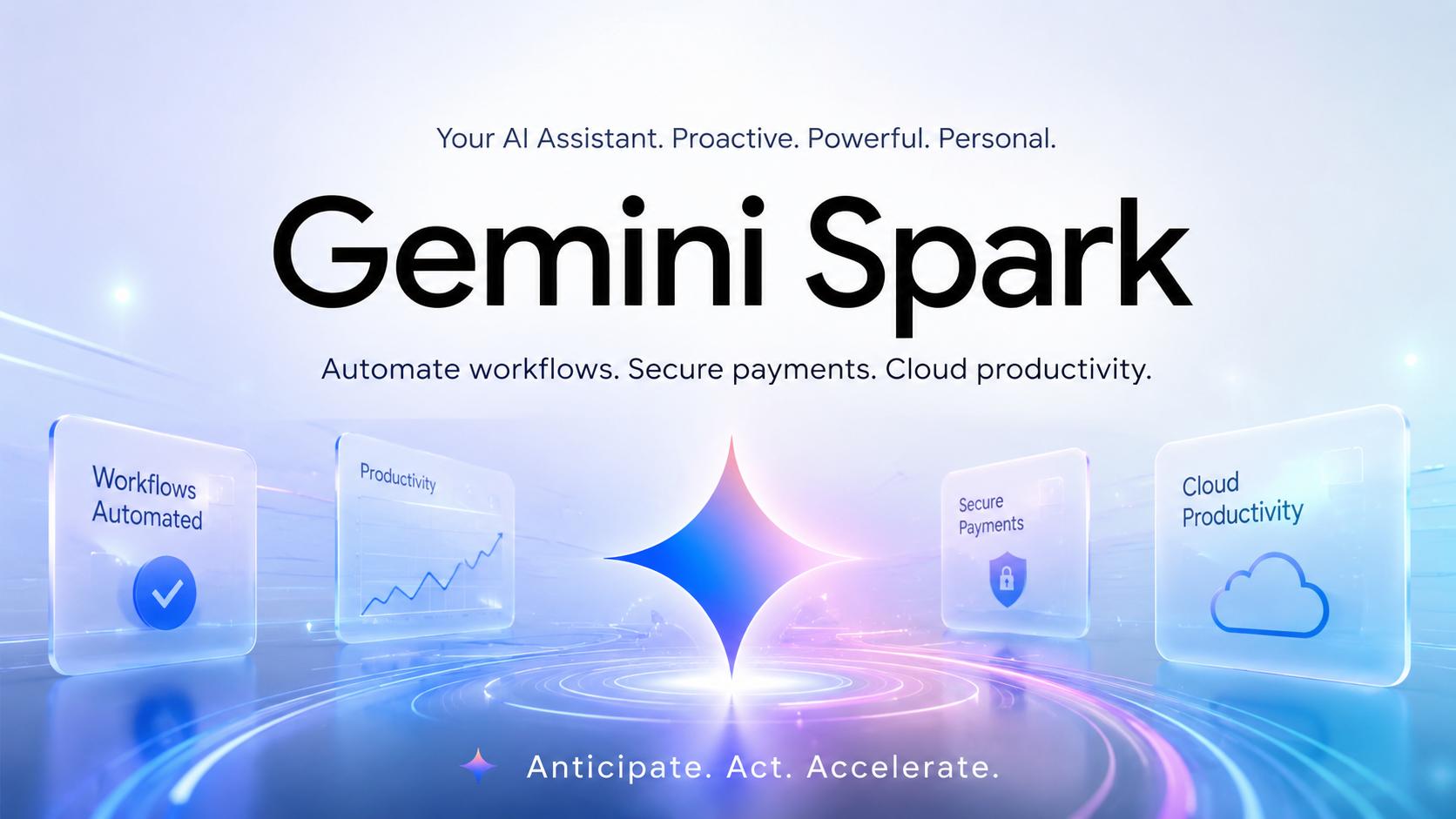
Google recently launched a revolutionary digital partner at its annual developer conference. Specifically, the tech giant unveiled a proactive virtual assistant called Gemini Spark. This platform operates continuously in the background to handle daily tasks for users. Standard chatbots typically wait for a prompt before they generate a helpful response. However, this agentic system actively initiates multi-step workflows without constant human prompting. Thus, users can delegate complex digital chores to this cloud-based agent. The platform manages these repetitive processes without requiring constant manual intervention.

The technology aims to streamline daily productivity and automate tedious digital routines. Consequently, the traditional chatbot interface is evolving into a dynamic administrative partner. This transition could redefine how billions of individuals interact with their personal devices. Modern technology users frequently struggle to manage numerous fragmented notifications and emails. Indeed, digital administrative burdens waste valuable creative hours in the typical office setting. Google aims to capture this emerging market with its deep ecosystem integration. The system leverages existing search and workspace databases to create custom solutions.
Therefore, the firm has scaled its intelligence tools to massive heights. The global user base for its ecosystem recently surpassed nine hundred million active members. This massive audience provides an ideal launchpad for advanced automation tools. Subsequently, the software will roll out to a select group of trusted testers immediately. Premium subscribers in the United States will gain access to the beta next week. Early feedback will help developers refine the virtual assistant before wider distribution. Ultimately, the deployment strategy highlights Google’s commitment to secure and gradual product scaling.
Workspace Integration via Gemini Spark
The software features native integration across several popular office productivity applications. Meanwhile, it can scan long email threads in Gmail to extract critical deadlines. The agent can automatically compile these findings into polished text documents. Furthermore, the system operates entirely in the secure Google Cloud environment. This cloud infrastructure ensures the assistant keeps working even when devices are offline. Users can also configure the tool to organize complex social events. The planning system dynamically updates its registers as new responses arrive.
Specifically, it can track party RSVPs and update tracking sheets in real time. Similarly, it monitors calendar schedules to identify upcoming personal commitments. The agent can then purchase necessary supplies using integrated delivery services. Additionally, the virtual assistant can retrieve relevant client records from external software. It connects with popular customer relationship platforms to gather crucial historical logs. This capability allows the system to draft tailored emails before strategic client meetings. The automation ensures that professionals never arrive at negotiations unprepared.
Ultimately, the software acts as an automated bridge between separate business programs. It synthesizes disjointed information into clean, professional business communications instantly. This automated compilation ensures that teams stay aligned on major corporate milestones. Alternatively, users can run these operations through standard web browsers on desktops. This flexible access model increases individual control over complex automated data pipelines. Business administrators can easily monitor these tasks to maintain high operational standards. The system remains fully transparent to prevent unauthorized background interactions.
Under the Hood of Gemini Spark
Context Compaction Simulator
The underlying intelligence of this active digital worker relies on advanced foundational models. Google utilizes the lightning-fast Gemini 3.5 Flash model to drive these processes. Additionally, the software incorporates sophisticated behavioral learning algorithms. The agent studies user patterns over time to understand custom administrative routines. Initially, it constructs a persistent model of how individuals complete their daily tasks. This persistent model allows the agent to make highly customized suggestions. Likewise, the system improves its accuracy by continuously observing user decisions and edits.
In the past, traditional artificial intelligence applications struggled to maintain state over extended periods. Specifically, they treated every prompt as an isolated event without historical business context. Consequently, modern systems must continuously update their databases to reflect ongoing workflow changes. However, keeping these long-running sessions alive often consumes massive amounts of computer memory and tokens. Therefore, the Antigravity framework resolves this issue through automatic context compaction. Under this system, the framework compacts active context once interactions exceed certain token thresholds. Crucially, this smart scaling algorithm prevents the engine from losing important contextual details.
The core program can delegate subtasks to specialized helper agents seamlessly. Indeed, it acts as a primary coordinator for a network of digital workers. The orchestrator runs safely in a fully managed Google Cloud sandbox. This secure environment prevents unauthorized code from accessing sensitive operational databases. Moreover, technical teams can manage these sandbox environments with minimal overhead. Google Cloud infrastructure automatically handles the complex underlying resource allocation. Developers can focus entirely on creating highly effective automation scripts.
Commercial Guardrails in Gemini Spark
AP2 Payment Mandate Tool
Proactive software requires strict security guardrails to prevent unintended real-world financial consequences. Thus, Google introduced the Agent Payments Protocol to solve this specific challenge. This open-source standard provides a secure foundation for autonomous commerce. Moreover, the framework enables users to set highly detailed purchasing restrictions. People can restrict spending limits, approved merchants, and item categories. The protocol operates using tamper-proof digital contracts called mandates. Specifically, these cryptographic objects serve as verifiable proof of user authorization.
For example, real-time transactions generate cart mandates that seal exact pricing details. In contrast, asynchronous tasks rely on pre-authorized intent mandates to establish rules of engagement. Furthermore, the protocol creates separate payment mandates specifically to inform banking networks. Ultimately, this clear cryptographic trail assigns accountability and simplifies future disputes. Historically, traditional credit card networks assumed a human confirmed every checkout page. To address this limitation, the new protocol modifies existing structures to welcome digital shoppers. As a result, merchants can verify transaction authenticity without exposing sensitive personal banking details.
The system communicates directly with payment networks like Mastercard and PayPal. This collaborative partnership ensures that automated purchases carry minimal security risk. Indeed, users retain final veto power over all high-stakes purchasing decisions. The assistant will explicitly ask for permission before spending any money. Subsequently, this framework will allow agents to make transactions on behalf of users. Secure shopping tools will eventually drive widespread consumer adoption of autonomous assistants. The payment architecture guarantees total transparency throughout every stage of the transaction.
Comparing Gemini Spark and OpenClaw
Cloud vs Local Comparison Matrix
| Metric | Cloud (Gemini Spark) | Local (OpenClaw) |
|---|---|---|
| Server | No hardware needed | Mac Mini required |
| Continuity | Constant run | Shutdown halts |
| Security | AP2 standard | Manual patch |
| Workspace | Native links | Manual setups |
The landscape of agentic tools has grown increasingly competitive over the past year. OpenClaw previously gained massive popularity among early adopters in the tech community. However, OpenClaw typically requires local hardware deployments like a Mac Mini. This local hosting creates setup barriers for non-technical retail users. Google bypasses these hardware demands entirely by running its agent in the cloud. Conversely, local setups face significant security risks if left unpatched. Researchers discovered high-severity vulnerabilities within the open-source alternative.
The flaw allowed remote actors to gain full administrative control. Therefore, enterprise customers prefer the robust protection of Google Cloud. Local automation tools demand technical knowledge and constant maintenance. Users must configure complicated databases and manage fragile API interfaces. Alternatively, the cloud assistant offers immediate utility without manual coding. The program also continues running when the user shuts down their computer. Tasks execute smoothly in the background without continuous device power.
Indeed, this background capability provides a distinct advantage over local programs. Enterprise clients require constant availability to manage global corporate operations. Cloud architectures naturally scale to meet high corporate service demands. Thus, the tech giant leverages its massive server farms to dominate. This industrial scale makes local agent hosting look like a hobby. Consumers enjoy faster response times and seamless device coordination. Table 1 outlines operational differences between these two prominent architectures.
| Metric | Cloud (Gemini Spark) | Local (OpenClaw) |
| Server | No local hardware | Needs device |
| Continuity | Runs constantly | Halts on shutdown |
| Security | AP2 standards | Manual patching |
| Workspace | Native links | Manual setups |
The Mobile Future of Agentic AI
Operating invisible systems can sometimes cause anxiety regarding personal data privacy. To address this concern, Google aims to make background automation transparent to every phone user. Consequently, developers created an upcoming interface feature called Android Halo. This glanceable tool displays subtle communication cues at the top of the screen. Meanwhile, a persistent Gemini spark icon updates to show the agent's current state. For example, it highlights when an agent processes a task or enters live mode. Ultimately, the responsive animation informs users without blocking their active workspace or calls.
Users can quickly verify background actions without exiting their active applications. Specifically, the visual layer integrates deeply with upgraded system privacy settings. Users can review active permissions using the updated Privacy Dashboard. Additionally, the upcoming Android seventeen update will introduce specialized performance optimizations. The system will allocate hardware resources dynamically to keep background processes efficient. This allocation prevents active applications from experiencing lag during heavy automation tasks. Mobile users will experience highly responsive system performance even during long operations.
Furthermore, premium mobile processors will unlock advanced on-device reasoning features. Local hardware chips will handle simpler cognitive steps directly on the phone. This hybrid cloud model reduces internet latency and increases overall processing speed. Indeed, on-device processing protects sensitive biometric files and personal passwords. The integration represents a massive step toward highly responsive consumer artificial intelligence. Future mobile architectures will rely heavily on these integrated local-cloud solutions. Consumers confidently delegate daily planning chores knowing their device safeguards their data.
Android Halo Status Bar
Developer Workflows and Antigravity Tools
Creating these advanced digital workflows requires robust, specialized software engineering platforms. To meet this need, Google addresses this engineering demand with its next-generation Antigravity framework. Historically, coding tools focused strictly on simple syntax autocompletion and highlighting. In contrast, the Antigravity platform prioritizes autonomous agent orchestration over simple text editing. To achieve this, the standalone desktop application forks the popular Visual Studio Code codebase. Specifically, it splits the screen into an editor and a manager dashboard. This direct split ultimately allows software architects to orchestrate multiple digital builders.
This configuration allows developers to spawn and monitor multiple asynchronous agents. For instance, technical teams can dispatch different agents to solve several bugs simultaneously. Consequently, this type of parallel processing greatly multiplies programming output and execution speed. At the same time, engineers can use secure Linux sandboxes to test their custom agents safely. Within this environment, the sandbox handles automated loops of reasoning, tool execution, and file management. Additionally, the Antigravity terminal tool brings agentic power directly to the command line. As a result, developers can write custom scripts inside standard bash environments without managing complex hardware.
Developers can also launch, monitor, and guide digital workers using familiar terminal commands. The command line sharing configuration ensures a unified experience across all interfaces. Thus, coding teams can maintain a highly coherent software development pipeline. Google has built a complete pipeline from code creation to secure deployment. Moreover, the ecosystem supports integration with multiple open-source large language models. This open approach provides absolute flexibility for teams building custom automation tools. Software companies accelerate their deployment schedules by adopting these unified development frameworks.
Antigravity Agent Spawner
Strategic Implications for Modern Commerce
Moreover, the rise of persistent background agents signals a profound shift in consumer internet behavior. Traditional web search engines are transforming into proactive, personalized information retrieval portals. Indeed, background search agents can continuously monitor web listings for specific consumer products. This automation will notify buyers immediately when relevant inventory becomes available online. This fundamental change poses serious challenges for modern digital publishers and brand marketers. Therefore, content creators must adapt to an ecosystem dominated by autonomous system crawlers. Corporate organizations need to prepare for a marketplace driven by algorithmic purchasing decisions.
Monetizing complex, usage-based AI interactions will require entirely new transactional models. Google recently donated its payment protocol to the FIDO Alliance to accelerate industry standards. Thus, this donation ensures that agent-based commerce remains platform-agnostic and secure. Collaborative industry frameworks will ultimately determine the commercial viability of autonomous agents. Corporate leaders must recognize the shifting nature of search engine traffic and conversion rates. Specifically, direct website visits will likely decrease as autonomous crawlers aggregate data for users. Brands need to establish direct relationships with software orchestrators to sustain market share.
Furthermore, businesses must optimize their online storefronts for machine readability to remain competitive. Standard keywords and generic metadata are no longer sufficient to attract organic web traffic. Subsequently, this strategic shift will reward companies that prioritize clean, verifiable data. Trust and safety will become the primary currencies of the modern digital marketplace. Accordingly, organizations must implement robust technical architectures to thrive in this new landscape. Secure payment integration and seamless identity validation will prove critical for future growth. Embracing agentic standards positions forward-thinking corporations at the absolute forefront of global innovation.
Support Our Work
Help us keep creating and maintaining our projects. We appreciate your support!
Ways to contribute:
Shop via Affiliate LinksSupport us at no extra cost to you while you shop.
Support on Ko-fiBuy us a coffee to keep the engine running!





Leave a Reply