

![Apple Watch Series 11 [GPS 42mm] Smartwatch with Rose Gold Alumin...](https://m.media-amazon.com/images/I/31caPPnRysL._AC_.jpg)

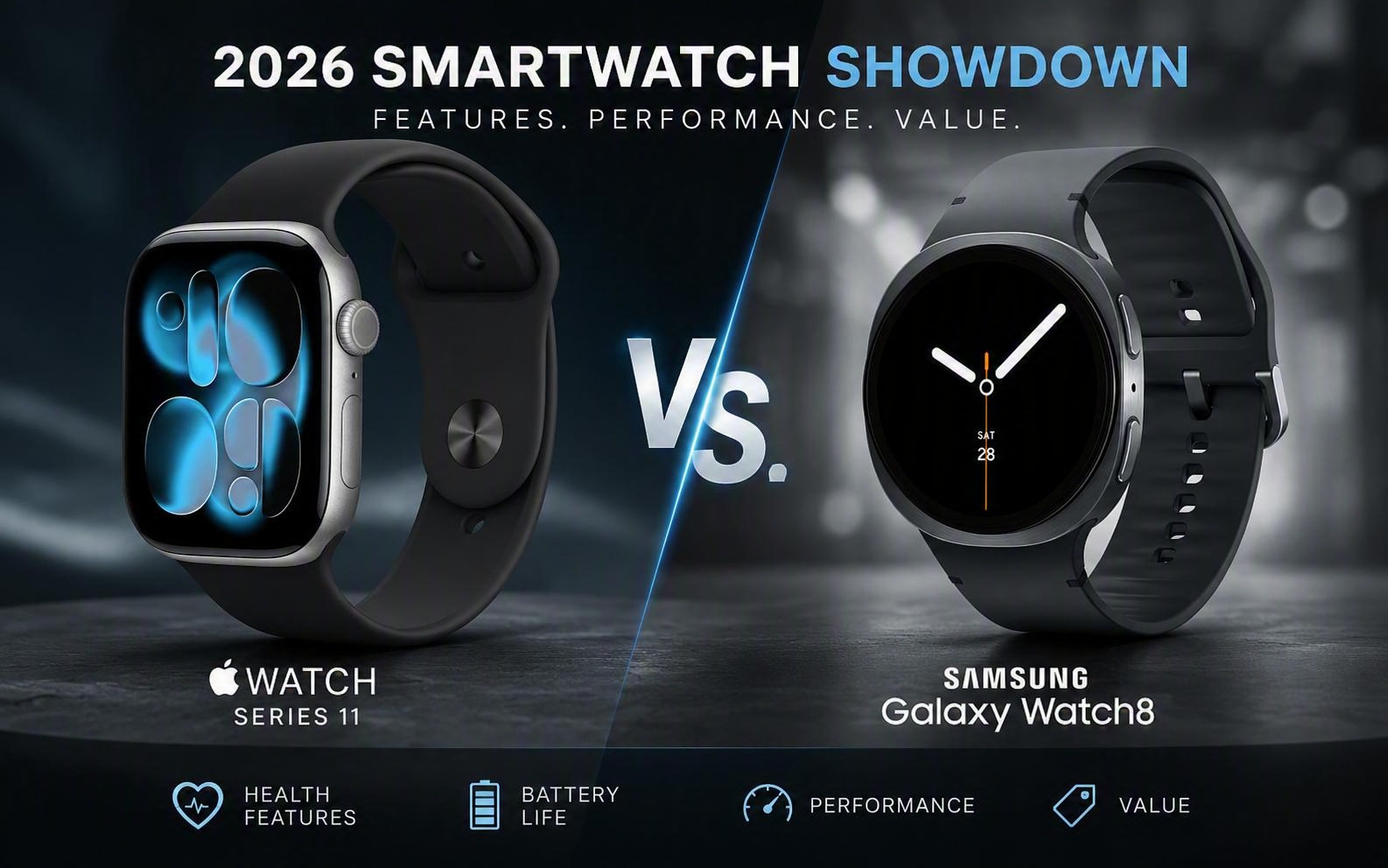
The global wearable market remains highly competitive in 2026. Consequently, enthusiasts are closely comparing the Apple Watch Series 11 vs. Samsung Galaxy Watch 8 this year. Both manufacturers have introduced premium upgrades to secure market share. Therefore, consumers must evaluate each watch before purchase. This analysis reviews technical specifications and everyday utility.
Apple has successfully upgraded its popular wearable line with highly precise health sensors. Meanwhile, Samsung introduced a redesigned frame to improve tracking accuracy. Thus, this comparison will explore design, performance, and health. Ultimately, the analysis will determine which smartwatch wins this year. Both brands continue to push boundaries through massive investments.
Design DNA and Ergonomics
Apple retains its classic square face with rounded corners. Interestingly, this layout makes reading long text blocks easy. The premium titanium casing option elevates durability. However, it also significantly increases the purchase price. Aluminum remains the default option for budget-conscious shoppers. The watch stays thin at nine point seven millimeters.
Conversely, Samsung has adopted a striking cushion design. This distinctive square bezel houses a beautiful circular display. Furthermore, the new Dynamic Lug System keeps sensors closer to the skin. Consequently, this structure improves comfort and reduces wrist movement. The elegant, lightweight chassis measures exactly eight point six millimeters.
Display Technologies Compared
Apple utilizes a wide-angle, highly responsive LTPO3 OLED display. Indeed, this screen offers exceptional visibility from off-center angles. The display reaches a bright peak of two thousand nits. Nevertheless, the screen can drop to one nit in dark environments to preserve battery. This variable refresh rate technology ensures excellent readability.
Conversely, Samsung equips its contender with a Super AMOLED panel. This vibrant display achieves a peak of three thousand nits. Therefore, users can easily read notifications in direct sunlight. Additionally, durable sapphire crystal protects the screen from scratches. High pixel density keeps small text sharp and clear.
Silicon Performance and Processing
The custom Apple S10 chip powers the wearable with robust dual-core performance. Additionally, a dedicated neural engine accelerates on-device Siri commands. This model is the first Apple Watch supporting fast 5G connectivity. Meanwhile, dual-band Wi-Fi ensures steady data transfers. The processor delivers swift application speeds and fluid animations.
Instead, Samsung features its efficient five-core Exynos W1000 processor. This three-nanometer chip handles multitasking and fitness tracking smoothly. Furthermore, dual-band GPS provides accurate location metrics without a nearby phone. The Galaxy Watch 8 supports standard 4G LTE cellular connections. Demanding digital tasks execute smoothly without thermal throttling.
Health Capabilities and Sensors
The Series 11 stands out with its FDA-cleared hypertension notification system. This intelligent tool monitors passive pulse patterns to spot blood pressure risks. Consequently, it prompts users to perform medical-grade cuff measurements. Apple also includes sleep apnea tracking and temperature monitoring. These algorithms evaluate background data before sending any alerts.
Similarly, Samsung offers a comprehensive BioActive health sensor suite. This tool analyzes body composition directly from the wrist. Moreover, the brand-new vascular load metric provides proactive health insights. Nevertheless, the blood pressure feature requires manual calibration with a cuff every twenty-eight days. Intelligent proactive alerts nudge users to maintain healthy habits.
Battery Longevity in Practice
Apple promises twenty-four hours of battery life under normal usage. Fortunately, real-world tests show the watch running for forty-three hours. This incredibly fast charging is highly convenient for active lifestyles. Specifically, a thirty-minute charge fills the battery to eighty percent. This speed enables sleep tracking without interruption.
In contrast, the Galaxy Watch 8 claims forty hours with the display disabled. Meanwhile, some testers struggle to exceed twenty-six hours under heavy usage. Thus, users must charge the device almost daily. Gentle usage can stretch the overall battery life to two full days. Standard charging speeds remain slower than the Apple competitor.
Apple Watch Series 11 vs. Samsung Galaxy Watch 8
This specific comparison represents the ultimate showdown between two powerful wearable ecosystems. Ultimately, the choice will depend heavily on the smartphone in the consumer’s pocket. Apple users will naturally prefer watchOS integration. Conversely, Android fans will find the Galaxy Watch 8 more compelling. Operating systems directly dictate application availability and performance.
Both models deliver premium features and excellent software support. However, Apple excels in battery efficiency and cardiovascular safety alerts. Meanwhile, Samsung wins on customization and body composition tracking. Therefore, both watches offer fantastic value depending on health goals. Users must carefully weigh these factors before investing.
Cellular Standards and Connectivity
Cellular standard developments in 2026 highlight different strategic paths. Specifically, Apple introduces RedCap 5G connectivity. This upgrade allows quicker data syncing during off-grid activities. Consequently, users experience faster loading times without their iPhone. The watch handles emergency communications reliably.
Conversely, the Galaxy Watch 8 limits cellular capability to LTE. This decision may disappoint users seeking modern cellular protocols. Nonetheless, dual-frequency GPS on the Samsung watch outperforms Apple. This advanced chip secures precise positioning among tall buildings. Navigating dense landscapes becomes simple and highly accurate.
Legal Battles and Workarounds
Apple recently resolved legal battles regarding the blood oxygen sensor. Specifically, Apple launched an iPhone-based processing workaround in late 2025. This solution allows American users to enjoy SpO2 tracking. Subsequently, an ITC judge ruled this method does not infringe Masimo patents. This ruling ensures Apple avoids further import restrictions.
Meanwhile, Samsung has focused on unifying its design language. The company is standardizing the cushion bezel across its catalog. Additionally, Samsung is deepening integration with Google Gemini. Indeed, this powerful assistant handles complex voice queries with ease. Users can dictate messages fluidly during runs.
Industry Mergers and Strategies
Strategic acquisitions continue to reshape global health technology. Specifically, Danaher acquired Masimo for nine point nine billion dollars in 2026. This massive transaction highlights the value of medical patent portfolios. Consequently, consumer technology firms face scrutiny from clinical manufacturers. Active legal defense remains a priority for consumer device developers.
Meanwhile, Apple appeals a six hundred thirty-four million dollar damages verdict. This courtroom battle focuses on patents used in historical watch models. Therefore, cross-licensing negotiations might occur to resolve ongoing tension. Such legal climates heavily influence future hardware developments. Both brands navigate these challenges with legal teams.
User Experience and Activity Tracking
The software ecosystem defines how users interact daily. WatchOS twenty-six delivers an intuitive interface with gesture controls. The double tap gesture allows hands-free navigation. On-device Siri processing handles commands quickly. The platform integrates seamlessly with iOS services.
One UI Watch eight offers notifications and smooth transitions. Samsung pairs software with the powerful Gemini AI assistant. The rotating physical bezel provides stellar navigation. The custom Quick Button enables instant app access. Android users will appreciate these integration options.
Athletes will find excellent metrics on both wearables. Apple introduces metrics like training load and oscillation. The watch calculates average speed, cadence, and SWOLF scores. Workout Buddy provides coaching via Apple Intelligence. Offline topographic maps support detailed hiking routes.
Samsung focuses its suite on body awareness. The running coach assists users during interval sessions. The BioActive sensor tracks muscle mass and body fat. This tool utilizes electrical signals to estimate fitness indices. Runners will benefit from sweat loss metrics.
Operating Longevity and Financial Value
Ongoing software updates preserve security and longevity. Samsung recently rolled out a firmware update in 2026. This patch addressed thirty-nine system vulnerabilities. Galaxy Watch eight owners enjoy improved performance. Security improvements remain vital in the digital landscape.
Apple consistently maintains software support. The Series 11 launches with watchOS twenty-six. Users will receive regular feature additions for years. The ecosystem prevents rapid technological obsolescence. Safety patches protect sensitive healthcare data.
Buying decisions depend heavily on retail price. The Galaxy Watch eight starts at three hundred forty-nine dollars. This pricing includes standalone dual-band location tracking. Discounts frequently lower the entry price. Consumers will appreciate this financial value.
The Apple Watch Series 11 demands premium investment. The base aluminum model starts at three hundred ninety-nine dollars. Amazon deals have slashed the entry price to two hundred ninety-nine dollars. This discount makes the health wearable far more accessible. Buyers must choose whether materials justify the extra expense.
Market Comparison Matrix
This analysis summarizes the core hardware specifications. This table highlights hardware differences between the flagships. Consequently, shoppers can assess which wearable suits their requirements. The comparison provides essential data for budget planning.
Both manufacturers have packed incredible technology into lightweight bodies. Reviewing data below reveals displays, processors, and capabilities. The ecosystem choice determines the software experience. Consumers should analyze these specifications before purchase. The comparison grid highlights these top competitors.
Summary of Wearable Dominance
The smartwatch landscape has reached a mature peak this year. Indeed, both of these flagships represent the pinnacle of engineering. The Series 11 is the perfect option for iPhone owners prioritizing health. Thus, it remains the safest choice. Apple delivers an incredibly refined wearable platform.
On the other hand, the Galaxy Watch 8 is the Android value champion. Its lower starting price and advanced metrics are attractive. Therefore, both devices are triumphs in their respective ecosystems. Ultimately, the smartphone in the user’s pocket will make this final decision. Consumers will certainly enjoy these technological achievements.
Support Our Work
Help us keep creating and maintaining our projects. We appreciate your support!
Ways to contribute:
Shop via Affiliate LinksSupport us at no extra cost to you while you shop.
Support on Ko-fiBuy us a coffee to keep the engine running!

Leave a Reply