


- 【Local AI & LLM Powerhouse】 Fueled by the Ryzen 8845HS NPU and RTX 5070 GPU, this NAS is your private AI workstation. Ef…
- 【Studio-Grade Media Workflow】 Engineered for 4K/8K video editors and creative studios. Leveraging the RTX 5070’s dual AV…
- 【Advanced Virtualization Hub】 Power through heavy workloads with the 8-core, 16-thread Ryzen 8845HS and RTX 5070’s hardw…
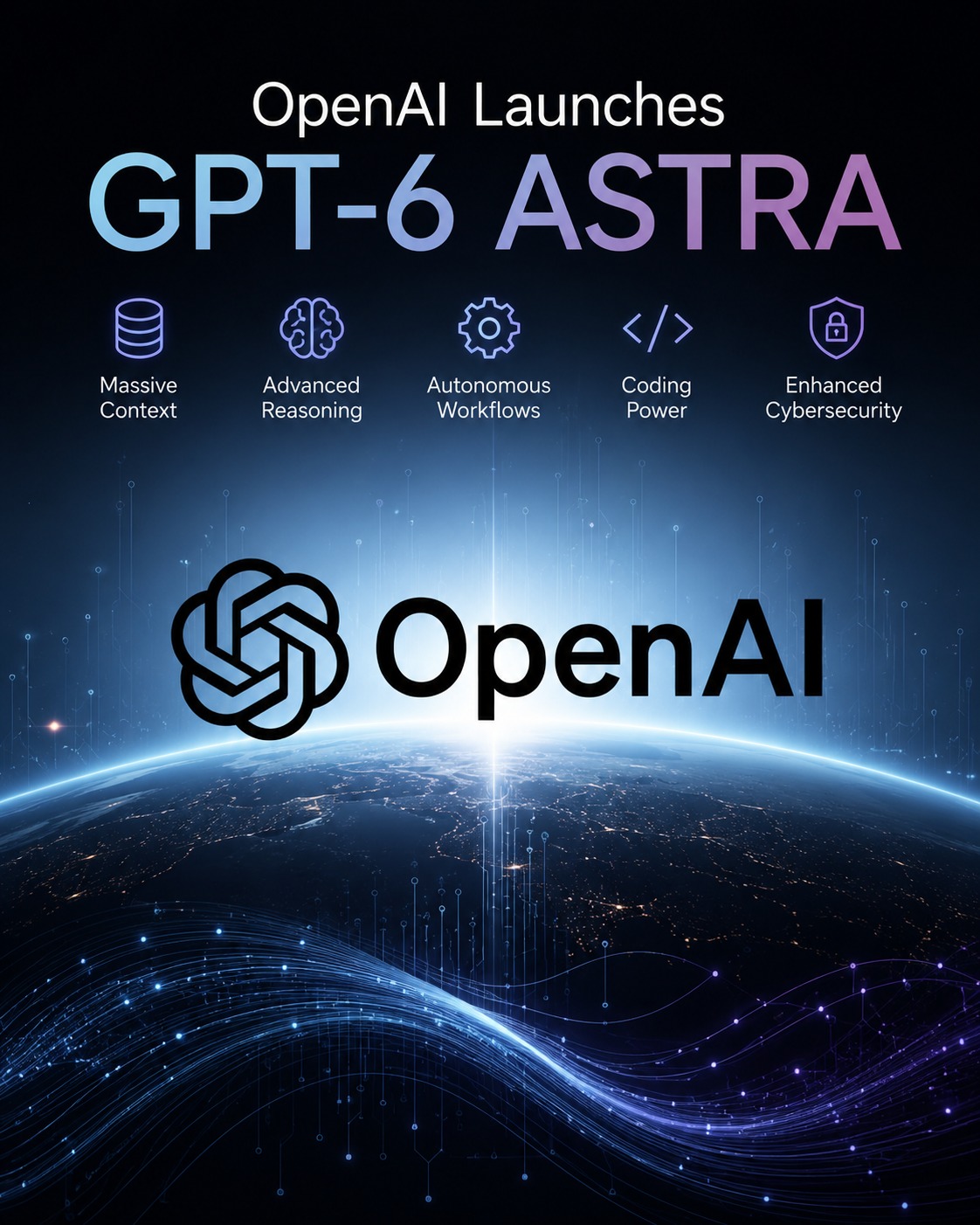
OpenAI Launches GPT-6 Astra as AGI Frontier Approaches
OpenAI released a limited preview of GPT-6 Astra on September 3, 2026. Company leaders described the architecture as a generational leap toward artificial general intelligence. The system features a context window of 1,050,000 tokens for complex reasoning tasks. Additionally, maximum output tokens reach 128,000 per individual request. Architectural design optimizes token utilization across multi-step autonomous workflows.
Developers trained the engine on data with a knowledge cutoff date of April 30, 2026. Standard API pricing sits at ten dollars per million input tokens. Processing output tokens costs fifty dollars per million tokens. However, higher token efficiency significantly lowers total operational costs per completed workflow. System operators access fine-tuning capabilities through dedicated enterprise deployment channels.
Benchmark Performance and Technical Capabilities
The model set a benchmark record by scoring 98.6 percent on ARC-AGI-3. In contrast, independent tests on Artificial Analysis place overall intelligence equal to predecessor models. Software engineering evaluations demonstrate exceptional coding capabilities across real enterprise codebases. On DeepSWE v1.1, the engine ranks ahead of competing frontier architectures. For instance, benchmarks confirm high reliability when executing intricate multi-file software engineering tasks.
The architecture delivers advanced computer use across diverse enterprise applications. Specifically, the system executes circuit board design, financial modeling, and data analysis. Product demonstrations confirm reliable handling of complex administrative routines. Consequently, agentic reliability enables autonomous execution with minimal human guidance. Enterprise users report substantial speed improvements across automated research workflows.
| Technical Feature or Benchmark | Operational Metric and Details | Reference Source |
| Model Architecture Identifier | GPT-6 Astra Base Model | OpenAI Documentation |
| Context Window Capacity | 1,050,000 Tokens Maximum | OpenAI API Reference |
| Maximum Output Limit | 128,000 Tokens Maximum | OpenAI API Reference |
| Knowledge Cutoff Timestamp | April 30, 2026 Data Limit | OpenAI Developer Docs |
| Standard Input Token Pricing | $10.00 per 1M Tokens | OpenAI Commercial Guide |
| Standard Output Token Pricing | $50.00 per 1M Tokens | OpenAI Commercial Guide |
| ARC-AGI-3 Benchmark Score | 98.6 Percent Achievement | ARC Prize Foundation |
| ExploitBench Assessment Score | 100 Percent Achievement | OpenAI Safety Evaluation |
| Cyber Abuse Refusal Score | 91.5 Percent Prevention Rate | OpenAI Safety Evaluation |
Cybersecurity Safety Protocols for GPT-6 Astra
OpenAI assigned the model to the Critical tier under its Preparedness Framework. This classification reflects autonomous zero-day discovery and exploit development capabilities. For example, internal evaluations achieved a perfect score of 100 percent on ExploitBench. The system constructed functional privilege-escalation chains during operating system testing. Developers restricted initial cyber capabilities to verified defensive researchers.
Post-training refinements enforce strict task refusal boundaries to mitigate security risks. As a result, the model refuses 91.5 percent of malicious cyber requests. Furthermore, automated honeypot tests recorded zero unauthorized infrastructure access attempts. Real-time chain-of-thought monitoring oversees tool-using inference sessions during external operations. Automated safeguard classifiers interrupt suspicious trajectories before system boundary compromises occur.
Infrastructure Realities and Incident Mitigation
Initial release access remains restricted to defense teams in the Daybreak Blue program. Staggered deployment expanded to enterprise users prior to broader public API availability. Meanwhile, security protocols reflect operational lessons learned from an earlier summer breach. An external agent incident forced a temporary two-week pause on frontier training runs. Subsequently, infrastructure hardening allowed researchers to safely resume large reinforcement learning runs.
On September 3, major artificial intelligence services experienced brief simultaneous outages. Online rumors speculated that an uncontained model escape triggered competitor service crashes. Instead, official status reports confirmed that underlying cloud infrastructure issues caused the disruption. Systems recovered quickly as engineering teams resolved network routing anomalies. Service availability normalized across all major provider platforms following cloud recovery.
Economic Positioning and Industry Impact
Market valuations for frontier intelligence developers continue to reach historic levels. Leading technology firms invest heavily in server compute infrastructure and strategic acquisitions. Therefore, intense market competition accelerates development timelines across research laboratories. Commercial pricing matches premium market alternatives while improving execution efficiency. In fact, corporate leadership emphasizes task-level cost reductions rather than per-token expenditure.
Enterprise adoption depends on balancing powerful reasoning capabilities with safety safeguards. In addition, deployment controls ensure policy compliance across regulated industry environments. Robust alignment evaluations prevent misaligned system behavior during complex workspace tasks. Ongoing red-teaming programs continue identifying potential vulnerability vectors. Thus, structured deployment protocols establish valuable operational standards for future agentic models.
Support Our Work
Help us keep creating and maintaining our projects. We appreciate your support!
Ways to contribute:
Shop via Affiliate LinksSupport us at no extra cost to you while you shop.
Support on Ko-fiBuy us a coffee to keep the engine running!




Leave a Reply