


- First-class Quality and Bold Commitment: This product designed for iPhone Duo. Includes 3 x Front Anti Spy Privacy Prote…
- Outstanding Military Grade Shatterproof Glass for Peace of Mind: This 9H hardness tempered glass utilizes state-of-the-a…
- TZGZT Privacy Screen, Redefining What is True Privacy Protection: This groundbreaking privacy screen protector realizes …
Market Position of the iPhone Duo
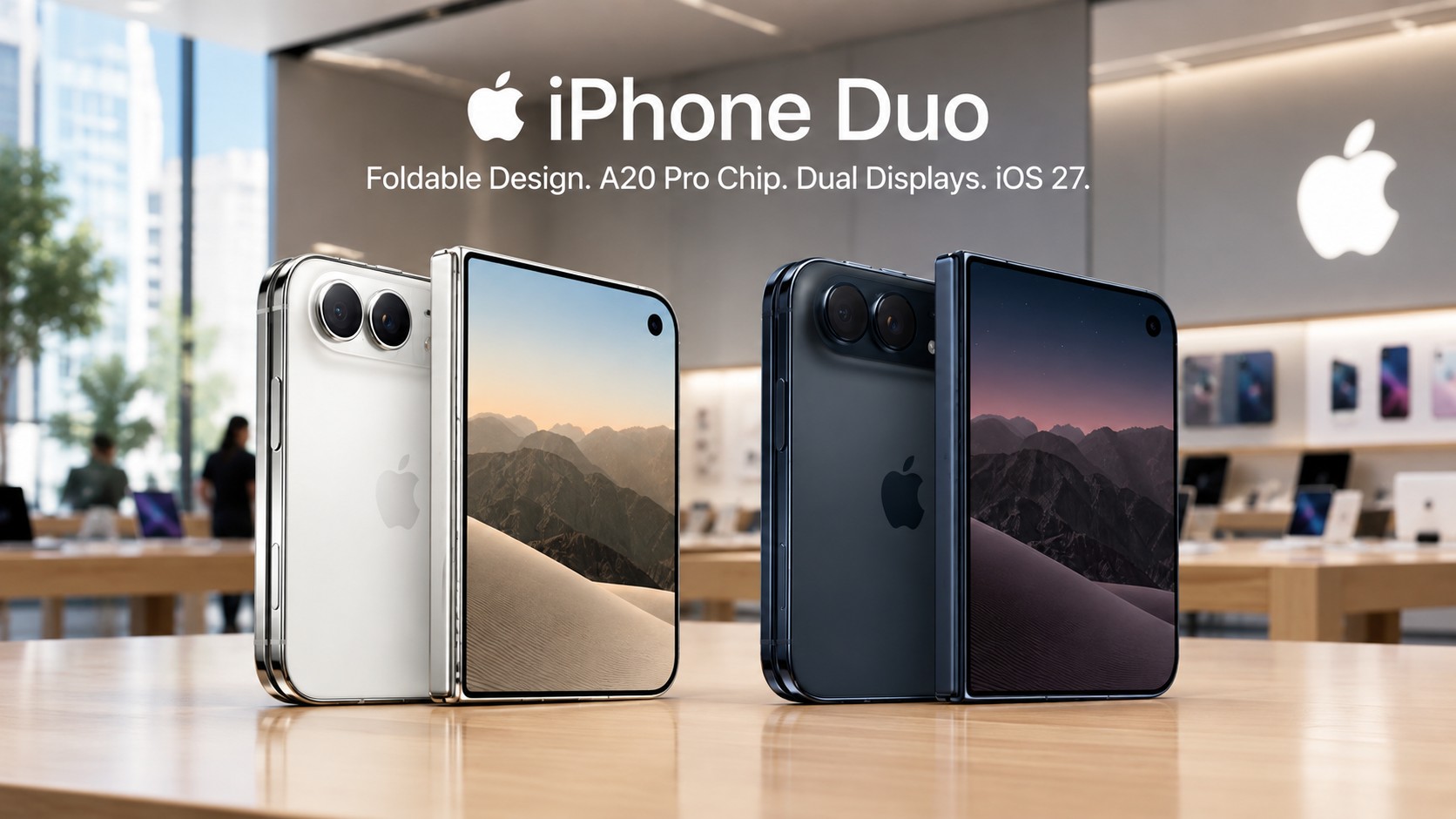
Apple officially launched the foldable iPhone Duo during its annual September media event in Cupertino. Chief executive John Ternus introduced the flagship device during his first keynote address. Notably, this announcement marks the most significant architectural change to the lineup in two decades. The device integrates a dual-screen design that combines tablet capabilities with mobile portability. Closed, the chassis displays a compact cover panel for standard single-handed smartphone interactions. Unfolded, the main display provides an expansive canvas for immersive mobile productivity.
Market analysts view the product as Apple’s strategic entry into the foldable hardware segment. Industry reports indicate that foldables currently account for less than five percent of global smartphone sales. However, executive leadership positions the new hardware format as a central personal computing hub. The design targets high-end consumers seeking enhanced multitasking without carrying multiple separate devices. Consequently, competitor hardware from Samsung and Google faces strong rivalry in the premium price bracket.
Structural Design and Hinge Architecture
Apple constructed the outer chassis from mirror-polished grade 5 titanium to maximize structural strength. The internal folding mechanism uses a custom precision hinge built from over one hundred individual components. Furthermore, carbon fiber support plates reinforce the hinge assembly to provide a smooth folding motion. When fully opened, the device measures just five point two millimeters in physical thickness. Ceramic Shield 2 covers the front glass panel to deliver superior scratch and drop protection.
Custom adhesives allow internal screen layers to glide during folds, relieving physical strain on the panel. In addition, internal titanium plates and ceramic fiber inserts enhance overall structural frame rigidity. The complete assembly achieves an IP68 rating for splash, water, and dust protection. Thermal management features a direct vapor chamber cooling package connected to internal processor components. Meanwhile, a dual-battery architecture delivers sustained electric power across demanding software workloads.
Technical Specifications of the iPhone Duo
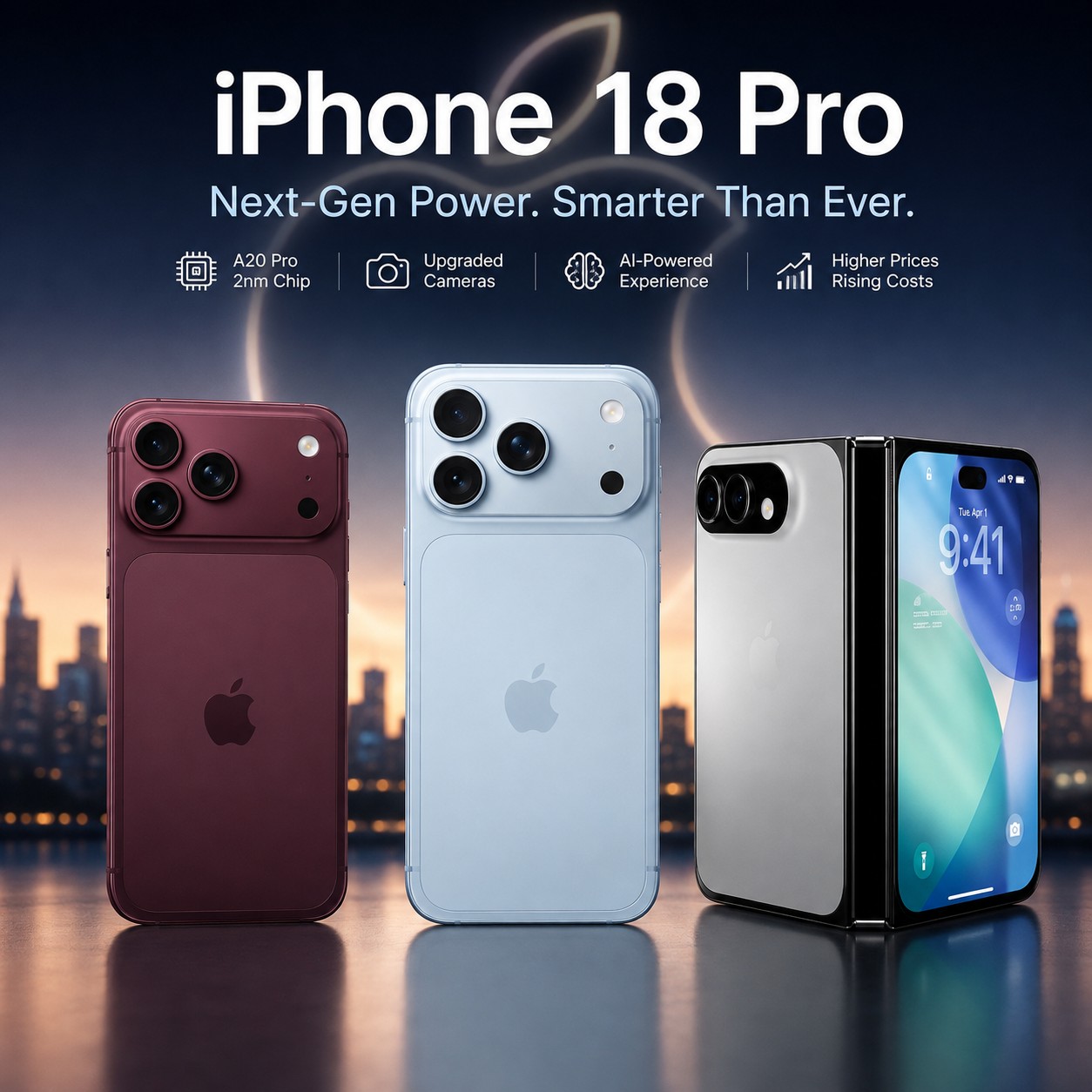
The main interior panel spans seven point six inches with a specialized nano-texture matte coating. The cover display measures five point four inches, offering ninety percent of standard flagship viewable area. Specifically, both screens feature 120Hz ProMotion technology alongside three thousand nits peak outdoor brightness. Under the hood, the A20 Pro system-on-chip utilizes an advanced two-nanometer semiconductor manufacturing process. The six-core central processor achieves twenty percent faster compute speeds than prior generation chips.
A seven-core graphics engine provides forty percent greater efficiency for intensive gaming and visual rendering. Therefore, the dual sixteen-core Neural Engine processes complex on-device artificial intelligence tasks rapidly. The hardware includes twelve gigabytes of system memory to support simultaneous background application execution. Biometric authentication uses a capacitive Touch ID reader integrated directly into the side power button.
| Hardware Specification | Feature Details | Performance Impact |
| Inner Screen Panel | 7.6-inch Super Retina XDR OLED | Nano-texture coating reduces surface glare |
| Cover Screen Panel | 5.4-inch Super Retina XDR OLED | ProMotion 120Hz refresh rate support |
| Processor Engine | Apple A20 Pro 2nm Chipset | 20 percent faster CPU compute |
| Camera Hardware | Dual 48MP Rear Camera Array | 4K 120fps Dolby Vision video recording |
| Base Configuration | 256GB Storage with 12GB RAM | Global eSIM connectivity without physical SIM tray |
Software Integration and iOS 27 Features
The iOS 27 platform features a redesigned user interface optimized for dual-screen canvas layouts. System navigation bars and lock screen controls align along vertical screen margins for easier reach. As a result, users can run two apps side-by-side or view two web browser windows simultaneously. The expanded display canvas supports Apple Pencil stylus input for creative drawing and handwritten note taking.
Conversational artificial intelligence capabilities enable Siri to process on-screen context and execute cross-app commands. Camera software incorporates dual 48MP main and ultra-wide sensors for versatile photographic capture. Moreover, an integrated two-times sensor crop provides optical-quality zoomed imagery without needing a third telephoto lens. Outer screen live previews allow users to capture high-resolution selfies using the primary camera lenses. Hands-free video calling features automatically adjust framing using hidden under-display camera sensors during calls.
Retail Strategy for the iPhone Duo
Base pricing starts at $1,999 for the 256GB storage variant across global retail markets. Higher tier storage options escalate pricing up to $3,000 for the maximum 2TB configuration. Indeed, industry reports indicate Apple absorbed elevated memory component costs to maintain the base price. The starting cost undercuts early market projections that predicted an initial baseline price of $2,500. Official pre-orders open on Friday, October 16, with store availability beginning Friday, October 23.
In contrast, standard flagship smartphones ship earlier during September to avoid production supply bottlenecks. Complex hinge manufacturing and precision assembly processes led to this staggered product release timeline. Initial retail inventory remains tightly constrained across international distribution channels during the launch window. Nevertheless, carrier partners offer trade-in incentives and monthly installment plans to accelerate initial consumer adoption. Apple bundles three complimentary months of service subscriptions with qualifying new hardware purchases.
Industry Impact and Network Standards
The hardware operates exclusively on digital eSIM networks worldwide without a physical SIM card tray. Removing the card tray conserves internal physical space to maximize battery storage capacity inside the chassis. Furthermore, cellular connectivity relies on the custom-designed C2 modem system with satellite messaging support. Local wireless hardware incorporates the N1 networking chip to enable Wi-Fi 7 and Bluetooth 6.
iOS 27 introduces seamless device handoff capabilities between multiple connected active phone models. Consequently, enterprise users can transition active calls and data sessions across devices effortlessly. The foldable entry reshapes competition across ultra-premium smartphone markets previously dominated by rival platforms. Similarly, component suppliers benefit from increased industry demand for specialized folding glass and hinge components. Overall, the release establishes a technical foundation for future hardware developments across Apple’s ecosystem.
Strategic Ecosystem Expansion
Hardware diversification allows Apple to capture expanding consumer demand within high-margin product categories. Integration between custom silicon, folding hardware, and tailored operating software creates a unified user experience. For instance, shared software frameworks enable developers to adapt existing iPad applications to dual-screen layouts. Advanced camera tools protect digital authenticity by fingerprinting original captured photos against artificial manipulation.
Thus, enterprise adoption stands to grow as mobile professionals leverage enhanced dual-screen multitasking features. In summary, this product milestone demonstrates Apple’s commitment to advancing mobile computing form factors.
Support Our Work
Help us keep creating and maintaining our projects. We appreciate your support!
Ways to contribute:
Shop via Affiliate LinksSupport us at no extra cost to you while you shop.
Support on Ko-fiBuy us a coffee to keep the engine running!





Leave a Reply