


- 𝐆𝐢𝐠𝐚𝐛𝐢𝐭 𝐖𝐢𝐅𝐢 𝐟𝐨𝐫 𝟖𝐊 𝐒𝐭𝐫𝐞𝐚𝐦𝐢𝐧𝐠 – Up to 5400 Mbps WiFi for faster browsing, streaming, gaming and downloading, all at the …
- 𝐅𝐮𝐥𝐥 𝐅𝐞𝐚𝐭𝐮𝐫𝐞𝐝 𝐖𝐢𝐅𝐢 𝟔 𝐑𝐨𝐮𝐭𝐞𝐫 – Equipped with 4T4R and HE160 technologies on the 5 GHz band to enable max 4.8 Gbps ultra-f…
- 𝐂𝐨𝐧𝐧𝐞𝐜𝐭 𝐌𝐨𝐫𝐞 𝐃𝐞𝐯𝐢𝐜𝐞𝐬 – Supports MU-MIMO and OFDMA to reduce congestion and 4X the average throughput
Infrastructure Vulnerabilities and the AT&T Internet Outage
Navigating service reliability remains critical as operators manage major AT&T internet outage risks across modern telecommunications networks. Specifically, a major nationwide network disruption took mobile services offline for over twelve hours. The failure blocked more than 92 million voice calls during peak business hours. Furthermore, emergency personnel lost access to over 25,000 attempted emergency calls to 911. Federal investigations revealed that a routine network maintenance expansion triggered the systemic shutdown.
However, technicians implemented an equipment configuration error without following required peer review protocols. This bad configuration spread quickly through interconnected system nodes nationwide. Consequently, AT&T agreed to a $950,000 regulatory settlement with federal authorities. The carrier also offered impacted wireless customers a five-dollar billing credit. This incident highlighted the operational necessity of automated staging and rapid rollback mechanisms.
Legacy Copper Sunset and Physical Vandalism
Physical infrastructure threats create additional operational challenges for traditional telecommunications services. For example, AT&T documented 600 distinct copper network outages within an eight-week window. These regional service disruptions collectively affected 1,697 active communications lines. Notably, cable thieves vandalized lines and drove nearly 70 percent of those failures. Severe weather events caused another 22.5 percent of legacy network breakdowns.
As a result, AT&T petitioned federal regulators for permanent service discontinuance at those sites. The carrier declined to repair obsolete lines that serve relatively few remaining subscribers. Instead, management encouraged customers to adopt advanced IP-based voice or mobile products. This strategic retirement reduces physical line exposure while steering resources toward fiber expansion.
Modern Investments and Network Expansion
Strategic capital investments strengthen primary connectivity networks against unexpected operational hardware failures. In fact, AT&T invested $22.4 billion during 2025 in wireline and wireless networks. The company also completed a $23 billion spectrum acquisition from EchoStar. Additionally, AT&T agreed to purchase the Mass Markets fiber business from Lumen. These combined transactions expand high-capacity fiber reaching nearly 32 million locations.
The carrier aims to pass 60 million customer locations nationwide by 2030. Meanwhile, average daily network transport volume surged to one exabyte of data. This data volume represents an impressive 386 percent increase since 2018. The table below summarizes recent operational investments and performance metrics.
| Metric Category | Historical Benchmark | Operational Target | Strategic Impact |
| Fiber Coverage | 32 Million Locations | 60+ Million Locations | Gigabit Broadband Access |
| Capital Investment | $22.4 Billion Capital | $14 Billion Open RAN | System Modernization |
| Daily Transport Volume | 824 Petabytes Daily | 1 Exabyte Daily | Capacity Growth |
Therefore, continuous fiber deployment provides strong transmission baselines for advanced mobile networks.
AI Automation and Ericsson Open RAN Architecture
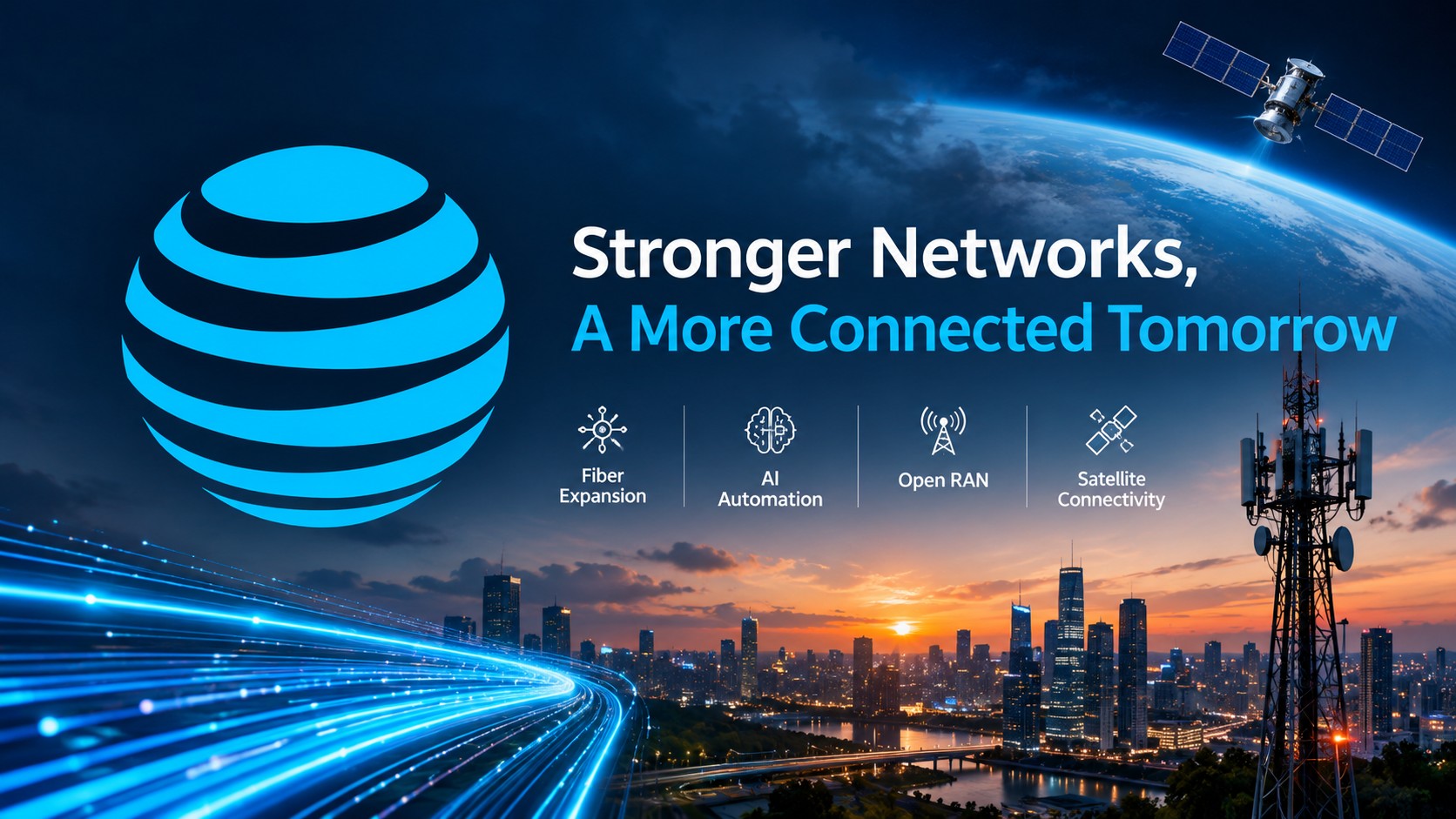
Network automation reduces human configuration error during routine operational software updates. AT&T partnered with Ericsson to deploy open radio access networks nationwide. This multiyear transformation standardizes open interfaces across mobile network infrastructure. Operators consolidated four separate management systems into one unified automation platform. This horizontal integration supports automated traffic steering, self-healing, and dynamic load balancing.
Subsequently, Ericsson expanded this automation platform to encompass core network operations. Artificial intelligence models monitor core event streaming data in real time. These automated cApps isolate software anomalies before disruptions spread across regional nodes. In addition, internal incident management AI reduced customer downtime by twelve million hours. Smart automation platforms fundamentally transform how carriers prevent systemic communication outages.
Satellite Integration and Disaster Recovery Protocols
Space-based communication options provide crucial connectivity layers during catastrophic ground infrastructure failures. For instance, AT&T collaborated with AST SpaceMobile to test direct-to-cell satellite connectivity. Unmodified commercial smartphones connect directly to low-Earth orbit satellites when offline. Subscribers retain text, voice, and emergency messaging capabilities during local outages. Commercial beta tests target initial availability during 2026 for public safety users.
Terrestrial redundancy protocols supplement satellite coverage through dedicated emergency dispatch fleets. The FirstNet program maintains over 190 deployable cell assets for emergency responders. Dedicated Band 14 spectrum ensures priority communication channels during high-congestion disaster events. AT&T equipped major transport hubs with generator infrastructure and tertiary connections. These layered hardware and software defenses ensure resilient communications across modern markets.
Support Our Work
Help us keep creating and maintaining our projects. We appreciate your support!
Ways to contribute:
Shop via Affiliate LinksSupport us at no extra cost to you while you shop.
Support on Ko-fiBuy us a coffee to keep the engine running!






Leave a Reply