

Launch Positioning and Hardware Rollout
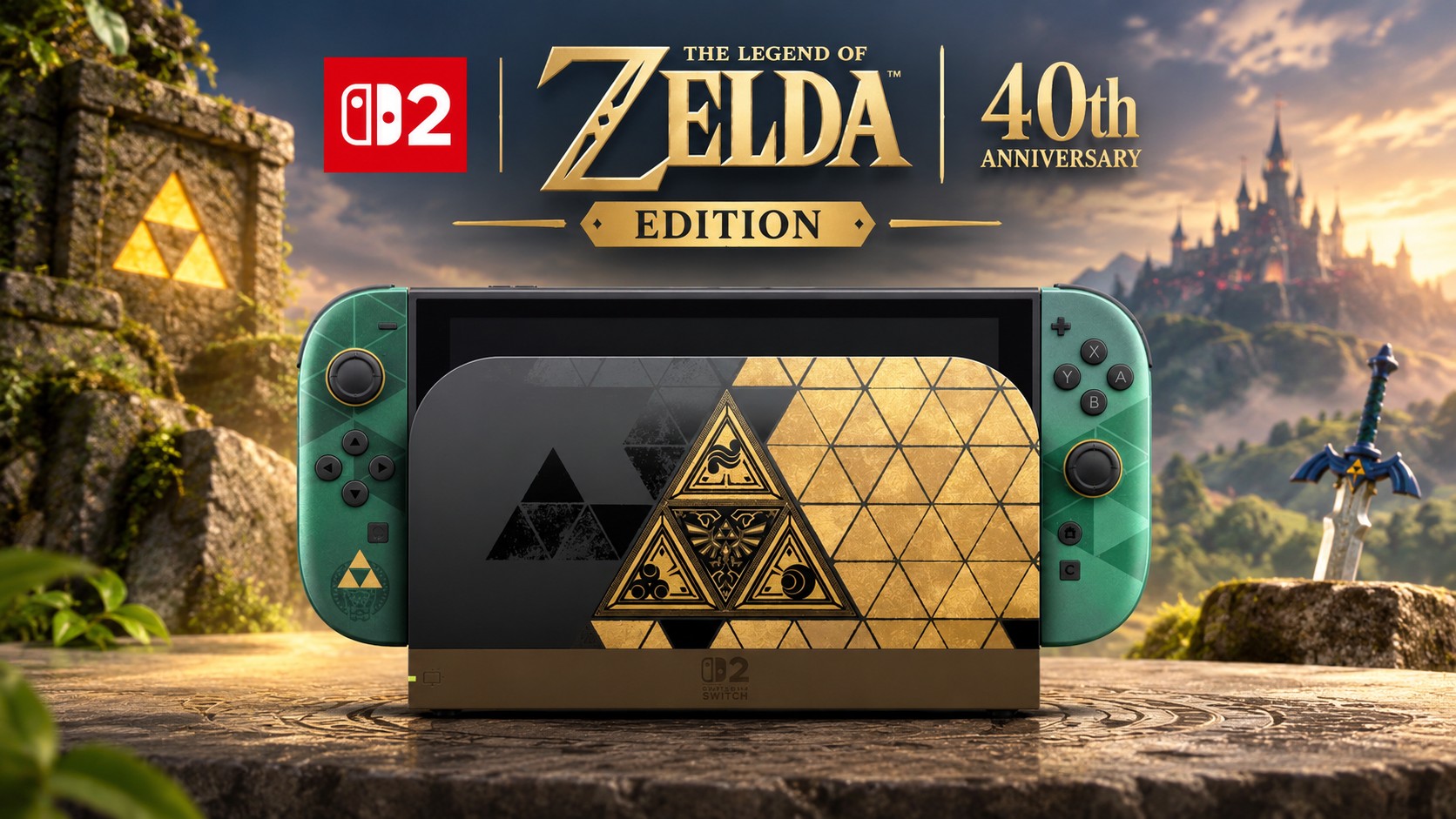
Nintendo released the Switch 2 Zelda Edition console system globally on October 29, 2026. This limited hardware commemorates the iconic adventure franchise’s 40th anniversary milestone. Notably, North American retailers list the flagship hardware bundle at $519.99. European distribution centers established local pricing at £434.99 across official outlets. Meanwhile, Asian retail channels priced the commemorative package at Rp 10.699.000.
Official retail packaging includes themed Joy-Con 2 controllers and an HDMI cable. However, Nintendo chose to sell software titles separately from console hardware units. Buyers must purchase complementary software titles to experience new game entries. Therefore, total initial hardware acquisition costs remain higher for collectors. Historical precedent highlights Nintendo’s unbundled strategy for limited edition console drops.
Hardware Architecture and Technical Specifications
The console features a striking black and gold aesthetic overall. Specifically, a golden Triforce emblem decorates the main TV docking station. Custom franchise symbols cover the entire back exterior of the handheld unit. Furthermore, the included Joy-Con 2 controllers display classic green and gold patterns. Magnetic connectors secure the controllers directly to the central handheld chassis.
Internal processing relies on Nvidia’s custom Tegra T239 Ampere silicon chip. Additionally, system memory expands to 12 gigabytes of LPDDR5X RAM. The handheld display presents a 7.9-inch 1080p LCD screen with 120Hz refresh capabilities. Consequently, docked video output delivers up to 4K resolution on compatible televisions. Internal UFS 3.1 flash storage provides 256 gigabytes for digital games.
Retail Supply Dynamics and Restock Management
Consumer demand depleted initial inventory allocations within minutes of release. Accordingly, major storefronts implemented scheduled inventory waves to manage traffic. Target confirmed digital restock events alongside in-store inventory drops. Simultaneously, Best Buy and Walmart managed physical store queues during launch week. Purchase limits restricted sales to single units per customer household.
Peripheral stock mirrored hardware scarcity across major electronic retailers. Separately, the standalone Zelda 40th Anniversary Pro Controller retails for $99.99. A premium controller bundle with display stand carries a $109.99 price tag. Instead of suppressing sales, supply constraints heightened secondary market resale values. Production facilities continue manufacturing units to meet sustained holiday consumer demand.
Ecosystem Impact and Software Integration
The hardware drop synchronized with major anniversary software announcements. Nintendo launched The Legend of Zelda: Ocarina of Time remake on November 5. Standard digital software editions retail at $59.99 on the Nintendo eShop. Physical game cards sell for $69.99 at North American retail stores. Hence, critical reviews praise the remake’s modern graphics and camera controls.
Visual enhancements showcase the raw processing power of the new platform. Moreover, high average selling prices boost overall hardware division margins. Collectors drive rapid adoption of special edition console inventory globally. Cross-promotional strategies strengthen Nintendo’s long-term market position. Industry analysts project strong earnings growth following successful seasonal hardware launches.
Strategic Industry Outlook
The commemorative hardware rollout demonstrates Nintendo’s effective premium pricing strategy. Indeed, strong ecosystem integration maintains brand equity across competitive console cycles. Robust supply chain management mitigates long-term retail inventory shortages effectively. Upgraded silicon components ensure backwards compatibility across legacy titles. Hardware innovations establish higher performance benchmarks for portable gaming devices.
Enthusiast demand continues driving rapid inventory turnover across digital outlets. Thus, strategic software pairings maximize long-term software attachment rates globally. Expanded internal storage supports growing digital software downloads efficiently. Nintendo reinforces its dominance in hybrid gaming console market segments. Platform stability positioning promises continued growth into future fiscal recording periods.
Support Our Work
Help us keep creating and maintaining our projects. We appreciate your support!
Ways to contribute:
Shop via Affiliate LinksSupport us at no extra cost to you while you shop.
Support on Ko-fiBuy us a coffee to keep the engine running!

Leave a Reply