
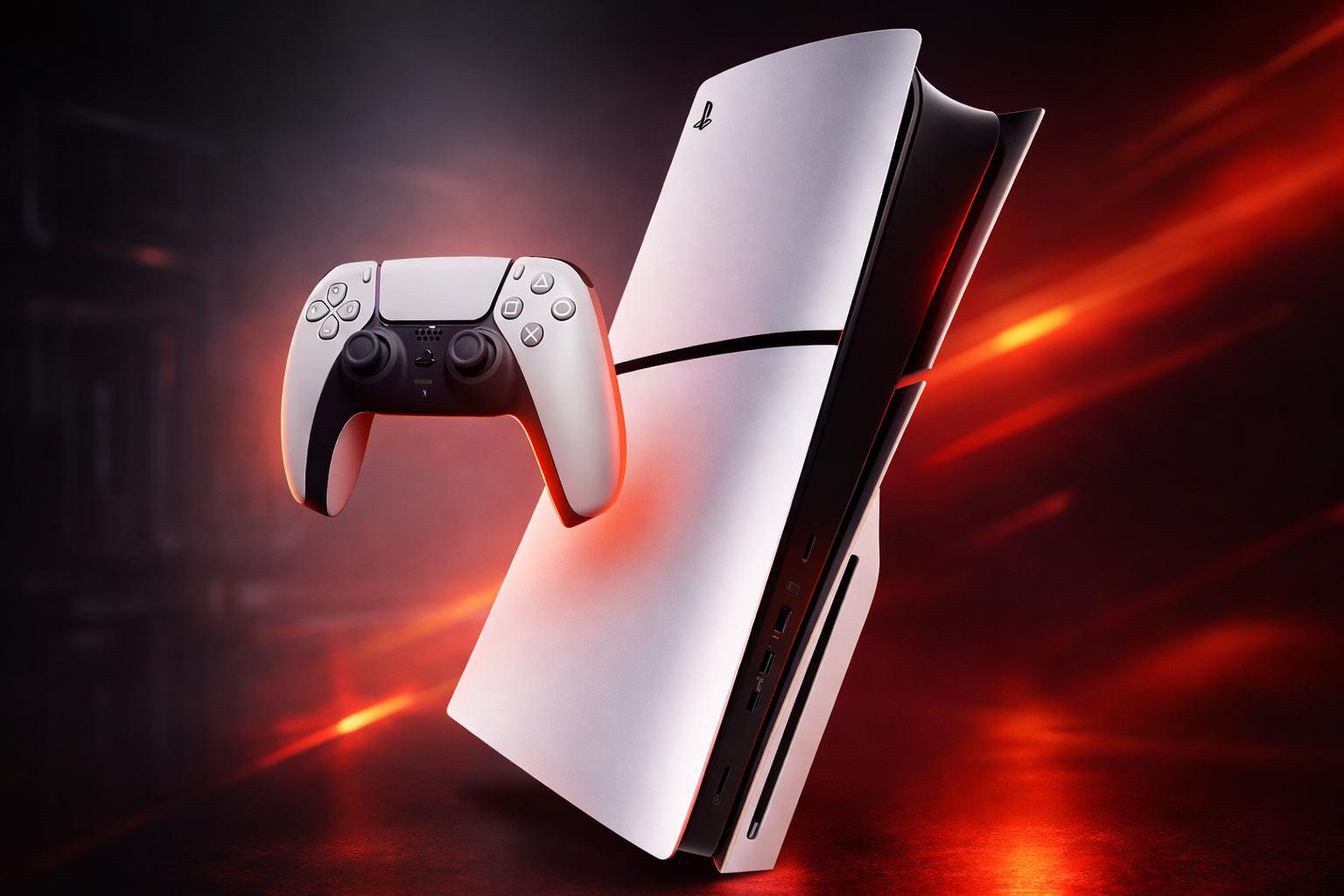
Welcome to the ultimate deep dive into the next generation of gaming. Currently, the internet is buzzing with incredible PS6 Leaks. We are seeing a flood of technical data from very reputable sources. Specifically, leaked documents from AMD have set the entire gaming community on fire. These files suggest that Sony is building something truly revolutionary for us. However, many fans are wondering if these claims are actually grounded in reality. Consequently, we have gathered every major detail to paint a clear picture. This console will likely redefine how we experience digital entertainment forever. Therefore, sit back and prepare for a massive breakdown of the PS6.

PS6 Leaks: Hardware and Architecture
First, let’s talk about the raw power hidden under the hood. According to recent leaks, Sony is sticking with its long-time partner, AMD. This partnership ensures that backward compatibility remains a top priority for everyone. Because of this, your current PS5 library will transition smoothly to the PS6. Furthermore, the console is expected to utilize the brand-new Zen 6 architecture. This CPU leap will provide a massive boost to processing speeds. Additionally, the graphics will likely be powered by a custom RDNA 5 GPU. Interestingly, some reports suggest this won’t be a standard off-the-shelf component. Instead, Sony is working with AMD to create a specialized gaming chipset. This chip is reportedly codenamed “Orion” within the internal development teams.
Beyond the CPU, the memory specifications are looking quite impressive as well. Latest leaks point toward a significant jump to GDDR7 RAM modules. This change will allow for much faster data transfer across the system. Specifically, we might see up to 30GB or even 40GB of total memory. In comparison, the PS5 feels like a modest starting point for developers. This extra headroom will enable much larger and more complex game worlds. Moreover, it allows for seamless multitasking between various intensive system applications. Consequently, loading screens might finally become a relic of the distant past.
Performance Targets: 4K at 120 FPS
Next, we must discuss the ambitious performance targets Sony is set to hit. PS6 Leaks suggest the PS6 aims for native 4K resolution at 120 FPS. While the PS5 promised this, it rarely delivered in demanding AAA titles. However, the PS6 hardware is specifically designed to make this the standard. Transitioning to this level of fluidity will make every movement feel lifelike. Furthermore, the inclusion of PSSR 2.0 is a complete game-changer for visuals. This proprietary AI upscaling tech will debut as a massive evolutionary step. It uses machine learning to sharpen lower-resolution images into stunning 4K clarity. Therefore, games can maintain high frame rates without sacrificing any visual fidelity.
Ray tracing is another area where the PS6 will truly shine bright. Current leaks suggest a performance boost of 6 to 12 times over PS5. This means we will finally see full path tracing in console games. Imagine realistic reflections and lighting that react perfectly to every single movement. Additionally, shadows will look soft and natural rather than pixelated or harsh. Because the hardware is so powerful, developers can use these features freely. They won’t have to choose between a “Performance” or “Quality” mode anymore. Instead, players will get the best of both worlds in every title. This level of immersion was previously only available on high-end gaming PCs.
The Release Date Mystery: 2027 or 2028?
Now, let’s address the big question regarding when we can buy it. Initially, many analysts predicted a standard seven-year cycle for the current generation. This would have placed the PS6 release right in late 2027. Nevertheless, a global memory shortage has recently complicated these internal corporate timelines. Some reports from Bloomberg suggested a potential delay into 2028 or 2029. Despite these worries, more recent PS6 Leaks tell a much more optimistic story. It appears Sony has already secured vital 3nm chip production with TSMC. Consequently, they are fighting hard to keep the 2027 launch window alive. Therefore, we might see the console on store shelves in November 2027.
However, if supply chain issues persist, early 2028 is a strong possibility. Sony CFO Lin Tao recently mentioned the PS5 is mid-lifecycle now. This statement supports a slightly longer wait for the next big jump. Regardless of the exact month, development is moving at a rapid pace. Developers are likely already receiving early dev kits to begin their projects. Because of this, the launch lineup could be the strongest in history. We expect to see sequels to massive franchises ready on day one. After all, Sony wants to ensure a very fast adoption rate.
Project Canis: The Rumored Handheld Companion
Wait, there is even more exciting news regarding a second device. Leaks have uncovered a project currently codenamed “Canis” at Sony’s headquarters. This appears to be a dedicated handheld gaming device for the PS6. Unlike the PlayStation Portal, this would be a fully native machine. This means it can run games locally without a constant Wi-Fi connection. Specifically, it might use a downscaled version of the PS6’s Zen 6 architecture. Therefore, you could take your AAA experiences with you on the go. Furthermore, it would offer seamless cross-save functionality with the main home console.
This strategy seems to be a direct response to the Steam Deck. Sony clearly sees the value in the growing portable gaming market. By launching a handheld alongside the PS6, they can capture more players. Additionally, it provides a more affordable entry point into the PlayStation ecosystem. While the main console targets enthusiasts, “Canis” targets the mobile-first gaming generation. Consequently, this dual-hardware launch could give Sony a massive competitive edge. We are eager to see if this handheld makes an official appearance soon.
The Price Factor of PS6 Leaks
Of course, we have to talk about the potential hit to your wallet. With such high-end specs, the manufacturing costs are definitely rising for Sony. Early rumors suggested a price point reaching as high as $600 or $700. However, newer leaks indicate Sony is aiming for a more competitive price. They might target a $499 or $549 starting price to ensure accessibility. To achieve this, they may sell the hardware at a loss initially. This is a common strategy to build a large user base quickly. Furthermore, they will rely on software sales and subscriptions to recoup costs.
There is also talk of a digital-only version being the primary model. By removing the disc drive, Sony can further reduce the retail price. Nevertheless, many collectors still prefer physical media for their gaming libraries. Therefore, an optional external disc drive might be sold as an accessory. This approach offers flexibility to different types of gamers across the globe. Regardless of the final price, the value proposition looks incredibly strong. People are generally willing to pay more for a true generational leap.
PS6 Leaks: Backward Compatibility and the Digital Library
One of the best leaks concerns the preservation of your current games. Sony has reportedly prioritized “multi-generational” backward compatibility for the PlayStation 6. This means it should play PS4 and PS5 games natively on day one. Because the architecture remains x86-based, the transition is technically much easier. Additionally, there are rumors about enhanced AI upscaling for these older titles. This would allow your favorite PS4 games to look better than ever. Consequently, your existing digital library instantly becomes more valuable on the new hardware.
There is even some speculation regarding PS3 emulation finally being solved. Due to the complex Cell processor, this has always been a challenge. However, the sheer power of the Zen 6 CPU might overcome this. If true, the PS6 could become the ultimate “all-in-one” PlayStation machine. Imagine playing every single generation of PlayStation on one sleek new console. Therefore, nostalgia and innovation would perfectly collide in this next-generation system. This would be a massive win for game preservation and long-term fans.
Innovation in Input: The New DualSense
Furthermore, we cannot forget about the controller that bridges the experience. Patents suggest a “buttonless” concept for the next-generation DualSense controller. This design might use haptic touch surfaces instead of traditional plastic buttons. While this sounds futuristic, it could provide much more customization for players. You could potentially remap the entire surface layout for different gaming genres. Additionally, the haptic feedback is expected to be even more precise and immersive. Imagine feeling the texture of the ground or the recoil of a weapon.
However, some fans are worried about the loss of physical tactile feedback. Consequently, Sony might stick to a more traditional layout with enhanced internals. We expect to see significantly improved battery life in the new models. This has been a consistent point of feedback for the current DualSense. Therefore, a larger battery and more efficient components are almost a certainty. The controller will likely remain the gold standard for immersion in the industry.
Competitive Landscape: PS6 Leaks vs. The Next Xbox
Finally, we must look at how the PS6 stacks up against the competition. Microsoft is reportedly working on a “PC-hybrid” console for their next generation. This could mean the next Xbox is even more powerful than the PS6. Nevertheless, Sony’s focus on specialized hardware and exclusive games remains their strength. They aren’t just selling a box; they are selling an ecosystem. With the combination of “Orion” and “Canis,” Sony’s lineup looks very diverse. Consequently, they are prepared for a multi-front battle in the console wars.
Ultimately, the leaks suggest that Sony is not playing it safe this time. They are pushing for massive leaps in AI, ray tracing, and portability. While we wait for an official reveal, these details give us plenty to discuss. The next two years will be incredibly exciting for every single gamer. Therefore, stay tuned as we continue to track every new development. The future of PlayStation is looking brighter—and faster—than we ever imagined.
The Generational Gap: PS5 Pro vs. PS6 Leaks
Absolutely. To help you visualize the massihttps://amzn.to/3OXDIBhve leap Sony is planning, here is a detailed breakdown. This table compares the confirmed specifications of the current PS5 Pro with the latest leaked data for the PlayStation 6 (Orion).
| Feature | PlayStation 5 Pro (Confirmed) | PlayStation 6 “Orion” (Leaked) |
| CPU Architecture | AMD Zen 2 (8-core) | AMD Zen 6 (8-10 core hybrid) |
| GPU Architecture | RDNA 2/3 Hybrid | AMD RDNA 5 (Custom) |
| Compute Units (CUs) | 60 CUs | 42–54 CUs (Higher Efficiency) |
| Memory (RAM) | 16GB GDDR6 + 2GB DDR5 | 30GB – 40GB GDDR7 |
| Memory Bandwidth | 576 GB/s | 640 GB/s – 768 GB/s |
| AI Upscaling | PSSR 1.0 | PSSR 2.0 (Native Integration) |
| Target Resolution | 4K (Upscaled) at 60 FPS | Native 4K at 120 FPS |
| Ray Tracing | 2x – 3x faster than PS5 | 6x – 12x faster than PS5 |
| Power Draw (TBP) | ~390W | ~160W (High Efficiency) |
| Estimated Price | $699 | $499 – $599 |
Why These Numbers Matter
Interestingly, the PS6 may actually feature fewer Compute Units than the PS5 Pro. Nevertheless, the jump to the RDNA 5 architecture means each unit is significantly more powerful. Because Sony is prioritizing efficiency, the console targets a much lower power draw of 160W. This suggests a cooler, quieter machine that still delivers triple the rasterization performance. Furthermore, the massive increase in GDDR7 memory will allow developers to use high-resolution textures without hitting a bottleneck.
The Handheld Factor: “Project Canis”
While the home console is a beast, the leaked “Canis” handheld is equally intriguing. It reportedly features 16 RDNA 5 CUs, which would make it twice as powerful as a Steam Deck. Consequently, Sony might be the first to offer a handheld that truly plays modern AAA titles natively. This dual-launch strategy aims to cover both the hardcore living room gamer and the mobile enthusiast. Therefore, the ecosystem becomes much more flexible for the average user.





Leave a Reply