
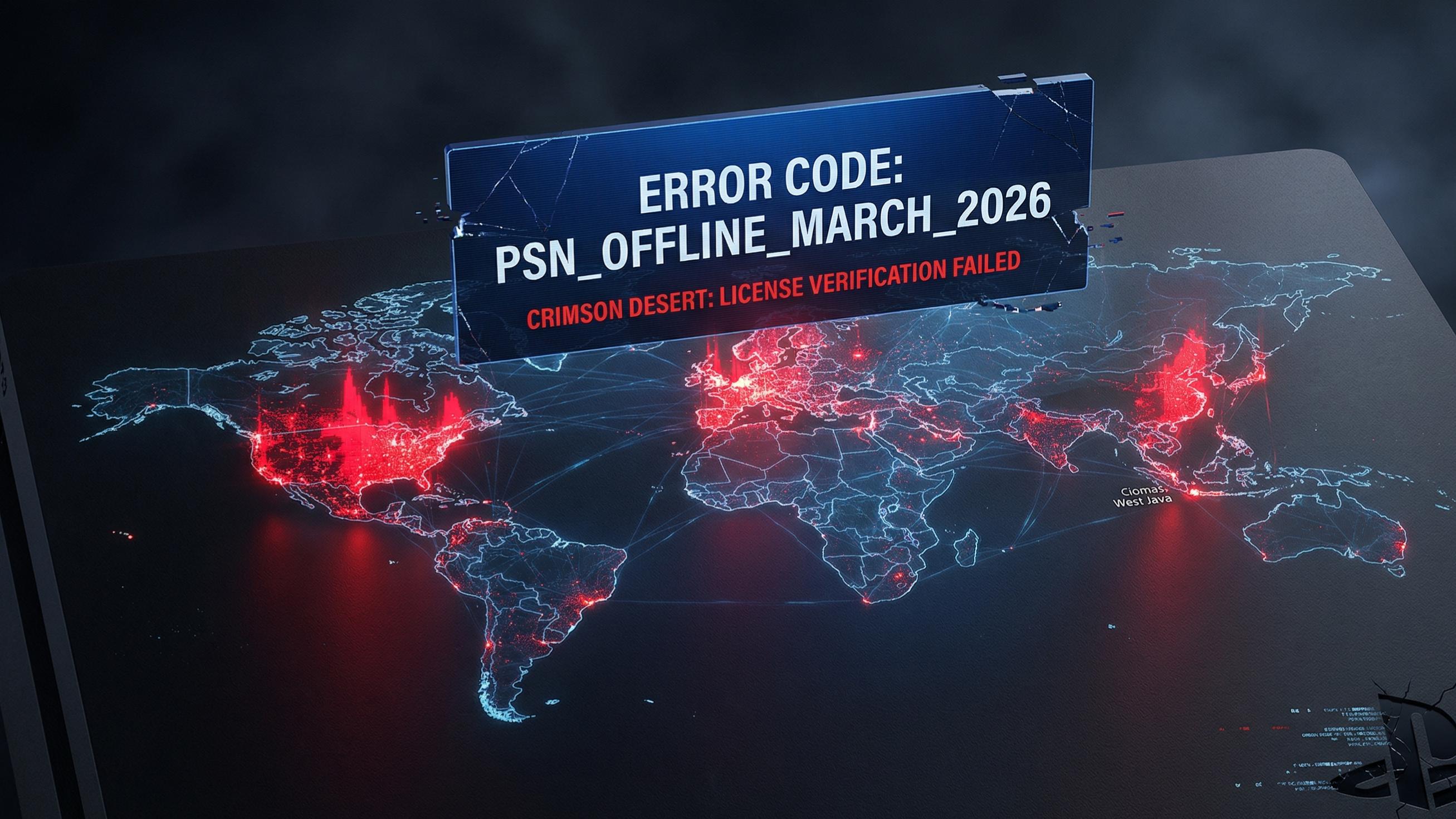
Suddenly, the blue light of millions of consoles flickered into a void of connectivity. Therefore, a massive wave of confusion swept through the global gaming community this weekend. Consequently, the PlayStation Network experienced a significant outage starting late Saturday, March 21, 2026. Furthermore, this disruption crippled essential services for both PlayStation 4 and PlayStation 5 users. However, Sony worked frantically behind the scenes to restore the pulse of its digital ecosystem. Meanwhile, players around the world stared at error codes instead of breathtaking game worlds.
Initially, the first reports of trouble surfaced around 4:16 PM ET. Subsequently, the official PlayStation Service Status page confirmed the growing crisis by 4:59 PM. Because of this, the “Gaming and Social” category turned a dreaded shade of red. Additionally, features like Trophies, Game Help, and Game Streaming became completely inaccessible. Naturally, social media platforms like X and Reddit exploded with frustrated queries and memes. On the other hand, some lucky players remained online while others were locked out.

Crimson Desert and the Timing of Terror
Specifically, the timing of this outage could not have been worse for Pearl Abyss. For example, their highly anticipated open-world epic, Crimson Desert, had just launched worldwide. However, many eager fans found themselves unable to even verify their licenses. Moreover, early reviews for the game on base PS5 hardware were already quite polarizing. Thus, the server issues added another layer of misery to an already rocky launch.
Indeed, players looking to explore the vast world of Pywel were left stranded. Instead of battling mythical beasts, they battled the persistent error code WS-114119-7. Furthermore, many critics noted that the game suffered from blurry textures and frame drops. Consequently, the inability to play at all felt like a final insult to the community. Nevertheless, some users managed to bypass the login screen by using offline modes. Unfortunately, those wanting the full social experience were forced to wait for Sony’s fix.
The Technical Tangle: Error Codes and Data
Surprisingly, the sheer scale of the outage caught many industry analysts off guard. According to Downdetector, reports peaked at over 50,000 incidents within the first hour. Furthermore, the heat maps showed major clusters in North America, Europe, and Japan. Consequently, the hashtag #PSNDown began trending globally within minutes of the failure. Meanwhile, Sony technicians investigated a suspected “ripple effect” within their backend authentication servers.
Particularly, the error code NP-104620-3 haunted those trying to access their digital libraries. Therefore, thousands of digital-only console owners realized the vulnerability of their purchases. Additionally, third-party publishers like Activision and Electronic Arts felt the impact. Because many of their titles rely on PSN for multiplayer, games like Overwatch 2 and FIFA went dark. Thus, the outage did not just affect Sony’s internal titles. Instead, it paralyzed a massive portion of the modern gaming industry for several hours.
A History of the PlayStation Network Down: From 2011 to Today
Honestly, veteran PlayStation fans have seen this movie many times before. For instance, the infamous 2011 data breach remains a dark mark on Sony’s record. Furthermore, a similar 24-hour blackout occurred as recently as February 2025. Consequently, the community remains sensitive to any sign of server instability. However, Sony has significantly improved its response time over the last decade. Therefore, most modern outages are resolved within a few hours rather than several weeks.
Additionally, the 2026 incident occurred during a period of transition for the company. Specifically, Sony is currently preparing for a major branding overhaul of its network services. Therefore, some insiders speculate that backend maintenance for this transition might have triggered the crash. Nevertheless, Sony has not officially confirmed the root cause of the weekend’s failure. Instead, they simply urged patience while their engineers performed “system updates.”
The Vanishing Brand: Goodbye “PSN”
Interestingly, this outage might be one of the last times we use the name “PSN.” According to leaked internal emails, Sony plans to retire the “PlayStation Network” branding by September 2026. Therefore, the service will simply be known as “PlayStation” across all platforms. Furthermore, this change aims to unify the branding for console, PC, and mobile offerings. Consequently, the iconic “PSN” logo is already disappearing from some PS5 system menus.
Moreover, the shift reflects Sony’s evolving strategy in a “platform-agnostic” world. Since more PlayStation titles are arriving on PC, a console-specific name feels outdated. Therefore, the company wants to “properly capture the breadth” of its digital ecosystem. However, this rebranding is purely visual and will not change how services function. Additionally, your friends list, trophies, and digital purchases will remain entirely safe. Thus, the transition should be seamless for the average user.
Starfield and the Changing Tide of Exclusives
Furthermore, the gaming landscape is shifting in other ways this spring. For example, Bethesda recently confirmed that Starfield will land on PS5 on April 7, 2026. Consequently, many fans see this as the definitive end of traditional “console wars.” Additionally, the PS5 version will launch alongside the massive Free Lanes update. Therefore, PlayStation owners will receive a much more polished experience than early Xbox adopters.
However, some rumors suggest Sony is simultaneously pulling back on its own PC ports. According to industry insider Jason Schreier, Sony may limit PC releases for certain single-player exclusives. Specifically, they want to protect the value of their hardware in an increasingly competitive market. Therefore, while Starfield arrives on PS5, future titles like Marvel’s Wolverine might stay console-exclusive for longer. Consequently, the balance of power between platforms continues to fluctuate.
The Tech Horizon: PSSR2 and PS5 Pro
Moreover, Sony is not just focusing on software and branding changes. Specifically, a major graphics upgrade known as PSSR2 is scheduled for late 2026. Therefore, PS5 Pro owners can expect a significant boost in image quality and performance. Additionally, this technology stems from “Project Amethyst,” a secret collaboration with AMD. Consequently, the new algorithm will rival the quality of high-end PC upscaling like DLSS 5.
Furthermore, Mark Cerny recently teased that ML-based frame generation is coming to the platform. Thus, even the most demanding games could soon run at a smooth 60 or 120 FPS. However, these features will likely require specific hardware found only in the Pro models. Therefore, base PS5 owners may start to feel a performance gap as the generation matures. Nevertheless, Sony promises that the standard console will still receive critical system updates.
How to Fix Your Connection: A Quick Guide to Solve the PlayStation Network Down
If you are still experiencing lingering issues, do not panic just yet. Instead, try performing a full power cycle on your console and router. Furthermore, checking for the latest system software update often resolves persistent bugs. Additionally, some users found success by manually clearing their PSN cache in the settings menu. Therefore, simple troubleshooting steps can often save you from a long call with support.
- Restart your console completely.
- Check the status at status.playstation.com.
- Verify your internet speed through the network settings.
- Apply any pending updates for the system or your games.
- Rebuild your database in Safe Mode if the lag persists.
Final Thoughts on the PlayStation Network Down: The Cost of Always-Online
Ultimately, this weekend’s outage serves as a stark reminder of our digital dependence. Therefore, the “always-online” nature of modern gaming remains a double-edged sword. Furthermore, when the servers fail, our expensive hardware becomes little more than a plastic paperweight. Consequently, calls for better offline support and preservation continue to grow louder. However, the convenience of the cloud ensures that the industry will likely never look back.
Meanwhile, Sony continues to refine its infrastructure ahead of the 2026 branding shift. Therefore, we can only hope that future outages are even shorter and less frequent. Additionally, the arrival of massive titles like Starfield will surely put the network to the ultimate test. Thus, the resiliency of the “PlayStation” brand depends on its ability to keep the lights on. For now, the servers are green, the trophies are syncing, and the digital world is whole again.





Leave a Reply