
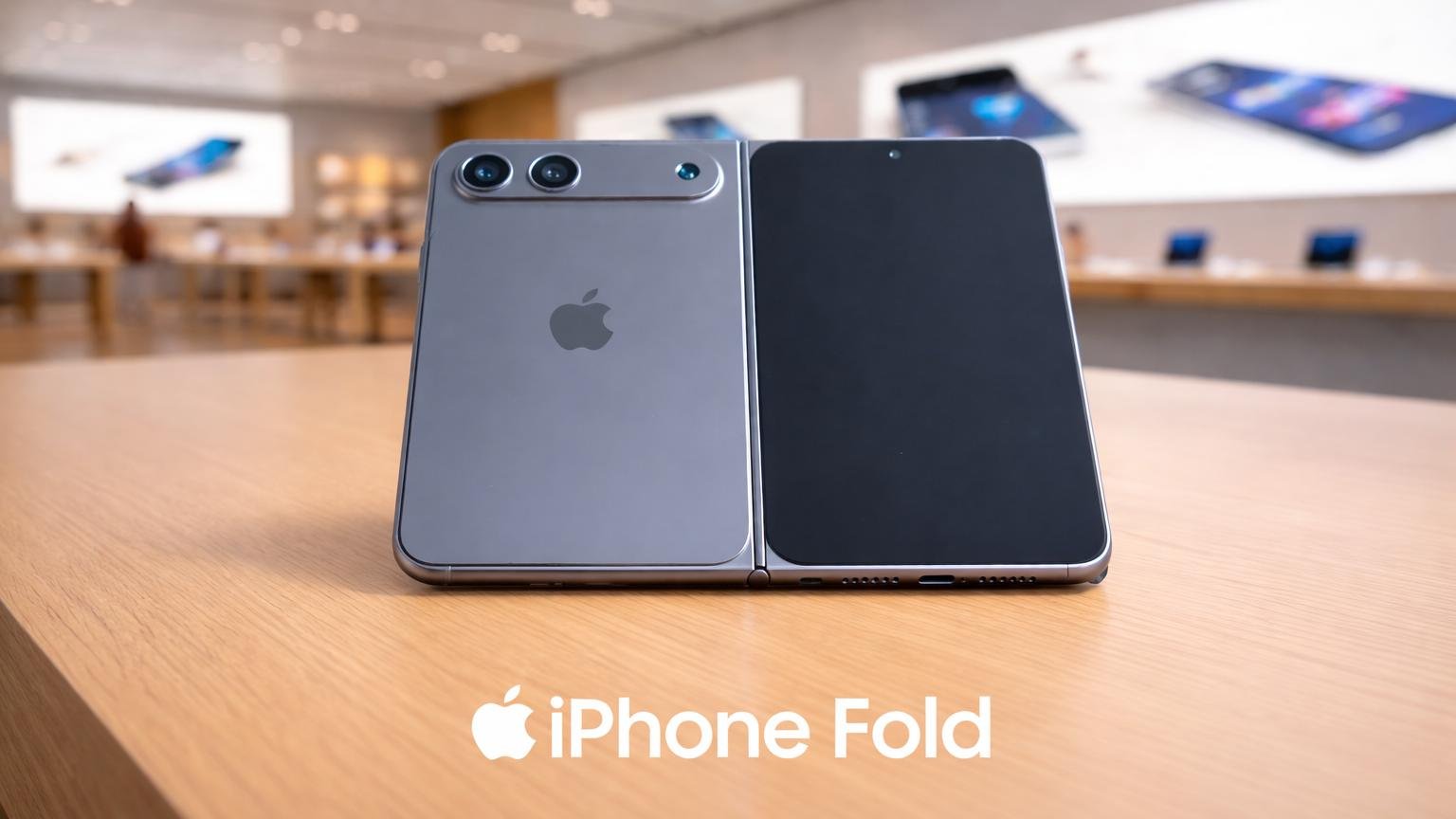
Apple fans have waited years for an iPhone Fold. They watched Samsung iterate through eight generations. They watched Huawei push boundaries with slim designs. Meanwhile, Apple remained remarkably silent about its plans. Rumors of a folding device first surfaced in 2017. However, the technology simply was not ready then. Apple famously demands perfection before any major launch. Finally, that long-standing silence is finally breaking today.

New reports suggest the wait is almost over. Reliable analysts now point toward a 2026 debut. This timing aligns with recent supply chain movements. Consequently, the tech world is buzzing with anticipation. Apple typically enters markets late to dominate them. They want to solve every existing foldable flaw. This strategy has worked for them before. For instance, the iPod and iPhone followed this pattern.
The foldable market is currently maturing rapidly. Competitors have already fixed many early hardware issues. Specifically, screen durability and hinge reliability have improved. Apple is now ready to strike with precision. Their entry will likely redefine the entire category. Moreover, it could signal the end of traditional tablets. We are witnessing the beginning of a new era.
Decoding the Mysterious V68
Inside Cupertino, the project is very real. Engineers refer to the device as V68. This is the official internal code name. Consequently, supply chain leaks are becoming more frequent. Multiple sources confirm that development has accelerated recently. Apple is no longer just “researching” the concept. Instead, they are moving toward actual mass production. Furthermore, the design has reached a final stage.
Mark Gurman recently confirmed the 2026 timeline. September 2026 remains the primary target for launch. This date coincides with the iPhone 18 series. However, some shipments might slip into December. Apple often separates revolutionary products from standard releases. Recall how the iPhone X launched in 2017. Similarly, the V68 might follow a staggered rollout. This allows for better quality control during manufacturing.
Supply chain partners are already receiving specific orders. Foxconn is reportedly preparing new assembly lines now. Additionally, Samsung Display is providing the primary panels. These are not standard folding screens, however. Apple requested a custom solution for this project. They want to avoid the common pitfalls of competitors. Therefore, the V68 is a bespoke engineering marvel. It represents years of hidden laboratory work.
The Record-Breaking Thinness
Design remains the most critical factor for Apple. They want a phone that feels “normal.” Most foldables are currently too thick when closed. Consequently, Apple focused heavily on reducing the chassis. Leaked schematics suggest a thickness of 4.5mm. This applies to the device in its unfolded state. For comparison, that is incredibly thin for any gadget. It rivalries the thickness of the newest iPad Pro.
Maintaining structural integrity at 4.5mm is very difficult. Apple is using a titanium and aluminum frame. This combination offers strength without adding much weight. Furthermore, the internal components require a radical layout. Engineers moved the mainboard to the right side. This avoids crossing the hinge with thick cables. Essentially, they are rethinking how a phone is built. Every millimeter of internal space is strictly utilized.
MagSafe compatibility presented a significant engineering challenge here. Recent dummy models showed no internal magnet rings. However, third-party cases include magnets for accessory support. This suggests a clever trade-off by Apple’s team. They might offload magnets to the case itself. This keeps the phone slim and light. Consequently, the device feels more like a standard iPhone. It fits perfectly in a pocket without bulk.
Liquid Metal Hinge Technology
The hinge is the heart of any foldable. Existing designs often feel mechanical or slightly fragile. Apple is reportedly using a liquid metal hinge. This material is an amorphous alloy with high strength. It offers better elasticity than traditional steel or titanium. Consequently, it prevents permanent deformation over time. The hinge should stay smooth for years of use. This represents a massive leap in durability standards.
Apple is targeting a near-invisible screen crease. Most competitors have a visible “valley” in the middle. Apple’s target depth is less than 0.15mm. Furthermore, the crease angle is restricted to 2.5 degrees. This makes the fold nearly impossible to feel. They are using specialized laser scanning for every part. This ensures a perfect fit for the hinge surfaces. Ultimately, the user experience will feel truly seamless.
Liquid metal also helps with heat dissipation across halves. This is vital for high-performance gaming and multitasking. Meanwhile, the hinge mechanism is surprisingly compact. It leaves more room for the battery and speakers. Apple is filing numerous patents for this specific design. They want to lock down this innovation for years. No other manufacturer currently uses this exact material. It will be a major selling point.
A Breakthrough in Display Tech
The inner display measures approximately 7.8 inches. This size is nearly identical to an iPad mini. Consequently, it provides a massive canvas for productivity. The panel uses LTPO OLED technology for efficiency. It supports a variable refresh rate up to 120Hz. Furthermore, the brightness levels will set new industry records. Apple is working closely with Samsung Display on this. They are using an 8.6-generation production process.
Samsung’s new panels are more efficient than older ones. They use less power while delivering more vibrant colors. However, the most impressive feature is the “self-healing” coating. This layer helps the screen recover from minor scratches. Specifically, it uses a heat-reactive material to fill gaps. This addresses a common complaint about soft folding screens. Therefore, users can worry less about fingernail marks. It adds a layer of much-needed confidence.
The outer display is equally impressive and functional. It features a 5.3-inch screen for one-handed use. This screen has a wide 4:3 aspect ratio. Most foldables use very narrow cover screens. Consequently, typing on them feels cramped and difficult. Apple’s wider design feels like a standard phone screen. This ensures the device is useful even when closed. It is a more practical approach to design.
Powering the Future: A20 Pro
The iPhone Fold will debut with the A20 Pro. This chip uses a cutting-edge 2nm manufacturing process. Consequently, it offers incredible power with very low heat. Performance will likely lap every current Android foldable. Apple is optimizing the silicon for dual-screen tasks. Furthermore, the chip includes a massive Neural Engine. This is essential for the new Apple Intelligence features. AI will be central to the user experience.
Memory is also seeing a significant upgrade here. The device will feature at least 12GB of RAM. This is the highest ever for an iPhone. More RAM is necessary for intensive multitasking scenarios. For instance, running three apps at once requires it. Specifically, Apple wants to ensure zero lag during transitions. Everything must feel fluid and instantaneous at all times. This hardware ensures the phone stays fast for years.
Thermal management is a priority for the A20 Pro. Folding designs make it harder to vent heat. However, the liquid metal hinge assists with cooling. The large surface area of the 7.8-inch screen helps. Consequently, the phone can maintain peak speeds longer. This is great for mobile gamers and video editors. Apple is pushing the limits of mobile computing here. It is more than just a phone.
The Silicon-Carbon Battery Revolution
Battery life is a major hurdle for foldables. Driving two screens requires a massive amount of power. Apple is implementing silicon-carbon anode battery technology. This is a significant departure from traditional lithium-ion. Consequently, the battery has a much higher energy density. It allows for a larger capacity in a smaller space. Reports indicate a massive 5,500mAh total capacity.
This is the largest battery ever in an iPhone. It ensures all-day battery life even with heavy use. Furthermore, the technology improves charging speeds and longevity. Silicon-carbon batteries degrade slower than standard phone batteries. Therefore, the device will stay healthy for longer. This is crucial for a phone costing $2,000. Apple wants to ensure long-term value for buyers. It is a smart engineering investment for them.
The battery is split into two separate cells. These cells are placed in each half of the phone. This balances the weight of the device perfectly. Consequently, it feels stable in the hand when unfolded. One-sided weight often makes large phones feel awkward. Apple’s balanced approach solves this ergonomics problem entirely. Every detail is carefully considered for the user’s comfort.
Camera Systems and Variable Aperture
Photography remains a top priority for Apple’s flagship. The iPhone Fold will feature a dual 48MP setup. Specifically, it includes a wide and ultra-wide lens. These cameras are arranged horizontally on the back. This layout is unique to the foldable model. Furthermore, Apple is introducing a variable aperture system. This mimics the behavior of professional DSLR cameras. It allows for better control over light and depth.
Variable aperture is perfect for low-light photography. It can open wider to capture more detail. Conversely, it can close for sharper landscape shots. This tech is reportedly coming to the iPhone 18. Consequently, the Fold will share this premium hardware. Apple wants the Fold to be their best camera. It is not just a gimmick or toy. Professional creators will find it very useful for work.
The selfie cameras are also receiving an upgrade. A punch-hole camera sits on the outer display. Meanwhile, the inner screen uses an under-display sensor. This ensures a truly full-screen experience when unfolded. Apple has finally perfected under-display camera quality for 2026. Consequently, there is no notch or island inside. It looks incredibly futuristic and clean to the eye.
Software of the iPhone Fold: A New Era for iOS
A foldable phone needs specialized software to work. Apple is reportedly developing a “Foldable iOS” variant. This software blends elements of iOS and iPadOS. Consequently, it handles the transition between screens perfectly. When you open the phone, apps expand instantly. This is what Apple calls “Continuity Flow.” Furthermore, multitasking will be much more intuitive and powerful. You can drag and drop between open windows.
A new taskbar will appear at the bottom. This looks similar to the dock on macOS. It allows for quick switching between favorite apps. Specifically, it only appears when the screen is unfolded. When closed, it reverts to standard iOS behavior. Therefore, the learning curve is very low for users. It feels familiar yet offers new capabilities for power users. Apple is prioritizing ease of use above all.
The software also supports a “Laptop Mode” configuration. You can fold the screen to 90 degrees. The bottom half becomes a keyboard or controller. Meanwhile, the top half displays the main content. This is perfect for video calls or gaming. Consequently, you do not need a stand to use it. It is a versatile tool for various situations. This software flexibility defines the foldable experience.
Hardware Comparison of the iPhone Fold
To understand the Fold, we must compare it. It sits at the very top of Apple’s range. It is more expensive than the iPhone 18 Pro. However, it offers a much larger screen area. It is basically an iPhone and iPad in one. Therefore, the value proposition is quite high for some. The following table highlights the key rumored differences.
Rumored Specifications Comparison
| Feature | iPhone 18 Pro | iPhone Fold (Ultra) |
| Main Display | 6.3-inch OLED | 7.8-inch Foldable OLED |
| Cover Display | N/A | 5.3-inch OLED |
| Processor | A20 Pro | A20 Pro |
| RAM | 8GB | 12GB |
| Battery | 4,200mAh | 5,500mAh (Si-C) |
| Thickness | 8.25mm | 4.5mm (unfolded) |
| Biometrics | Face ID | Side Touch ID |
| Price | $1,099 | $1,999 |
Pricing Strategy and Market Position of the iPhone Fold
Apple is positioning this as an “Ultra” luxury. Consequently, the price tag will be quite high. Starting prices are expected to be $1,999. This makes it the most expensive iPhone ever. However, it is aimed at early adopters and professionals. Apple expects high demand despite the steep cost. They are only producing limited quantities at first. This maintains the device’s exclusive and premium status.
The high price covers the massive R&D costs. Developing a liquid metal hinge is not cheap. Furthermore, the silicon-carbon battery adds to the bill. Specifically, Apple wants to avoid a budget foldable. They are not interested in the mid-range market. Therefore, they are focusing on the absolute high end. They believe customers will pay for a “perfect” foldable. It is a bold but calculated financial move.
Some analysts suggest a “Pro Max” trade-in program. This would make the Fold more accessible to fans. Meanwhile, carriers will offer aggressive financing options for it. Apple wants to move millions of units eventually. However, 2026 is about proving the technology works. They want to set the standard for everyone else. Success here ensures the future of the iPhone.
The Competition Landscape
Samsung is currently the king of the foldables. They have the Galaxy Z Fold 8 coming. However, their design has become somewhat iterative lately. Many users are bored with the same look. Consequently, Apple has a huge opportunity to disrupt. They are offering a thinner and more polished device. Furthermore, the Apple ecosystem is a massive advantage here. Your Apple Watch and Mac work perfectly with it.
Honor and Huawei are also major players now. Their hardware is actually very impressive and thin. For instance, the Magic V6 is incredibly light. Apple is reportedly benchmarked against these specific Chinese models. Specifically, they want to beat them on build quality. Chinese foldables often lack the software polish of iOS. Apple hopes their software will be the differentiator. It is a battle of hardware vs. software.
The foldable market is expected to grow 30%. This surge is driven almost entirely by Apple’s entry. When Apple joins a category, everyone pays attention. Consequently, developers will start making better foldable apps now. This “Apple Effect” will benefit the whole industry. Even Samsung users might see better apps soon. Competition is good for every single tech consumer.
Supply Chain Secrets and Hurdles of the iPhone Fold
Apple’s supply chain is a global miracle. However, the Fold presents unique logistical challenges for them. Mass producing liquid metal parts is very slow. Only a few factories can handle the process. Furthermore, the 2nm chip yield is still improving. Any delay in parts could push the launch. Apple is reportedly stockpiling components right now. They want to avoid a launch day shortage.
Samsung Display is the primary screen supplier for now. However, Apple is also talking to LG Display. They want to diversify their supply chain quickly. This helps them negotiate better prices and terms. Specifically, it prevents a monopoly on their most vital part. Consequently, the “iPhone Fold” will have high-quality screens. Apple’s quality control teams are living in the factories. They check every single hinge for imperfections.
The final assembly will likely happen at Foxconn. They have the most experience with complex Apple builds. Interestingly, some production might move to India soon. This helps Apple avoid certain tariffs and taxes. Therefore, the global nature of the project is clear. It takes a world to build an iPhone. This is Apple’s most complex product yet. We are seeing the result of global cooperation.
The Verdict on the Future of iPhone Fold
The iPhone Fold is no longer a myth. It is a concrete project with a deadline. 2026 will be a historic year for Apple. They are finally embracing the foldable future. Consequently, the smartphone landscape will change forever. This device represents the ultimate expression of mobile tech. It is thin, powerful, and incredibly versatile. Most importantly, it solves the “crease” problem.
Will it replace the standard iPhone? Probably not for several more years at least. The high price will keep it niche initially. However, it will eventually become the new standard. As prices fall, more people will switch over. Essentially, we are seeing the prototype of 2030. Apple is playing the long game with V68. They are building a legacy, not just a phone. The wait is nearly over for us.
Get your wallets ready for September 2026. This launch will be the biggest in a decade. Furthermore, the excitement is already palpable in the industry. Apple is ready to prove the doubters wrong again. They are not late; they are just on time. The foldable revolution is finally starting for real. We cannot wait to hold it ourselves. It is going to be a wild ride.





Leave a Reply