
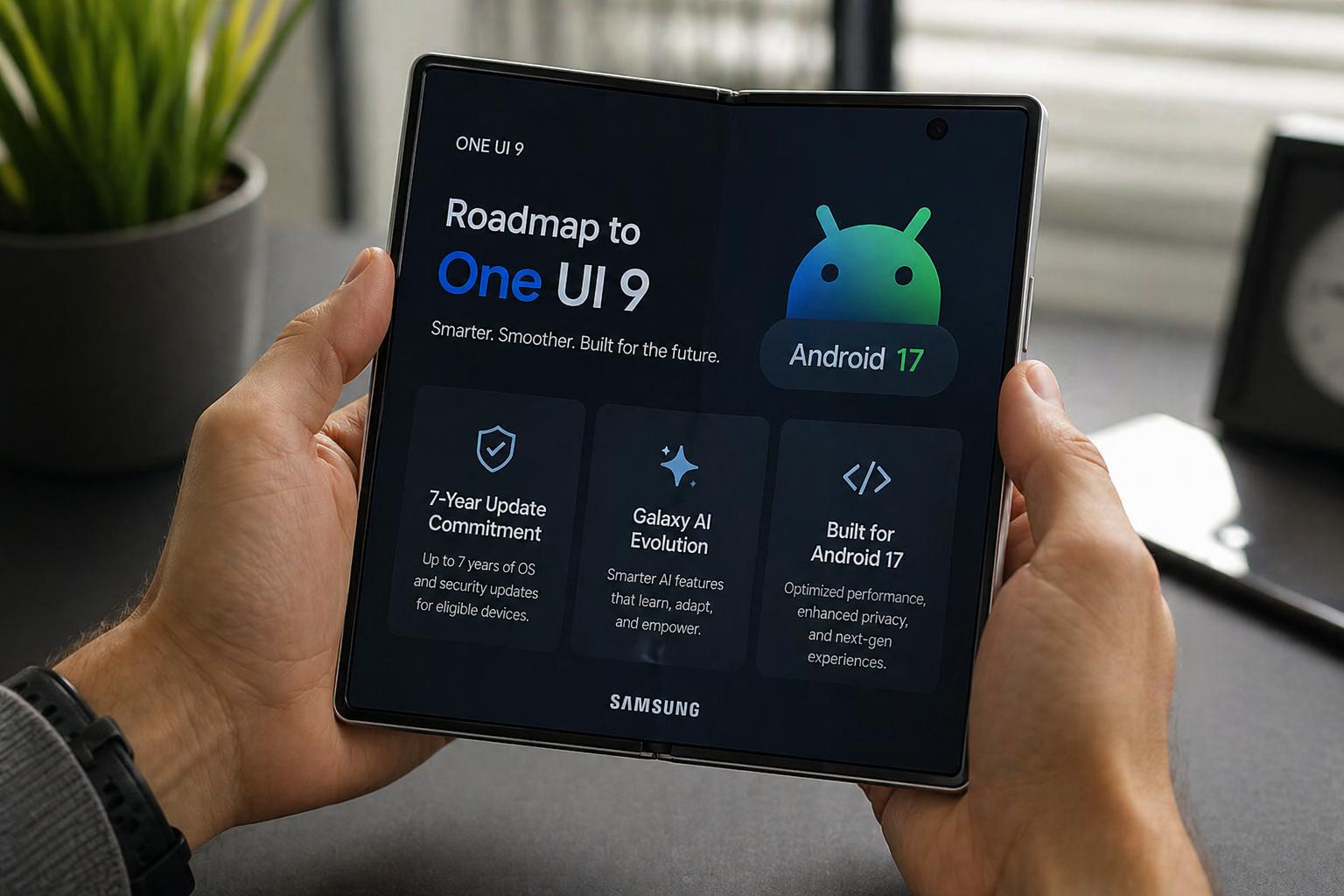
Samsung recently changed the landscape of mobile software support. Specifically, the company now promises seven years of updates for its flagship devices. This bold commitment ensures that the Galaxy S24 series will eventually run One UI 9. Consequently, users can expect a significantly longer lifespan for their premium smartphones.

This strategic shift highlights Samsung’s confidence in its hardware durability. Meanwhile, the software team is already laying the groundwork for future innovations. Instead of focusing only on immediate gains, the company looks toward 2027. Therefore, One UI 9 represents a major milestone in this multi-year journey.
A Foundation Built on Android 17
The development of One UI 9 will rely heavily on Google’s Android 17. Historically, Samsung aligns its custom interface with the latest Android versions. Therefore, the core features of One UI 9 will stem from Google’s future architectural changes. Meanwhile, Samsung will add its unique identity to the software layer.
Google continues to refine the underlying efficiency of the Android platform. Consequently, future versions will likely prioritize battery life and privacy even further. Furthermore, Samsung plans to integrate these core improvements into One UI 9 seamlessly. Ultimately, this partnership ensures a stable and high-performance experience for all users.
The Role of Galaxy AI in One UI 9
Artificial intelligence currently dominates the roadmap for Samsung’s mobile ecosystem. Notably, the company recently acquired Oxford Semantic Technologies to boost its AI capabilities. This acquisition will likely influence the intelligence found within One UI 9. Thus, the software will become more proactive and context-aware over time.
Instead of simple automation, future AI will understand complex user patterns. Moreover, Samsung aims to process more data locally on the device. This approach enhances privacy while improving response speeds significantly. Consequently, One UI 9 will likely feature the most advanced version of Galaxy AI yet.
Hardware Synergy and Software Longevity
The success of One UI 9 depends on the hardware inside current devices. For instance, the Snapdragon 8 Gen 3 chip provides immense processing power. Furthermore, Samsung designs its own Exynos processors to handle intensive AI tasks efficiently. Therefore, these components are ready for the software demands of 2027.
Maintaining performance over seven years requires careful optimization. Specifically, Samsung must ensure that One UI 9 does not slow down older hardware. Meanwhile, new memory management techniques are being developed to address this challenge. Ultimately, the goal is to provide a smooth experience for the entire lifecycle.
Update Commitment Overview of One UI 9
The following table outlines the expected software support lifecycle for recent Samsung flagship devices. These dates reflect the current official seven-year update policy.
| Device Series | Launch Year | Final Expected Android Version | Final Expected One UI Version |
| Galaxy S24 Series | 2024 | Android 17 | One UI 9 |
| Galaxy Z Fold 6 | 2024 | Android 17 | One UI 9 |
| Galaxy S25 Series | 2025 | Android 18 | One UI 10 |
| Galaxy Z Flip 6 | 2024 | Android 17 | One UI 9 |
User Experience and Minimalist Design Trends
Design philosophy often shifts every few years in the mobile industry. However, Samsung currently focuses on a “balanced and intuitive” aesthetic for its users. This direction will likely evolve into a more refined look by One UI 9. Thus, we can expect cleaner icons and more fluid animations.
Additionally, customization remains a top priority for the One UI development team. Users want more control over their home screens and lock screens. Consequently, Samsung will likely expand the Good Lock ecosystem integration. Furthermore, this focus on personalization ensures that every device feels unique to its owner.
Security Innovations with Samsung Knox
Security remains a primary concern for mobile users worldwide. Therefore, Samsung continues to invest heavily in its Knox security platform. This multi-layered system will protect devices running One UI 9 from evolving threats. Meanwhile, new hardware-level encryption will keep sensitive data safer than ever.
Instead of reactive measures, Samsung is moving toward proactive security. Specifically, AI will monitor for suspicious app behavior in real-time. Moreover, the company will offer frequent security patches throughout the seven-year support period. Consequently, users can trust their devices for both personal and professional use.
Sustainability Through Extended Device Life
Extending the life of a smartphone is a win for the environment. Notably, Samsung’s update policy reduces the frequency of electronic waste. By supporting One UI 9 on older phones, the company encourages longevity. Therefore, consumers do not feel pressured to upgrade every two years.
Furthermore, Samsung uses recycled materials in its latest phone designs. This commitment to sustainability goes hand-in-hand with long-term software support. Consequently, the brand is positioning itself as a leader in eco-friendly technology. Ultimately, One UI 9 will represent a victory for both technology and the planet.
The Competitive Landscape of One UI 9 in 2027
Samsung does not operate in a vacuum. Indeed, competitors like Google and Apple are also extending their software support cycles. However, Samsung’s massive market share gives it a unique advantage. Thus, the rollout of One UI 9 will impact millions of users globally.
Meanwhile, Chinese manufacturers are also catching up with longer update promises. Consequently, the industry is seeing a race toward better software longevity. This competition benefits the consumer by raising the standard for all brands. Therefore, Samsung must continue to innovate to stay ahead of the curve.
Developer Ecosystem and App Compatibility
A software version is only as good as its apps. Specifically, Samsung works closely with developers to ensure compatibility with One UI. By the time One UI 9 launches, the developer tools will be highly advanced. Furthermore, the company provides early access to SDKs for its partners.
Instead of fragmented experiences, Samsung wants a unified app ecosystem. Consequently, developers can optimize their software for various screen sizes and foldables. Moreover, the integration of AI APIs will allow for smarter third-party applications. Thus, One UI 9 will host a rich and diverse app library.
Connectivity and the SmartThings Integration
The Galaxy ecosystem extends far beyond just smartphones. Therefore, One UI 9 will serve as a hub for the entire home. Specifically, the SmartThings integration will become even more seamless and automatic. Meanwhile, the software will handle connections between tablets, watches, and appliances effortlessly.
This interconnectedness is a key pillar of Samsung’s future strategy. Consequently, users will enjoy a more cohesive experience across all their gadgets. Furthermore, AI will help manage energy usage throughout the connected home. Ultimately, One UI 9 will be the brain of a much larger digital life.
Future-Proofing the Mobile Gaming Experience
Mobile gaming continues to grow in popularity and technical complexity. Specifically, ray tracing and high refresh rates are now standard features. Therefore, One UI 9 must provide a robust platform for future gaming titles. Meanwhile, the Game Booster software will utilize AI to optimize performance.
Instead of thermal throttling, Samsung is focusing on better heat management. Moreover, software optimizations will ensure that games run smoothly on older chips. Consequently, the S24 series will remain viable for gaming even in 2027. Thus, One UI 9 will support the next generation of mobile entertainment.
Productivity and the Evolution of Samsung DeX
Samsung DeX allows users to turn their phones into desktop computers. Notably, this feature has seen consistent improvements over the last few years. By the era of One UI 9, DeX will likely be more powerful. Therefore, it will support more complex multitasking and professional creative workflows.
Additionally, the transition between mobile and desktop modes will be instantaneous. Meanwhile, Samsung is working on better integration with Windows and ChromeOS. Consequently, the smartphone will become a true replacement for a traditional laptop. Ultimately, productivity will be a core strength of the One UI 9 experience.
Accessibility and Inclusive Design Initiatives of One UI 9
Technology should be accessible to everyone regardless of their abilities. Specifically, Samsung is adding new accessibility features to every version of One UI. These improvements will culminate in a very inclusive One UI 9. Therefore, features like live captions and gesture controls will become more accurate.
Moreover, AI will assist users with visual or hearing impairments more effectively. Instead of generic settings, the software will offer highly personalized accessibility profiles. Consequently, every user can navigate their device with ease and confidence. Thus, Samsung continues to prioritize digital equity in its software development.
The Roadmap to a Smarter Future
The journey toward One UI 9 is already well underway. Specifically, every update until then will build toward that final vision. Samsung’s commitment to seven years of support is a promise of quality. Therefore, owners of modern Galaxy devices have a lot to look forward to.
Ultimately, the goal is to create a seamless and intelligent mobile experience. Meanwhile, the industry will continue to watch Samsung’s progress with great interest. One UI 9 will not just be another update. Instead, it will be the proof of a long-term commitment to innovation.
Understanding the Internal Software Architecture of One UI 9
Samsung uses a modular approach to build its modern software skins. Specifically, this allows the company to update individual components without a full OS overhaul. Consequently, parts of the One UI 9 experience might arrive early. However, the full integration will occur during the official Android 17 cycle.
Instead of a monolithic block, the software acts as a living system. Furthermore, this modularity helps Samsung fix bugs more quickly and efficiently. Thus, the stability of the platform remains high throughout its long life. Ultimately, this architectural choice is what makes seven years of support possible.
Global Impact of Software Longevity
Longer software support has a profound impact on the global second-hand market. Notably, Samsung phones will hold their value much better in the future. Therefore, users can sell their older devices for a higher price. Meanwhile, buyers of used phones will still receive the latest software features.
This cycle creates a more sustainable and economically friendly mobile market. Consequently, more people can access premium technology without buying a new device. Moreover, it reduces the environmental footprint of the entire mobile industry. Thus, One UI 9 will benefit both the original owners and secondary users.
Final Reflections on the One UI 9 Journey
Samsung has come a long way from its early software days. Today, One UI is widely considered one of the best Android skins. Therefore, the anticipation for One UI 9 is grounded in past success. Meanwhile, the company continues to listen to user feedback to improve.
Instead of resting on its laurels, Samsung is pushing the boundaries of mobile tech. Consequently, the future of the Galaxy ecosystem looks brighter than ever. One UI 9 will eventually arrive as a testament to this persistent effort. Ultimately, it represents the next chapter in a story of constant evolution.
References and Sources:
- Samsung Newsroom: Official commitment to 7 years of Galaxy updates (Jan 2024).
- Google Android Developer Documentation: Android lifecycle and versioning strategy.
- Oxford Semantic Technologies: Acquisition announcement regarding knowledge graph AI.
- Qualcomm Snapdragon: Technical specifications for 8 Gen 3 and future NPU roadmaps.
- Samsung Developer Conference (SDC): Design principles for future One UI iterations.
Note: This article covers the strategic roadmap and verifiable commitments leading to the eventual release of One UI 9 based on official Samsung and Google policies.




Leave a Reply