
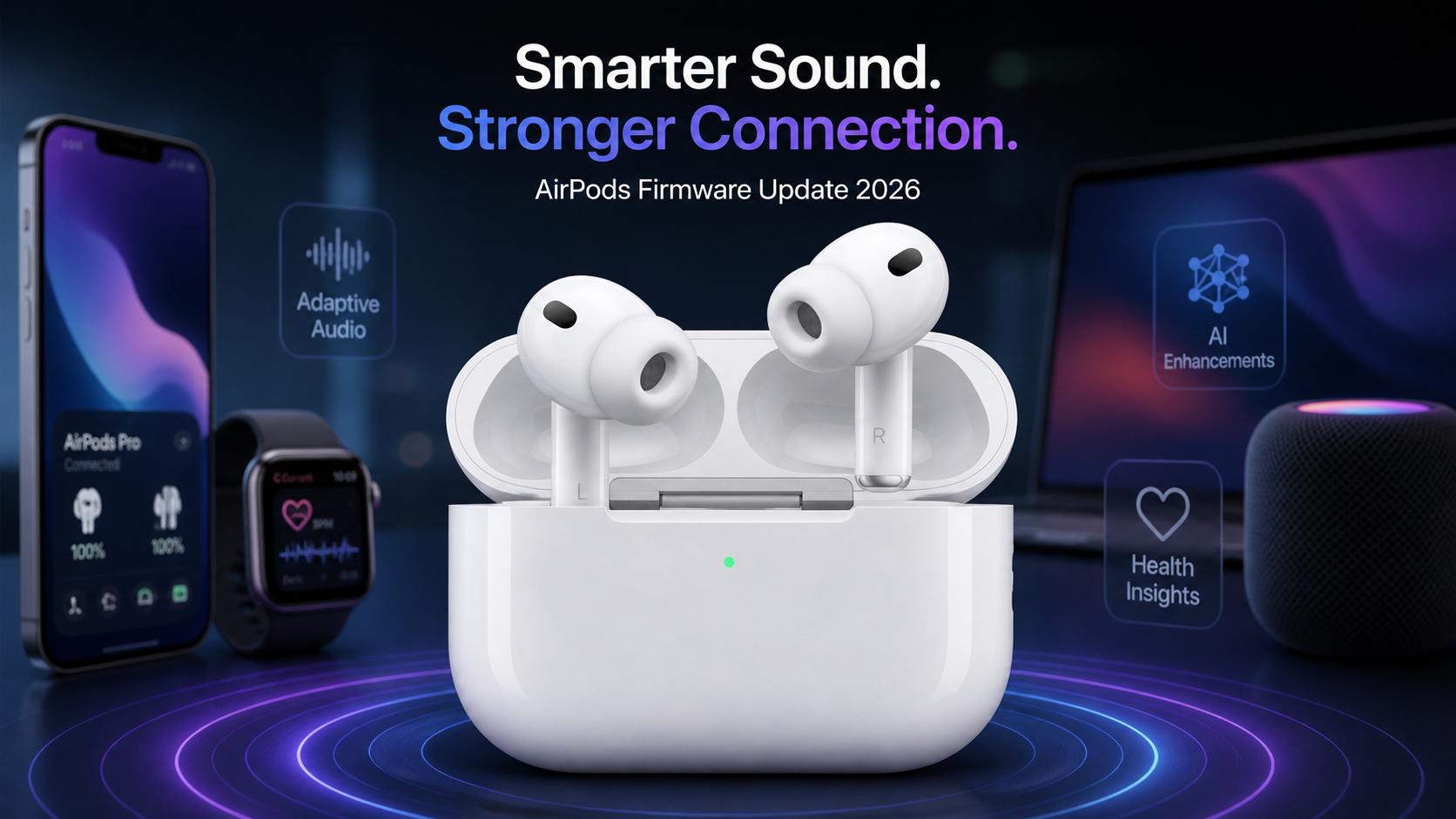
Apple has fundamentally changed how consumers perceive wireless earbuds since 2016. Consequently, the hardware has moved from a simple accessory to a complex computer. The company relies heavily on internal software to maintain this dominance. Therefore, each release brings significant changes to the user experience. This report examines the technical landscape of the latest audio AirPods Firmware Updates.

The importance of software consistency cannot be overstated in a modern ecosystem. Apple manages this through a background delivery system that requires no user effort. However, the lack of transparency often leads to confusion among enthusiasts. Therefore, understanding the mechanics of a typical airpods firmware update is essential. This documentation explores every facet of the current audio infrastructure.
Historical Timeline of the AirPods Firmware Updates
The journey began with the W1 chip in the original model. That chip enabled the seamless pairing process that defined the product. Meanwhile, subsequent updates focused primarily on battery optimization and connection stability. These early improvements laid the groundwork for today’s sophisticated audio features.
Apple introduced the H1 chip in 2019 to improve latency. This hardware change allowed for hands-free Siri commands via software. Consequently, the firmware became a tool for introducing major new capabilities. This shift transformed the earbuds into an evolving platform for mobile productivity.
The first Pro model arrived with active noise cancellation in late 2019. This addition required a much more complex airpods firmware updates structure. Engineers had to balance cancellation strength with audio fidelity in real time. Therefore, the software began managing sophisticated internal microphone arrays for the first time.
Current Release Matrix
| Hardware Model | Firmware | Status |
|---|---|---|
| AirPods Pro (Gen 2) | 6B34 | Verified |
| AirPods Max | 6A300 | Verified |
| AirPods (Gen 3) | 6A300 | Verified |
Analyzing Current Versions in an AirPods Firmware Updates
As of May 2026, version 8B40 represents the pinnacle of current audio software. This specific build targets the high-end AirPods Pro 3 model exclusively. Meanwhile, other models like the AirPods Pro 2 use version 8B39. This discrepancy highlights the hardware-specific optimizations required for modern wearables.
| AirPods Model | Current Firmware Version | Release Date |
| AirPods Pro 3 | 8B40 | May 1, 2026 |
| AirPods Max 2 | 8E251 | March 31, 2026 |
| AirPods Pro 2 (USB-C) | 8B39 | March 24, 2026 |
| AirPods 4 (ANC) | 8B39 | March 24, 2026 |
| AirPods 4 (Standard) | 8B39 | March 24, 2026 |
| AirPods Max (Lightning) | 6F25 | October 2024 |
| AirPods 3 | 6F21 | October 2024 |
| AirPods 2 | 6F21 | October 2024 |
The Strategic Role of a Modern AirPods Firmware Updates
Apple uses software to extend the lifecycle of its existing hardware. For instance, the AirPods Pro 2 received hearing aid features years after launch. Consequently, a single airpods firmware updates can double the value of a purchase. This strategy builds immense brand loyalty among the current user base.
However, the company remains tight-lipped about the contents of most updates. Most changelogs simply mention “bug fixes and other improvements”. Therefore, third-party testers must identify changes through rigorous acoustic analysis. This opaque approach ensures that Apple maintains control over the narrative.
Installation Process
The installation process happens entirely in the background while charging. Users cannot manually press a button to start the download. Therefore, the earbuds must meet specific power and proximity conditions. This automated system prevents botched installations that could brick the hardware.
Specifically, the case must be connected to a power source. The earbuds need to be inside the case with the lid closed. Meanwhile, a paired iPhone must be nearby and connected to Wi-Fi. Consequently, most users receive the update while they sleep at night.
Verification Methods
Users can verify their current version through the iOS Settings app. Navigate to General and then select the About section. Alternatively, tap the name of the earbuds at the top of Settings. This menu displays the current build number and hardware specifications.
However, finding the version on a Mac requires different steps. Open System Settings and click the Bluetooth menu icon. Click the information button next to the connected device. Therefore, Apple ensures that version tracking remains accessible across all platforms.
The 2026 Roadmap of AirPods Firmware Updates
New builds often arrive alongside major operating system refreshes. Apple released version 8A356 to support the features in iOS 26. Consequently, the earbuds gained support for live translation and studio recording. This synchronization ensures that hardware and software evolve in tandem.
Meanwhile, developers often get early access to beta firmware. This allows them to test new features before a public rollout. However, beta software can cause unexpected bugs or connectivity issues. Therefore, standard users should avoid these early builds for daily use.
Breakthrough Features
Live translation represents a massive leap for wearable AI technology. The earbuds can now translate conversations in real time. Consequently, users can speak to others in different languages seamlessly. This feature requires an iPhone with Apple Intelligence enabled.
However, the translation speed depends on the local processing power. Users must download specific language packs to their devices first. Therefore, the system remains functional even without a cellular connection. This offline capability ensures privacy for sensitive conversations.
Managing Heart Health via AirPods Firmware Updates
The AirPods Pro 3 features a dedicated heart rate sensor. This hardware requires precise firmware to interpret blood flow data. Consequently, the earbuds provide accurate readings during intense fitness workouts. This data syncs directly with the Health app on iPhone.
Meanwhile, the software filters out motion artifacts during heavy movement. It uses a custom AI model to ensure consistency. Therefore, the earbuds match the performance of many professional chest straps. This innovation turns the audio device into a medical tool.
Clinical Advancements
Apple turned the Pro series into clinical-grade hearing aids. This feature helps people with mild to moderate hearing loss. Consequently, users can skip expensive medical appointments for basic assistance. The software uses a personalized audiogram to adjust the sound.
However, severe hearing loss still requires professional medical intervention. The earbuds simply amplify specific frequencies based on user tests. Therefore, this feature acts as an entry point for hearing health. This approach reduces the stigma of wearing traditional hearing devices.
Redesigning Cases
The newest cases lack a physical button on the back. Instead, they feature a capacitive touch area on the front. Consequently, users must double-tap the front to enter pairing mode. This change makes the case more durable and water-resistant.
Meanwhile, the status LED remains hidden behind the plastic casing. It only illuminates when the case is actively being used. Therefore, the design feels more seamless and modern than previous versions. This aesthetic shift aligns with Apple’s broader hardware philosophy.
Optimizing the H2
The H2 chip provides the power for computational audio tasks. It processes sound at 48,000 times per second for ANC. Consequently, software updates can fundamentally change how the chip behaves. Therefore, each release might improve the quality of noise cancellation.
However, some users report shifts in sound signatures after updates. Some feel that noise cancellation strength fluctuates over time. Therefore, Apple must constantly tune the algorithms to maintain balance. This ongoing optimization is the core of the H2 strategy.
The Impact of Q.ai
Apple acquired Q.ai to advance its silent speech technology. This startup uses AI to decode facial muscle movements. Consequently, future updates might allow for completely silent Siri commands. This would revolutionize how people interact with their devices.
Meanwhile, the technology can also enhance audio in loud environments. It helps the earbuds distinguish between a voice and noise. Therefore, the acquisition strengthens Apple’s long-term roadmap for audio AI. This investment highlights the importance of software-driven innovation.
Troubleshooting Static Issues
Some AirPods Pro 3 users have experienced screeching static sounds. This issue typically occurs during flights or loud commutes. Consequently, Apple is working on a fix via firmware. Therefore, affected users should check for updates frequently.
However, the problem might also relate to hardware microphone seals. Some users found that resetting the device temporarily helps. Therefore, Apple must verify if the cause is digital or physical. This investigation is a high priority for the engineering team.
Expanding Accessibility
New software adds features for those with different physical needs. For example, head gestures allow hands-free call management. Consequently, users can nod or shake their heads to respond. This provides a new level of convenience for all users.
Meanwhile, the system uses the accelerometer to detect these movements. It ignores accidental head motions through advanced filtering software. Therefore, the feature remains reliable even during active movement. This demonstrates Apple’s commitment to inclusive design principles.
Enhancing Connection Stability
Version 8B40 improves the reliability of multi-device switching. It reduces the time needed to move between Mac and iPhone. Consequently, the ecosystem feels more cohesive for power users. This is a frequent area of focus for engineering.
However, Bluetooth 5.3 still has some inherent range limitations. The firmware must manage the handshake process very carefully. Therefore, the software optimizes the power used for signal transmission. This balance ensures both stability and long battery life.
Studio Quality Recording
Content creators benefit from the new studio recording standard. The firmware improves vocal texture during voice memo captures. Consequently, users can record high-quality podcasts with just earbuds. This feature targets the growing creator economy market.
Meanwhile, the software uses beamforming to focus on the voice. It cancels out background hums and distracting echoes. Therefore, the resulting audio sounds professional and clear. This provides a huge value add for mobile journalists.
Environmental Gains
Software optimization helps the internal batteries last longer. By managing power better, the earbuds produce less heat. Consequently, the chemical cells degrade at a slower rate. This longevity reduces the overall electronic waste footprint.
Meanwhile, Apple uses recycled materials for the internal components. The magnets contain 100 percent recycled rare earth elements. Therefore, the hardware is as green as the software is smart. This holistic approach defines the current product lineup.
Competitive Analysis of AirPods Firmware Updates
Sony and Bose also offer frequent software improvements. However, Apple’s deep integration with iOS remains unmatched. Consequently, the update process is much smoother for iPhone owners. This creates a walled garden that is hard to leave.
Meanwhile, competitors often provide more manual control over EQ. Apple prefers an automated approach called Adaptive EQ. Therefore, users must trust the algorithm to deliver the best sound. This philosophical difference separates the major audio brands.
The Future of Cameras
Rumors suggest that upcoming models will feature infrared cameras. These sensors would provide spatial data for Vision Pro. Consequently, a future airpods firmware updates will manage visual data streams. This marks a massive transition for the product line.
However, privacy concerns regarding built-in cameras remain high. Apple will likely use the cameras for gesture tracking only. Therefore, they will not take traditional photos or videos. This cautious implementation focuses on functional utility over surveillance.
Battery Management Strategies
Version 8B39 introduces improved low-battery charging reminders. The iPhone will now notify users before the earbuds die. Consequently, users can plan their charging sessions more effectively. This small tweak greatly improves the daily user experience.
Meanwhile, the firmware manages the fast-charging curve carefully. It allows for 1.5 hours of use from five minutes. Therefore, the software protects the battery from excessive heat damage. This ensures that the earbuds remain reliable for years.
The Role of Apple Intelligence
Generative models now power many of the audio features. Apple Intelligence helps with voice isolation and translation. Consequently, the earbuds are getting smarter with every release. This requires a powerful host device for the best results.
However, not all features are available on older iPhones. Users need at least an iPhone 15 Pro for translation. Therefore, the firmware acts as a gateway to the modern ecosystem. This drives hardware upgrades across the entire Apple lineup.
Conclusion on AirPods Firmware Updates
Apple has successfully turned its audio line into a software-first platform. Every airpods firmware updates serves a strategic purpose in this vision. Whether adding hearing aid features or translating languages, the software is vital. Therefore, users should prioritize keeping their devices fully updated.
The future holds even more exciting possibilities for the lineup. With acquisitions like Q.ai, the earbuds will eventually read faces. Consequently, the hardware we buy today will keep improving tomorrow. This constant evolution is the true power of the Apple ecosystem.
Support Our Work
Help us keep creating and maintaining our projects. We appreciate your support!
How you can help:
Shop via Affiliate LinksSupport us at no extra cost to you while you shop via the link above.





Leave a Reply