
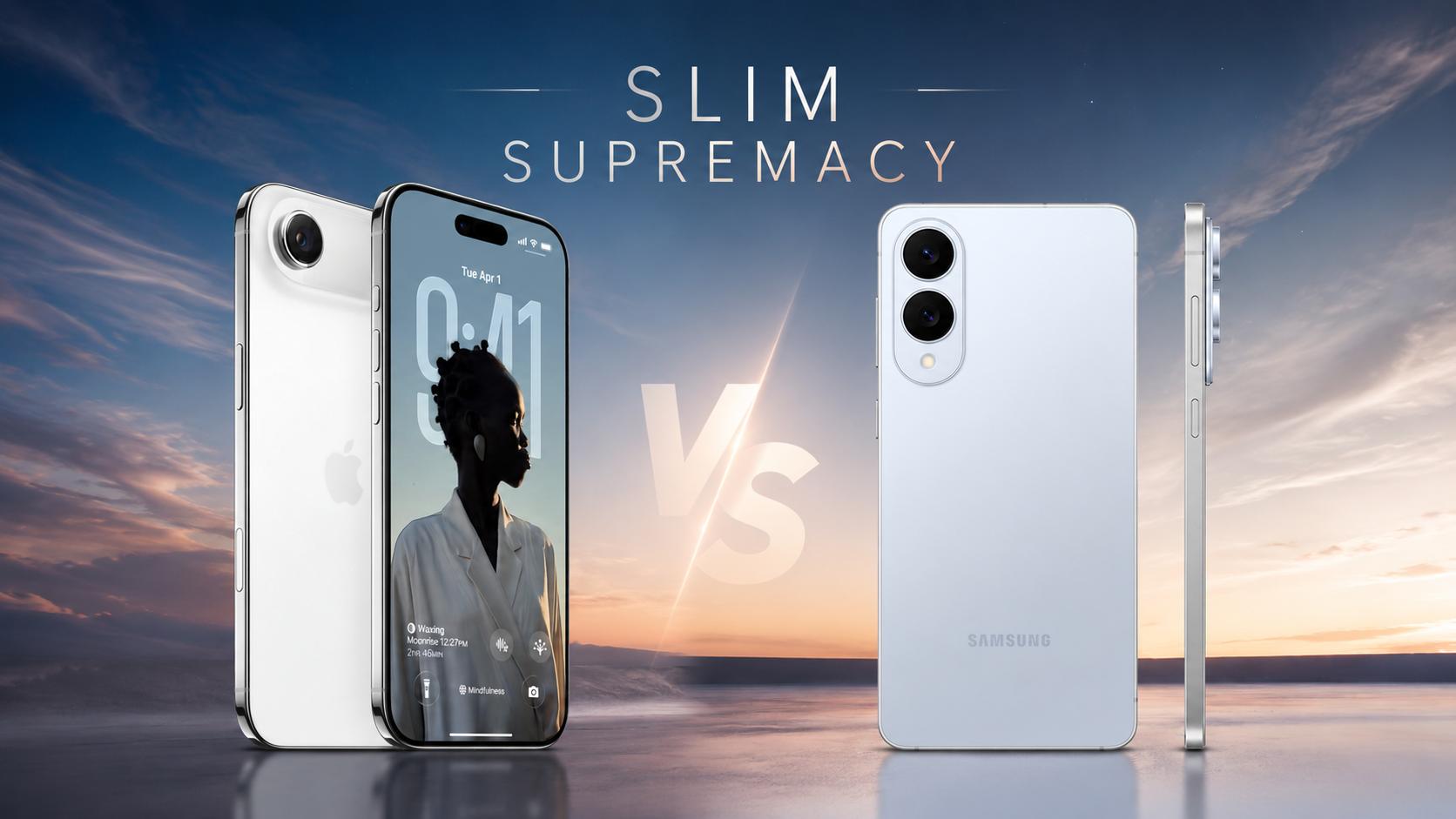

The New Era of Slender Smartphones
Smartphone design trends shifted dramatically toward extreme physical thinness in late 2025. Consequently, elite manufacturers now compete to produce the thinnest premium mobile frames. Apple and Samsung both launched highly specialized, lightweight handsets to dominate this new segment. iPhone Air and Galaxy S25 Edge challenge the traditional notion that heavy smartphones offer better durability. Tech enthusiasts constantly debate which brand executed this minimalist hardware strategy more effectively.
This aesthetic movement has created a fascinating ideological battle between iOS and Android. Specifically, each brand makes distinct compromises regarding battery capacity and camera configurations. Consequently, this report analyzes the structural engineering and performance parameters of these devices. Eventually, these designs will shape the future trajectory of the global premium smartphone market.
Physical Dimensions and Structural Engineering
Apple engineered its thinnest device ever by reducing the internal frame to 5.64 mm. However, the camera plateau rises slightly above this exceptionally flat aluminum profile. The device weighs only 165 grams, making it comfortable during prolonged single-handed operation. Indeed, aerospace-grade aluminum ensures high structural integrity despite the reduced physical thickness. The ultra-slim profile feels incredibly natural and secure during active daily movement.
Samsung deployed a robust titanium band to reinforce its competing 5.8 mm chassis. Meanwhile, the lightweight titanium frame keeps the total weight at a mere 163 grams. Front glass panels feature durable Ceramic protection to survive accidental drops on hard surfaces. Therefore, the device resists structural flexing under direct pressure despite its thin profile. Additionally, both devices carry solid IP68 ratings for excellent dust and water resistance.
iPhone Air vs. Galaxy S25 Edge Display Analysis
Apple equipped its model with a beautiful 6.5-inch Super Retina XDR OLED screen. Specifically, this display renders content at a sharp resolution of 2736 by 1260 pixels. Furthermore, ProMotion technology drives dynamic refresh rates from one to 120 hertz. Additionally, peak brightness outputs a stellar 3000 nits to combat direct afternoon sunlight.
Samsung opted for a larger 6.7-inch Dynamic AMOLED 2X panel on its device. Specifically, this screen delivers an incredibly crisp resolution of 3120 by 1440 pixels. Furthermore, its peak brightness reaches 2600 nits under bright ambient outdoor conditions. Notably, both displays utilize variable refresh rates to optimize efficiency during static screen tasks.
iPhone Air vs. Galaxy S25 Edge: Silicon Power and Performance
Apple powers its ultra-thin handset with the three-nanometer A19 Pro system-on-chip. Specifically, this high-efficiency processor features a six-core setup and a sixteen-core Neural Engine. As a result, the chipset maintains exceptional single-core speeds and excellent overall thermal management. Furthermore, the internal memory configuration utilizes twelve gigabytes of fast system RAM. Eventually, this hardware configuration ensures buttery smooth animations across all system applications.
Samsung runs on the powerful Qualcomm Snapdragon 8 Elite for Galaxy processor. This octa-core beast operates at a swift maximum frequency of 4.47 gigahertz. Subsequently, a fifteen percent larger vapor chamber successfully dissipates heat under heavy loads. Hence, the phone maintains high sustained workloads without noticeable performance degradation. The cooling design prevents frame drops during resource-intensive mobile gaming sessions.
iPhone Air vs. Galaxy S25 Edge: Camera Capabilities and Sensors
Apple chose a highly minimalist path by installing a single rear fusion camera. Specifically, the forty-eight megapixel main sensor captures beautiful landscapes using advanced computational photography. Moreover, a specialized crop provides optical-quality twice zoom without a separate physical lens. Meanwhile, the front features an eighteen megapixel Center Stage camera with a square sensor.
Samsung takes a very different approach by integrating a versatile dual-lens rear system. For instance, the primary wide-angle lens utilizes a staggering two-hundred megapixel resolution sensor. Meanwhile, users can capture ultra-wide shots via the secondary twelve megapixel camera. Additionally, the front selfie shooter features a standard twelve megapixel camera with smooth stabilization.
Battery Longevity and Charging
Physical thinness directly threatens the battery capacity of modern mobile devices. To counter this, Apple addressed this design issue by installing a thirty-one hundred forty-nine milliampere-hour battery. Nevertheless, iOS power-saving features help stretch this modest capacity through daily tasks. Additionally, users can recharge the device to fifty percent in thirty minutes using fast chargers.
Samsung managed to fit a larger thirty-nine hundred milliampere-hour battery cell. Accordingly, the device achieved an impressive sixteen hours of video streaming in tests. Furthermore, it supports fast twenty-five watt wired charging and fifteen watt wireless charging. As a result, this charging setup makes it highly convenient for users with busy schedules. Moreover, the phone offers reverse wireless charging to power smaller accessories on the go.
Software, Connectivity, and Ecosystems
Apple ships its minimalist smartphone running the modern iOS twenty-six operating system. This software integrates deeply with local artificial intelligence tools to simplify daily routines. Local encryption algorithms also keep personal user data highly secure at all times. Moreover, the US model operates strictly on dual eSIM technology with no physical slot. This wireless design enhances hardware security but limits immediate physical SIM swaps.
Samsung operates on Android fifteen customized with the fluid One UI interface. Nonetheless, the company promises a generous seven years of operating system upgrades. Additionally, the physical tray supports one nano-SIM alongside secondary eSIM profiles. Consequently, this setup provides travelers with excellent network flexibility across international boundaries. Furthermore, this cellular modem ensures highly reliable data connections in crowded metropolitan areas.
Pricing and Strategic Trade-Offs
Premium thin phones present customers with substantial pricing and configuration decisions. To illustrate, Apple positions its baseline model at an entry price of 999 dollars. Furthermore, storage options extend all the way to a spacious one-terabyte internal drive. Consequently, this large capacity makes it ideal for digital creators with massive photo libraries.
| Key Spec | iPhone Air | S25 Edge |
|---|---|---|
| Chassis Depth | 5.64 mm | 5.80 mm |
| Total Mass | 165 g | 163 g |
| Display Panel | 6.5″ OLED | 6.7″ AMOLED |
| Main Processor | Apple A19 Pro | Snapdragon 8 Elite |
| Battery Charge | 3,149 mAh | 3,900 mAh |
| Starting Cost | $999 | $1,099 |
In contrast, the competing Samsung device enters the US market at 1099 dollars. However, storage options remain restricted to standard two hundred fifty-six and five hundred twelve gigabytes. Nevertheless, the package includes a more versatile camera and significantly better battery life. Ultimately, this pricing dynamic challenges buyers to choose between maximum storage or hardware versatility.
Strategic Conclusions
The ultra-slim smartphone market marks a bold evolutionary phase in consumer tech engineering. To illustrate this, Apple successfully created a highly aesthetic, pocketable design with seamless ecosystem ties. Moreover, minimalist enthusiasts will appreciate the clean design and lightweight chassis. Ultimately, the model sets a strong benchmark for physical device thinness in coming years.
Samsung delivers an equally impressive thin phone with outstanding real-world performance. As a result, power users seeking robust battery life and camera flexibility should opt for Samsung. Both devices demonstrate that lightweight frames do not require massive functional sacrifices. In conclusion, individual operating system loyalty will dictate the final choice for most premium consumers.
Support Our Work
Help us keep creating and maintaining our projects. We appreciate your support!
Ways to contribute:
Shop via Affiliate LinksSupport us at no extra cost to you while you shop.
Support on Ko-fiBuy us a coffee to keep the engine running!


Leave a Reply