
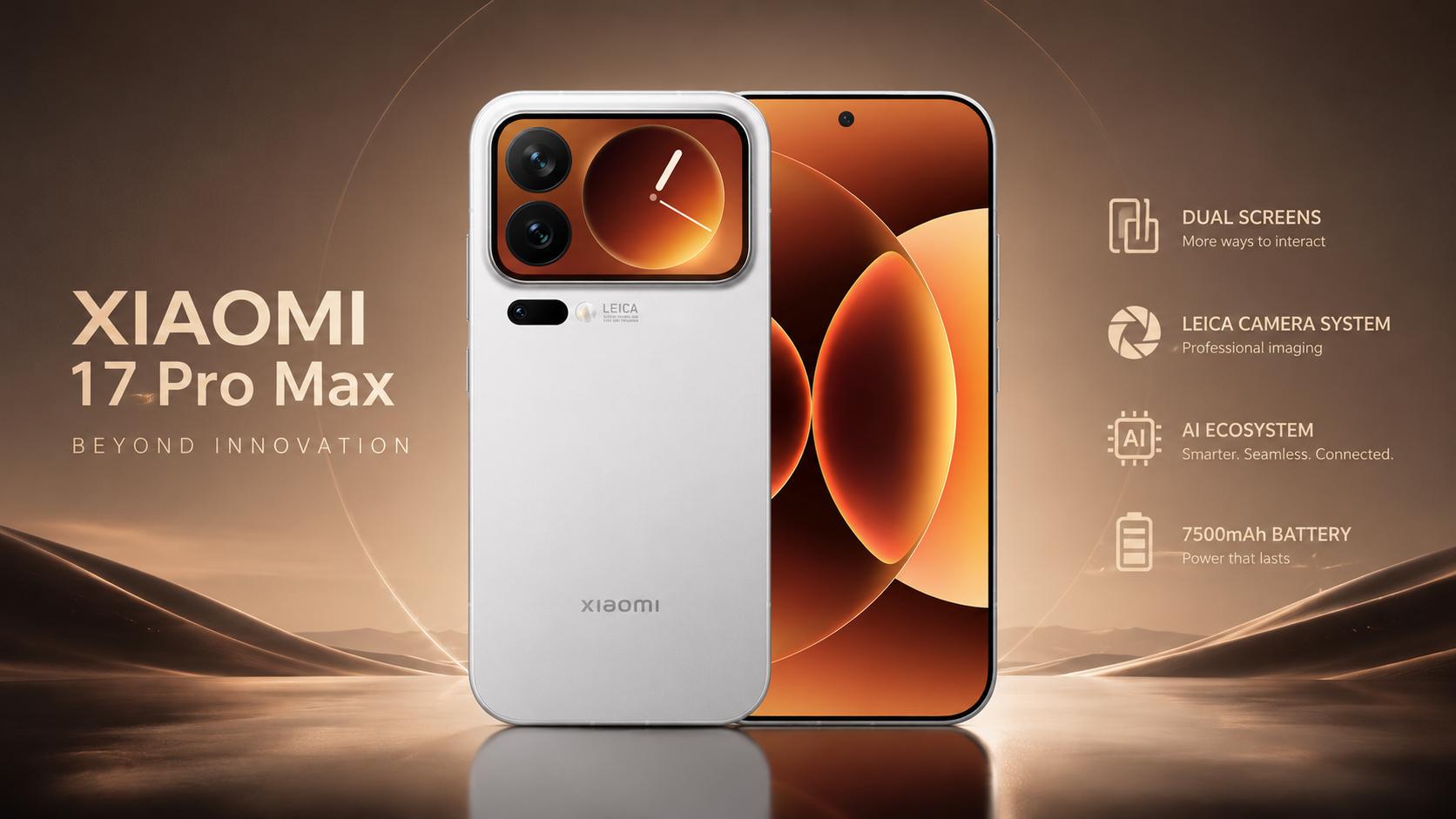

Market Dynamics and Strategic Reorientation
The global smartphone industry faces significant headwinds due to critical hardware component shortages in early 2026. Consequently, major mobile brands must navigate rising bills of material costs and constrained supply chains. Xiaomi actively addresses these market challenges by accelerating its transition toward highly profitable premium products such as Xiaomi 17 Pro Max. Indeed, this shift allows the consumer electronics giant to protect its margins while sustaining technological innovation. The organization consistently aims to balance volume and profitability through its new premium ecosystem roadmap. Therefore, the company plans to invest over 200 billion yuan in core research and development. This massive capital injection will fuel next-generation hardware designs and artificial intelligence algorithms over five years. Furthermore, this continuous financial commitment ensures a steady stream of highly advanced consumer technologies.
Modular multi-screen integration simulation with HyperOS 3.
The corporate vision centers on the unified Human-Car-Home ecosystem that debuted during major trade exhibitions. Specifically, the strategy integrates high-end mobile devices directly with home automation and electric vehicles. The brand also aggressively expands its premium television and tablet offerings under a cohesive three-screen initiative. Meanwhile, localized manufacturing efforts in key markets like India have scaled up significantly. The regional division now successfully produces nearly all local smartphones, tablets, and smart wearables domestically. This deep localization strategy successfully offsets import tariffs and streamlines regional logistics networks. Accordingly, domestic value addition now reaches approximately thirty-five percent on average across the product portfolio.
Dual-Screen Innovation on the Xiaomi 17 Pro Max
This elite flagship model redefines premium mobile aesthetics through its unique dual-display chassis design. For instance, a magnificent 6.9-inch primary LTPO AMOLED panel dominates the front of the smartphone. This display delivers a crisp resolution of 2608 by 1200 pixels for optimal visual clarity. Additionally, the screen supports Dolby Vision and handles a peak brightness of 3500 nits. A secondary 2.9-inch AMOLED display sits elegantly next to the rear camera module. This small screen facilitates high-quality rear-camera selfies and displays interactive system widgets. Moreover, the rear display mirrors the impressive brightness capabilities of the main display panel. Both panels utilize advanced technologies to minimize overall power draw.
Interactive dynamic scaling comparison of the dual-display premium chassis.
Strong structural integrity matches this display innovation to ensure daily durability in active environments. Subsequently, Xiaomi utilizes tough Dragon Crystal Glass 3.0 and an aerospace-grade aluminum frame. The structural design also features IP68 water resistance for reliable outdoor operation. Underneath this resilient shell, Qualcomm’s advanced three-nanometer Snapdragon 8 Elite Gen 5 processor runs. This octa-core CPU easily achieves a top frequency of 4.6 GHz on its performance cores. Thus, power users can execute demanding workloads and games without experiencing thermal performance drops. Concurrently, a large vapor cooling system ensures stable frame rates during intensive gaming sessions.
Interactive cluster core allocation and real-time vapor thermal simulation.
| Feature | Specification Details |
| Main Processor | Snapdragon 8 Elite Gen 5 (3nm) |
| Primary Screen | 6.9-inch LTPO AMOLED (120Hz) |
| Cover Screen | 2.9-inch LTPO AMOLED (120Hz) |
| Triple Camera | 50MP Wide + 50MP Tele + 50MP Ultra |
| Power Cell | 7500 mAh Silicon-Carbon Battery |
| Software System | Android 16 with HyperOS 3 |
Professional Leica Optics and Advanced Battery Technology in Xiaomi 17 Pro Max
Excellent camera performance remains a key pillar of the company’s premiumization strategy. To achieve this, the primary wide-angle rear camera employs an advanced 50-megapixel Light Hunter 950L sensor. This sensor features an f/1.67 aperture and optical image stabilization for superior night photos. Similarly, a premium 50-megapixel periscope telephoto lens delivers an outstanding five-times optical zoom experience. A third 50-megapixel ultra-wide angle lens completes this versatile rear triple-camera array. However, a massive 7500 mAh silicon-carbon battery represents the true highlight of the hardware. This high-density battery outlasts typical flagship alternatives by supplying over two days of active use. Consequently, mobile enthusiasts can capture precious memories without constantly worrying about finding a power outlet.
Interactive lens selection displaying advanced mobile optical focal specs.
The power management system supports rapid refills through 100W wired and 50W wireless charging. The integrated battery is rated to retain eighty percent of its total capacity after 1600 charge cycles. This ensures years of reliable performance before any battery health degradation occurs. The highly intuitive, custom software experience utilizes HyperOS 3 based on the modern Android 16 platform. Nevertheless, the manufacturer provides six years of operating system and security updates. This stellar long-term software commitment enhances the lifetime value of this high-end mobile device. These highly comprehensive hardware features establish a new benchmark for global flagship devices in 2026.
High-density silicon-carbon cell capability overview and active performance profiles.
Support Our Work
Help us keep creating and maintaining our projects. We appreciate your support!
Ways to contribute:
Shop via Affiliate LinksSupport us at no extra cost to you while you shop.
Support on Ko-fiBuy us a coffee to keep the engine running!






Leave a Reply