

Paradigm Shift in Consumer Hardware
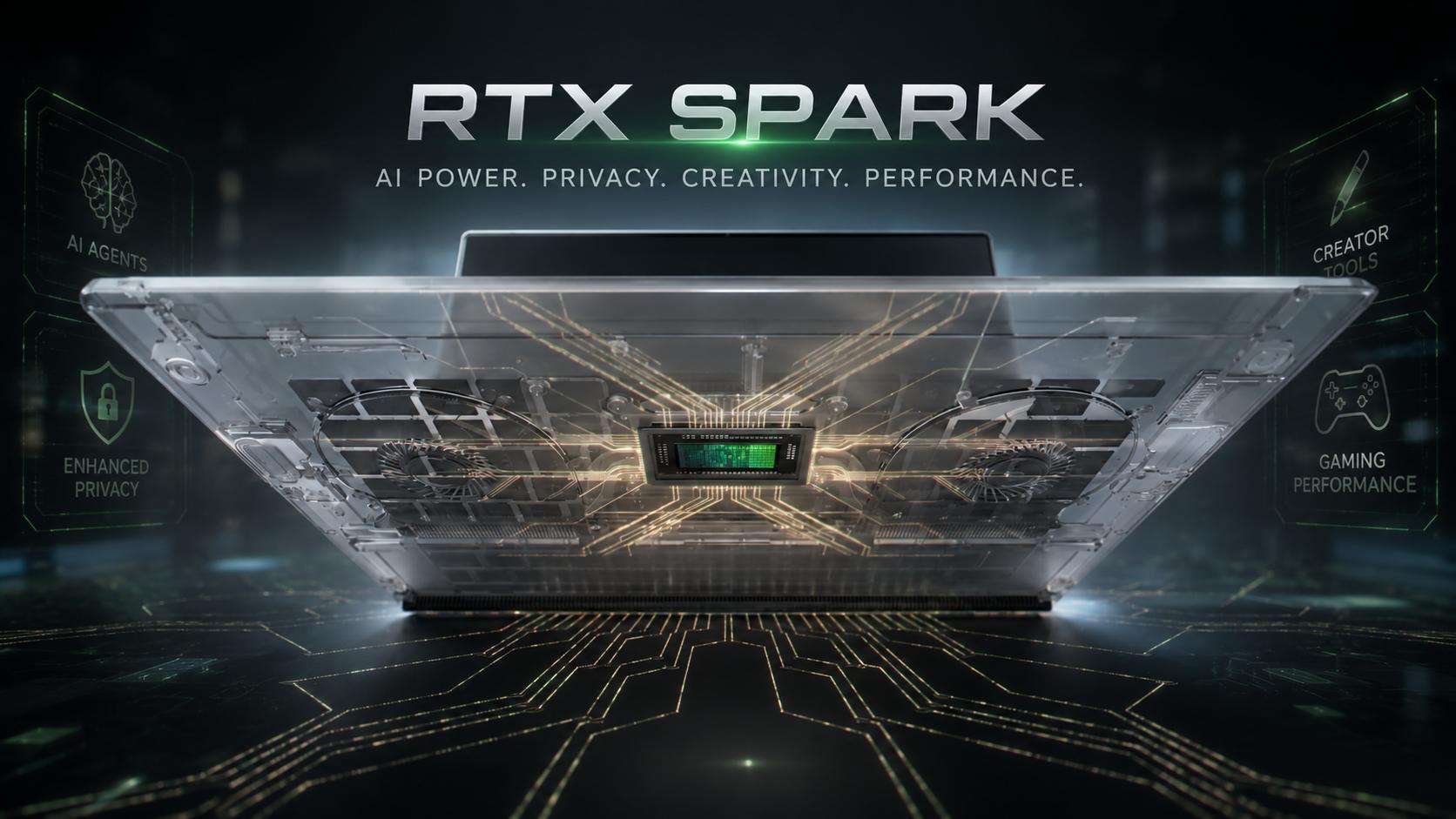
Nvidia officially unveiled the RTX Spark superchip at Computex 2026 in Taipei. The platform signals a major, highly anticipated evolutionary shift in how humans interact with personal computers. Specifically, the architecture transitions the system from a tool into a teammate. For forty consecutive years, users manually launched applications through clicking and typing. Consequently, users will now simply ask the machine to execute workflows locally. This sweeping paradigm change marks a major new milestone in consumer technology. The localized architectural design reduces dependence on remote cloud networks significantly. Thus, privacy and performance are no longer at odds for normal users. Computing power moves directly into the user hands now.
Nvidia strategically developed this high performance processor alongside Taiwanese chipmaker MediaTek. Additionally, TSMC manufactures the custom superchip using its advanced three nanometer silicon process node. This physical integration merges massive computing resources into a space efficient laptop chassis. Bulkier portable systems traditionally required cloud connectivity to process large local AI tasks. The corporate collaboration successfully brings data center supercomputing power directly to slim everyday notebooks. This hardware fusion establishes an entirely new industry benchmark for performance efficiency. Previously, general consumers chose between high performance workstations and portable devices. Modern silicon manufacturing techniques resolve this difficult historical compromise completely. Therefore, modern consumers enjoy premium desktop performance without sacrificing portability or battery efficiency.
Hardware Architecture
Compare specs of the consumer superchip against the commercial desktop variant.
Under the Hood of the Superchip
The custom superchip combines a Grace CPU with a cutting edge Blackwell GPU. The internal hardware architecture features a twenty core ARM based central processing unit. The integrated graphics processor boasts 6,144 CUDA cores. Furthermore, the custom system on chip design integrates up to 128GB of LPDDR5X unified memory. This massive unified memory pool allows the CPU and GPU to share resources seamlessly. Ultimately, this robust configuration delivers one petaflop of local FP4 computing performance. The unique on chip system architecture minimizes latency between processing elements. Moreover, MediaTek engineered a proprietary memory controller to handle high bandwidth tasks. Developers can experiment with highly complex model structures easily under this unique configuration.
Core Performance Output
Comparison of continuous local computing speed measured in Int8 TOPS.
This physical design mirrors the commercial DGX Spark workstation targeting developers. However, the new consumer processor targets the Windows 11 operating system instead of Linux. MediaTek successfully implemented advanced power management circuits to preserve battery life. In addition, custom on chip system integration allows high performance within a small footprint. Meanwhile, integrated wireless silicon ensures seamless connectivity for local cloud synchronization. The integrated processor operates with high efficiency in portable devices. As a result, laptop users obtain supercomputer grade intelligence on their laps. The table below contrasts the consumer superchip against the commercial desktop variant.
Continuous Agent Power
Adjust the slider below to calculate systemic wattage metrics across computing states.
Driving the RTX Spark: First PC for AI Agents Initiative
Leading industry analysts actively compare different platforms in this rapid technological evolution. For instance, HooRii Technology recently launched its own unique physical companion hub called the ClawStage. This physical device operates as an embodied personal assistant hub using a Raspberry Pi 5. Conversely, the Nvidia RTX Spark represents a traditional client computing architecture. While the ClawStage focuses on smart home integration through Matter, Nvidia optimizes the superchip for local processing. This direct contrast highlights two vastly different pathways for personal local automation. Both philosophies agree that agents require dedicated hardware to run effectively.
Local agentic execution demands massive on device performance to handle multi step actions. Simultaneously, the custom superchip handles 120 billion parameter models locally with ease. This direct execution preserves private user data locally on the physical device. On the other hand, traditional smart assistants rely heavily on cloud processing. The consumer personal computing space is evolving rapidly into teammate based local operations. By extension, users no longer need to manage apps manually. This paradigm shift changes our fundamental relationship with computer systems forever. Indeed, personal machines will become highly customized companion systems.
Securing the Local Agentic Experience
Running personal agents locally requires robust security protocols on the primary operating system level. Therefore, Microsoft partnered directly with Nvidia to introduce new security primitives. This partnership ensures that local agents execute instructions safely. Moreover, they introduced the custom NVIDIA OpenShell to give users complete policy control. This utility lets users define exact permissions for autonomous processes. Alternatively, the system can route queries to local models based on privacy preferences. It also disguises sensitive personal details before sending queries to remote cloud models. This comprehensive approach prevents unauthorized data exposure during active workflows.
NVIDIA OpenShell Console
Enable localized privacy protection measures to control execution environments.
Local Vector Database Shielding
Prevents context parameter scraping
Screen Coordination Harness
Monitors Screen coordinate navigation
Remote Query Obfuscation
Anonymizes cloud database requests
Software developers also contribute heavily to this security centric computing environment. H Company recently created a physical computer use harness to streamline navigation. This technology lets local agents navigate the screen exactly like a human. Nonetheless, giving agents keyboard and mouse control introduces obvious security risks. By running these processes locally, users mitigate critical external intervention threats. The joint software integration drives a two times speedup on local graphics processors. Accordingly, the system lowers memory consumption by thirty five percent during these tasks.
Empowering Creators and Professional Suites
Creative professionals require massive memory bandwidth to process complex visual media. For this specific reason, Adobe partnered with Nvidia to optimize its core applications. They are rearchitecting Photoshop and Premiere from the ground up. This optimization yields up to two times faster AI editing performance. Furthermore, local agents can execute complex multi step rendering tasks. This specific advancement allows video editors to focus on overall visual direction. Meanwhile, the underlying hardware handles repetitive frame extensions and background fills locally. Creators can generate local high resolution assets instantly without remote server delays.
Creative Execution Speed
Compare rendering execution time outputs between standard computing architectures.
Hardware manufacturers are leading this creator centric slim laptop implementation directly. Indeed, ASUS launched its premium ProArt P16 and P14 creator notebooks. These slim creator machines feature OLED displays with exceptional color accuracy. Nevertheless, mobility remains their biggest selling point for field production. Thin CNC milled aluminum laptop chassis frames provide robust durability for traveling artists. The lightweight P14 model weighs only 1.48 kilograms. Conversely, the larger ProArt P16 variant integrates a massive 99.9 watt hour battery. These physical dimensions demonstrate the space efficiency of the integrated superchip.
Resolving the Windows on ARM Gaming Dilemma
Gaming on ARM based laptops historically presented major compatibility challenges. Consequently, Nvidia designed the superchip with consumer grade gaming capabilities in mind. The Blackwell GPU features dedicated ray tracing and tensor cores. Accordingly, players can experience AAA games at 1440p resolution. The unified memory architecture also removes traditional laptop memory limitations. For example, a shared LPDDR5X pool accommodates modern assets easily. Subsequently, DLSS technology elevates frames per second above one hundred. This execution outperforms competing portable silicon solutions by a significant margin.
AAA Native Performance
Estimate native performance frames under anti-cheat certified environments.
Fortnite Target
125 FPSValorant Target
144 FPSAnti cheat software compatibility represents another historic barrier for ARM gaming. Fortunately, Nvidia collaborated with developers to enable native anti cheat support. Popular titles like Fortnite and Valorant now run smoothly. Demanding competitive gamers play these titles without performance reducing virtualization. Additionally, the platform supports Easy Anti Cheat, BattlEye, and Denuvo services. This technical breakthrough clears the path for mainstream consumer adoption. More developers will likely port their existing catalog to ARM. This shift could eventually dismantle x86 dominance in the laptop sector.
Financial Implications of the Silicon Shift
The market reaction to this announcement was swift and dramatic. Nvidia shares jumped five percent to trade near 222 dollars quickly. Qualcomm stock fell seven percent on rising local AI PC fears. Investors quickly recognized a direct threat to Qualcomm’s Snapdragon X franchise. Industry competition will push traditional computing boundaries to new performance limits. The competitive balance in the ARM laptop market changed instantly. This consolidation of market power highlights Nvidia’s dominant market position. Users can trust their physical machines with sensitive workflows and private datasets.
Major global device manufacturers are backing the new silicon ecosystem heavily. Lenovo, Dell, HP, and others are developing premium Windows laptops. Microsoft and MSI plan to launch these compatible systems this fall. The HP stock price jumped sixteen percent over a single week. The commercial market values this crucial transition to local agentic hardware. This transformative technology will ultimately redefine consumer productivity and security worldwide. Both hardware and software developers must adapt quickly to survive this architectural shift.
Support Our Work
Help us keep creating and maintaining our projects. We appreciate your support!
Ways to contribute:
Shop via Affiliate LinksSupport us at no extra cost to you while you shop.
Support on Ko-fiBuy us a coffee to keep the engine running!




Leave a Reply