

The Rise of Always-On Autonomous Systems
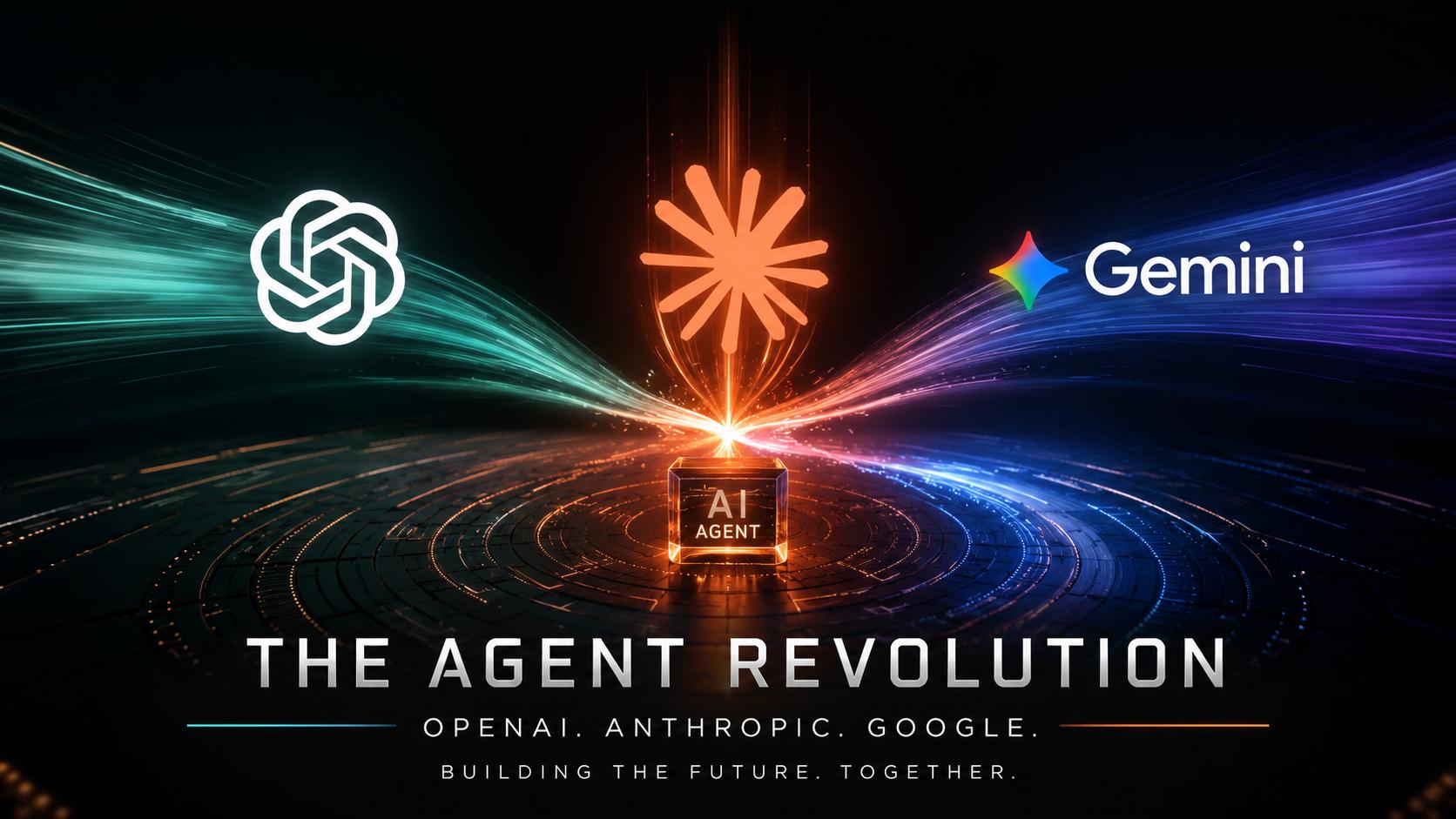
Generative artificial intelligence is undergoing a massive AI Agent War in mid-2026. Specifically, static chat interfaces are rapidly transitioning into active, self-correcting agent networks. These modern frameworks autonomously plan multi-step operations without constant human supervision. Users no longer need to guide systems through every minor step of a project. Consequently, developers are focusing heavily on system reliability and long-horizon execution. This shift demands robust models that can navigate highly ambiguous professional landscapes.
Interactive pricing estimation across standard mid-2026 enterprise models.
Enterprise operations require deep software integration to connect models with internal business databases. Additionally, simple text generation fails to satisfy the demands of complex workflow automation. Modern applications must execute commands and modify local files directly in sandboxed environments. These connected systems can perform continuous background actions while the user is offline. Thus, organizations must deploy always-on agents to remain competitive in the market. Early preparation avoids costly friction during active system deployments.
The Current Dynamics of the AI Agent War: ChatGPT vs. Claude vs. Gemini
The ongoing corporate race for digital supremacy represents a highly competitive tech landscape. Indeed, three major tech companies dominate the market with highly specialized agent platforms. OpenAI, Anthropic, and Google continually deploy new features to capture enterprise market share. Choosing the correct system depends on budget limits and specific coding requirements. Meanwhile, older models are facing rapid retirement to preserve crucial server capacity. Slower systems are disappearing from active development APIs completely. Developers must adjust their software configurations immediately to prevent unexpected service interruptions.
This dynamic ecosystem offers clear trade-offs between rapid execution and logical precision. However, selecting a single platform often limits an organization’s overall operational capacity. Sophisticated creators build multi-model workflows to exploit the unique strengths of each tool. This methodology reduces computational costs and improves overall response quality. Therefore, understanding the internal mechanics of these frontier engines remains highly critical. The subsequent analysis details the architecture of each leading model family.
OpenAI and the GPT-5.5 Flagship Framework
OpenAI launched its flagship model series, GPT-5.5, on April 23, 2026. Specifically, the family includes three main model variations to serve different user tiers. GPT-5.5 Instant operates as the fast, everyday workhorse model for standard conversational tasks. GPT-5.5 Thinking handles multi-step reasoning and complex programmatic debugging. Moreover, GPT-5.5 Pro delivers research-grade intelligence for high-precision scientific analysis. OpenAI limits Pro access to premium ChatGPT subscribers paying two hundred dollars monthly. This structural tiering allows the provider to manage server loads efficiently.
The financial structures of these models dictate the economics of modern enterprise software development. Consequently, the standard GPT-5.5 model is much more cost-effective than the Pro version. This pricing model ensures that startups can build scalable products without facing massive costs. Free ChatGPT users transitioned to GPT-5.5 Instant on May 5, 2026. Indeed, this default model cuts factual hallucinations on high-stakes prompts by half. Older versions like GPT-4.5 face complete retirement by late June 2026. Therefore, developers must quickly migrate active software projects to these newer models.
The pricing structures of these models dictate the economics of modern enterprise software development. Additionally, specific benchmarks help illustrate the logical capacity of these engines. Standard GPT-5.5 scores eighty-two percent on command-line terminal tasks. The following table outlines the pricing and core features of OpenAI’s flagship models.
| Model Name | Input Price (per 1M) | Output Price (per 1M) | Primary Capability |
| GPT-5.5 Instant | ~$5.00 | ~$15.00 | Everyday Chat & Q&A |
| GPT-5.5 Pro | $30.00 | $180.00 | High-Precision Research |
Concurrently, the company launched GPT-5.5-Cyber for vetted defensive security teams. This specialized model blocks malicious requests to prevent the exploitation of web software. These steps represent a strong commitment to ethical AI alignment practices.
Anthropic and the Claude Opus 4.8 Software Solution
Anthropic continues to prioritize security, safety, and rigorous reasoning in its software updates. Subsequently, the company announced Claude Opus 4.8 on May 28, 2026. This release immediately became available across major enterprise cloud platforms. Additionally, Opus 4.8 introduces a highly useful Effort Control layer in user settings. Furthermore, users can manually choose between low and maximum thinking intensity. This granular control balances output speed with overall processing quality. Anthropic recommends high effort settings for difficult software engineering and coding migrations.
Select user settings to preview speed, latency, and logical output changes.
Thinking Intensity
Operational Task Type
Expected Latency
Optimized for rapid task delivery
Refactoring Quality
Standard semantic mapping
The standard pricing for Opus 4.8 remains five dollars per million input tokens. Alternatively, developers can run the model in fast mode for rapid execution. Fast mode speeds up performance by more than two times. This mode costs double the standard rate for API interactions. Moreover, Claude Sonnet 4.6 serves as the primary engine for standard professional work. Sonnet 4.6 features a massive one-million-token beta context window. This enormous capacity allows developers to digest entire code repositories in a single request.
Comparison of data storage capacities against engine operating speeds.
The logical precision of Sonnet 4.6 excels at complex legacy codebase refactoring. Indeed, early testers preferred Sonnet 4.6 over the older Opus 4.5 model. This preference underscores the rapid speed of modern model optimization cycles. Anthropic also retired older systems like Claude Opus 4.1 to streamline its API. Thus, developers must configure their systems to target the latest available versions. These updates ensure optimal compatibility with the newest features and tools. Businesses enjoy significant productivity gains by maintaining current software integrations.
Google and the Agentic Gemini Ecosystem
Google’s recent announcements at I/O 2026 showcase a strong commitment to proactive background automation. Specifically, the provider released Gemini 3.5 Flash globally on May 19, 2026. This high-speed engine operates four times faster than competing frontier models. It excels at multi-step tool execution, software coding, and automated business workflows. Consequently, Google positioned Flash as the default model for Search and the Gemini app. Moreover, the API price starts at a highly competitive rate of one dollar and fifty cents. This aggressive pricing strategy pressures rival AI providers to lower their access rates.
The company also introduced Gemini Spark to serve as an always-on personal agent. Meanwhile, Spark runs long-horizon tasks continuously on dedicated cloud virtual machines. This agent organizes workflows and monitors emails even when user devices are completely locked. It integrates with Google Workspace products to automate repetitive corporate office administrative chores. Additionally, Google announced Gemini Omni to handle complex generative multimedia operations. Omni combines Gemini’s reasoning intelligence with advanced physical simulation algorithms. This model creates realistic digital scenes by calculating structural weight and kinetic energy.
Video generations feature invisible SynthID watermarks to verify the origin of AI content. Furthermore, developers can build custom workflows inside the unified Antigravity 2.0 platform. Antigravity provides a standalone desktop application, software CLI, and specialized SDK. Google will soon sunset older command-line interfaces to drive developer adoption. Therefore, active engineering teams must prepare a comprehensive tool migration strategy immediately. Gemini 3.5 Pro will roll out in June 2026 to further strengthen these tools. This upcoming model will raise the logical baseline for advanced automated workflows.
Core developmental ecosystems, cloud networks, and specialized platform capabilities.
Strategic Hybrid Workflows for Enterprise Operations
Modern enterprises must reject single-vendor dependence to build resilient software infrastructure. Instead, sophisticated engineering groups design hybrid environments using multiple models simultaneously. These custom pipelines deploy the most cost-effective tool for each specific processing task. Claude handles difficult code refactoring and in-depth multi-step document analysis. Conversely, Gemini excels at real-time internet search and broad visual media tasks. ChatGPT serves as an excellent all-around utility tool for general brainstorming and rapid iteration.
Combining these strengths produces superior operational results at a much lower cost. Consequently, organizations can maximize their digital output while maintaining tight security guardrails. Power users begin complex planning in Claude before pivoting to other engines. They execute final database integrations inside ChatGPT to utilize its mature developer ecosystem. Thus, this coordinated orchestration represents the gold standard of modern business workflows. Teams must continuously evaluate new model releases to optimize their custom setups. Keeping pace with model upgrades ensures maximum technical efficiency over time.
Support Our Work
Help us keep creating and maintaining our projects. We appreciate your support!
Ways to contribute:
Shop via Affiliate LinksSupport us at no extra cost to you while you shop.
Support on Ko-fiBuy us a coffee to keep the engine running!






Leave a Reply