
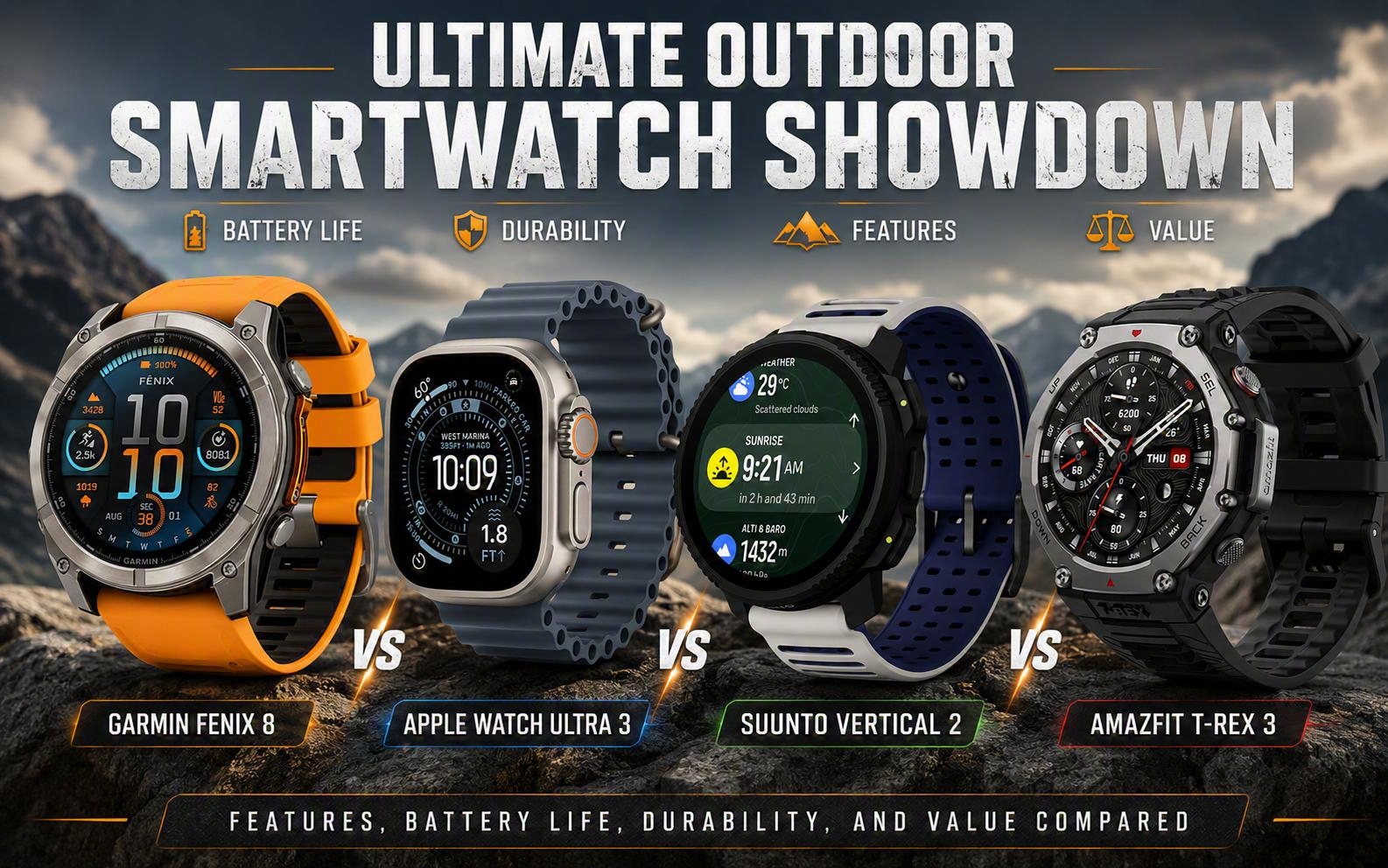

Garmin Fenix 8 vs. Apple Watch Ultra 3 vs. Suunto Vertical 2 vs. Amazfit T-Rex 3
Choosing a rugged outdoor smartwatch requires a careful analysis of the latest technical advancements in 2026. This detailed guide compares the Garmin Fenix 8 vs. Apple Watch Ultra 3 vs. Suunto Vertical 2 vs. Amazfit T-Rex 3. Indeed, each manufacturer targets a specific segment of the endurance sports and exploration markets. Selecting the correct wearable involves evaluating hardware, proprietary software ecosystems, and real-world battery performance.
Meanwhile, rapid corporate innovations continue to reshape user expectations for premium multisport devices. Specifically, sports technology brands focus heavily on off-grid navigation, advanced biometric tracking, and artificial intelligence. These high-performance wearables help athletes manage training loads and track physiological recovery accurately. This analysis outlines how strategic shifts and design upgrades impact the landscape of elite fitness tracking.
Garmin Fenix 8: Elite Multisport Innovation
Garmin officially launched the Fenix 8 series to provide unmatched versatility for extreme athletes. Users can choose between brilliant AMOLED screens and efficient solar-charging MIP display configurations. Furthermore, the hardware features leakproof inductive buttons and a 40-meter recreational diving rating. An integrated speaker and microphone allow hands-free voice commands when paired with a smartphone.
Garmin posted strong financial results in the first quarter of 2026. Fitness segment revenues grew by 42% due to robust demand for premium adventure watches. Subsequently, the manufacturer integrated messaging capabilities for WhatsApp alongside Natural Cycles tracking. This proactive strategy reinforces Garmin’s position against emerging smartwatch competitors in the fitness industry.
Apple Watch Ultra 3: Smart Connectivity and Growth
Apple introduced the Watch Ultra 3 to deliver advanced smart features and safety tools. Specifically, the watch incorporates a wide-angle LTPO3 Always-On OLED screen with 3000 nits peak brightness. Moreover, the internal S10 chip utilizes a 4-core Neural Engine to accelerate on-device processing. Built-in satellite communication enables emergency SMS and location sharing without active cellular coverage.
Apple remains the dominant force in the global smartwatch landscape in 2026. Indeed, the brand captured a 23% shipment share in the first quarter. Consequently, global shipments for Apple watches rose by 21% year-over-year. This exceptional growth keeps competitors at bay while solidifying the company’s hardware profit margins.
Suunto Vertical 2: Premium Finnish Endurance
Suunto designed the Vertical 2 to endure highly challenging mountain expeditions and ultra-running races. The premium adventure watch boasts a bright 1.5-inch LTPO AMOLED screen. Furthermore, the device provides up to 65 hours of battery life with maximum dual-frequency GPS accuracy. A physical white LED flashlight assists navigators during low-light ascents and remote campsite setups.
Suunto focuses heavily on software updates to enrich its existing sports ecosystem in 2026. Indeed, the April mapping update introduced clearer turn guidance, richer details, and offline routing. Additionally, strategic partnerships with events like the Lavaredo Ultra Trail drive international brand visibility. These initiatives show the brand’s commitment to delivering reliable data tracking for serious outdoor professionals.
Amazfit T-Rex 3: Disruption through Premiumization
Amazfit launched the T-Rex 3 to offer military-grade durability at a highly competitive retail price. Specifically, the device features a 1.5-inch AMOLED screen reaching 2000 nits brightness. Moreover, the watch integrates free downloadable offline maps and circular-polarized GPS positioning. Users can utilize OpenAI’s GPT-4o voice control system via Zepp Flow software.
Zepp Health successfully executed a premiumization strategy to drive corporate value in 2026. Indeed, their overall average selling price rose by 20% during the first quarter. Subsequently, the company secured an exclusive three-year global partnership with hybrid fitness developer HYROX. This collaboration licenses specific workout modes to position Amazfit as a premium training companion.
Directly Comparing Technical Architecture
Evaluating core specifications helps athletes identify the most suitable outdoor tracking companion. Specifically, the hardware design determines overall durability, environmental resistance, and legibility. Alternatively, key differences exist in diving capability, screen materials, and internal storage limits. The following technical table outlines the essential hardware parameters verified across all four models.
| Feature | Garmin Fenix 8 | Apple Watch Ultra 3 | Suunto Vertical 2 | Amazfit T-Rex 3 |
| Price (MSRP) | $999.99 – $1,199.99 | From $799.00 | $599.00 – $699.00 | $279.00 / €299.00 |
| Display Size | 1.3″ / 1.4″ | 49mm (Active Area) | 1.5″ LTPO AMOLED | 1.5″ AMOLED |
| Display Glass | Sapphire or Gorilla | Sapphire Crystal | Sapphire Crystal | Gorilla Glass |
| Peak Brightness | 1000+ nits (AMOLED) | 3000 nits | 2000 nits | 2000 nits |
| Battery (GPS) | Up to 84 Hours | Up to 42 Hours | Up to 65 Hours | Up to 180 Hours |
| Battery (Daily) | Up to 29 Days | Up to 72 Hours | Up to 40 Days | Up to 27 Days |
| Dive Rating | 40m Recreational | 40m Recreational | 100m Water Resistant | 45m Freedive |
| Chassis Material | Steel or Titanium | Recycled Titanium | Steel or Titanium | Steel and Polymer |
Clearly, the structural data highlights a significant divergence in pricing and battery management. Garmin and Suunto deliver remarkable long-term durability designed for extended wilderness tracking. Conversely, Apple provides superior everyday smart features but requires more frequent battery recharging. Choosing between these architectures requires balancing functional training requirements against direct financial investments.
Future Outlook and Ecosystem Strategy
Hardware optimization alone no longer guarantees victory in the competitive athletic wearable industry. Major brands focus heavily on software integration, artificial intelligence, and proprietary recovery metrics. Zepp Health invests a high proportion of its revenue directly into platform development. This deep financial commitment enables rapid feature rollouts and keeps pace with Garmin’s ecosystem.
Subscription services and partner ecosystems provide continuous recurring revenues for these top brands. Collaborations with platforms like Strava and Komoot enhance user engagement across all devices. Advanced hormone analytics and nutritional tracking broaden the appeal of these high-performance smartwatches. Future market success depends heavily on software usability and continuous developer innovation.
The Verdict for Outdoor Athletes
Each of these highly advanced smartwatches serves a unique niche within the modern athletic landscape. Garmin Fenix 8 remains the ideal choice for uncompromising professional multisport athletes. Apple Watch Ultra 3 represents the absolute pinnacle of daily ecosystem connectivity. Suunto Vertical 2 offers extreme physical durability and superior offline mapping tools for remote mountaineers.
Meanwhile, Amazfit T-Rex 3 provides an exceptionally strong budget alternative with premium capabilities. It delivers incredible battery performance and essential mapping features without a high price. Consumers should select their wearable companion based on specific training disciplines and software ecosystems. Ultimately, the perfect device is the one that best supports targeted personal fitness objectives.
Support Our Work
Help us keep creating and maintaining our projects. We appreciate your support!
Ways to contribute:
Shop via Affiliate LinksSupport us at no extra cost to you while you shop.
Support on Ko-fiBuy us a coffee to keep the engine running!

Leave a Reply