

Market Disruption and Device Trajectories
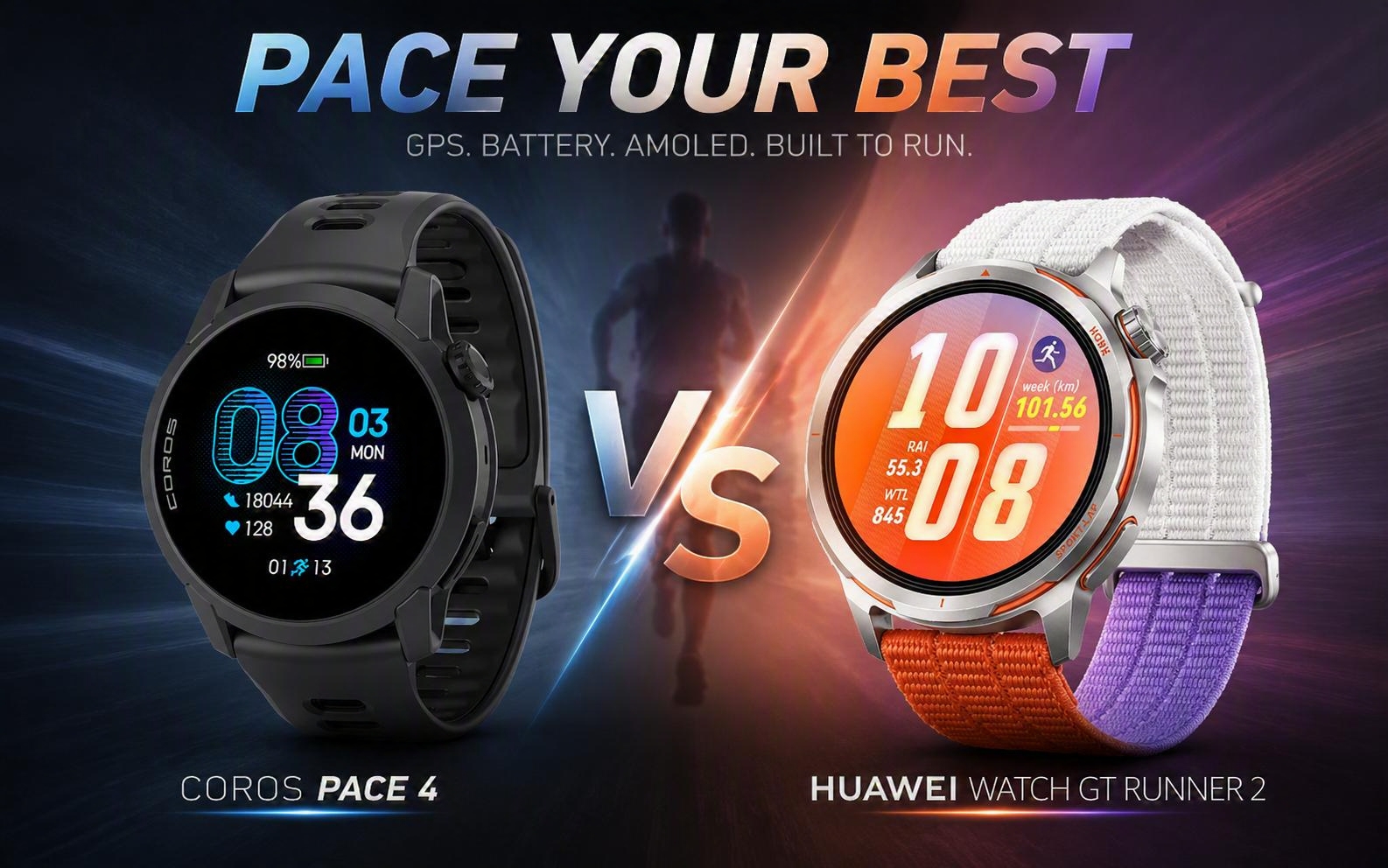
The debate surrounding the Coros Pace 4 vs Huawei Watch GT Runner 2 highlights a major shift in sportstech. Manufacturers are currently replacing older MIP screens with bright AMOLED displays to capture broader consumer markets. Consequently, athletes receive sharper graphics but must navigate shorter battery runtimes under heavy tracking conditions.
This development marks a critical transition in how sports technology brands position their latest training wearables. Indeed, companies now target both core marathon runners and lifestyle fitness enthusiasts with these premium tracking tools. This strategic positioning changes how runners evaluate sensor accuracy alongside general smartwatch features.
Premium Engineering and Tactile Control
The outer construction of these running watches reveals distinct material choices and design priorities. Coros utilizes a lightweight plastic case to keep the device highly comfortable during long runs. Specifically, the watch weighs just 32 grams when paired with its optional nylon strap.
Conversely, Huawei uses an aerospace-grade titanium alloy bezel paired with a fiber-reinforced plastic back. This premium construction increases the overall structural durability while maintaining a thin 10.7mm profile. The unit feels exceptionally rugged and premium on the wrist despite weighing slightly more.
Physical navigation methods also differ significantly between these two competitive sports watches. The Coros watch features a physical digital crown alongside a dedicated sports action button. However, athletes sometimes trigger the touchscreen dial by accident when wearing winter jackets or thick gloves.
The Huawei interface uses a physical crown that does not act as a selection button. Runners must scroll with the crown but press the secondary lower button to select options. Consequently, this control layout feels somewhat backwards compared to traditional sports watch designs.
Display Technology and Visual Depth
Both displays offer impressive outdoor readability but utilize slightly different panels. Coros upgraded its watch with a 1.2-inch AMOLED touchscreen. Additionally, this panel provides a crisp 390 x 390 resolution and 1,500 nits of peak brightness.
Conversely, Huawei uses a larger 1.32-inch screen with an outstanding resolution of 466 x 466 pixels. The display achieves a peak brightness of 3,000 nits for flawless visibility under harsh sunlight. Tough Kunlun Crystal covers the screen to protect against drops and abrasive trail scratches.
High-brightness screens present unique challenges for battery management during continuous outdoor exercises. Runners will notice that using max brightness mode drains battery capacity much quicker during midday runs. Therefore, choosing the correct backlight settings becomes critical for maintaining accurate workout logging.
Sensor Performance and Running Analysis
Both sport watches deliver reliable biometric tracking for daily training evaluations. Coros features a five-LED optical sensor array alongside a built-in microphone for recording voice notes. Specifically, this microphone lets runners capture quick subjective ratings during high-intensity intervals.
Huawei employs its accurate TruSense sensor suite to monitor health trends in real time. The hardware includes an ECG sensor, skin temperature tracking, and a specialized depth sensor. Thus, the device operates as a highly versatile wellness tool across diverse environments.
Both watches integrate advanced training algorithms to calculate recovery, predicted race times, and aerobic fitness. Huawei works closely with elite marathon runners to refine its professional training feedback. Indeed, these real-world insights help the software deliver actionable advice for complex marathon strategies.
Comparison of Technical Specifications
This comprehensive table outlines the exact physical properties and internal hardware components of both smartwatches. Understanding these quantitative differences helps runners choose the ideal tool for their daily training schedules. Consequently, athletes can compare raw performance metrics before committing to a specific ecosystem.
| Specification Parameter | Coros Pace 4 | Huawei Watch GT Runner 2 |
| Launch Price | $249 USD | £349.99 (Approx. $470 USD) |
| Device Weight | 32g (Nylon band) | 34.5g (Without strap) |
| Case Dimensions | 43.4 x 43.4 x 11.8 mm | 43.5 x 43.5 x 10.7 mm |
| Bezel Material | Fiber-Reinforced Plastic | Aerospace Titanium Alloy |
| Screen Coverage | Mineral Glass | Kunlun Crystal |
| Peak Brightness | 1,500 nits | 3,000 nits |
| Water Resistance | 5 ATM | 5 ATM / IP69 |
| Internal Storage | 4 GB | 4 GB / No card slot |
| Battery Type | Lithium Polymer | Silicon-Carbon 540 mAh |
| GPS Tracking Life | Up to 31 hours | Up to 32 hours |
The raw specifications show that Huawei prioritizes luxury construction materials and robust waterproof protection. Meanwhile, Coros designs for extreme lightness to minimize wrist fatigue during intensive speed sessions. Both manufacturers target different segments of the running population with these designs.
Satellite Accuracy and Battery Architecture
Satellite path accuracy remains highly important for runners calculating their actual training paces. Coros offers reliable dual-band GPS performance that holds signals perfectly during tight urban routes. Specifically, it performs outstandingly well even when navigating highly congested, high-rise city marathon paths.
Conversely, Huawei uses an advanced three-dimensional floating antenna designed to reduce signal dropouts. Real-world tests show that the watch sometimes smooths out path corners near large bodies of water. Its raw GPS tracking is not quite as precise as top-tier Garmin models.
Battery engineering also represents a major area of innovation for these new sport wearables. Huawei utilizes a modern silicon-carbon battery to squeeze extra energy capacity into a smaller chassis. Nonetheless, both watches deliver enough GPS runtime to support athletes through multi-hour ultramarathon races.
Software Ecosystems and Global Usability
Operating system performance shapes the long-term usability and convenience of any athletic training watch. The Coros app remains fully accessible worldwide, offering deep athletic analysis and seamless Strava uploads. Additionally, runners can download custom watch faces and update their firmware without experiencing regional restrictions.
Conversely, Huawei users face major installation hurdles due to ongoing international trade restrictions. Android owners must download a sideloaded APK because the companion app is missing from Google Play. Thus, setting up the device requires technical steps that may frustrate casual consumers.
Furthermore, some essential wellness services remain completely inaccessible unless users set their account region to the UK. The health app also pushes unwanted training recommendations and restricts some watch faces behind paywalls. The operating system represents the most significant drawback for buyers living in North America.
Strategic Market Impact and Final Verdict
The pricing strategy implemented by Coros aims to squeeze middle-tier competitors out of the market. By pricing its latest model at $249, the brand forces competitors to justify their higher rates. Indeed, this move positions the watch as an incredibly competitive option for value-seeking runners.
Huawei targets the premium luxury bracket by offering titanium casing and high-end fitness features. The inclusion of ECG monitoring and Curve Pay integration helps justify its higher price tag. Thus, the company appeals directly to athletes who want a multi-functional smartwatch for everyday wear.
Ultimately, buyers must choose between seamless software connectivity and premium hardware design. The Coros watch provides the most straightforward, sports-focused user experience for daily training. Alternatively, the Huawei model offers unmatched physical elegance if users can bypass the software hurdles.
Water Resistance and Environmental Protection
Physical durability under extreme conditions represents a crucial factor for multi-sport athletes and outdoor swimmers. The Coros watch provides standard waterproof protection up to a depth of fifty meters. Specifically, it has a 5 ATM rating that allows for safe surface swimming sessions.
Conversely, the Huawei wearable carries an exceptional IP69 rating against pressurized high-temperature water jets. The chassis also supports professional deep diving and underwater activities up to forty meters. This rugged device easily outclasses its lighter competitor in terms of extreme aquatic durability.
This extreme resistance makes the premium model highly attractive for triathletes and off-trail wilderness runners. The robust titanium outer frame stands up to severe impacts without cracking or scratching. Therefore, outdoor adventurers can comfortably wear this timepiece during highly demanding back-country excursions.
Audio Integration and Voice Capabilities
Audio features represent an expanding frontier for modern smartwatches designed for high-performance track training. The Coros watch integrates media controls to govern music playback directly on a paired smartphone. Additionally, it provides built-in storage space for local MP3 files to enable phone-free runs.
The premium competitor provides a much more complete standalone audio solution during active workouts. The device incorporates both a microphone and a speaker for direct audio playback. Thus, runners can listen to pacing notifications and music without wearing external headphones.
These audio tools offer significant utility for tracking training paces without constantly checking the screen. However, some athletes still prefer the simpler physical layout of traditional sport-focused digital displays. These varied designs ensure that every runner can find a watch matching their needs.
Support Our Work
Help us keep creating and maintaining our projects. We appreciate your support!
Ways to contribute:
Shop via Affiliate LinksSupport us at no extra cost to you while you shop.
Support on Ko-fiBuy us a coffee to keep the engine running!

Leave a Reply