
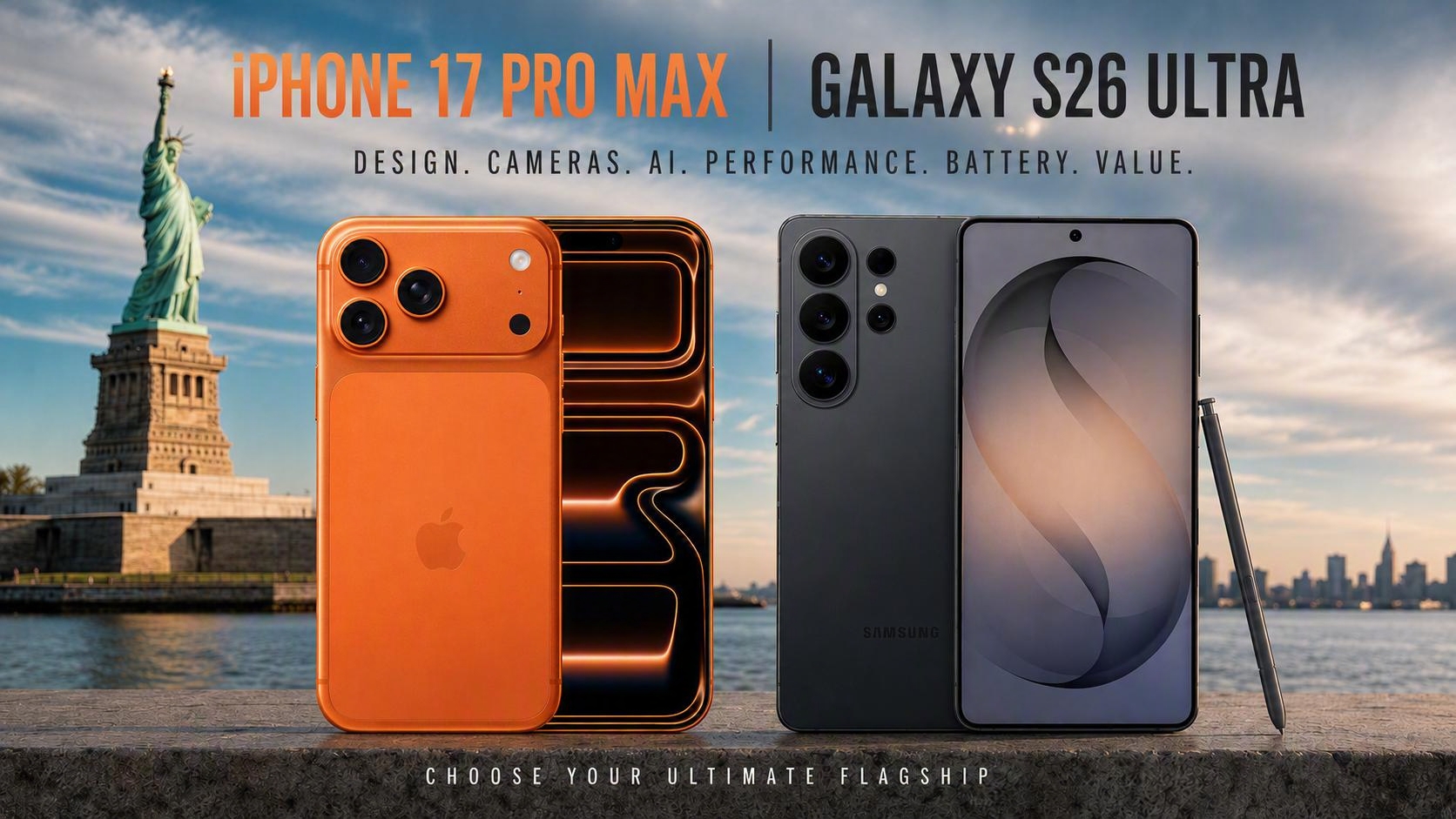


Competitive Flagship Overview
Choosing a premium flagship in 2026 feels more difficult than ever for technology enthusiasts. The legendary rivalry of iPhone 17 Pro Max vs. Samsung Galaxy S26 Ultra represents the peak of mobile engineering. Both global manufacturers delivered incredible updates to their flagship models this year to capture consumer attention. Consequently, buyers must weigh hardware upgrades against ecosystem benefits when selecting their next phone. These giant devices target power users who demand the absolute best. This comprehensive comparison will analyze every crucial feature to provide complete operational clarity.
Apple successfully launched its leading iOS smartphone in September 2025 to massive critical acclaim. Meanwhile, Samsung countered with its slimmest Ultra design during a major event in February 2026. These competing mobile devices reflect entirely different philosophies of daily user experience and hardware optimization. One premium model focuses on seamless vertical software integration to streamline routine productivity tasks. The other rival device emphasizes physical utility tools and expansive, customizable system controls. Ultimately, this choice will determine how consumers manage their personal digital lives for several years.
Redesigned Chassis and Premium Materials
Physical design aesthetics changed quite significantly for both competitors during this latest hardware release cycle. Apple unexpectedly reverted from its previous titanium build to a premium aluminum unibody design. This material switch increased the overall weight of the iOS model to 233 grams. However, the aluminum frame feels remarkably premium and comfortable to hold during extended periods. The new Ceramic Shield 2 cover glass provides advanced physical protection against scratches. The rear panel combines half aluminum and half glass, establishing a highly distinctive texture finish.
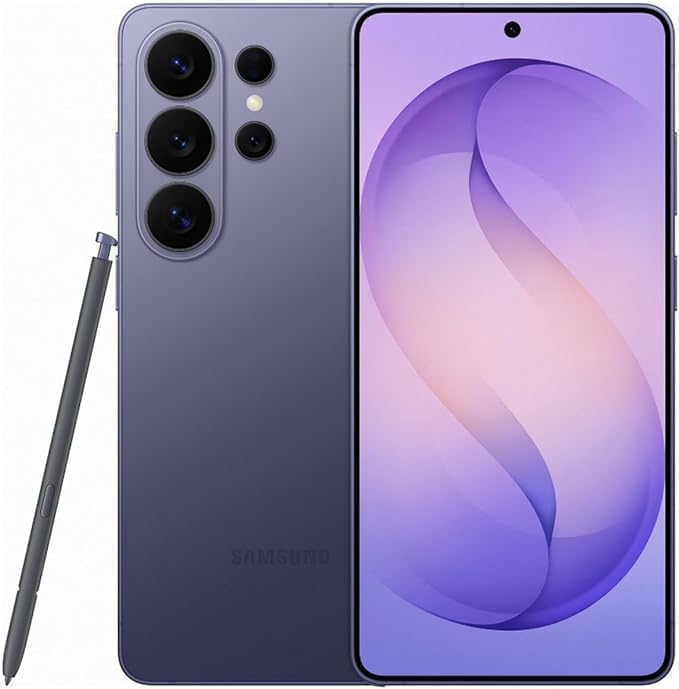
Samsung carefully pursued an entirely different physical approach for its slimmest premium model this year. The Korean manufacturer utilized a highly refined Armor Aluminum 2 frame to improve structural durability. By comparison, the phone dropped the sharp corners of older models for softened, rounded edges. This ergonomic shift makes the massive device far more comfortable to hold in a single hand. Furthermore, the new S26 Ultra measures a sleek 7.9 millimeters in total chassis thickness. The slim Samsung design remains noticeably thinner and lighter than its giant, heavy competitor.
Display Advancements and Privacy Integration
Both premium smartphones offer spectacular 6.9-inch displays with highly variable refresh rates for seamless scrolling. Apple implemented an LTPO Super Retina XDR OLED panel with exceptional color accuracy. This custom high-end display boasts an impressive peak brightness of 3000 nits outdoors. As a result, on-screen content remains perfectly readable even under direct, blinding summer sunlight. In fact, the OLED display drops to just 1 nit to ensure comfortable late-night viewing. The Ceramic Shield 2 features a specialized anti-reflective coating to minimize environmental glare.
Samsung aggressively responded with an incredibly sharp Dynamic LTPO AMOLED 2X display panel. This advanced screen provides an elite resolution of 3120 by 1440 pixels for crisp text. Otherwise, the main technological highlight is the world-first integrated Privacy Display hardware stack. This clever system utilizes Flex Magic Pixel technology to narrow viewing angles on command. Subsequently, lateral side views turn completely dark to prevent nearby strangers from reading notifications. Nevertheless, head-on viewing retains a stunning ten-bit hardware color depth and outstanding contrast.
Performance Metrics and Gaming Capabilities
Processor power reached unprecedented levels this year with custom, cutting-edge 3-nanometer system chips. Apple engineered the A19 Pro with an overhauled vapor chamber thermal cooling layout. This physical architecture allows the powerful six-core CPU to sustain peak speeds during workloads. Indeed, the silicon chip registers a dominant 3894 in Geekbench 6 single-core CPU testing. Yet, the processing platform focuses heavily on efficiency to prolong daily battery life. The custom GPU delivers incredibly smooth, hardware-accelerated ray tracing in demanding games.
Conversely, Qualcomm custom-engineered an overclocked Snapdragon 8 Elite Gen 5 processor for Galaxy. This octa-core system runs its primary performance cores at a blistering 4.74 gigahertz frequency. The system achieves a massive multi-core score of 11454 in standard Geekbench 6 benchmarks. Consequently, the Samsung device handles heavy visual background multitasking and high-resolution video exports faster. Simultaneously, the Adreno 840 graphics engine easily maintains a locked 120 frames per second in shooters. This raw hardware graphics capability slightly edges out Apple in sustained gaming benchmarks.
iPhone 17 Pro Max vs. Samsung Galaxy S26 Ultra
Camera configurations showcase completely different physical approaches to mobile optical engineering, shaping this hardware generation. Apple simplified its rear camera array by implementing uniform 48-megapixel sensors across all modules. This uniform matching resolution ensures identical color science and processing when switching between lenses. Meanwhile, the periscope telephoto lens received a physical upgrade to a dedicated 4x optical zoom. The front camera upgraded fully to an 18-megapixel sensor for much sharper group selfies. Undeniably, the iPhone remains the absolute premier choice for high-quality, professional ProRes video production.
Alternatively, Samsung continues its maximalist product philosophy with a highly versatile quad-camera hardware system. The primary image sensor boasts a massive 200 megapixels with a wider f/1.4 aperture. This key lens physical improvement gathers 47% more light for superior low-light imaging. Furthermore, a 50-megapixel periscope lens delivers crisp 5x optical zoom performance at f/2.9. The camera system eventually combines these lenses with AI to offer an incredible 100x Space Zoom. Thus, Samsung offers much greater optical versatility for long-range outdoor nature and architectural shots.
Artificial Intelligence and Operating Systems
The modern user experience highlights a massive battle between two highly advanced software ecosystems. Apple integrated its on-device Apple Intelligence deeply into its proprietary iOS 26 system. This engine processes sensitive personal user data locally to guarantee complete user privacy. Indeed, Siri now understands context much better, executing complex tasks across multiple applications seamlessly. The intelligent platform suggests writing edits and generates custom imagery via text commands. This prioritization of absolute device data security will strongly appeal to privacy-focused premium buyers.
Meanwhile, Samsung launched One UI 8.5 software based on the modern Android 16 platform. This custom software brings resizable control toggles to a completely redesigned visual Quick Panel. The upgraded Galaxy AI software suite introduces the highly proactive Now Nudge contextual suggestion engine. This tool automatically anticipates upcoming user needs based on real-time messaging text and schedules. Furthermore, a standalone Creative Studio app lets active users generate polished invitation cards and wallpapers. The resulting interface delivers a highly customizable and visually interactive daily productivity workspace.
Battery Lifespans and Charging Dynamics
Power management remains a vital performance metric for these giant, high-resolution 6.9-inch devices. Apple packed a massive 5088 milliampere-hour battery directly into its cellular flagship models. This generous capacity easily delivers up to 32 hours of continuous video playback on-device. Wired charging speeds improved quite significantly this generation to support up to 40 watts. Moreover, the device supports fast 25-watt wireless charging power via MagSafe or Qi2 chargers. Users can conveniently charge the internal battery to 50% in twenty minutes.
Samsung equipped its leading flagship premium device with a matching 5000 milliampere-hour battery. However, the overclocked Snapdragon processor consumes more battery power under sustained gaming workloads. To compensate, the S26 Ultra supports blazing 60-watt rapid wired Super Fast Charging 3.0. This advanced charging protocol reaches 75% total capacity in only thirty minutes. Nevertheless, the device lacks built-in magnetic wireless charging alignment, requiring specialized case accessories. Buyers choose directly between magnetic convenience and pure charging speed.
Value Analysis and Pricing Decisions
Pricing and long-term value retention play a critical role in this purchasing decision. The iPhone starts at exactly 1199 dollars for the base 256-gigabyte storage version. Historically, Apple premium hardware depreciates much slower than Android equivalents in secondary retail markets. This slower asset depreciation protects a buyer’s long-term investment during annual upgrade cycles. Additionally, standardizing on 12 gigabytes of RAM ensures excellent long-term system performance. Therefore, the premium iOS flagship represents a highly reliable and safe financial acquisition.
- 256 GB NVMe Storage
- 12 GB RAM Baseline
- Multi-Year iOS 26 Platform
- Private Local Siri Engine
- 256 GB UFS 4.0 Storage
- Integrated S Pen Stylus
- 7 Years OS Support (Android 16)
- Now Nudge Galaxy AI
Conversely, the S26 Ultra demands a slightly higher starting price of exactly 1299 dollars. This premium retail price includes an integrated S Pen stylus to enhance mobile note-taking. Furthermore, Samsung promises a stellar seven years of continuous official operating system upgrades. This software policy guarantees security patches and new features until the March 2033 deadline. The phone remains an unmatched long-term product choice for productivity-focused users. The Ultra model rewards enterprise buyers who want extreme hardware utility.
| Feature Category | Apple iPhone 17 Pro Max | Samsung Galaxy S26 Ultra | Causal Market Crossover Trend |
| Starting Price | Exactly 1199 USD | Exactly 1299 USD | Samsung pricing premium represents standard physical stylus pen inclusions to support advanced multitasking workflows for all mobile professionals |
| Screen Protection | Ceramic Shield 2 | Gorilla Armor 2 | These modern cover materials integrate specialized structures to significantly decrease annoying reflection glare under direct outdoor sunlight conditions |
| Base Storage | 256 GB NVMe | 256 GB UFS 4.0 | High data read speeds consistently minimize transfer bottlenecks when users attempt opening several extremely large business files simultaneously |
| Selfie Optics | 18MP Center Stage | 12MP Auto-focus | A high physical optical sensor resolution provides excellent visual clarity during intensive professional video conferencing call sessions |
| Vapor Cooling | Aluminum Unibody | Redesigned Chamber | Vapor cooling chambers spread intense processor heat efficiently across wider surface structures to safely stabilize overall device performance |
| AI Assistant | Siri Engine | Galaxy Bixby System | Advanced conversational intelligence models contextually anticipate routine physical workflows depending on complex daily scheduling and location tracking parameters |
| Update Policy | Multi-Year iOS Platform | Seven Years OS Support | Extended software upgrade policies preserve system stability while significantly expanding the operational lifecycle of active personal user hardware |
| Primary Camera | 48 Megapixel Fusion | 200 Megapixel Main | Extremely dense megapixel arrays give amateur mobile photographers massive editing flexibility without sacrificing any overall high image sharpness |
| Battery Capacity | 5088 Milliampere-Hour | 5000 Milliampere-Hour | Enormous physical storage capacities sustain highly intensive dynamic display refresh rates during extended high performance mobile gaming sessions |
| Wired Charging | 40W Fast Power | 60W Fast Power | Enhanced rapid charging metrics strictly restrict annoying offline periods during busy professional schedules and continuous commercial travel itineraries |
| Wireless Tech | 25W MagSafe Support | 25W Qi2 Charger | Universal wireless charging protocols establish highly convenient ways to quickly top up mobile power without using any physical cables |
| Frame Material | Aluminum Frame Design | Armor Aluminum 2 | Dynamic aluminum and specialized metal selections significantly lower weight metrics while preserving solid overall structural frame durability standards |
| Software Platform | iOS 26 System | Android 16 System | Operating systems govern user home customization layouts alongside third party application updates and global security privacy protection protocols |
Support Our Work
Help us keep creating and maintaining our projects. We appreciate your support!
Ways to contribute:
Shop via Affiliate LinksSupport us at no extra cost to you while you shop.
Support on Ko-fiBuy us a coffee to keep the engine running!



Leave a Reply