

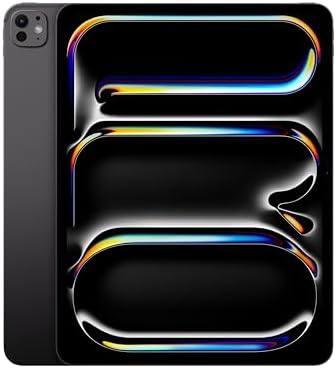
- WHY IPAD PRO — iPad Pro is the ultimate iPad experience in an impossibly thin and light design. Featuring the breakthrou…
- BUILT FOR APPLE INTELLIGENCE—Apple Intelligence is the personal intelligence system that helps you write, express yourse…
- 13-INCH ULTRA RETINA XDR DISPLAY — Ultra Retina XDR delivers extreme brightness and contrast and exceptional color accur…

- 512GB Storage
- 14.6 Inch Screen
- 12 Gigabytes of Ram
The Battle for Tablet Supremacy
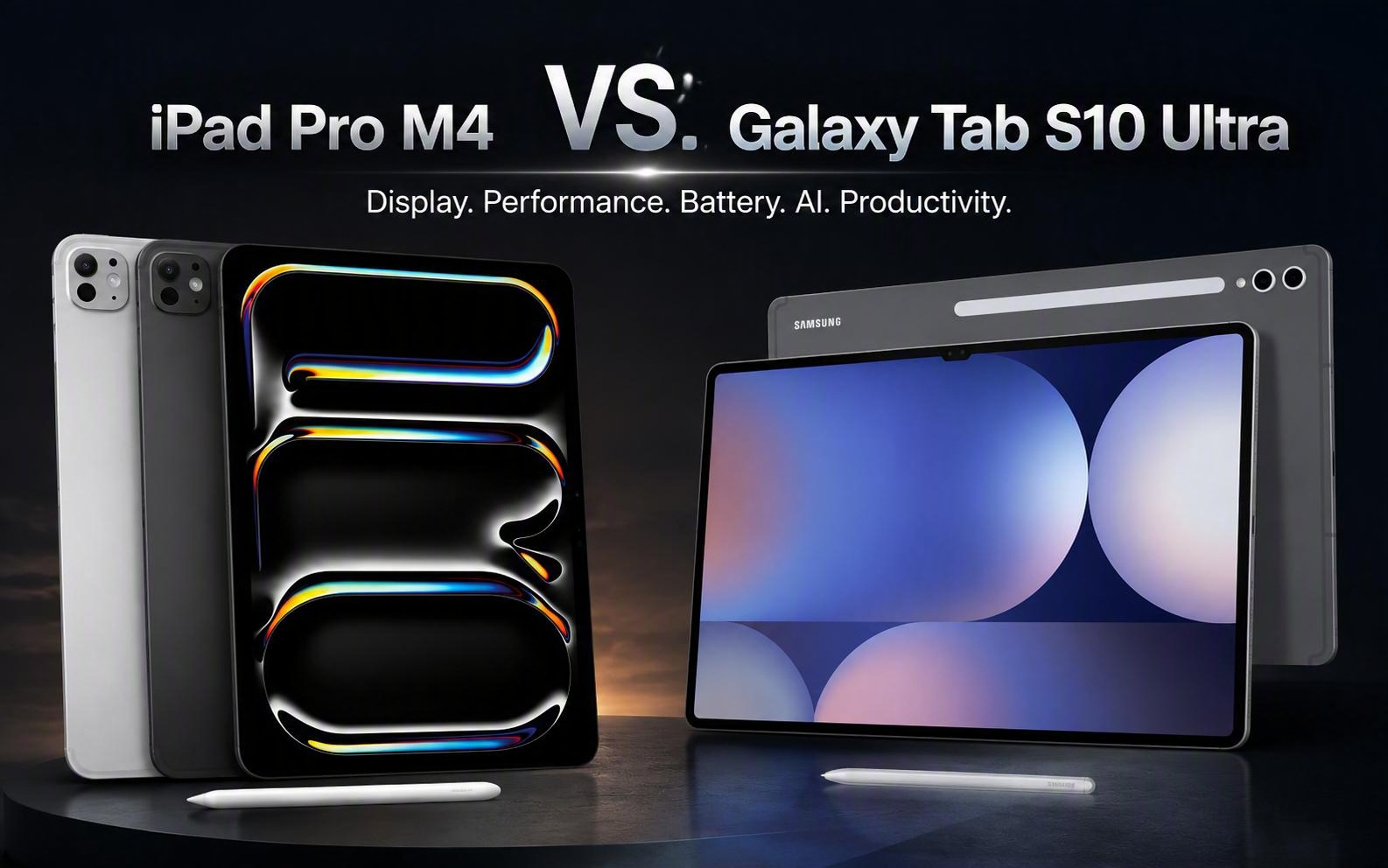
The debate surrounding the iPad Pro M4 vs. Samsung Galaxy Tab S10 Ultra defines top-tier tablet innovation today. Apple released its thinnest hardware slate featuring groundbreaking M4 silicon and tandem OLED technology. Meanwhile, Samsung expanded its ecosystem by delivering a giant display paired with advanced artificial intelligence tools. Both technology giants target demanding creative professionals who need high computing power and seamless versatility. Consequently, buyers must evaluate display quality, overall performance, and software ecosystems before selecting a premium device.
Global tablet shipments grew substantially in recent quarters as manufacturers refreshed their flagship product portfolios. Strong customer demand for premium slates lifted overall market revenues across major international regions. Apple currently leads global shipments, while Samsung maintains a firm hold on second place worldwide. However, intense competition forces both companies to innovate constantly through hardware refinements and intelligent software features. This comparison analyzes whether Samsung’s top Android slate finally surpasses Apple’s industry-standard flagship tablet.
iPad Pro M4 vs. Samsung Galaxy Tab S10 Ultra: Visual and Display Engineering
Display performance represents a primary battleground for these flagship tablets. Apple stacked two OLED panels together to create its Ultra Retina XDR tandem OLED display architecture. Indeed, independent testing confirms the iPad Pro panel reaches an extraordinary peak HDR brightness of 1,516 nits. This extreme brightness level delivers vibrant visuals, deep contrast, and remarkable color accuracy for high-end video editing. In contrast, Samsung opts for a larger 14.6-inch Dynamic AMOLED 2X display with crisp resolution and smooth motion.
The Galaxy Tab S10 Ultra panel reaches 775 nits of peak HDR brightness during laboratory measurements. Samsung equips the display with an anti-reflective coating that dramatically cuts distracting ambient glare. This optical treatment reduces reflections by roughly sixty-five percent compared to standard glossy glass screens. Therefore, users working outdoors or under direct overhead lighting enjoy much clearer visibility on the Samsung slate. Apple offers nano-texture anti-glare glass only on higher-tier storage models at a premium extra charge.
Performance Benchmarks and Processing Power
Raw computing power highlights a major structural difference between Apple and Samsung tablet architectures. Apple built the M4 chip using an advanced second-generation three-nanometer semiconductor manufacturing process. In fact, benchmark results show the M4 achieving multi-core Geekbench 6 scores near 14,600 points. The M4 GPU introduces hardware-accelerated ray tracing to deliver realistic lighting effects in heavy graphical applications. Moreover, its 16-core Neural Engine processes up to 38 trillion operations per second for artificial intelligence workloads.
Samsung switched processors by equipping the Galaxy Tab S10 Ultra with MediaTek's Dimensity 9300+ chipset. On the other hand, synthetic CPU tests show the Dimensity 9300+ trailing Apple's M4 in multi-core speed. The MediaTek processor still easily handles heavy multi-app split-screen tasks and intensive Android mobile games. The MediaTek chip features an Immortalis-G720 GPU that supports hardware ray tracing for enhanced graphic rendering. Thermal dissipation remains effective across both slates during long gaming sessions or continuous photo rendering.
Hardware Specifications and Direct Comparison
Physical engineering reveals contrasting design choices regarding tablet portability, structural rigidity, and overall size. Apple crafted an extraordinarily thin profile measuring just 5.1 millimeters for the 13-inch iPad Pro. Conversely, Samsung built the Galaxy Tab S10 Ultra with an expansive 14.6-inch display inside a 5.4-millimeter chassis. Samsung reinforces its chassis with Armor Aluminum and achieves an IP68 dust and water resistance rating.
As a result, Samsung offers superior environmental protection against accidental liquid spills or dusty outdoor settings. Battery longevity tests demonstrate that Apple maintains a distinct efficiency advantage over Samsung in daily runtime. The iPad Pro M4 lasted over 13 hours during standardized continuous web browsing tests. The Galaxy Tab S10 Ultra recorded 9 hours and 22 minutes under identical laboratory testing conditions. Nevertheless, Samsung includes an IP68-rated S Pen stylus inside the retail package without adding extra cost. Apple obliges customers to buy the Apple Pencil Pro separately for writing, drawing, and digital navigation.
Software Ecosystems and Productivity Tools
Software capabilities determine whether these powerful slates can effectively replace traditional desktop or laptop computers. Samsung DeX transforms the mobile user interface into a desktop-like environment complete with a flexible taskbar. Thus, power users easily manage multiple overlapping app windows and connect external displays up to 4K resolution. Apple uses Stage Manager within iPadOS to organize windowed multitasking on the Ultra Retina display. In comparison, many creative professionals feel iPadOS still limits full desktop file management and application workflows.
Artificial intelligence capabilities have become central to both tablet software platforms in recent operating system updates. Galaxy AI includes Circle to Search, Note Assist, audio transcriptions, and Sketch to Image generative tools. In parallel, Apple Intelligence integrates Writing Tools, photo Clean Up, and notification priorities across iPadOS. Samsung adopts a hybrid processing architecture that combines local on-device task execution with cloud artificial intelligence services. Apple prioritizes on-device processing paired with Private Cloud Compute to safeguard user privacy during complex queries.
Market Strategy and Final Verdict
Industry market share reports show Apple commanding over forty percent of global tablet shipments each quarter. Samsung maintains second position globally by offering diverse screen sizes and bundled ecosystem accessories. Likewise, expandable microSD storage up to 1.5TB makes Samsung particularly attractive for storage-hungry power users. Apple attracts digital artists and video producers through superior raw performance and unmatched display peak brightness. Similarly, the lightweight thinness of the iPad Pro M4 sets a benchmark for ultra-portable mobile computing design.
Determining whether Android beats Apple depends heavily on specific user requirements and software workflow priorities. Samsung wins on multi-window productivity, included stylus value, outdoor display glare reduction, and desktop interface flexibility. Even so, Apple dominates processing speed, single-core CPU power, battery life longevity, and display peak HDR brightness. The Galaxy Tab S10 Ultra provides the most capable desktop replacement experience ever seen on Android. Ultimately, while Samsung narrows the gap significantly, Apple retains the ultimate hardware performance leadership in 2025.
Support Our Work
Help us keep creating and maintaining our projects. We appreciate your support!
Ways to contribute:
Shop via Affiliate LinksSupport us at no extra cost to you while you shop.
Support on Ko-fiBuy us a coffee to keep the engine running!



Leave a Reply