

Evolving Market Dynamics in the Premium Tablet Sector
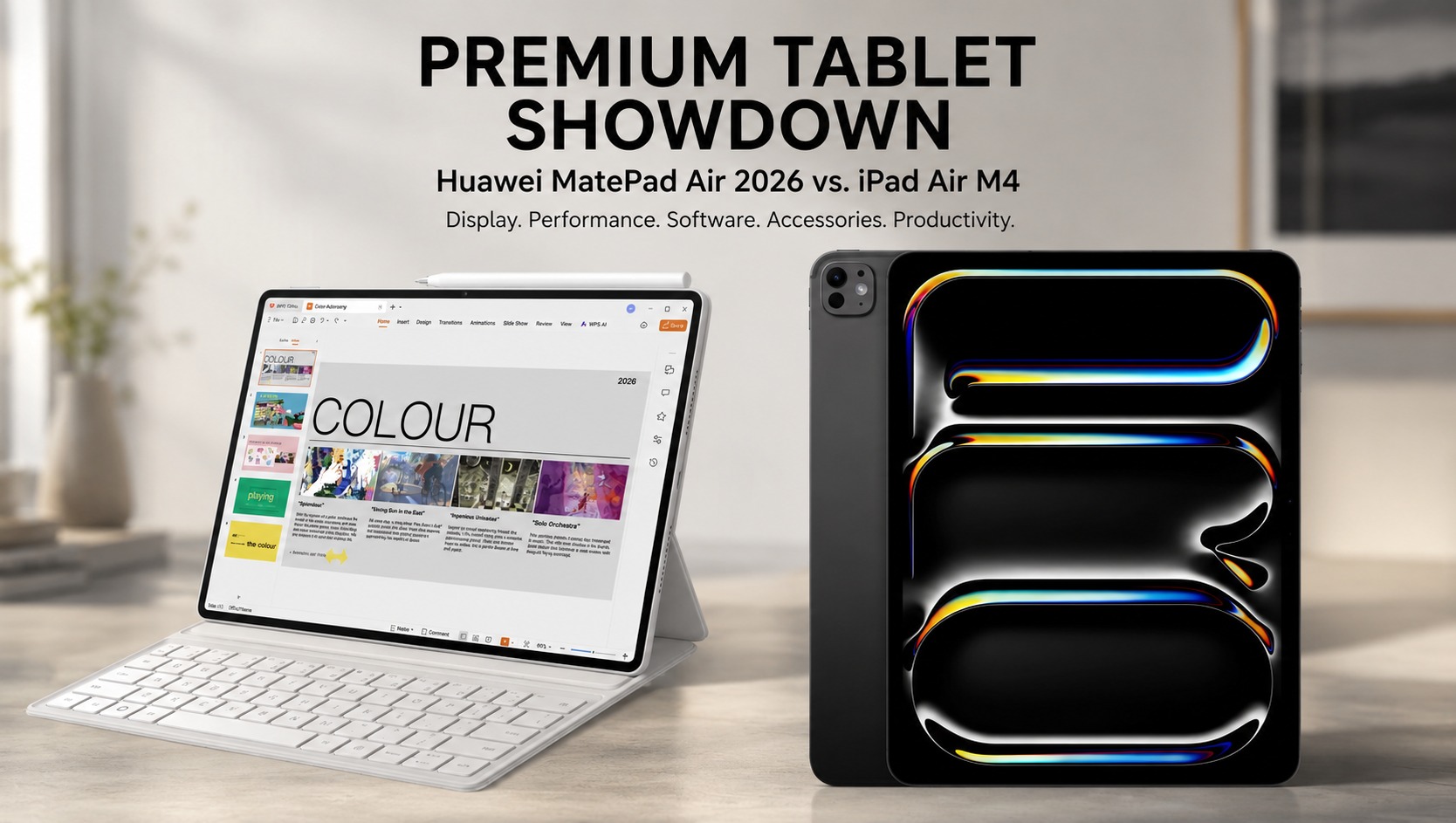
Premium tablet competition intensified significantly following recent hardware refreshes across global consumer electronics markets. The rivalry between the Huawei MatePad Air (2026) vs. Apple iPad Air (M4) defines this technological transition. Consequently, both manufacturers target demanding enterprise and creative workflows with upgraded silicon and displays. Global tablet shipments recorded modest expansion throughout early 2026 despite persistent semiconductor constraints.
Meanwhile, consumer preferences shifted toward hybrid devices that combine laptop productivity with lightweight portability. Apple maintains dominant global sales volume through expansive distribution channels and institutional deployments. However, Huawei captures expanding market share across Asia through rapid product innovation. This divergence establishes a compelling rivalry across distinct hardware and operating system philosophies.
Comparative Architecture of the Huawei MatePad Air (2026) vs. Apple iPad Air (M4)
A detailed hardware comparison highlights contrasting engineering priorities between both flagship tablets. Specifically, differences across display panels, memory configurations, and thermal management shape daily usability. The following matrix summarizes key technical specifications based on official manufacturer disclosures.
| Feature / Specification | Huawei MatePad Air (2026) | Apple iPad Air (M4) |
| Display Panel | 12.0-inch OLED (PaperMatte option) | 11.0-inch or 13.0-inch Liquid Retina IPS LCD |
| Resolution & Density | 2800 × 1840 pixels (~279 ppi) | 2360 × 1640 (11″) / 2732 × 2048 (13″) (~264 ppi) |
| Peak Refresh Rate | 144Hz | 60Hz |
| Maximum Brightness | Up to 1200 nits | 500 nits (11″) / 600 nits (13″) |
| Processor Platform | HiSilicon Kirin T93C (7nm) | Apple M4 (8-core CPU, 9-core GPU) |
| System Memory | 8GB / 12GB RAM | 12GB Unified Memory |
| Internal Storage | 256GB | 128GB / 256GB / 512GB / 1TB |
| Primary Camera | 50 MP (f/1.8, 4K video) | 12 MP (f/1.8, 4K video) |
| Front Camera | 12 MP (f/2.4) | 12 MP Landscape Center Stage (f/2.0) |
| Battery & Charging | 10,100 mAh; 66W wired fast charging | ~9,705 mAh (13″); 10-hour standard endurance |
| Audio System | 6 stereo speakers with Audio Vivid | Landscape stereo speakers |
| Wireless Connectivity | Wi-Fi 7, Bluetooth 5.2, NearLink | Wi-Fi 7 (Apple N1), Bluetooth 6, Optional 5G |
| Operating System | HarmonyOS 4.3 | iPadOS 26 |
| Base Starting Price | €849 (with keyboard bundle) | $599 (11″) / $799 (13″) |
Furthermore, Huawei includes high-speed 66W wired charging and bundles a keyboard accessory in standard configurations. Apple counters with versatile storage tiers that scale up to 1TB capacity. Thus, prospective buyers must weigh initial accessory value against expansive local storage requirements.
Display Technology and Visual Engineering
Screen quality represents a decisive battleground for modern creative and multimedia tablets. Huawei fitted the MatePad Air with a 12-inch OLED panel delivering vibrant 2.8K resolution. In addition, the panel achieves a 144Hz refresh rate and reaches 1200 nits peak brightness. The optional PaperMatte surface treatment uses precision nanoscale etching to cut reflections by 99%.
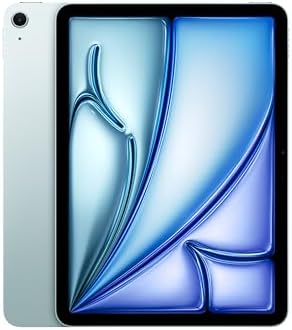
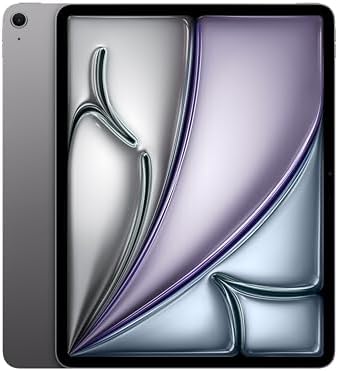
Conversely, Apple equips the iPad Air with traditional Liquid Retina IPS LCD panels. These screens support P3 wide color and True Tone technology for dependable color reproduction. Nonetheless, Apple restricts the Air line to 60Hz refresh rates, reserving ProMotion for costlier models. Huawei also engineered a slimmer 5.3mm chassis that weighs only 509 grams.
- 12.0-inch OLED (PaperMatte)
- 2800 × 1840 pixels (~279 ppi)
- 144Hz Peak Refresh Rate
- Up to 1200 nits
- 11.0″ or 13.0″ Liquid Retina IPS
- Up to 2732 × 2048 (~264 ppi)
- 60Hz Refresh Rate
- 500 nits (11″) / 600 nits (13″)
Silicon Performance and Thermal Architecture
Apple placed its high-performance M4 processor at the center of the iPad Air lineup. The M4 features an eight-core CPU alongside a nine-core GPU with hardware-accelerated ray tracing. Notably, the 16-core Neural Engine processes complex on-device machine learning operations with remarkable speed. Apple integrates 12GB of unified memory with a massive 120 GB/s bandwidth.
In contrast, Huawei utilizes its custom Kirin T93C chipset inside the MatePad Air. Benchmark evaluations show smooth application navigation and stable thermal dissipation under prolonged productivity tasks. Therefore, everyday tasks like multi-window document editing run fluidly without noticeable performance degradation. Apple retains a decisive computational advantage for intensive 4K video exports and complex 3D rendering.
Operating Systems and Productivity Capabilities
Software design determines how effectively tablet hardware translates into practical workstation productivity. Apple ships the iPad Air with iPadOS 26, featuring the updated Liquid Glass interface. Moreover, advanced windowing controls allow users to position and resize applications freely across workspaces. Apple Intelligence embeds contextual writing tools and image creation features directly into system apps.
Simultaneously, Huawei deploys HarmonyOS 4.3 to establish PC-level functionality across its device ecosystem. The operating system integrates desktop-grade WPS Office tools with automated AI document assistance. Additionally, Huawei’s GoPaint software delivers extensive canvas options and brush simulation for digital artists. Integrated continuity tools facilitate instant cross-device clipboard sharing and file dragging between connected hardware.
Accessory Ecosystems and Connectivity Innovations
Peripheral ecosystems transform lightweight slates into powerful standalone computer substitutes. Apple supports the Apple Pencil Pro with haptic feedback and squeeze detection sensors. Similarly, the Magic Keyboard offers a floating cantilever design with an integrated precision trackpad. Huawei pairs its slate with the NearLink M-Pencil Pro for ultra-low latency digital handwriting.
Concurrently, wireless standards across both tablets highlight rapid telecommunications advancements. Both devices integrate high-bandwidth Wi-Fi 7 modules for swift file exchanges on compatible networks. Nevertheless, Apple provides optional sub-6 GHz 5G mobile connectivity powered by its custom C1X modem. Huawei relies solely on local Wi-Fi positioning and mobile hotspot tethering for wireless connectivity.
Supply Chain Realities and Market Outlook
Upstream component dynamics significantly alter consumer technology strategies throughout 2026. Semiconductor manufacturers allocated massive DRAM and NAND flash capacity toward enterprise artificial intelligence servers. As a result, consumer hardware brands face rising component costs across high-capacity device tiers. Tablet makers must deliver premium hardware features at competitive prices to maintain stable consumer demand.
Accordingly, Huawei accelerated tablet shipments across Asian, European, and Middle Eastern markets. Huawei recorded remarkable 28% year-over-year shipment growth during the first quarter of 2026. Apple fortified its global market lead through strategic channel promotions and education discounts. Industry analysts expect mid-premium tablets to drive market growth as replacement cycles normalize.
Strategic Takeaways and Purchasing Decisions
Selecting between these premium tablets depends on individual workflow demands and platform ecosystems. The iPad Air M4 excels for power users needing supreme computational speed and expansive storage. Digital creators working with heavy rendering pipelines will maximize productivity on Apple silicon. Apple’s mature tablet software catalog ensures long-term professional application support and consistent updates.
The Huawei MatePad Air provides superior display performance, bundled accessories, and anti-glare reading comfort. Its 144Hz OLED panel and 50MP camera package offer unmatched visual fidelity at this price. Intense competition between these industry giants accelerates hardware innovation across the broader marketplace. Both slates establish compelling benchmarks for modern mobile computing versatility and digital workflow efficiency.
Support Our Work
Help us keep creating and maintaining our projects. We appreciate your support!
Ways to contribute:
Shop via Affiliate LinksSupport us at no extra cost to you while you shop.
Support on Ko-fiBuy us a coffee to keep the engine running!


Leave a Reply