


- HB-Series Lenses With Auto Detection: HERO13 Black is compatible with the HB-Series Lenses that let you instantly set up…
- Best-in-Class 5.3K Video: 5.3K video delivers breathtaking image quality with 91% more resolution than 4K and an incredi…
- Burst Slo-Mo: HERO13 Black features our slowest slo-mo ever with the ability to record video clips with the action slowe…
Financial Performance and GoPro Stock and Its Future
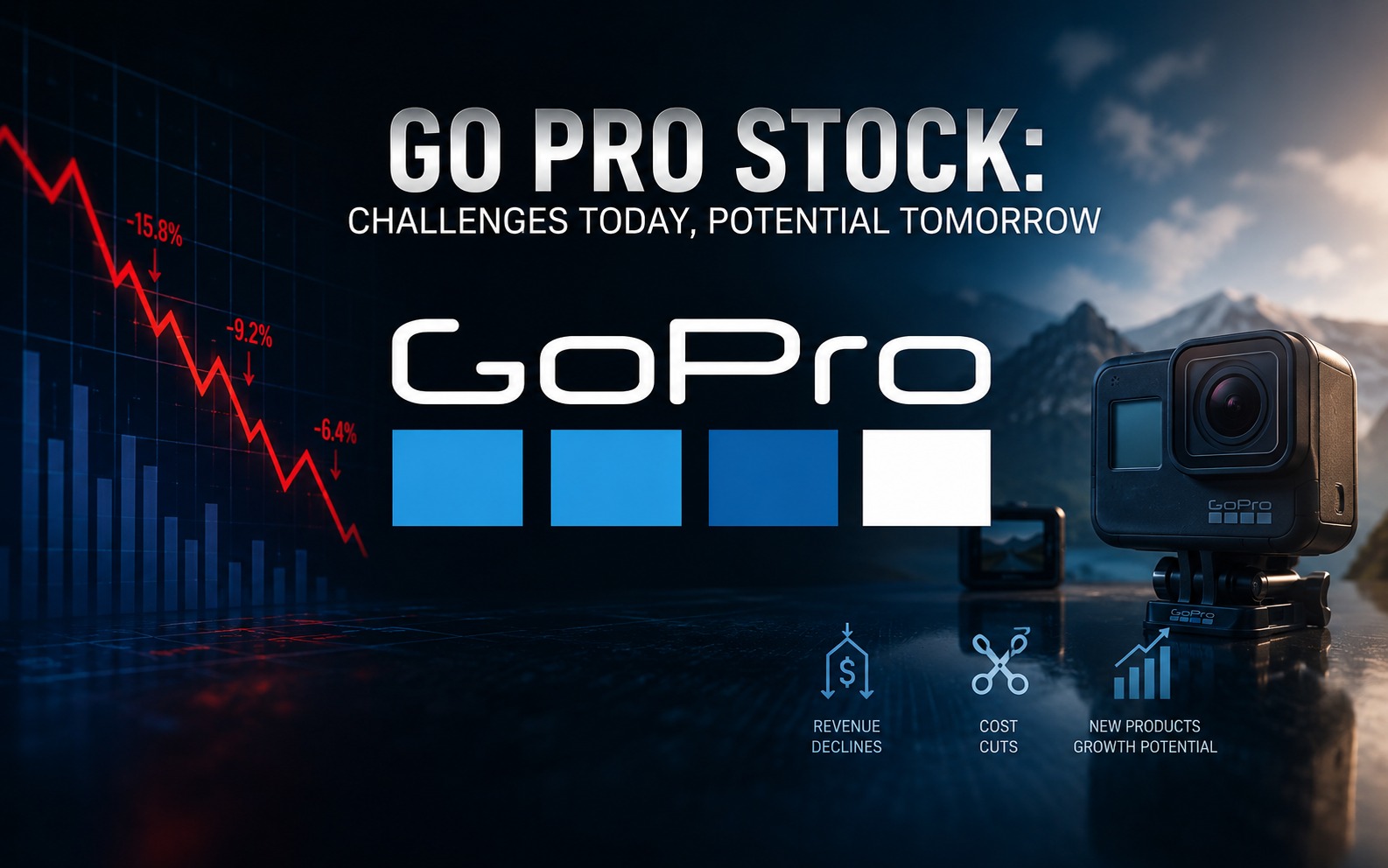
Investors closely monitor GoPro Stock and Its Future as the business navigates revenue contraction. Specifically, annual revenue declined from $801.5 million in 2024 to $651.5 million in 2025. Action camera sell-through dropped twenty percent year-over-year to roughly two million units. Fourth quarter sales reached $202 million while full year hardware sales fell. Retail channels generated $154 million during the fourth quarter accounting period. Direct website sales through GoPro.com contributed $48 million during that timeframe.
Operating losses remained substantial at $83.3 million for full year 2025. However, GAAP net loss improved to $93.5 million from $432.3 million previously. First quarter 2026 filings revealed revenues falling further to $99 million. Meanwhile, second quarter 2026 revenues reached $105 million amid retail slumps. International markets generated fifty-two percent of total 2025 revenues. Consequently, global currency swings and foreign market weakness hindered corporate earnings.
💰 GoPro Revenue Contraction & Distribution
Visualizing annual top-line decline and channel distribution metrics (2024-2026).Strategic Cost Controls and Operational Restructuring
Corporate leadership initiated aggressive cost reduction initiatives to protect total cash reserves. Operating expenses fell by $93 million during 2025, representing a twenty-six percent reduction. Furthermore, management reduced research spending by thirty-two percent to limit cash burn. Marketing budgets experienced a thirty-seven percent cut as campaigns faced caps. Operating cash flow improved by $104 million through strict inventory discipline.
Severe component cost increases placed heavy pressure on overall gross profit margins. In particular, critical memory chip prices escalated by more than eighty percent. Import tariffs added twenty million dollars in unexpected expense burdens during 2025. Nevertheless, GAAP gross margin held steady at thirty-three point six percent. Operational efficiency gains helped offset manufacturing cost increases across international plants.
⭐ Product Innovations & Services
Evaluating hardware updates, acquisitions, and recurring revenue metrics.Product Innovations and Strategic Acquisitions
Timely product launches remain vital for driving regular hardware upgrade cycles. Notably, the HERO13 Black introduced interchangeable HB-Series auto-detecting specialized lenses. The camera features an upgraded 1900mAh battery for extended continuous video recording. Additionally, a compact $199 HERO camera expanded market entry for beginner creators. Flagship cameras priced above $400 generated eighty-four percent of fourth-quarter camera sales.
GoPro completed its acquisition of Forcite Helmet Systems in February 2024. Therefore, the acquisition enables smart motorcycle helmet integration with embedded safety technology. Development delays pushed the MAX 2 360-degree camera release into 2025. Indeed, executives plan to introduce custom GP3 AI processors in Q2 2026. Next-generation processors will power future cameras with advanced automated video features.
⭐ Product Innovations & Services
Evaluating hardware updates, acquisitions, and recurring revenue metrics.Recurring Services and Market Valuation
Subscription services generate high-margin recurring income that balances seasonal hardware slumps. Subscription revenue reached $106 million throughout 2025 despite lower camera shipments. In comparison, the total subscriber count dropped seven percent to 2.36 million users. Higher average revenue per user helped stabilize overall subscription service earnings. Slower subscriber growth poses clear profit risks if camera sales stay weak.
Equity markets severely reduced valuation multiples following repeated annual net losses. For example, shares traded around sixty cents with market capitalization near $110 million. Wall Street equity analysts maintain a consensus sell rating with a fifty-cent target. Simultaneously, external auditors issued a formal going concern warning in June 2026. A federal court also invalidated a key patent claim in May 2026.
Financial Summary and Key Operational Metrics
Financial metrics demonstrate operational restructuring gains alongside top-line sales pressure. Accordingly, the table below outlines core financial and operational shifts between 2024 and 2025.
Operating loss reductions reflect significant operational efficiency gains across business segments. In contrast, camera unit sales declines reveal continuous market pressure from modern smartphones. Eliminating long-term debt strengthened balance sheet flexibility during recent operating quarters. Management must preserve cash reserves until new product lines enter retail stores.
📊 Key Operational Metrics Summary
Comparing critical performance indicators between 2024 and 2025 accounting periods.| Financial & Operational Metric | 2024 Result | 2025 Result | Performance Shift |
|---|---|---|---|
| Total Revenue | $801.5M | $651.5M | 🔻 18.7% Decline |
| GAAP Operating Loss | $135.0M | $83.3M | 🔼 38.3% Improvement |
| GAAP Gross Margin | 33.8% | 33.6% | 🔻 20 bps Decline |
| Subscriber Count | 2.52M | 2.36M | 🔻 6.3% Decline |
| Operating Cash Flow | Negative | +$104M YoY | 🔼 Positive Shift |
Industry Outlook and Operational Roadmap
Turnaround success depends on effective software developments and upcoming hardware releases. Reversing subscription user losses remains crucial for long-term profit margin expansion. Thus, integrating GP3 AI chips may restore product differentiation against key competitors. Supply chain stabilization will protect unit margins from further memory cost spikes. Smart helmet technology offers attractive entry into growing commercial safety sectors.
Executive leadership must balance budget cuts against vital research investments. Excessive spending reductions could harm fundamental technological competitiveness over time. Meanwhile, investors evaluate cash burn trajectories against projected launch schedules. Execution quality will determine whether new hardware features restore sustainable growth. Cost controls provide interim stability, but top-line growth remains vital for recovery.
Strategic execution across direct and retail distribution channels requires constant monitoring. Similarly, overseas sales growth depends on stable global macroeconomic conditions. Product innovations must convince existing action camera users to upgrade hardware. Consequently, brand equity remains a foundational asset during ongoing corporate restructuring. Stabilizing user churn will solidify recurring revenue streams over coming quarters. Ultimately, market confidence will rebuild as profitability metrics show persistent expansion.
Support Our Work
Help us keep creating and maintaining our projects. We appreciate your support!
Ways to contribute:
Shop via Affiliate LinksSupport us at no extra cost to you while you shop.
Support on Ko-fiBuy us a coffee to keep the engine running!






Leave a Reply