


Era of Flagship Foldables
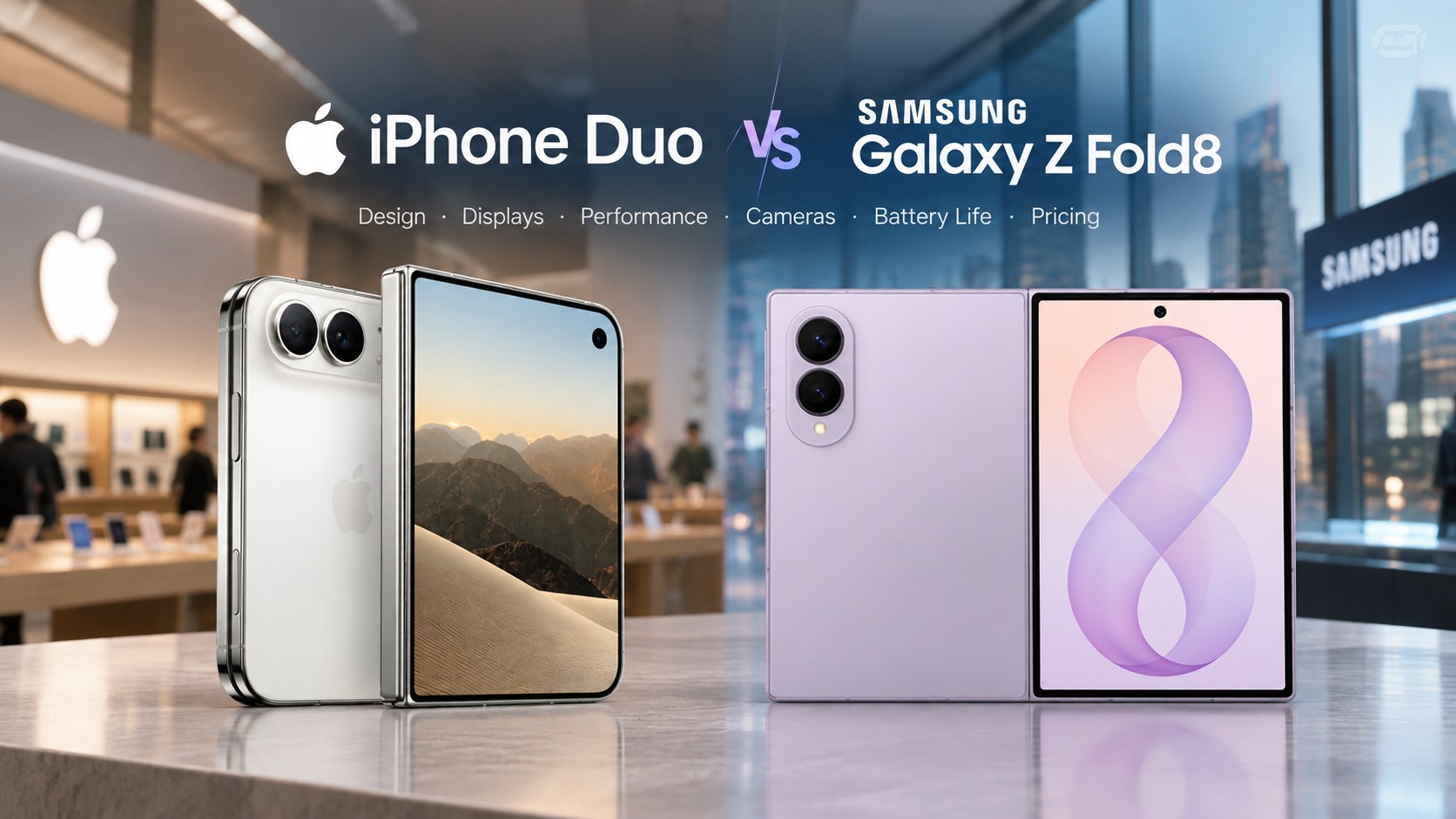
The smartphone landscape transformed dramatically following recent product announcements from major technology leaders. Analysts closely evaluate the Apple iPhone Duo vs. Samsung Galaxy Z Fold8 rivalry in the premium segment. Samsung unveiled its eighth-generation book-style foldable during the London Unpacked event in July 2026. Meanwhile, Apple officially launched its first folding handset during a dedicated September keynote address.
Both manufacturing giants aim to capture dominance across the rapidly expanding folding device sector. Consequently, mobile buyers now choose between two distinct technological philosophies and ecosystem designs. Samsung relies on refined structural iteration across multiple device generations. In contrast, Apple introduces novel materials and structural innovations for its inaugural foldable hardware.
Structural Engineering and Chassis Design
Physical dimensions demonstrate contrasting hardware priorities between the two major smartphone manufacturers. Samsung prioritized light construction to deliver maximum daily handling comfort. As a result, the Galaxy Z Fold8 weighs only 201 grams. The device measures just 4.5mm when opened and 9.7mm when closed. Engineers reduced mass by optimizing roughly 270 internal components.
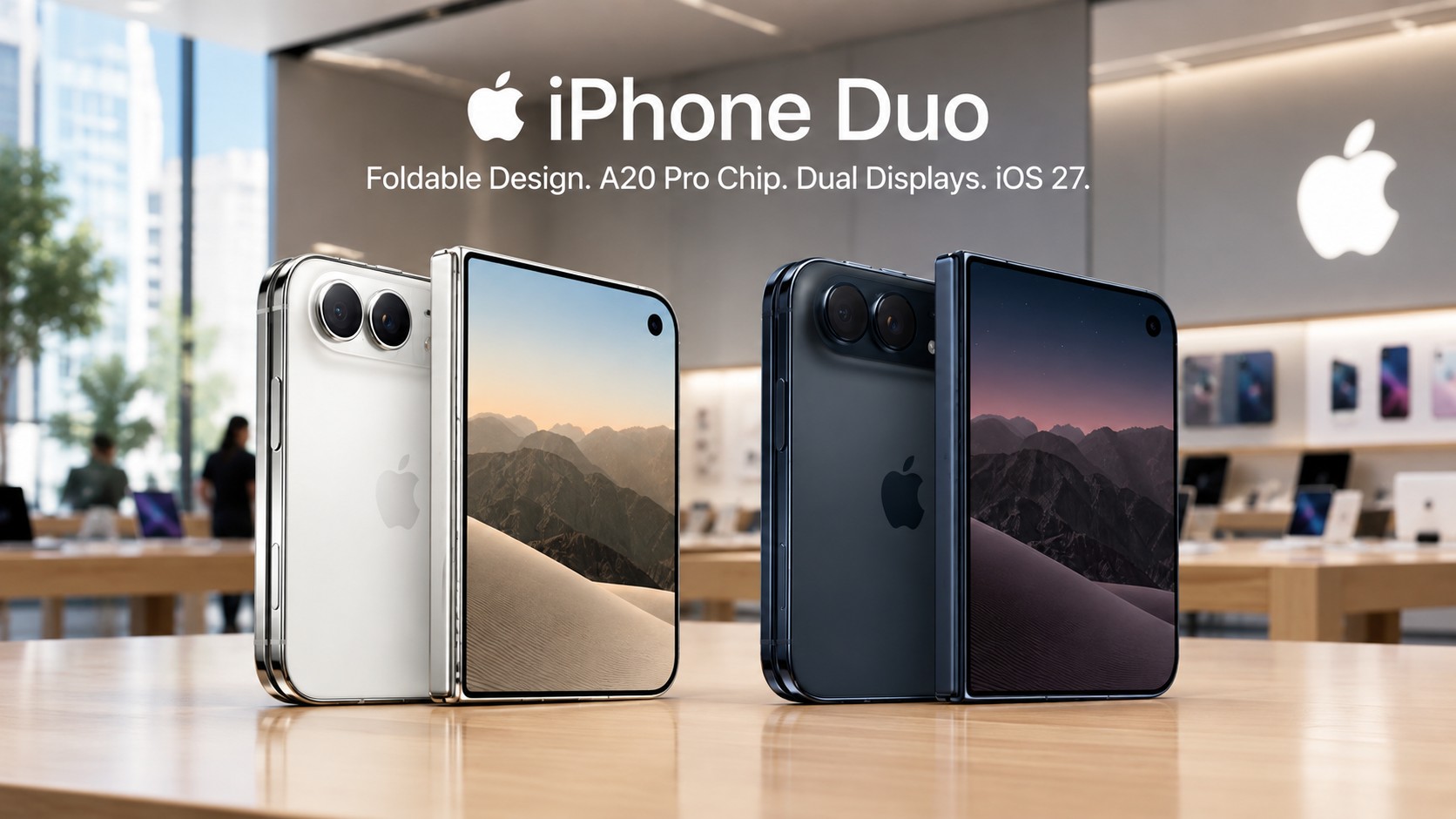
Apple selected heavy-duty titanium alloys to enhance structural rigidity throughout the frame. The iPhone Duo weighs 254 grams and measures 5.2mm unfolded. However, its Grade 5 titanium enclosure achieves IP68 dust and water resistance ratings. Samsung equips the Fold8 with IP48 protection and an Armor FlexHinge mechanism.
Display Architecture and Crease Reduction
Both flagship devices incorporate large 7.6-inch main inner displays for immersive viewing experiences. Specifically, Samsung utilizes Flex Titanium tech alongside a laser-drilled metal support plate. Therefore, screen crease visibility decreases while panel rigidity improves over previous model generations. The Z Fold8 cover display features a 5.5-inch panel with a 10:16 aspect ratio.
Apple applies a specialized nano-texture finish on the inner display to minimize surface glare. The Duo inner panel reaches 3,000 nits peak brightness and supports Apple Pencil input. Furthermore, capacitive Touch ID replaces Face ID within the side power button. Its outer display spans 5.4 inches with matching internal aspect proportions.
Technical Specifications of Apple iPhone Duo vs. Samsung Galaxy Z Fold8
Internal processing hardware represents peak performance capabilities for both computing ecosystems. Samsung embeds the 3nm Snapdragon 8 Elite Gen 5 processor inside the Fold8. Simultaneously, Apple debuts its 2nm A20 Pro chipset to drive foldable multitasking software.
| Feature / Specification | Apple iPhone Duo | Samsung Galaxy Z Fold8 |
| Starting Base Price | $1,999 | $1,649 – $1,899 |
| Device Weight | 254 grams | 201 grams |
| Unfolded Thickness | 5.2 mm | 4.5 mm |
| Main Inner Display | 7.6-inch Super Retina XDR OLED | 7.6-inch Dynamic AMOLED 2X |
| Cover Outer Display | 5.4-inch Super Retina XDR OLED | 5.5-inch Dynamic AMOLED 2X |
| Processor Architecture | Apple A20 Pro (2nm) | Snapdragon 8 Elite Gen 5 (3nm) |
| System RAM Capacity | 12GB LPDDR5X | 12GB / 16GB |
| Max Internal Storage | Up to 2TB | Up to 1TB |
| Rear Camera Sensors | Dual 48MP Wide + Ultra Wide | Dual 50MP Wide + Ultra Wide |
| Maximum Video Capture | 4K @ 120fps Dolby Vision | 8K @ 30fps |
| Ingress Rating | IP68 | IP48 |
Memory configurations provide high bandwidth for modern artificial intelligence applications. For instance, Samsung supplies options for 12GB or 16GB of system memory. Additionally, Apple pairs 12GB of LPDDR5X RAM with up to 2TB storage capacity. Both devices incorporate custom vapor chambers for effective thermal dissipation during heavy gaming.
Battery Efficiency and Camera Capabilities
Battery configurations reflect distinct engineering strategies for managing power across dual displays. Samsung relies on a single 4,800 mAh silicon-carbon cell with 45W charging capabilities. Accordingly, the Fold8 recharges quickly while offering up to 26 hours of video playback. Apple implements a twin-battery layout rated for up to 31 hours of inner video playback.
Rear camera modules cater to advanced photography needs without bulky periscope hardware. Samsung installs dual 50MP primary and ultra-wide camera lenses on the rear housing. Conversely, Apple features dual 48MP Fusion sensors supporting 4K 120fps Dolby Vision video recording. An under-display FaceTime camera sits inside the Duo inner folding screen.
Market Strategy and Ecosystem Outlook
Pricing strategies define distinct market targets across the premium smartphone landscape. Samsung sets base retail pricing between $1,649 and $1,899 for entry storage tiers. Alternatively, Apple establishes its base configuration price point at $1,999. Preorders for the iPhone Duo open in October ahead of wide global retail availability.
Competition between these folding flagships accelerates hardware innovation across the broader mobile industry. Samsung maintains an advantage in total device weight and entry pricing flexibility. Ultimately, consumer adoption will depend on operating system preference and desired form factor ergonomics. Growth trajectories indicate strong commercial momentum for book-style foldable smartphones globally.
Support Our Work
Help us keep creating and maintaining our projects. We appreciate your support!
Ways to contribute:
Shop via Affiliate LinksSupport us at no extra cost to you while you shop.
Support on Ko-fiBuy us a coffee to keep the engine running!




Leave a Reply