

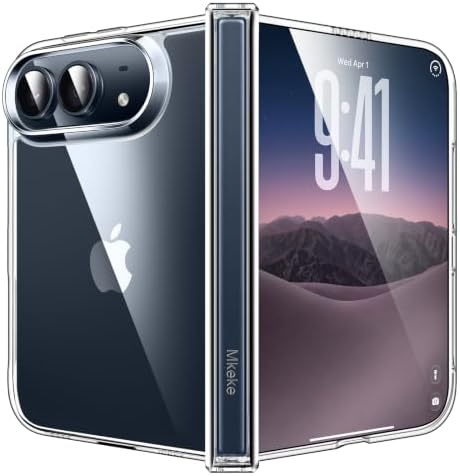
- Integrated Hinge Connection: Made of durable material, the Hinge connects both sides of the iPhone Duo case, offering fu…
- Crystal Clear: This for iPhone Duo Clear case, crafted from oxidation-resistant material, effectively repels fingerprint…
- Only for iPhone Duo 2026: Fit for iPhone Duo Case, released in 2026. Before you place an order, please confirm the phone…

- Compatibility: This case is only designed fo iPhone Duo. lt features precise cutouts for easy access to all buttons, spe…
- Strong Magnetic: It is compatible with MagSafe and other wireless chargers, with strong built-in magnets for a secure fi…
- Shock Protection: Passing military drop tests up to 10 feet, your device is effectively protected from violent impacts a…
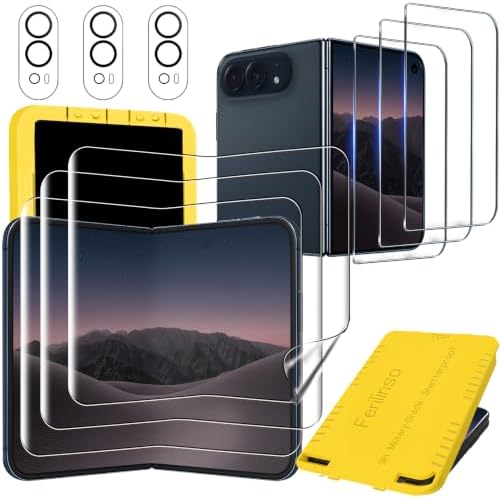
- Provide the Strongest Protection: Different from the ordinary screen protector in the market. Ferilinso’s protector made…
- Unmatched Lens Protection: The lens of the new iPhone Duo cell phone stands out in particular, and to better protect the…
- 3 Pack Back Tempered Glass: Advanced laser cutting creates 2.5D rounded edges that feel great in your hand. Aircraft gra…
Market Dynamics of the iPhone Duo vs. Xiaomi 18 Fold
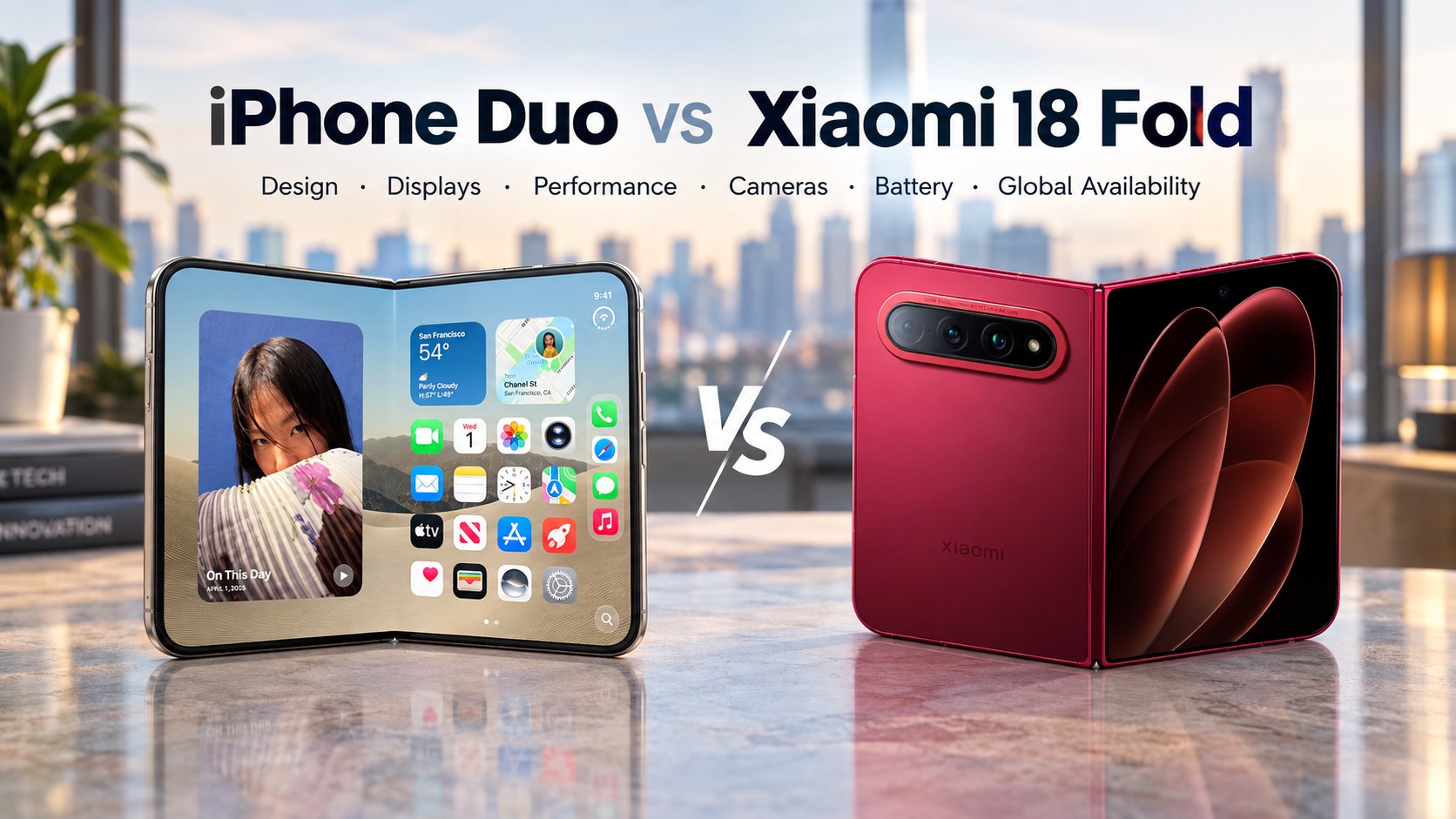
Tech enthusiasts actively analyze the recent market rivalry between the iPhone Duo vs. Xiaomi 18 Fold. Both tech giants unveiled their latest flagship devices in September 2026. Apple designed its first foldable phone with titanium materials and deep iOS integration. However, Xiaomi focused on reducing device weight while enlarging total battery capacity.
Consumers now expect thinner form factors without sacrificing core hardware features. Furthermore, custom silicon chips power both devices to improve daily thermal performance. Industry analysts view this competitive launch as a turning point for premium hardware.
⚖ Ergonomics & Build
Weight, Thickness & Durability MetricsErgonomics and Structural Engineering
Physical dimensions heavily influence daily user comfort during prolonged handling sessions. The Xiaomi 18 Fold weighs 219 grams for easy single-handed operation. Conversely, Apple’s titanium chassis increases total device weight to 254 grams. Xiaomi measures just 5.02mm thick when unfolded into tablet mode. Apple measures 5.2mm unfolded and expands to 11.3mm when closed.
Ruggedness remains another major factor for premium foldable buyers. Apple secures full IP68 ingress protection against environmental exposure. Meanwhile, Xiaomi provides IP58 and IP59 protection against water intrusion. For instance, raised camera bars on the Xiaomi double as ergonomic finger rests.
Display Systems and Optical Hardware
Screen technology directly determines visual performance across various ambient light conditions. Apple equips its device with a 7.6-inch inner OLED panel. Additionally, the display features anti-reflective nano-texture glass to minimize glare. Xiaomi features a 7.58-inch HyperRGB AMOLED display reaching 4,000 nits peak brightness.
Outer cover screens allow fast interactions without unfolding the main display. Xiaomi matches aspect ratios across both panels for smooth interface scaling. Apple incorporates active Apple Pencil stylus support on its primary inner screen. In contrast, Xiaomi omits stylus functionality from its foldable screen layout.
📺 Screens & Silicon
Hardware Processing & Visual OutputsHardware Specifications Comparison
Direct specification comparisons highlight clear differences in hardware design priorities. Consequently, prospective buyers can evaluate key components through verifiable technical metrics.
A side-by-side data comparison clarifies exact operational capabilities.
| Specification | Apple iPhone Duo | Xiaomi 18 Fold |
| Inner Screen | 7.6-inch OLED, 120Hz | 7.58-inch AMOLED, 120Hz |
| Outer Screen | 5.4-inch OLED, 120Hz | 5.38-inch AMOLED, 120Hz |
| Processor | Apple A20 Pro (2nm) | Xiaomi XRing O3 (3nm) |
| Main Camera | 48MP Dual System | 200MP Triple System |
| Telephoto Lens | None | 50MP Periscope (3.5x) |
| Battery | 4,700mAh | 6,000mAh Si-Carbon |
| Charging Speed | 25W Wireless | 67W Wired / 50W Wireless |
| Weight | 254g | 219g |
| Ingress Protection | IP68 | IP58 / IP59 |
| Distribution | 75+ Countries | China Exclusive |
Therefore, raw specifications demonstrate contrasting approaches toward battery capacity and zoom lenses.
Silicon Performance and Battery Endurance
Advanced chipsets drive overall system efficiency and heavy multitasking workload performance. Apple integrates its custom 2nm A20 Pro silicon chip inside the chassis. Alternatively, Xiaomi utilizes its custom 3nm XRing O3 system processor. Apple offers extended storage configurations extending up to two full terabytes.
Battery architecture highlights another crucial split between both tech manufacturers. Xiaomi fits a massive 6,000mAh silicon-carbon cell into its ultra-thin chassis. Moreover, the device supports fast 67W wired and 50W wireless HyperCharge. Apple uses a 4,700mAh battery paired with 25W MagSafe magnetic alignment.
🔋 Power Endurance & Charging
Battery Capacity & Replenishment RatesCamera Arrays and Computational Imaging
Mobile photography capabilities reflect distinct camera engineering decisions. Xiaomi installs a versatile triple rear camera array. Specifically, its primary camera incorporates a high-resolution 200MP sensor. A dedicated 50MP periscope camera provides 3.5x optical zoom functionality.
Apple chooses a dual-lens array featuring two 48MP camera sensors. Nonetheless, the device lacks a dedicated telephoto camera lens. Apple relies on computational photography to deliver cropped digital zoom images. Xiaomi enables dual-view framing across front and rear cameras simultaneously.
Software Ecosystems and Global Market Strategy
Software optimization largely dictates daily user satisfaction with large foldable displays. Apple’s iOS 27 smoothly transitions active apps between cover and main screens. For example, cover display elements map seamlessly onto the expanded inner workspace. Users retain their visual layout when unfolding the device during work.
Xiaomi HyperOS provides desktop-style window tiling for multitasking efficiency. Nevertheless, the Xiaomi 18 Fold remains limited to the Chinese domestic market. Global units lack built-in Google Play services out of the box. On the other hand, Apple launches its foldable across more than 75 nations worldwide.
📷 Imaging & Market Reach
Optical Arrays & Global DistributionIndustry Impact and Strategic Outlook
Structural engineering advances in foldable smartphones influence broader mobile market trends. Xiaomi proves that powerful optical zoom fits inside an ultra-thin frame. Thus, competing Android brands may adopt similar silicon-carbon battery solutions soon.
Apple demonstrates how custom software enhances physical display usability. As a result, market competition pushes foldable hardware into standard mainstream popularity. Consumers benefit from rapid technological development across software and hardware domains.
Support Our Work
Help us keep creating and maintaining our projects. We appreciate your support!
Ways to contribute:
Shop via Affiliate LinksSupport us at no extra cost to you while you shop.
Support on Ko-fiBuy us a coffee to keep the engine running!


Leave a Reply