

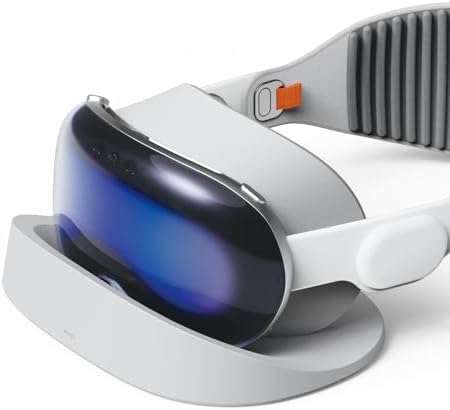
- UNLIKE OTHER PRODUCTS THAT are mass produced, all of our cases are designed IN HOUSE FROM SCRATCH. From a concept, all t…
- PREMIUM SILICONE MATERIAL PROTECTS YOUR AR headset’s screen from damage by absorbing the shock when resting it on it’s s…
- DESIGNED TO CONFORM TO THE headset so it rests perfectly. The tray has precisely shaped grooves for the Vision to rest t…
Apple Vision Pro vs. Samsung Galaxy XR: Market Analysis
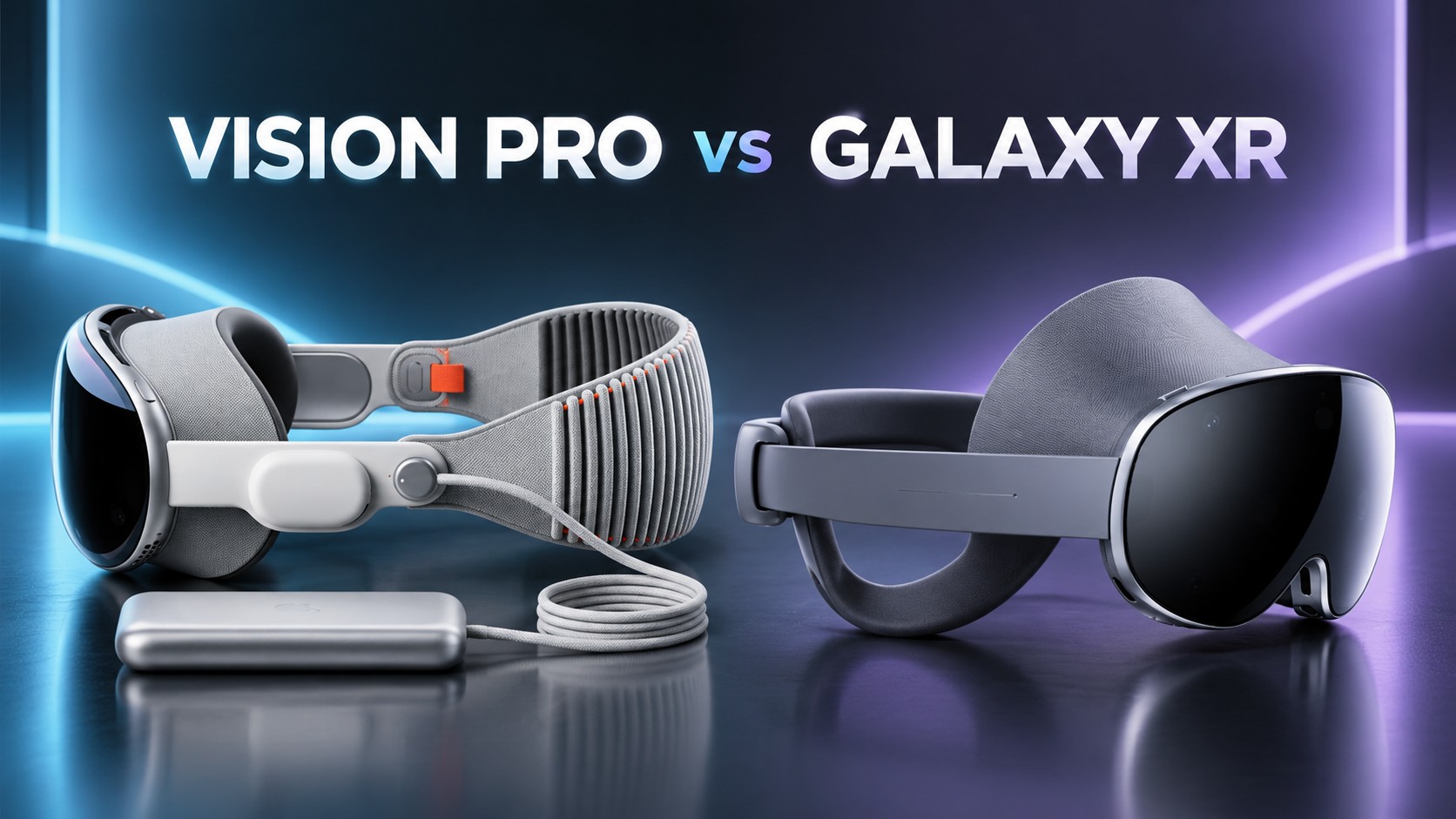
The rivalry of Apple Vision Pro vs. Samsung Galaxy XR redefines spatial computing today. Apple recently launched the upgraded M5 Vision Pro model. Meanwhile, Samsung introduced an ambitious $1,799 headset running Android XR. These flagship devices represent vastly different corporate hardware strategies. Consumers now face a major choice between distinct ecosystems. Apple focuses on premium computing power for professionals. Conversely, Samsung targets a broader entertainment audience.
The industry eagerly anticipated these specific hardware announcements. Apple maintains its steep $3,699 entry price. Therefore, the company completely abandoned plans for cheaper headsets. Samsung seized this exact opportunity to capture curious buyers. Both giants expect rapid growth in mixed reality adoption. Consequently, developers must choose where to invest their resources.
- 💼 Enterprise Users
- 🎨 Creative Professionals
- 🛠 Industrial Applications
- 🎞 General Entertainment
- 🎮 Gaming Enthusiasts
- 📡 Curious Early Adopters
Display Technology And Visual Fidelity
Visual clarity defines the modern spatial computing experience. Samsung features impressive 3552 by 3840 micro-OLED displays. Furthermore, it provides a 109-degree horizontal field of view. This wide perspective deeply enhances virtual reality immersion. Apple counters this with a 23-million pixel screen. However, Apple’s headset has a slightly narrower field of view.
Refresh rates also impact user comfort significantly. The new M5 chip drives Apple’s display up to 120Hz. This reduces motion blur during intense visual tasks. In contrast, Samsung caps its refresh rate at 90Hz. Samsung automatically adjusts interpupillary distance for perfect alignment. Apple requires users to scan their faces for precise fitting. Ultimately, both headsets deliver breathtaking optical clarity.
Core Processors And Benchmarked Performance
Silicon performance strictly dictates graphical and computational limits. Apple equips its premium headset with the M5 chip. This processor easily dominates current mobile benchmarking tests. Additionally, a sixteen-core Neural Engine handles complex artificial intelligence. Apple claims this yields 25 trillion operations per second. Alternatively, Samsung chose the Snapdragon XR2+ Gen 2 chipset.
Qualcomm’s silicon efficiently drives standard Android applications. Nevertheless, it falls behind the M5 in raw power. Apple’s architecture includes a dedicated R1 processor for sensors. Similarly, Samsung supports twelve-millisecond full-color video passthrough. Both devices utilize unified memory for rapid data access.
| Specification | Apple M5 Headset | Samsung XR Headset |
| SoC | Apple M5 & R1 | Snapdragon XR2+ Gen 2 |
| Resolution | 23M Pixels | 27M Pixels |
| Max Refresh | 120Hz | 90Hz |
| Operating System | visionOS 2 | Android XR |
| Weight | 750-800g | 545g |
Operating Systems And Developer Platforms
Operating systems define the entire user interaction paradigm. The visionOS 2 platform leverages existing iPad application libraries. It relies entirely on precise eye and hand tracking. As a result, Apple strictly avoids physical controllers for interface navigation. Android XR brings Google Play applications into spatial environments. Moreover, Samsung offers optional physical controllers for gaming enthusiasts.
Developer support remains critical for long-term platform survival. Android XR natively supports OpenXR and WebXR standards. Thus, creators can easily port existing virtual reality titles. Google also deeply integrated Gemini Live into the system. This assistant understands physical surroundings through the camera array. Instead, Apple focuses on its proprietary software development frameworks.
Strategic Corporate Technology Acquisitions
Both technology giants acquired smaller companies to secure components. Samsung bought eMagin for 218 million dollars. This purchase secured advanced OLED microdisplay manufacturing capabilities. Hence, Samsung stabilized its hardware supply chain significantly. Apple recently absorbed artificial intelligence startups Datakalab and DarwinAI. Specifically, these acquisitions improved on-device machine learning processes.
Corporate buyouts shape the future capabilities of these devices. Apple’s M5 chip utilizes these newly acquired neural techniques. Accordingly, their system handles local data compression much better. Samsung leveraged eMagin to achieve extreme display brightness. Direct pixel patterning eliminates the need for color filters. Ergo, the Samsung headset delivers incredibly vivid digital images.
Ergonomics And Physical Device Comfort
Physical comfort dictates how long users endure wearing headsets. The original Apple device suffered from severe front-heavy distribution. Apple addressed this problem by introducing the Dual Knit Band. Now, this new accessory balances the heavy aluminum frame perfectly. Concurrently, Samsung designed a rigid rear strap with dials. This structure effectively shifts pressure away from the face.
Material choices heavily influence the total hardware weight. The complete Samsung visor unit weighs just 545 grams. Comparatively, Apple’s headset weighs between 750 and 800 grams. Both devices require external tethered battery packs for power. The Samsung battery weighs an additional 302 grams. Apple’s aluminum battery pack adds another 353 grams. Subsequently, users must manage annoying cables during active sessions.
Future Market Implications
The spatial computing industry desperately needs a mainstream success. Apple continues pushing premium boundaries with custom silicon advancements. Regardless, their steep prices naturally exclude everyday technology consumers. Their sheer hardware excellence remains undisputed among professional reviewers. Finally, Samsung brings necessary competition to this stagnant segment. They offer comparable visual fidelity at half the cost.
This ecosystem war will likely define the next decade. Android XR offers developers an open and accessible environment. On the other hand, Apple provides a tightly integrated and polished platform. Consumers ultimately benefit from this fierce corporate hardware rivalry. Each company forces the other to innovate rapidly. In the end, this competition accelerates the evolution of mixed reality.
Advanced Camera And Sensor Arrays
Immersive environments require massive arrays of advanced environmental sensors. The Apple headset features stereoscopic 3D main exterior cameras. In addition, it utilizes four infrared cameras for eye tracking. LiDAR scanners build highly accurate maps of physical rooms. Likewise, Samsung answers this with six world-facing tracking cameras.
Passthrough cameras blend virtual elements with the real world. Samsung captures environments using two 6.5-megapixel front-facing cameras. Correspondingly, Apple uses high-resolution cameras for mixed reality passthrough. Both systems achieve incredibly low latency to prevent nausea. The M5 chip accelerates these complex image processing tasks. Simultaneously, the Snapdragon chip efficiently handles multiple sensor inputs.
Artificial Intelligence And Machine Learning
Generative artificial intelligence plays a crucial role today. Google heavily powers the Android XR platform with Gemini. Indeed, this assistant understands what users see in real-time. Users can ask contextual questions about their physical surroundings. The software delivers instant answers based on visual inputs. Separately, Apple utilizes its Neural Engine for system-wide intelligence tasks.
The M5 chip drastically accelerates machine learning processes. Yet, Apple mostly focuses on background image processing algorithms. Their digital Persona feature creates highly realistic user representations. Contrarily, Samsung uses artificial intelligence to upscale flat video streams. Gemini provides live conversational assistance during game sessions. Both companies view artificial intelligence as a core feature.
Target Demographics And Usage Scenarios
Identifying the target audience explains these divergent hardware strategies. Apple targets enterprise users and professional creative workers heavily. For example, their software emphasizes virtual monitors for productivity. Spatial video playback also represents a massive selling point. Professionals justify the steep price for specialized industrial applications. Parallelly, Samsung focuses much more on general entertainment and media.
Samsung users can stream multiple sports broadcasts simultaneously. Also, the lower price attracts curious early technology adopters. Gamers appreciate the optional controllers for traditional input methods. Apple prefers users stick to purely gesture-based interface navigation. As such, the two headsets serve entirely different market segments. These distinct approaches guarantee a fascinating market evolution.
Optic Accommodations And Hardware Accessories
Visual correction remains a major hurdle for mixed reality. Apple requires users to purchase magnetic Zeiss optical inserts. Otherwise, prescription glasses simply will not fit comfortably inside. The headset automatically calibrates eye tracking for these lenses. Differently, Samsung accommodates different users through interpupillary distance adjustments. Users can manually shift lenses between 54 and 70mm.
Samsung also supports separately purchasable vision correction glass inserts. Unquestionably, both manufacturers ensure maximum visual comfort for operators. Apple sells a premium protective travel case for travel. Samsung offers discounts on cases and wireless earbuds. These accessories add significant hidden costs to both platforms. Buyers must carefully consider these necessary peripheral hardware purchases.
Support Our Work
Help us keep creating and maintaining our projects. We appreciate your support!
Ways to contribute:
Shop via Affiliate LinksSupport us at no extra cost to you while you shop.
Support on Ko-fiBuy us a coffee to keep the engine running!


Leave a Reply