
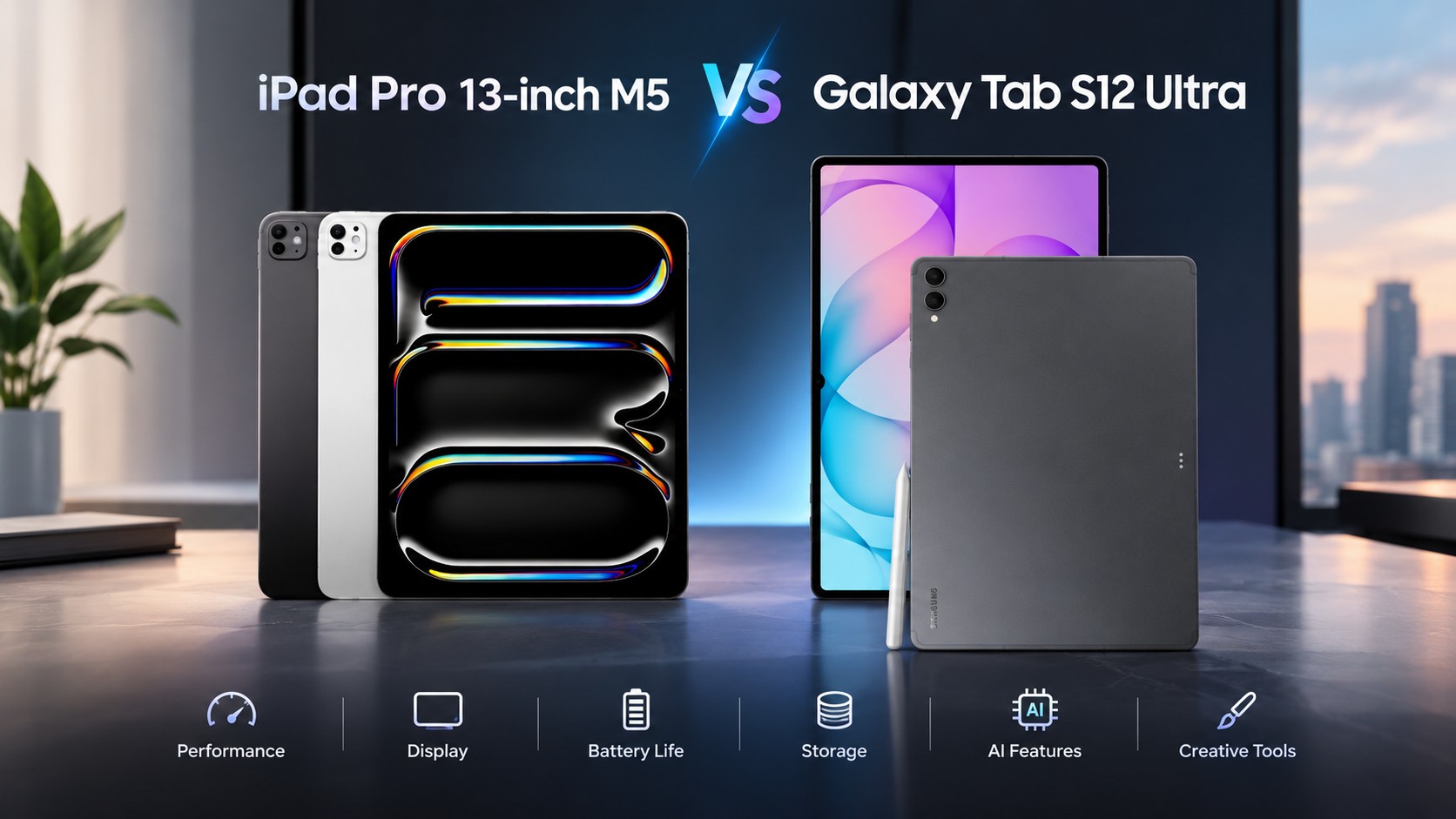

The Premium Tablet Landscape in 2026
Currently, the technology industry continues to push the boundaries of portable computing power. Consumers face a difficult choice regarding the iPad Pro 13-inch (M5) vs. Galaxy Tab S12 Ultra. Furthermore, these flagship devices represent the pinnacle of modern tablet engineering. Analysts expect Apple to reach record market share across smart devices in 2026.
The broader tablet market saw declining shipments earlier this year. However, premium tier devices bucked this downward trend entirely. Apple maintained significant dominance with over a third of global shipments. Meanwhile, Samsung aims to capture demanding professionals with its massive new slate.
Release Timelines and Pricing Trends
Apple launched its powerful M5 tablet in October 2025. Subsequently, Samsung released its massive competitor a year later in October 2026. Both companies significantly increased retail prices for their respective flagship models. Rising memory component costs drove these strategic pricing adjustments.
The Apple tablet starts at a steep $1,499 for the base configuration. Conversely, the Samsung device demands $1,590 for its entry model. Professional buyers must carefully evaluate their specific workflow requirements before investing. Ultimately, these machines rival premium laptops in both computational capability and cost.
- 💲 Base Price $1,499
- ⚡ Processor Apple M5
- 🦼 Base RAM 12GB
- 💾 Storage 256GB
- 🠕 Expandability ❌ None
- 📏 Thickness 5.1 mm
- 💲 Base Price $1,590
- ⚡ Processor Dimensity 9500
- 🦼 Base RAM 12GB
- 💾 Storage 256GB
- 🠕 Expandability ✔ Up to 2TB microSD
- 📏 Thickness 5.1 mm
iPad Pro 13-inch (M5) vs. Galaxy Tab S12 Ultra
Visual excellence remains a primary selling point for premium creative tablets. Consequently, both manufacturers utilize exceptional OLED technology for their panels. Apple deploys a 13-inch Tandem OLED Ultra Retina XDR display. This unique dual-layer panel achieves 1600 nits of peak HDR brightness.
Samsung counters with a remarkably large 14.6-inch Dynamic AMOLED 2X screen. Similarly, this massive canvas also hits 1600 nits of peak brightness. Both displays feature smooth 120Hz adaptive refresh rates for fluid motion. Additionally, the larger Samsung screen excels at displaying three simultaneous application windows.
Display Innovations and Screen Quality
Bright environments often ruin the digital drawing experience through harsh screen glare. Therefore, Apple offers an optional nano-texture glass coating for its screens. Buyers can only add this premium feature to 1TB or 2TB models. This specific upgrade effectively scatters ambient light to minimize distracting reflections.
Samsung includes standard anti-reflective properties alongside an upgraded Vision Booster system. Indeed, this software dynamically adjusts contrast and brightness for outdoor visibility. The nano-texture glass provides superior glare reduction overall. Users must weigh the substantial extra cost against their environmental needs.
(1TB/2TB models only)
+ Vision Booster Software
Anti-Reflective Technology Enhancements
Raw processing power dictates how quickly a device completes demanding rendering tasks. Moreover, synthetic benchmarks reveal clear computational differences between these two rivals. Apple utilizes its proprietary M5 processor built on a 3-nanometer architecture. Samsung equips its tablet with the MediaTek Dimensity 9500 chipset.
The M5 chip dominates independent Geekbench 6 multi-core performance tests. Specifically, Apple achieves an incredible multi-core score of 16,517 points. The Dimensity 9500 trails significantly with a score of 9,763 points. Likewise, Apple also commands a notable lead in raw graphics processing capabilities.
Performance Metrics and Benchmarks
Short benchmark bursts rarely reflect sustained performance during extended creative sessions. Thus, engineers must implement robust cooling systems inside these incredibly thin devices. Samsung introduces a newly designed 3D vapor chamber in its flagship. This cooling mechanism maintains excellent stability during intense 3DMark stress tests.
Apple relies on the extreme energy efficiency of its M5 silicon. Nevertheless, the M5 still renders 3D graphics up to 6.7 times faster. Both tablets handle demanding video editing applications without experiencing severe thermal throttling. Still, Apple maintains an edge for exporting massive 4K video files quickly.
Thermal Management and Sustained Output
Professional applications generate massive files that consume local storage space rapidly. Hence, evaluating long-term storage needs prevents expensive early device replacement cycles. Apple provides base models with 256GB of internal storage and 12GB of RAM. Buyers must pay exorbitant fees to reach the 2TB storage tier.
Samsung matches the base 256GB storage and 12GB RAM specifications initially. Contrarily, the Android device includes a dedicated microSD card slot. Users can easily add up to 2TB of affordable removable storage. This hardware advantage saves consumers hundreds of dollars over the device lifespan.
| Specification | Apple Tablet | Samsung Tablet |
| Processor | Apple M5 | MediaTek Dimensity 9500 |
| Base RAM | 12GB | 12GB |
| Base Storage | 256GB | 256GB |
| Expandability | None | Up to 2TB microSD |
| Thickness | 5.1 mm | 5.1 mm |
Storage Options and Memory Expansion
Thin device profiles physically constrain internal battery capacities across the industry. Regardless, both tablets squeeze impressive endurance from their internal power cells. Apple packs a 38.99-watt-hour lithium-polymer battery into its 13-inch chassis. Alternatively, Samsung utilizes a massive 11600 mAh battery for its larger frame.
Battery testing reveals differing strengths based on specific usage scenarios. Particularly, Apple lasts longer during continuous web browsing over Wi-Fi connections. Samsung claims up to 23 hours of continuous local video playback. Both units support fast charging, with Samsung hitting full capacity in 95 minutes.
Battery Life and Rapid Replenishment
Digital artists demand incredibly low latency and precise pressure sensitivity tools. Accordingly, modern active styluses represent extraordinary feats of miniaturized human engineering. Apple introduced the Pencil Pro to complement its new tablet hardware. This stylus features a gyroscope for barrel roll and squeeze haptics.
Apple forces consumers to purchase this advanced accessory completely separately. Instead, Samsung generously includes its excellent S Pen inside the box. The S Pen requires less initial activation force for delicate strokes. Besides, many artists prefer the paper-like friction of the rubberized Samsung nib.
Advanced Creative Peripherals
Seamless wireless data transfer accelerates cloud-based workflows for mobile professionals. Unsurprisingly, both manufacturers integrate the latest Wi-Fi 7 and Bluetooth 6 standards. Buyers can configure either device with optional 5G cellular modems. Apple utilizes eSIM technology exclusively, removing the physical SIM card tray entirely.
Multimedia consumption requires robust integrated audio and microphone hardware solutions. Equally, both tablets feature powerful quad-speaker arrays that deliver spatial audio. Apple utilizes a studio-quality four-microphone array for pristine voice isolation. Both devices easily fill a small room with rich, distortion-free sound.
Connectivity and Audio Systems
Tablet photography typically serves practical documentation purposes rather than artistic expression. Next, both tablets incorporate capable dual camera arrays on their rear panels. Apple provides a 12-megapixel wide camera paired with a LiDAR scanner. Samsung features a 13-megapixel primary sensor and an 8-megapixel ultrawide lens.
Front cameras remain crucial for professional video conferencing and virtual meetings. Significantly, Apple moved its 12-megapixel front camera to the landscape edge. Samsung already positioned its 12-megapixel ultrawide front camera in this orientation. Both devices support advanced subject tracking to keep speakers perfectly framed.
Camera Systems and Content Creation
Content creators frequently record high-resolution video directly to their portable workstations. Surprisingly, the iPad Pro supports ProRes video recording at 4K resolution. This professional codec allows immense flexibility during the color grading process. Samsung limits its video capture capabilities to standard 4K at 30fps.
Apple also integrates an adaptive flash to improve document scanning quality. Evidently, this system automatically detects shadows and captures multiple rapid exposures. Samsung relies on Galaxy AI algorithms to enhance scanned text readability. Both solutions effectively replace traditional desktop scanners for mobile office workers.
Video Recording and Document Scanning
Premium electronics require long-term software support to justify their massive costs. Traditionally, Apple leads the industry in providing extended operating system updates. iPad Pro models typically receive between five and seven major updates. This generous policy keeps older hardware relevant and secure for years.
Samsung recently overhauled its software support strategy to match Apple directly. Fundamentally, the Android manufacturer now promises seven generations of OS upgrades. This massive commitment ensures the device remains usable until the 2030s. Consumers can purchase either flagship without fearing sudden software obsolescence issues.
Operating System Upgrade Policies
Electronic waste reduction depends heavily on hardware durability and repairability scores. Undeniably, accidental damage frequently ends the lifespan of ultra-thin portable devices. Samsung protects its tablet with an official IP68 water resistance rating. Users can submerge the Galaxy Tab without destroying the internal components.
Apple currently omits official water resistance ratings entirely from its premium iPad lineup. Finally, iPad owners maintain significantly higher resale values on secondary markets. This unique financial dynamic heavily influences early upgrade cycles for many technology enthusiast buyers. Both hardware titans consistently deliver exceptional value through entirely different long-term ownership benefits for consumers.
Device Longevity and Value Retention
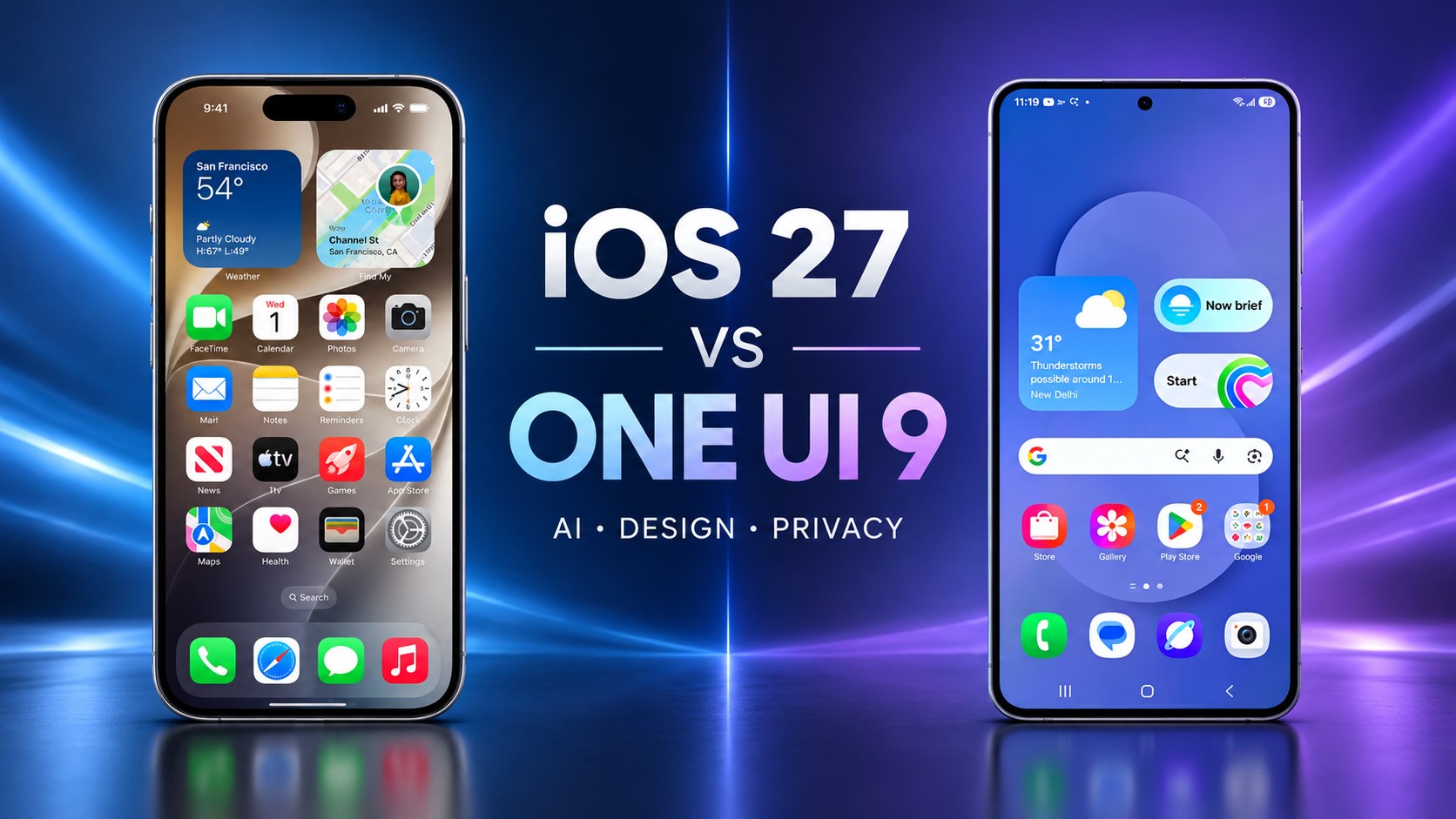
Premium hardware capabilities remain locked without capable operating system software frameworks. Generally, software preferences often dictate which tablet a consumer will purchase. Apple ships the device with iPadOS 26 and a redesigned interface. Its intuitive windowing system drastically improves complex document management and multitasking.
Samsung runs Android 17 underneath its highly customized One UI 9 layer. Further, this combination supports up to three simultaneous application windows effortlessly. Samsung also provides its DeX desktop environment for a traditional computer experience. Apple restricts users strictly to its mobile-first paradigm despite the desktop-class processor.
Software Ecosystems and Multitasking
Artificial intelligence integration currently drives strategic product development across the industry. Unquestionably, Apple aggressively markets its Apple Intelligence features for creative professionals. Neural accelerators inside the M5 chip process machine learning tasks locally. This hardware approach protects user privacy while generating images or text.
Samsung heavily promotes Galaxy AI to remove friction from complex workflows. Notably, Samsung secured a major software victory by pre-installing Adobe Photoshop. This marks a significant milestone for Android adoption in creative industries. Both companies continue blurring the line between premium tablets and traditional laptops.
Support Our Work
Help us keep creating and maintaining our projects. We appreciate your support!
Ways to contribute:
Shop via Affiliate LinksSupport us at no extra cost to you while you shop.
Support on Ko-fiBuy us a coffee to keep the engine running!


Leave a Reply