
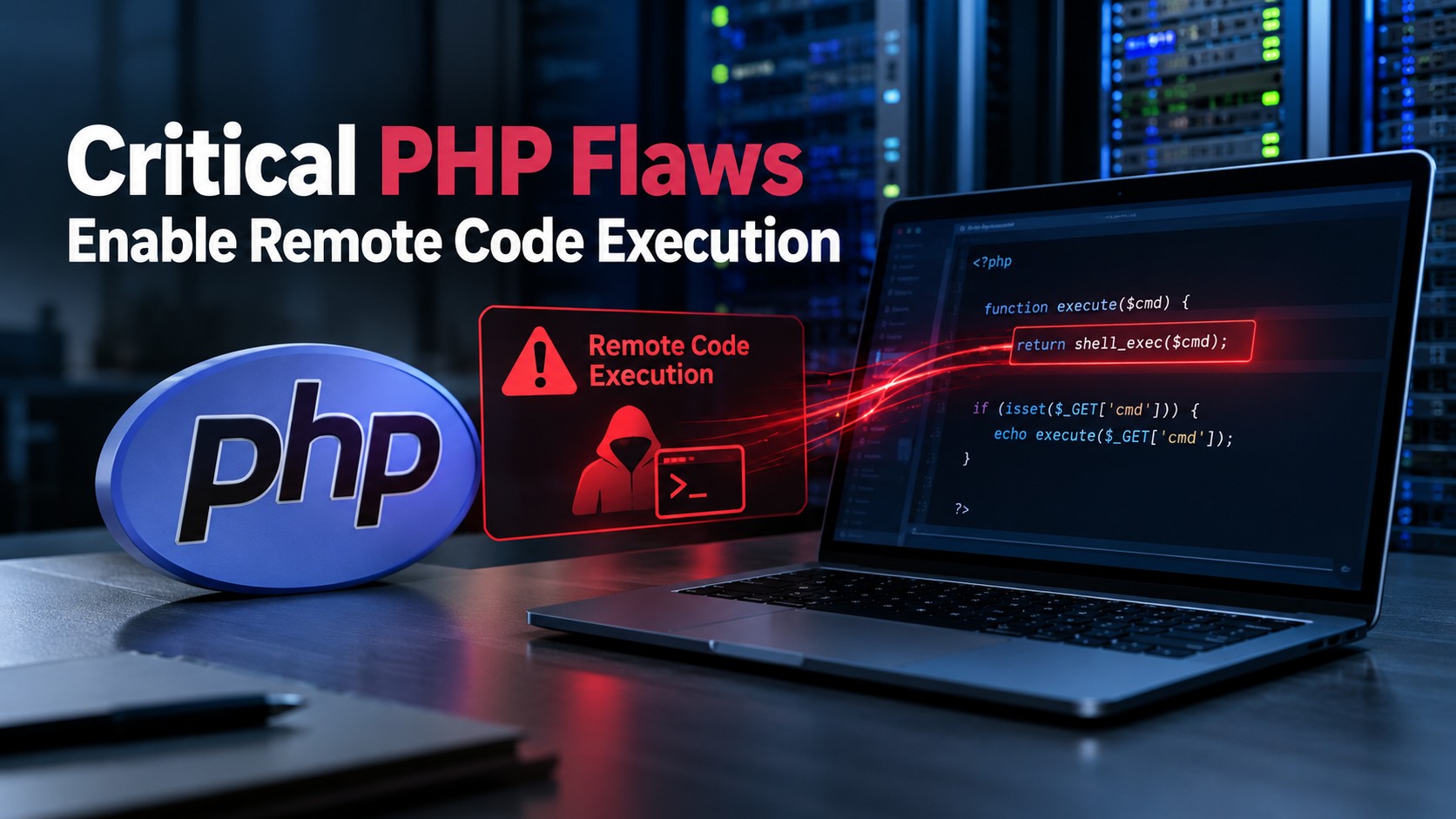

Global Agencies Warn Against Widespread PHP Vulnerability Risks
Cybersecurity agencies issued urgent advisories following critical PHP vulnerability disclosures affecting millions of active web servers worldwide. Security research teams identified two zero-day memory flaws that enable unauthenticated remote code execution across web environments. Consequently, global response teams urged system administrators to audit their server inventories immediately to prevent widespread intrusions. The newly identified flaws impact all unpatched PHP versions serving live web traffic across enterprise infrastructure.
Meanwhile, malicious actors began scanning exposed web hosts shortly after technical details leaked prior to official patches. Core engine vulnerabilities inherently endanger popular software platforms like WordPress and Drupal without requiring direct application bugs. Organizations must identify embedded scripting instances within third-party tools to secure internal networks against remote exploits. Public agencies emphasize prioritizing internet-facing systems during initial patch deployment cycles.
Technical Architecture of the php2shell Exploits
Engineers designated these memory corruption flaws under the collective moniker php2shell due to their severe shell execution potential. Furthermore, CVE-2026-109618 stems from flawed out-of-memory handling during heavy HTTP request parsing operations. Abrupt allocation failures leave internal request structures partially initialized inside interpreter memory. Subsequent cleanup routines treat corrupted memory as valid data structures, allowing attackers to hijack execution flow.
Similarly, CVE-2026-109619 exploits worker process reuse across sequential web requests to cause use-after-free conditions. Fatal execution errors interrupt internal cleanup, preserving stale global state pointers for subsequent request cycles. As a result, worker processes read freed memory blocks before initialization routines reset internal variables. Both security vulnerabilities hold high CVSS v4.0 ratings of 9.2 due to their unauthenticated remote execution threat. Exploit reliability varies based on specific build configurations, enabled modules, and active memory layouts. Apache web server modules face particularly high risk because exploitation succeeds prior to application execution.
Comparing Recent Outbreaks and Structural Industry Impact
Recent security history reveals shifting attack vectors targeting web scripting engines across different server platforms. In contrast, the earlier CVE-2024-4577 flaw specifically targeted Windows CGI installations using specific character encoding pages. The php2shell flaws affect all major operating systems and web server worker architectures universally.
Major cloud providers swiftly deployed automated runtime patches across serverless environments to protect hosted workloads. Additionally, organizations running custom container builds must manually rebuild base images to integrate fixed binaries. Educational institutions and enterprises temporarily disconnected vulnerable web nodes to mitigate remote intrusion risks. Thus, security teams must coordinate across infrastructure tiers to verify system updates.
Remediation Protocols for PHP Vulnerability Containment
Upgrading core interpreter binaries remains the primary method for resolving these dangerous security vulnerabilities. Explicitly, developers released patched runtime builds including versions 8.5.12, 8.4.27, 8.3.36, and 8.2.35. However, legacy releases like PHP 8.1 reached end-of-life status and received no upstream official fixes. System administrators operating outdated legacy versions must upgrade to supported active branches immediately.
Where immediate binary patching remains unfeasible, security personnel can implement temporary server configuration adjustments. Administrators must disable upload progress tracking and remove per-request memory limits within core configuration files. Simultaneously, perimeter firewalls should filter incoming multipart form submissions if applications do not process upload requests. These temporary mitigations restrict specific attack paths without providing a complete security replacement for patches.
- ❌ Disable upload progress tracking
- ❌ Remove per-request memory limits
- 🛇 Filter multipart form submissions at WAF
- 🔍 Monitor logs for anomalous memory failures
- 🚨 Audit worker process abrupt terminations
- 📦 Track container runtime behavior with security tools
- 🔑 Rotate database credentials immediately
- 🔐 Reset exposed API keys and auth tokens
- 🗃 Rebuild custom container base images
Security teams must monitor application logs for anomalous memory exhaustion errors or unusual worker terminations. Moreover, incident response teams should rotate database credentials and API keys on exposed web systems. Automated threat detection tools provide continuous visibility into container runtime behavior during active scanning. Rigorous inventory tracking ensures organizations identify and patch every hidden scripting engine across complex networks. Security analysts recommend auditing network endpoints continuously to prevent unauthorized access. Proactive vulnerability management reduces operational downtime during widespread threat outbreaks. Timely remediation protects sensitive enterprise databases from unauthorized exploitation.
Support Our Work
Help us keep creating and maintaining our projects. We appreciate your support!
Ways to contribute:
Shop via Affiliate LinksSupport us at no extra cost to you while you shop.
Support on Ko-fiBuy us a coffee to keep the engine running!






Leave a Reply