

Introduction to Compact Audio Systems
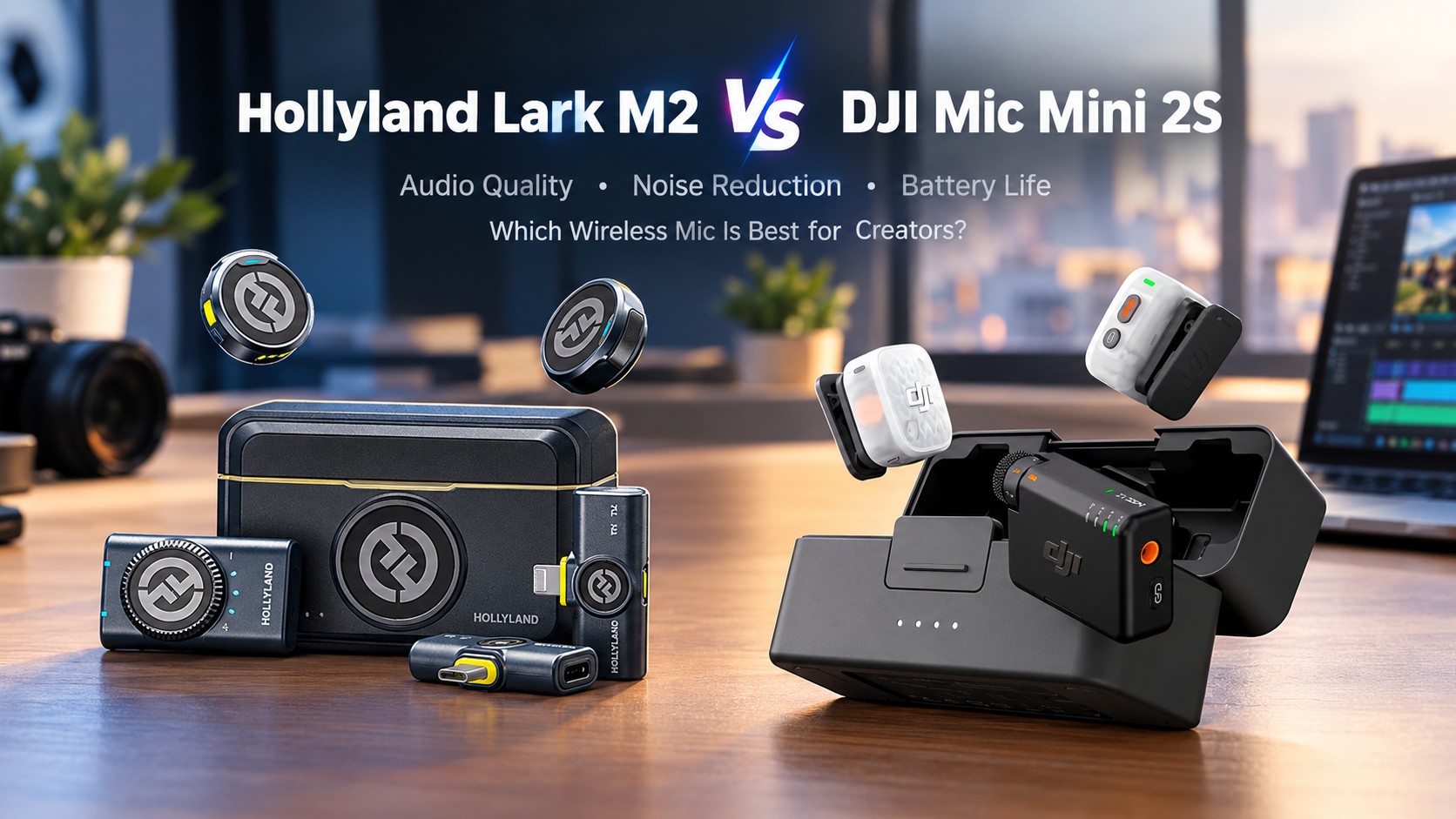
Content creators currently demand lightweight microphone setups to capture high-quality wireless audio. Therefore, evaluating Hollyland Lark M2 vs. DJI Mic Mini 2S highlights major technological shifts in portable recording gear. Modern wireless capsules now integrate advanced digital signal processing inside tiny transmitter units. Manufacturers continue shrinking hardware bodies while simultaneously enhancing digital audio reliability.
Dual-channel wireless platforms serve podcasters, mobile journalists, and solo video producers effectively. Consequently, tiny transmitter capsules isolate human voices while reducing ambient background noise during active video shoots. Hardware selection depends heavily on specific production workflows and data safety requirements.
Hollyland Lark M2 Architecture and Performance
Hollyland engineered the Lark M2 to provide an ultra-compact button microphone weighing only nine grams. Specifically, its disc shape allows creators to attach the unit using magnets, clips, or lanyards. The transmitter captures 48 kHz 24-bit uncompressed sound to preserve vocal clarity across video recordings. Furthermore, built-in Environmental Noise Cancellation suppresses background ambient sounds during busy outdoor shoots.
The system transmits stable 2.4 GHz signals across line-of-sight distances up to 300 meters. Additionally, the internal transmitter battery yields ten hours of continuous operation per single charge cycle. However, the Lark M2 lacks internal memory for recording local backup audio files during signal dropouts. Its unbranded front design remains completely clean, hiding corporate logos from camera views during production.
DJI Mic Mini 2S Capabilities and Innovations
DJI launched the Mic Mini 2S, introducing internal recording capabilities inside a twelve-gram chassis. Each transmitter includes 14.5 gigabytes of built-in storage to record up to 28 hours of audio. In addition, the device supports 32-bit float recording to prevent dynamic audio clipping and distortion. Editors can easily recover distorted high gain recordings during post-production software editing workflows.
The Mini 2S receiver supports four-channel output configurations when pairing with up to four transmitters. Similarly, two-level AI noise reduction mitigates ambient noise while preserving fundamental vocal warmth. Direct OsmoAudio integration connects transmitters to native camera hardware without requiring external plug-in receivers. Meanwhile, onboard internal recording features slightly increase overall transmitter power consumption during long shoot days.
Hollyland Lark M2 vs. DJI Mic Mini 2S: Performance Comparison
Direct hardware evaluations highlight fundamental structural differences between these compact wireless systems. For example, Hollyland emphasizes absolute visual discretion by delivering a transmitter weighing only nine grams. Conversely, DJI incorporates onboard flash memory components, raising total transmitter weight to twelve grams. Both systems achieve excellent battery performance, providing roughly ten to eleven operating hours per charge.
Wireless signal stability remains reliable across both platforms under standard line-of-sight outdoor shooting conditions. Subsequently, protective USB-C charging cases allow creators to recharge hardware quickly between production locations. On the other hand, DJI offers broader ecosystem connectivity through direct OsmoAudio pairing and 32-bit float backups. Nevertheless, Hollyland delivers a logo-free transmitter capsule for creators requiring complete on-camera invisibility.
Detailed Technical Specification Matrix
Technical data comparisons reveal how each manufacturer engineered hardware for targeted creator requirements. Overall, the metrics highlight distinct choices regarding internal memory, channel expansion, and capsule weight.
Examining specification data demonstrates how internal storage capacity alters overall operational flexibility. As a result, buyers must weigh minimal transmitter weight against advanced digital safety capabilities. While Hollyland offers maximum visual stealth, DJI guarantees superior recording redundancy through local files.
Practical Workflow Applications and Integration
Production environments demand specific audio feature sets based on talent movement and noise conditions. For instance, solo vloggers capturing mobile content frequently favor the ultralight Hollyland transmitter body. Its magnetic necklace mount hides the disc capsule naturally underneath lightweight apparel during shoots. Mobile journalists appreciate simple plug-and-play operation without managing separate internal recording files.
Alternatively, documentary filmmakers capturing unscripted interviews require guaranteed local backup security against RF dropouts. The DJI Mic Mini 2S preserves audio data locally even when radio interference interrupts receiver transmission. Moreover, multi-speaker panel interviews benefit directly from four-channel output routing into compatible cameras. Audio engineers isolate separate voice tracks easily, accelerating post-production sound mixing and editing workflows.
Digital Signal Processing and Noise Mitigation
Acoustic processing algorithms dictate how effectively miniature microphones handle challenging outdoor environments. Hollyland employs hardware Environmental Noise Cancellation to reduce low-frequency ambient hums. A single button toggle enables noise reduction instantly during sudden wind gusts or HVAC noise. Heavy noise filtering can occasionally introduce minor artificial processing artifacts into natural voice tones.
DJI implements two-tier artificial intelligence noise reduction within the Mic Mini 2S hardware model. Basic mode mitigates subtle indoor background noises while preserving natural vocal clarity and warmth. Strong mode suppresses intense outdoor urban traffic noise without destroying fundamental speech frequencies. Besides, selectable voice tone profiles allow creators to adjust sound character directly within Mimo software.
Physical Design and Ecosystem Connectivity
Physical ergonomics and accessory ecosystems directly influence setup speed and daily recording convenience. Hollyland provides versatile clip attachments, magnetic backings, and decorative skin stickers out of the box. Its sleek round design blends seamlessly into clothing, remaining virtually unnoticeable on camera during interviews. Videographers prioritizing visual subtlety find the Lark M2 layout exceptionally clean and unobtrusive.
DJI introduces interchangeable magnetic front covers in various colors to complement different clothing styles. Direct Bluetooth functionality connects transmitters to smartphones without requiring external receiver dongles. Native OsmoAudio integration connects transmitters directly to compatible action cameras and handheld gimbals. Nonetheless, visible corporate branding on transmitter covers may displease video producers seeking unbranded aesthetics.
Strategic Outlook and Market Implications
Technological innovations in ultra-compact wireless microphones reflect broader structural shifts in media production. Traditional heavy lavalier systems yield to miniature magnetic button transmitters across professional workflows. Micro-capsules now incorporate 32-bit floating-point audio processing engines without adding significant hardware bulk. Competition between hardware producers will continue driving rapid improvements in battery density and digital signal processing.
Mobile video creators benefit immensely from ongoing innovation rivalries between leading equipment manufacturers. Consumer demand for fail-safe audio recording ensures 32-bit float internal memory will become standard across future gear. Hence, production teams must choose equipment balancing visual discretion, ecosystem features, and data safety.
Conclusions and Recommendations
Equipment selection between these two advanced wireless platforms depends on specific creator priorities and risk tolerance. Budget-conscious creators needing an invisible on-camera aesthetic should choose the lightweight Hollyland Lark M2. Its nine-gram button capsule delivers excellent 24-bit audio clarity while maintaining complete visual discretion. Thus, mobile vloggers and interviewers gain high mobility without managing complex local audio files.
In contrast, production crews who cannot afford audio dropouts should invest in the DJI Mic Mini 2S. The DJI system provides crucial 32-bit float internal recording, AI noise reduction, and four-channel receiver expansion. Accordingly, its robust feature set offers complete insurance against unexpected wireless interference and dynamic audio clipping. Ultimately, both systems establish remarkably high benchmarks for audio performance within the ultra-compact microphone market.
Support Our Work
Help us keep creating and maintaining our projects. We appreciate your support!
Ways to contribute:
Shop via Affiliate LinksSupport us at no extra cost to you while you shop.
Support on Ko-fiBuy us a coffee to keep the engine running!





Leave a Reply