


Strategic Engineering and Development of the Zelda Ocarina of Time Remake
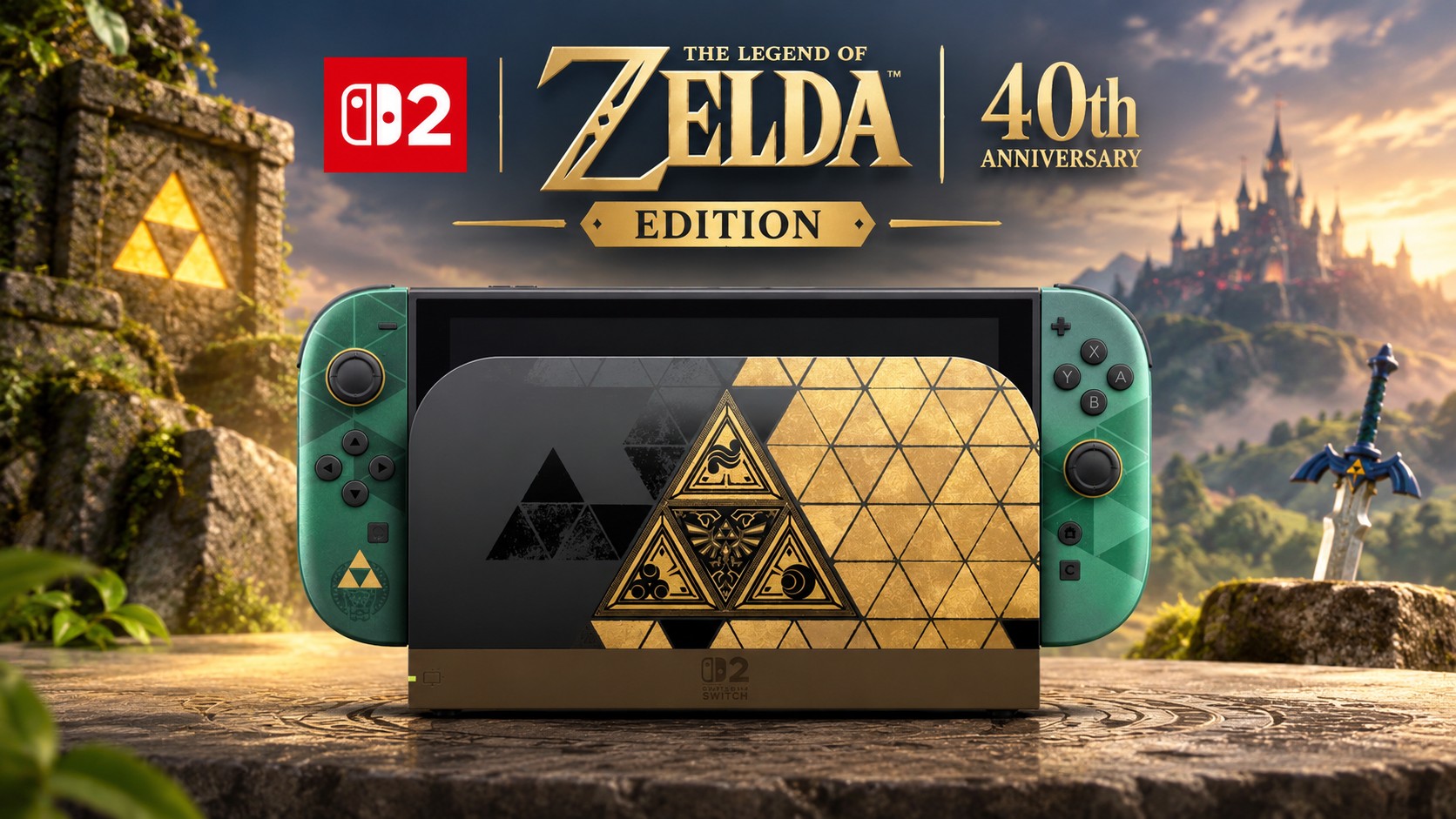
Nintendo releases the ground-up remake of Zelda Ocarina of Time on November 5, 2026. Consequently, this software anchors the 40th anniversary celebration of the long-running fantasy series. Mainline studio Nintendo EPD Production Group No. 3 executed the entire production effort. Producer Eiji Aonuma initiated the project to teach core design mechanics to junior staff members. Specifically, senior leadership wanted younger developers to analyze classic linear dungeon structures directly. This internal initiative rebuilds foundational systems while preserving the iconic tone of the original release.
Modern players accustomed to open-ended exploration can now experience classic structured progression. Furthermore, physical retail copies feature red game cartridges and textured foil cover art for initial shipments. Retailers hold pre-order inventory while review publications prepare coverage ahead of launch. However, select distribution channels suffered minor early inventory delivery leaks before the official release date. Nintendo also scheduled special Amiibo releases for 2027 to unlock extra in-game masks. Executive leadership views this title as a crucial strategic anchor for their new hardware platform.
1. Strategic Initiative & Launch Snapshot
Key commercial details, anniversaries, and internal objectives.- Release Date: November 5, 2026
- Milestone: 40th Anniversary Anchor
- Packaging: Red cartridges & textured foil cover art
- Developer: Nintendo EPD Group No. 3
- Producer: Eiji Aonuma
- Core Goal: Internal training on linear dungeon design
- Logistics: Early retail supply leaks detected
- Amiibo Plan: Special 2027 Amiibo release
- Amiibo Perk: Unlocks extra in-game masks
Game Mechanics and Environmental Design in Zelda Ocarina of Time
Game Director HokWai Ng implemented key mechanical upgrades to modernize character locomotion and world interaction. Additionally, developers added a dedicated jump button to enhance platforming control across environments. The revamped combat mechanics eliminate rolling spam and integrate quick item selection wheels. Voice actors recorded full spoken dialogue for cinematic cutscenes throughout the main narrative line. Meanwhile, audio designers utilized controller microphone functionality for interactive environmental puzzle mechanics. Art Director Aya Shida chose visual styles inspired by classic puppet shows and practical physical props.
2. Platform & Version Specs Breakdown
Comparative metrics across historical releases, official remakes, and community builds.| Version / Platform | Resolution Target | Frame Rate Target | Upscaling / Display Tech | Control & Feature Enhancements |
|---|---|---|---|---|
| 📺 Nintendo 64 (1998) | 20 FPS | Native CRT Presentation | Standard targeting system (Z-Targeting) | |
| 📱 Nintendo 3DS (2011) | 240p (3D) / 480p | 30 FPS | Hardware Stereoscopic 3D | Touchscreen inventory management |
| 🎮 Switch 2 Remake (2026) | 1080p (1440p UI) | 60 FPS | AMD FSR 1.0, HDR, VRR | Jump button, item wheel, voiced cutscenes |
| 💻 Ship of Harkinian (PC) | Native Up to 4K | Up to 250 FPS | Custom HD Textures & Shaders | Right-stick camera, remapping, co-op, randomizer |
Designers expanded Hyrule Castle Town into a fully explorable three-dimensional urban hub. In contrast to the original, time now flows continuously across towns and interior building spaces. Developers deliberately preserved distinct zone transitions across Hyrule Field to maintain area discovery excitement. Playtesters rejected extra fast travel points because instant teleportation disrupted environmental exploration balance. Therefore, the world architecture preserves regional boundaries while modernizing standard navigational controls. These design adjustments balance atmospheric nostalgia with modern quality of life expectations.
3. Mechanics & World Interaction Improvements
Key mechanical additions supervised by Game Director HokWai Ng and Art Director Aya Shida.- Dedicated jump button
- Quick item selection wheels
- Elimination of rolling spam
- Full voice acting for cinematics
- Mic-assisted puzzle mechanics
- Dynamic ambient soundscape
- Expanded 3D Castle Town
- Continuous real-time interior clock
- Preserved regional Hyrule Field zones
- Puppet show / physical prop aesthetic
- No fast travel (preserves exploration)
- Modernized navigational controls
Performance Analysis and Hardware Render Architecture
Technical evaluations show that the rendering engine targets 1080p resolution at 60 frames per second. Subsequently, the title supports high dynamic range color and variable refresh rates in docked television mode. User interface overlay menus render sharply at an increased output resolution of 1440p. System documentation confirms that the executable uses AMD FSR 1.0 upscaling alongside Spatial Anti-Aliasing. Nevertheless, the development team opted against integrating Nvidia DLSS image reconstruction technology. Hands-on preview impressions emphasize fluid combat responses stemming from stable frame rate performance.
Notably, rendering engineers relied primarily on pre-rendered light maps for environmental illumination. Sharp texture filtering provides clean visual details across complex dungeon interiors and outdoor landscapes. Performance metrics demonstrate consistent frame rates during intense action sequences and boss battles. Software engineers prioritized operational stability to ensure responsive defensive parry mechanics for players. This optimization strategy yields dependable visual output across both portable and home console configurations.
4. Render Engine & Performance Architecture
Upscaling, illumination techniques, frame stability, and target display parameters.👁 Display & Upscaling Pipeline
💡 Lighting & Optimization Strategy
Community Source Ports and Zelda Ocarina of Time Legacy
Parallel to commercial software releases, fan programmers developed native source ports like Ship of Harkinian. Indeed, community engineers created this executable after fully decompiling the original N64 game binaries. The software extracts original visual assets from legal user-supplied ROM files without redistributing copyrighted code. This native application runs across Windows, Linux, macOS, Android, and homebrew console operating systems. As a result, players enjoy unlocked frame rates reaching up to 250 frames per second. Modern computer processors run these compiled native builds with minimal system memory utilization.
Community modifications incorporate high-resolution texture packs, custom character models, and fully rebindable controls. In addition, developers implemented dual-stick camera controls and secondary player support for local cooperative play. An integrated randomizer feature alters item locations to maximize long-term replay value for veteran players. Instead of relying on emulation layers, native execution eliminates input lag and graphical micro-stuttering. Useful enhancements include auto-save functions, rapid item hotkeys, and convenient time-rewind features. These non-commercial projects demonstrate robust software preservation methods alongside corporate commercial remakes.
5. Community Preservation & Native PC Ports
Decompilation efforts, multi-platform binaries, and non-commercial enhancements.⚒ Architecture & Legality
- Created via clean N64 binary decompilation
- Extracts assets from user-supplied legal ROMs
- Zero copyrighted code redistribution
- Eliminates emulation layers & input lag
💻 Supported Operating Systems
- Unlocked frame rates up to 250 FPS
- Minimal system memory utilization
🎮 Feature Extensions
- Dual-stick camera & rebindable hotkeys
- Local co-op & item location randomizers
- Auto-save & time-rewind features
- HD texture packs & custom character models
Strategic Outlook and Franchise Trajectory
Directing primary internal studio resources toward a remake carries clear strategic consequences for future releases. Because Production Group No. 3 built this title, the next original mainline entry remains distant. Alternatively, management could split team resources to develop original titles alongside legacy game updates. Junior developers gained vital professional expertise in spatial puzzle design and traditional progression systems. Simultaneously, executive producer Eiji Aonuma maintains creative oversight across all ongoing franchise initiatives. Industry observers expect Nintendo to alternate classic game remakes with expansive open-world titles moving forward.
The co-existence of official releases and community ports highlights enduring public demand for classic adventures. Overall, publisher strategy centers on preserving original game identity while implementing essential modern controls. Players receive updated camera controls, improved target frame rates, and streamlined user interface options. Thus, this balanced approach preserves historical gaming culture while introducing classic stories to new audiences. Nintendo establishes modern standards by celebrating fundamental design principles across modern console hardware. Future development cycles will benefit immensely from practical engineering knowledge gained during this remake project.
Support Our Work
Help us keep creating and maintaining our projects. We appreciate your support!
Ways to contribute:
Shop via Affiliate LinksSupport us at no extra cost to you while you shop.
Support on Ko-fiBuy us a coffee to keep the engine running!

Leave a Reply