
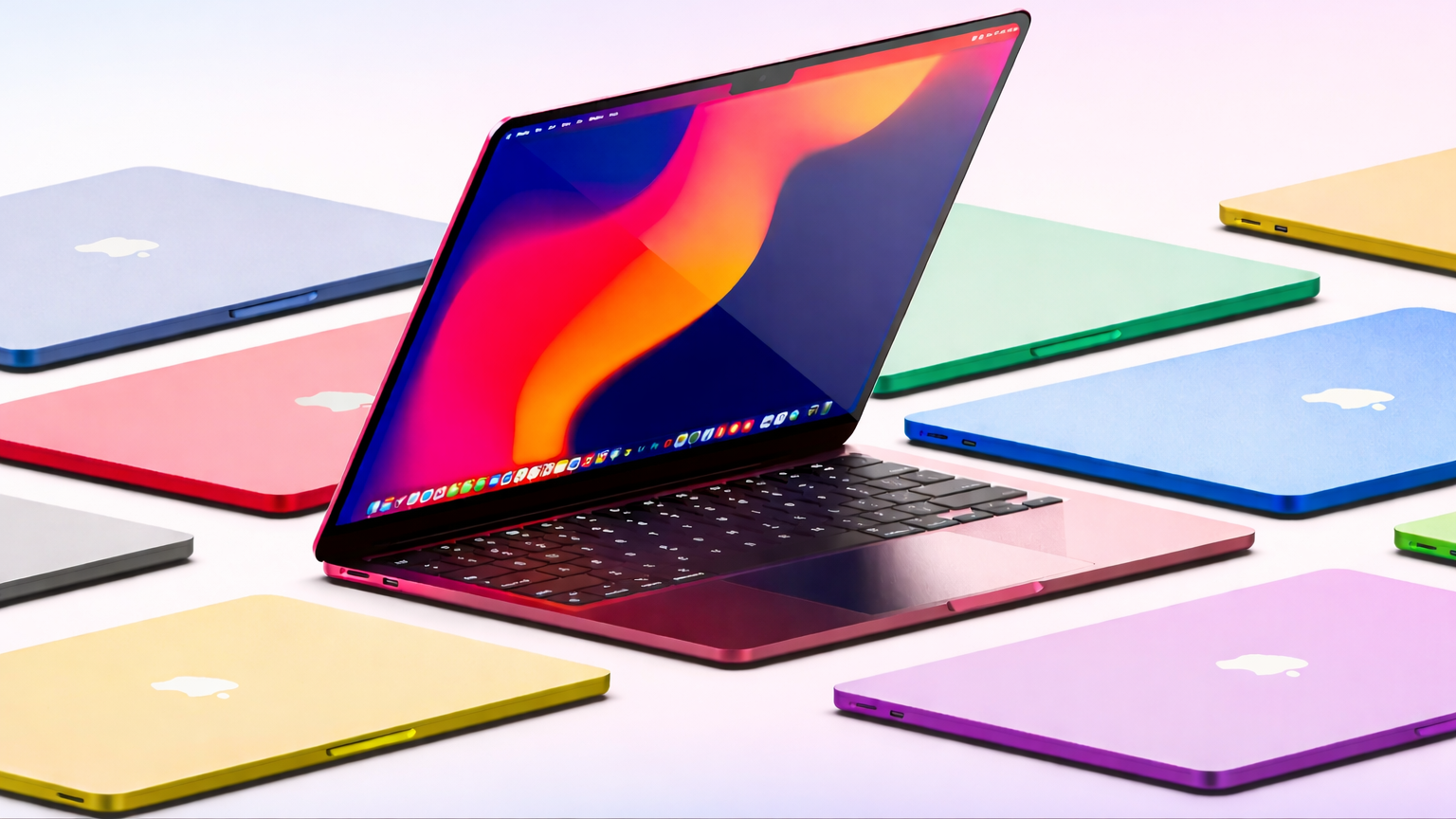
Consequently, the tech world is buzzing with anticipation of MacBook Revolution right now. Indeed, the latest whispers from Cupertino suggest a massive transformation for the MacBook lineup. Meanwhile, reputable sources like Mark Gurman and Ming-Chi Kuo have dropped some bombshells. Thus, it seems Apple is preparing its most ambitious hardware year since the silicon transition began. Furthermore, we are looking at a roadmap that spans from budget-friendly options to futuristic foldables.

M5 Chips Are Coming Fast for the MacBook Revolution
Initially, the focus remains on the upcoming March 2026 “Apple Experience” event. Historically, Apple loves a spring refresh for its most popular laptops. Therefore, we expect the brand-new M5 MacBook Air to debut very soon. Specifically, the 13-inch and 15-inch models will receive the new silicon. Although the chassis design likely remains the same, the internals are seeing a massive boost. Actually, the M5 chip should offer up to 25% faster CPU performance compared to the M4.
Additionally, the graphics performance might jump by nearly 45% in certain configurations. Naturally, this makes the Air a formidable machine for creative tasks. Moreover, Apple is reportedly keeping 16GB of RAM as the new base standard. However, the starting price is rumored to stay around $999 for the 13-inch model. Consequently, this maintains the Air’s position as the king of consumer laptops. Hence, if you need a portable powerhouse, waiting just a few more weeks is wise.
The Pro Dilemma: Power Now or Design Later?
Subsequently, the MacBook Pro is also entering a very interesting phase. Currently, the 14-inch base model already utilizes the standard M5 chip. Nevertheless, the higher-end M5 Pro and M5 Max variants are still missing. Recently, leaks suggested these chips will finally arrive in March 2026. For instance, these processors will likely use an advanced “SoIC-MH” fabrication process. Basically, this allows Apple to stack components vertically for better thermal management.
Alternatively, some users might feel tempted to wait even longer. Specifically, a massive redesign is rumored for late 2026 or early 2027. According to analysts, the M6 generation will introduce a much thinner chassis. Furthermore, Apple may finally replace the iconic notch with a hole-punch camera. Also, this redesign should include a move toward Tandem OLED display technology. Thus, the current M5 Pro models represent the pinnacle of the existing design language. Essentially, you must choose between refined power today or a total revolution tomorrow.
The OLED Revolution: Brighter, Faster, and Thinner
In addition to chip upgrades, the display is the next big frontier. Indeed, the transition to OLED is the most anticipated visual change in years. Currently, Samsung Display is reportedly mass-producing these panels for Apple. Specifically, the 2026 MacBook Pro models are the first in line for this upgrade. Because OLED doesn’t require a backlight, the screens will be significantly thinner. Moreover, the Tandem OLED tech will deliver incredible brightness levels.
Consequently, this change will solve the “blooming” issues sometimes seen on mini-LED screens. Furthermore, the power efficiency of OLED panels could extend battery life by 20%. Therefore, professionals who work on the go will see a massive benefit. Unfortunately, the MacBook Air won’t get OLED until at least 2029. Instead, the Air will stick with improved LCD panels for several more years. Thus, the display gap between the Air and Pro will grow even wider.
A Surprise Entry: The Return of the Budget MacBook
Surprisingly, Apple might be working on a laptop for the rest of us. Recently, rumors have surfaced regarding a “low-cost” MacBook variant. Apparently, this device could target the education market and budget-conscious students. For example, it might feature a slightly smaller 12.9-inch display. Additionally, it may run on a modified A18 Pro chip from the iPhone lineup. Consequently, the price point could drop to as low as $599 or $699.
Moreover, this would be the first time Apple has chased this price bracket in years. Historically, they have used older Air models to fill this specific gap. However, a dedicated budget machine could help Apple compete with high-end Chromebooks. Thus, the 2026 lineup looks more diverse than ever before. Effectively, there will be a MacBook for every single type of user.
The Future is Foldable: The 20-Inch Giant
Finally, we must discuss the most radical rumor of all. Specifically, Apple is developing a 20.3-inch foldable MacBook. According to Ming-Chi Kuo, this is the only foldable with a firm schedule. Interestingly, the device would function as a massive tablet when fully open. Conversely, it could fold into a traditional laptop shape with a virtual keyboard. Furthermore, this device is expected to enter mass production sometime in 2027.
Consequently, this represents a completely new category for the Mac ecosystem. Indeed, it would likely be positioned as a “Ultra” or “Pro Max” tier product. Moreover, it would showcase Apple’s mastery of flexible display technology and hinges. Therefore, while we wait for the M5, the horizon looks even more exciting.
The Future Unfolds: Comparing the M4 and Rumored M5 MacBooks
Consequently, choosing the right time to upgrade feels more difficult than ever. Since the M4 lineup is already impressive, the rumored M5 models must offer something truly special. Indeed, the leap from the current generation to the 2026 hardware involves significant internal changes. Meanwhile, the exterior of the “Spring 2026” refresh will likely remain very familiar. Thus, we have compiled a direct comparison based on the most reputable leaks available today.
Performance and Core Architecture
Initially, the M4 chip set a high bar for single-core efficiency and AI processing. However, the M5 series aims to refine this with a more advanced 3-nanometer process. Specifically, the M5 Pro and M5 Max will likely utilize “SoIC-MH” vertical stacking technology. Therefore, this allows for much better thermal efficiency despite the increased power draw. Furthermore, early benchmarks suggest the M5 could be 15% to 25% faster in CPU tasks. Actually, the biggest jump will appear in the GPU, with rumors pointing to a 45% boost.
| Feature | Current M4 (Base) | Rumored M5 (Base) |
| CPU Performance | Industry-leading 3nm | Advanced 3nm (SoIC-MH) |
| GPU Architecture | 10-Core with Ray Tracing | 10-Core “Next-Gen” Architecture |
| AI Processing | 38 TOPS Neural Engine | “Next Leap” AI Accelerator |
| Memory Bandwidth | 120 GB/s | Up to 153 GB/s |
Display and Visual Technology of the MacBook Revolution
Subsequently, we must address the display differences which remain a point of debate. Currently, the M4 MacBook Pro features a stunning Liquid Retina XDR screen with mini-LED. Nevertheless, the M5 models arriving in March 2026 will likely stick with this exact technology. Because Apple plans a major redesign for late 2026, the OLED transition is probably on hold. Thus, the spring M5 refresh is primarily an “under-the-hood” update for professional users.
Alternatively, the rumored “Budget MacBook” might use a standard LCD to keep costs low. Specifically, this 12.9-inch model would forgo the high refresh rates of the Pro line. Moreover, the MacBook Air M5 will maintain its current Retina display for several more years. Consequently, if you want a revolutionary screen, you must wait for the late 2026 OLED models. Essentially, the visual experience on the March M5 lineup will mirror the current M4 generation.
Connectivity and Battery Life in MacBook Revolution
Additionally, the M5 series might introduce Apple’s first in-house 5G and Wi-Fi chips. Historically, Apple has relied on third-party modems for its cellular-capable devices like iPads. However, leaks suggest the M5 generation could finally debut the “C1X” or “N1” wireless modules. Naturally, this would provide even tighter integration between the hardware and the software. Moreover, the increased efficiency of the M5 chip should push battery life even further. Specifically, we might see the first MacBooks reaching a consistent 24-hour real-world runtime.
Summary of Key Spec Changes in MacBook Revolution
- Chipset: M4 moves to M5 with improved transistor density and thermal stacking.
- Memory: Base RAM likely stays at 16GB, but bandwidth increases by nearly 30%.
- Gaming: New GPU architecture allows the M5 to maintain 100 FPS in high-end tests.
- Connectivity: Potential introduction of Apple’s proprietary Wi-Fi and Bluetooth networking chips.
- Color Palette: The budget model may introduce vibrant colors like green, blue, and pink.
In conclusion, the M5 is an “optimization” year rather than a “reinvention” year. If you need raw power for video editing or 3D rendering, the M5 is huge. Therefore, the March 2026 event will be the best time for power users to buy. Certainly, those seeking a brand-new look should wait for the M6 and its OLED screen.
Final Summary of Rumored MacBook Revolution Timeline
| Expected Date | Model | Major Upgrade |
| March 2026 | MacBook Air (13″ & 15″) | M5 Chip, 16GB Base RAM |
| March 2026 | MacBook Pro (14″ & 16″) | M5 Pro / M5 Max Chips |
| Mid 2026 | Budget MacBook | A18 Pro Chip, 12.9″ Screen |
| Late 2026 | MacBook Pro Redesign | OLED, Hole-punch Camera, M6 |
| 2027 | Foldable MacBook | 20.3″ Flexible OLED |
In conclusion, the next twelve months will be monumental for Apple fans. Whether you want a $600 portable or a $3,000 powerhouse, big changes are coming. Therefore, if your current Mac is still holding on, you might want to wait. Certainly, the M5 generation is just the beginning of a very bold new era.






Leave a Reply