
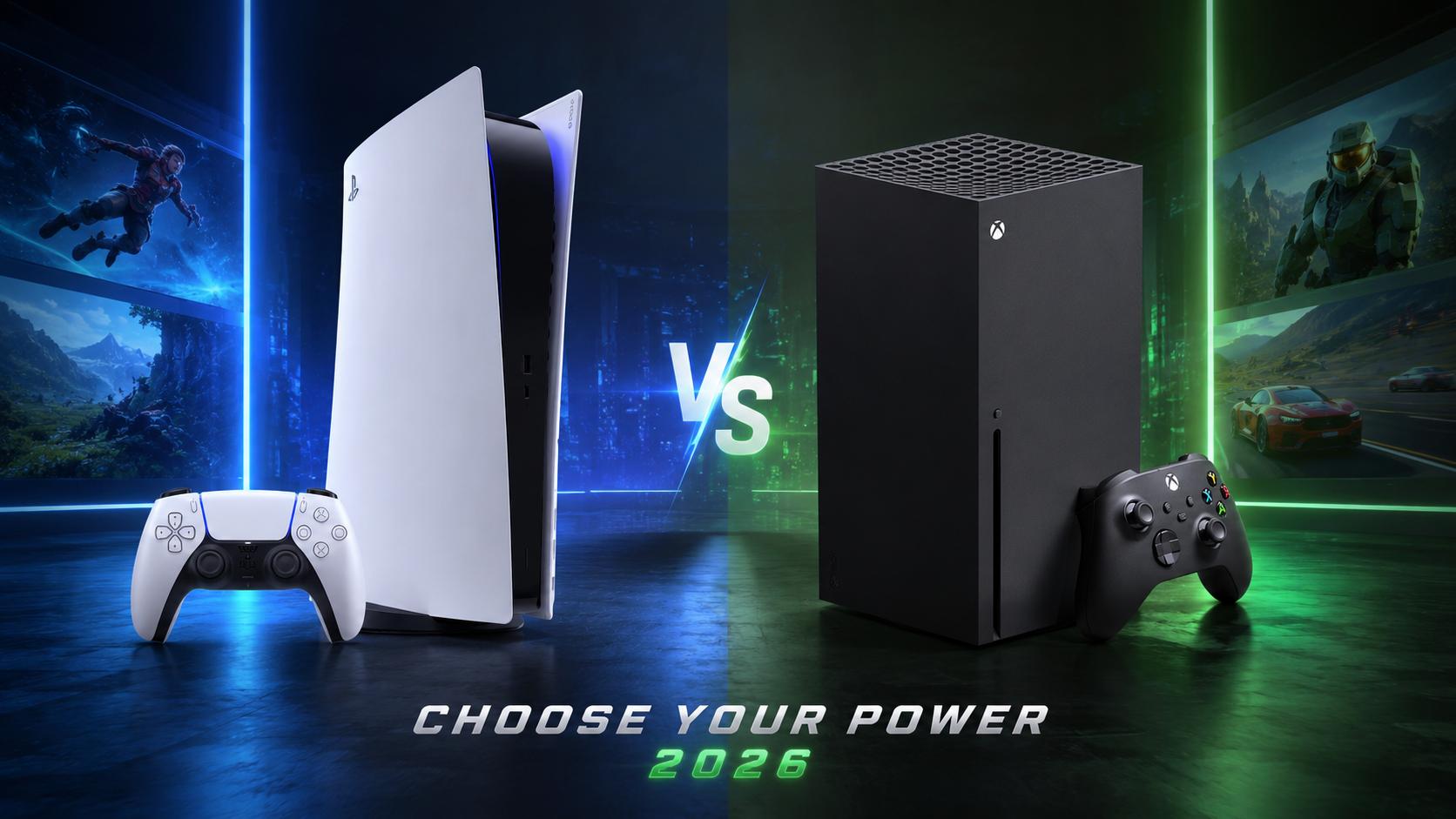

PlayStation 5 vs. Xbox Series X: Marketshare
The ninth-generation console market continues to showcase a massive performance disparity between the two leading platforms in the PlayStation 5 vs. Xbox Series X era. Specifically, the PlayStation 5 has achieved a dominant sales lead over the Xbox Series X and S. Aligned worldwide estimates through March 2026 indicate that Sony has sold 91,517,202 console units globally. Meanwhile, Microsoft has reached a total of 34,574,152 hardware sales during the same timeframe. This massive divergence represents an active sales gap of 56,943,050 units in favor of PlayStation. This growing physical sales divide translates directly into substantial ecosystem revenue disparities for both corporations. This dynamic has forced third-party software publishers to prioritize the platform with the larger install base.
Market share calculations reflect this widening sales divide with absolute clarity. Consequently, Sony commands a staggering 72.6% of the current-generation console market. Conversely, Microsoft holds the remaining 27.4% share, following consecutive years of declining hardware demand. Both platforms actually lag behind their previous-generation counterparts when aligning historical launch lifecycles. The PlayStation 5 is 3.37 million units behind the PlayStation 4 trajectory. The Xbox Series X and S remain 13.97 million units behind the Xbox One lifecycles. Nonetheless, these modern systems continue to represent the absolute pinnacle of current-gen interactive technology.
📉 Generation Velocity Disparity
Highlights the active trajectory lag of 9th-generation systems compared directly to their highly successful predecessors.
Escalating Hardware Pricing and Spec Dynamics
🎮 Premium Hardware Price & Spec Matrix
Compare 2026 pricing adjustments, high-definition GPU Teraflop power, and physical internal storage capacities.
| Console System | GPU Performance | Compute Power | Storage | Price (USD) |
|---|---|---|---|---|
| PS5 Pro | 60 CUs (AI SSR) | 18.05 TF | 2 TB SSD | $899.99 |
| PS5 Standard | 36 CUs (Base) | 10.28 TF | 1 TB (Slim) | $649.99 |
| Xbox Series X | 52 CUs (Base) | 12.00 TF | 1 TB SSD | $649.99 |
| Xbox Series X Digital | 52 CUs (Base) | 12.00 TF | 1 TB SSD | $599.99 |
Hardware manufacturing costs have experienced historic upward pressure throughout the middle of this console cycle. Therefore, Sony implemented a massive global price increase for all PlayStation 5 models in April 2026. The standard disc console now costs $649.99, while the digital edition has risen to $599.99. Furthermore, the premium PlayStation 5 Pro model reached an unprecedented retail price of $899.99 globally. Sony attributed these significant price adjustments to continued economic pressures and rising memory component shortages.
Industry analysts observed a massive hardware purchasing rush just before these price increases took effect. Subsequently, weekly console sales reached annual highs during the first week of April 2026. Microsoft has also adjusted its hardware strategy, offering multiple premium, distinct Xbox Series X iterations. The 1TB Carbon Black disc model retails at an estimated $649.99 MSRP. Gamers can select the 1TB All-Digital Robot White version for $599.99. A premium 2TB Galaxy Black edition is available for $799.99.
Raw architectural performance reveals different engineering approaches for these modern gaming machines. Indeed, the base Xbox Series X utilizes 52 compute units to deliver 12 teraflops of power. The standard PlayStation 5 utilizes 36 compute units for a peak of 10.28 teraflops. However, the upgraded PlayStation 5 Pro features 60 compute units offering up to 18.05 teraflops. This high-end console leverages proprietary machine learning silicon to upscale resolutions via Spectral Super Resolution.
Subscription Service Restructuring and Evolution
âš¡ Ecosystem Subscription Price Index
Outlines the contrasting trajectories of Sony’s PS Plus rate hikes (May 2026) vs Asha Sharma’s Game Pass price relief cuts (April 2026).
Digital subscription services have undergone massive operational pivots to combat rising customer churn. Consequently, new Xbox CEO Asha Sharma implemented significant Game Pass pricing reductions in April 2026. The cost of Xbox Game Pass Ultimate dropped from $29.99 to $22.99 per month. Additionally, PC Game Pass prices were reduced to $13.99 per month to stimulate user acquisitions. These sharp cuts partially reversed the aggressive fifty percent pricing hikes enacted in late 2025. This tactical adjustment serves as an open acknowledgment of the financial strain on typical consumer wallets.
This pricing relief requires subscribers to accept a fundamental shift in first-party software distribution. Specifically, future Call of Duty releases will no longer launch day-and-date on Game Pass plans. New titles in this franchise will arrive on the service approximately one year after retail launch. Nevertheless, Game Pass Ultimate retains online multiplayer, cloud streaming, and various other day-one games. Microsoft also partnered with Discord to provide a Starter Edition for Nitro subscribers. This collaborative effort yields mutual benefits for both Discord Nitro users and active Xbox gamers.
Sony has pursued a contrasting path by raising prices for PlayStation Plus members globally. Accordingly, the entry-level Essential tier rose to $10.99 per month on May 20, 2026. PlayStation Plus Extra and Premium tiers increased to $16.99 and $19.99 respectively. Subsequently, Sony distributed customer surveys to evaluate user satisfaction and improve retention strategies. Many players have expressed frustration over these mounting costs for online multiplayer access. High-tier subscriptions continue to stretch household budgets amidst challenging economic landscapes.
Strategic Shift Toward Multiplatform Software
Corporate consolidation has transformed first-party exclusivity into a highly challenging financial model. Therefore, Microsoft has settled its final legal battles surrounding the massive $70 billion Activision takeover. This resolution cost $250 million but allowed Xbox to focus entirely on platform integration. Meanwhile, holiday console revenues hit historic lows, prompting a massive pivot in software delivery. Xbox leadership must now prioritize software margins over traditional console hardware exclusivity boundaries. This financial reality forces the brand to explore broader avenues for software monetization and reach. The removal of regulatory barriers allows Xbox to streamline its first-party development pipelines.
Microsoft is actively porting established first-party intellectual properties to competing hardware platforms. Indeed, Indiana Jones and the Great Circle arrived on PlayStation 5 on April 17, 2025. Forza Horizon 5 is already available to PlayStation players, yielding strong digital sales. Furthermore, id Software will release Doom: The Dark Ages day-and-date on both platforms in 2026. Rumors suggest iconic franchises like Halo and Gears of War may follow very soon. This massive multiplatform pipeline creates exciting opportunities for gamers who own competing hardware systems.
Strategic Outlook for the Gaming Ecosystems
The console landscape has evolved beyond basic hardware sales into a battle of ecosystem retention. Ultimately, Sony is leveraging its massive market install base to secure premium, high-margin software sales. The premium pricing of the PlayStation 5 Pro establishes a new high-end benchmark for consumers. Hence, the Japanese publisher remains dedicated to a traditional, hardware-centric premium gaming ecosystem. This hardware dominance provides massive leverage for negotiating future exclusive third-party software arrangements. Traditional console gamers remain highly willing to pay premium prices for highly polished, single-player experiences.
Microsoft is pursuing an entirely divergent course aimed at ubiquitous multiplatform service distribution. Thus, Xbox Game Pass acts as a unified library connecting console, PC, and cloud players. The brand is deliberately deprioritizing box sales to construct a massive platform-agnostic gaming empire. Both corporate giants face intense pressure to prove the long-term value of these strategies. These competing corporate ideologies will permanently shape the upcoming tenth generation of interactive entertainment. Consumers stand to benefit from these highly distinct paths as competition drives ongoing digital innovation. This competitive rivalry ultimately drives the entire industry toward higher quality standards and better value.
Support Our Work
Help us keep creating and maintaining our projects. We appreciate your support!
Ways to contribute:
Shop via Affiliate LinksSupport us at no extra cost to you while you shop.
Support on Ko-fiBuy us a coffee to keep the engine running!



Leave a Reply