
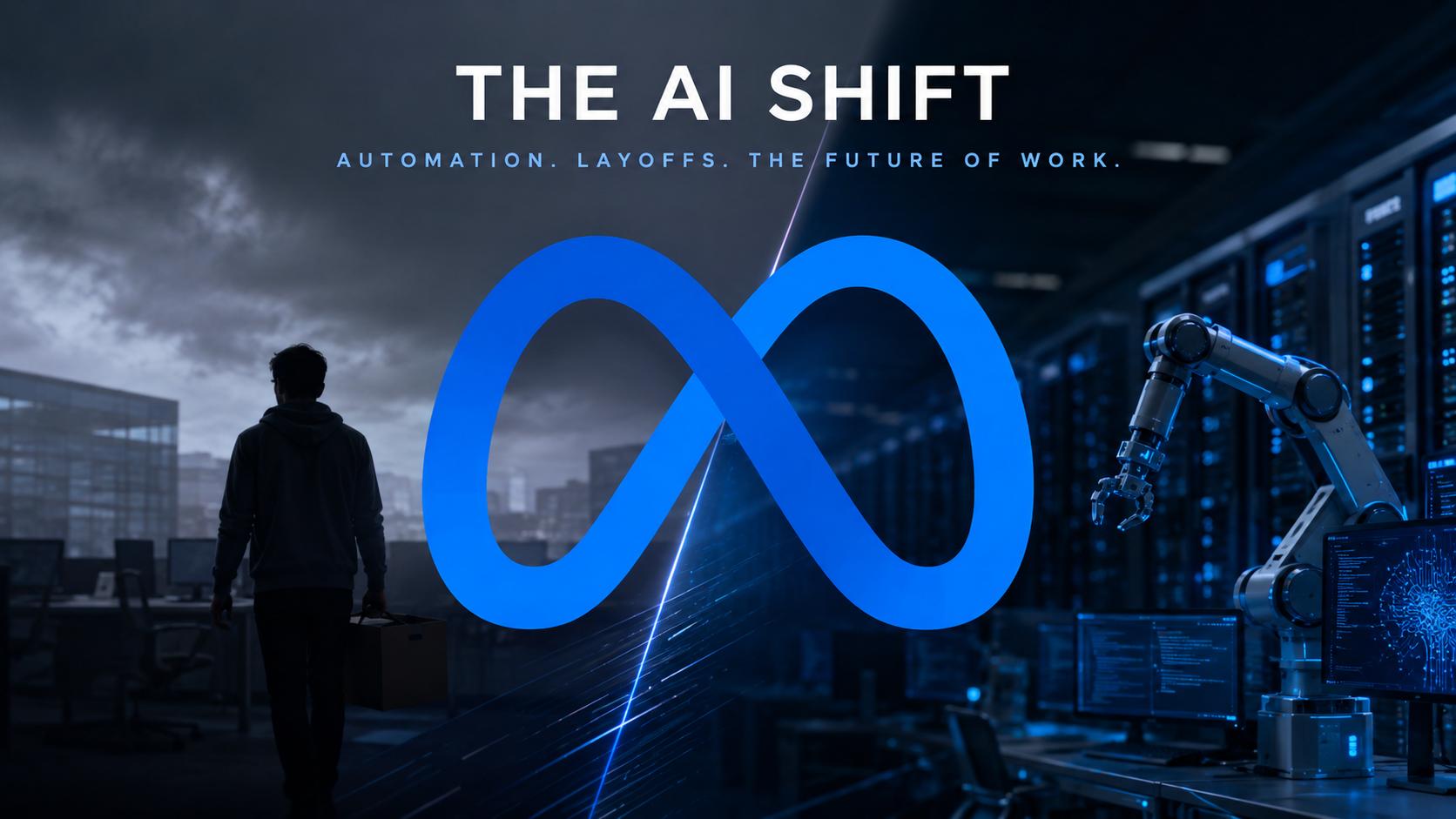

The New Era of Tech Layoffs
Silicon Valley is experiencing a massive wave of restructuring as companies shift priorities. Corporate leaders are rapidly redirecting billions of dollars from legacy projects toward artificial intelligence development. Consequently, thousands of highly skilled engineers are suddenly facing an uncertain job market. These changes reflect a broader industry pattern that favors automated software systems over human personnel.
Recruiters across the region report a dramatic surge in applications from displaced technology workers. Indeed, the rapid realignment of corporate resources is transforming the traditional engineering career path. Firms must quickly adjust their talent acquisition strategies to survive this competitive environment. Many senior professionals are transitioning to emerging startups to apply their extensive programming skills.
How Meta Cuts 2,400 Jobs to Pivot Toward AI
Meta Layoff Footprint (July 2026)
Workforce impact distribution across primary hubs
State labor documents reveal significant permanent staff cuts at the company’s major Northern California offices. The filings show the elimination of 2,212 positions in Menlo Park and 313 roles in Sunnyvale. Specifically, these local cuts represent a key component of a larger global workforce reduction plan. This targeted restructuring aims to establish flatter management layers that can execute decisions much faster.
Affected workers will receive sixteen weeks of base pay along with extended healthcare coverage benefits. These departures primarily impact software developers who work on business-facing artificial intelligence applications. Meanwhile, state officials are tracking additional deep workforce cuts expanding rapidly across the Pacific Northwest corridor. In addition, Washington state filings confirm nearly fourteen hundred terminations starting late July.
The Massive Infrastructure Spending Push
FY 2026 AI Capital Expenditure
Financial shift from human payroll to cloud servers
Lower Bound
$115 Billion
Upper Bound
$145 Billion
Executive leadership is redirecting massive budgets away from virtual reality hardware toward generative cloud systems. Capital expenditures will likely hit 115 billion to 145 billion dollars this fiscal year alone. Therefore, the company must reduce operating costs in non-essential divisions to fund these servers. This financial strategy demonstrates a clear shift from human payroll toward raw computing power.
Zuckerberg hopes that massive compute investments will eventually deliver superintelligence for everyday consumers. The aggressive reallocation demonstrates that computing infrastructure holds higher corporate priority than headcounts. Thus, developers are facing unprecedented pressure to build revenue-generating automated tools quickly. Shareholders are closely watching the balance sheet to see if these investments yield profitable products.
The Controversial Employee Tracking Program
Employee Activity Monitoring
Friction index and automated metrics collection
Keystrokes
Continuous logs
Mouse Clicks
Friction track
Navigation
Active screen info
Internal tension grew significantly after management launched a highly intrusive computer monitoring system. This program tracks employee keystrokes, mouse clicks, and active screen navigation throughout the workday. However, the automated tracking project has triggered intense backlash and petitions from the workforce. Many employees complain that the system harvests their expert knowledge to train future algorithmic replacements.
International observers also warn that recording conversations with European colleagues might violate local privacy regulations. Furthermore, the initiative has severely damaged overall employee trust and workplace morale during layoffs. Staff members describe the surveillance tools as a direct threat to their long-term professional security. As a result, several tech advocacy groups are calling for regulatory investigations into corporate tracking practices.
Redundant Leadership and the Commercial Pivot
Machine Learning Structural Reorg
Talent optimization shift from Scale AI integration
Brings high-profile ML researchers directly into core laboratories.
Restricted operational autonomy focused strictly on frontier superintelligence.
Active focus on boosting near-term earnings through user-facing features.
The purchase of Scale AI brought high-profile machine learning pioneers into the internal laboratory. The new Chief AI Officer initially aimed to build long-term, frontier superintelligence models. Subsequently, the executive team created a parallel division to focus entirely on immediate product applications. This strategic division of labor restricts the autonomy of the long-term scientific research team.
The corporate strategy prioritizes short-term revenue features over high-risk, expensive frontier models. Conversely, investors welcome this focus on boosting near-term earnings per share. The operational friction illustrates a wider struggle between scientific progress and commercial realities. Eventually, executives must balance these competing interests to ensure the platform remains competitive.
Strategic Implications for the Tech Labor Market
The structural shift toward automation is permanently altering the demand for traditional engineering roles. Experienced professionals must now acquire highly specialized machine learning competencies to remain competitive. Ultimately, the rapid transition presents significant challenges for workers but creates opportunities for lean startups. Independent developers are using advanced code generators to launch products with minimal operating capital.
Younger developers are increasingly seeking entrepreneurial paths rather than relying on traditional corporate tech careers. The ongoing restructuring highlights a future where algorithmic efficiency dictates organizational size and structure. Hence, the evolving tech industry will continue to redefine the relationship between human labor and software. Only adaptable personnel will thrive as automated agents take over routine software development tasks.
Support Our Work
Help us keep creating and maintaining our projects. We appreciate your support!
Ways to contribute:
Shop via Affiliate LinksSupport us at no extra cost to you while you shop.
Support on Ko-fiBuy us a coffee to keep the engine running!






Leave a Reply