
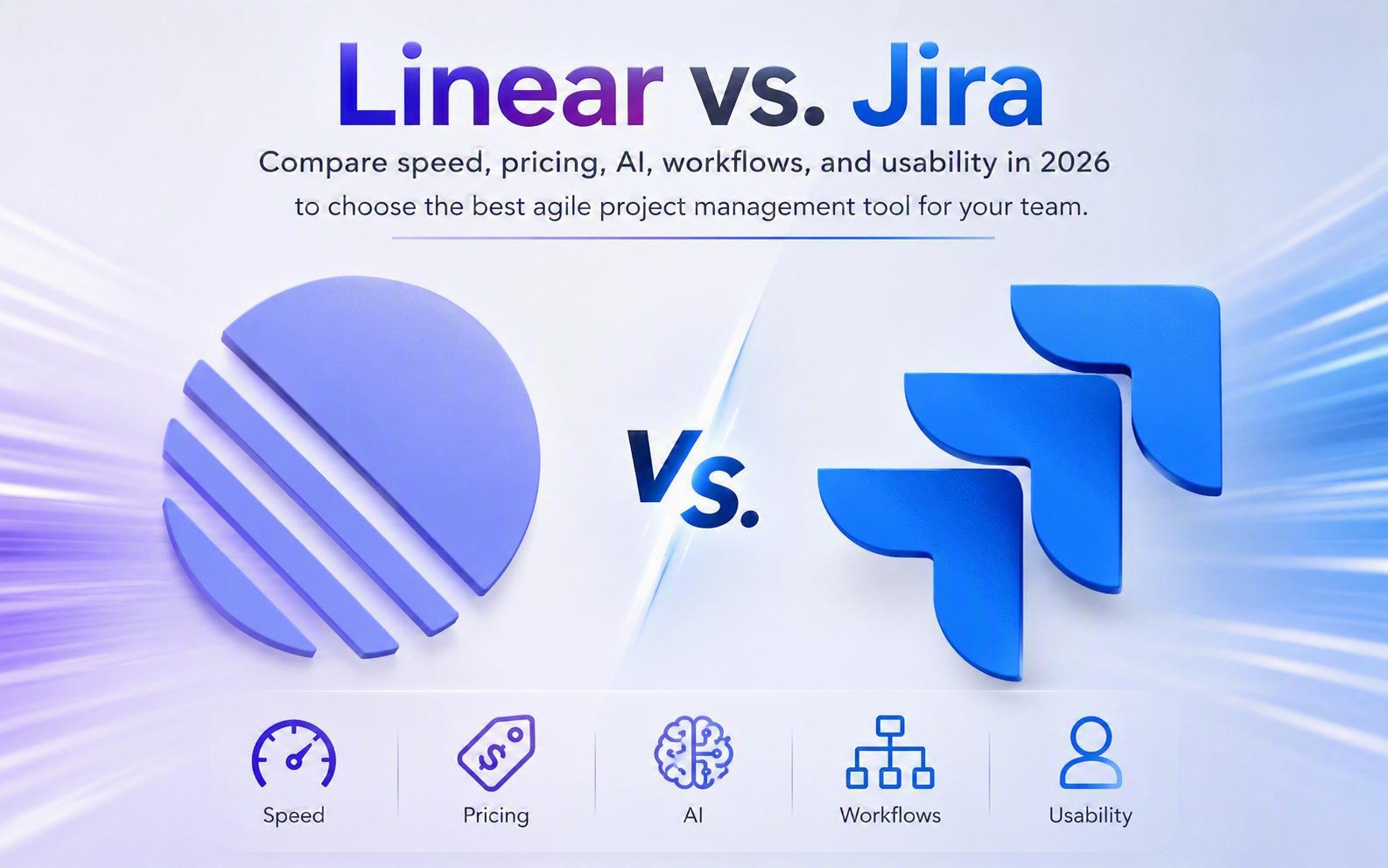

The Shifting Landscape of Linear vs. Jira

- FAST RUNS IN THE FAMILY — The 14-inch MacBook Pro with the M5 Pro or M5 Max chip brings next-generation speed and powerf…
- BUCKLE UP — Along with a next-generation CPU, faster unified memory, and up to 2x faster SSD storage,* M5 Pro and M5 Max…
- BUILT FOR AI — Apple silicon, and every major component that powers it, is designed to run demanding on-device AI worklo…
Software development teams in 2026 increasingly question the traditional dominance of old enterprise management giants. Specifically, the modern debate around Linear vs. Jira represents a fundamental cultural shift in technology workspace design. Developers now prioritize raw execution speed and clean user interfaces over heavy corporate administrative overhead. Consequently, smaller product-led organizations are leaving legacy setups to escape constant configuration friction.
Recent customer acquisition data illustrates a rapid narrowing of the market gap between these two leading platforms. For instance, the challenger acquired over thirteen hundred new companies between February and April of 2026. Meanwhile, legacy signups dropped by thirty-two percent during that identical three-month evaluation window. This dynamic puts both toolmakers on a clear trajectory to collide in the mid-market segment. The challenger reportedly crossed one hundred million dollars in ARR during the previous fiscal year.
Performance Benchmarks and Daily Usability
Performance stands as the most critical factor driving engineering departments to abandon their historical systems. Indeed, local-first architectures allow the modern challenger to render pages and search queries almost instantly. Typical core interactions in this streamlined application execute in less than fifty milliseconds. Conversely, traditional cloud databases require several seconds to reload complex boards and custom screens. Engineers easily notice these persistent delays during daily standups and intense sprint planning sessions.
These minor performance lags produce a compound negative effect on developer velocity over long periods. Furthermore, complex navigation patterns force engineers to click through multiple nested tabs just to update single tasks. The challenger addresses this issue by embedding comprehensive keyboard shortcuts for every possible user action. Accordingly, developers can triage issues, assign tickets, and build roadmaps without touching their computer mouse. These efficiency gains eliminate the dread that technical teams traditionally associate with issue tracking.
Analyzing the Cost Dynamics of Linear vs. Jira
Financial metrics reveal that direct licensing fees tell only part of the project management equation. The legacy vendor charges standard monthly rates of roughly eight dollars per seat. The challenger’s basic plan demands ten dollars per user when billed on an annual cycle. However, hidden administrative costs heavily tilt the financial balance back toward the newer alternative. Complex enterprise environments usually require highly paid dedicated administrators to manage custom configurations.
Teams must also purchase external marketplace add-ons to unlock basic charts and testing modules. These supplemental software fees can easily double the initial per-user licensing expenses. Thus, the real total cost of ownership remains significantly lower for self-serve systems. We can compare the core pricing models across both platforms in the structured data below.
| Plan Tier | Linear Price (Annual) | Jira Price (Annual) | Storage Included |
| Free | $0 (250 issues) | $0 (10 users) | 2 GB |
| Standard/Basic | $10/user/month | $7.91/user/month | 250 GB (Jira) |
| Premium/Business | $16/user/month | $14.54/user/month | Unlimited |
Workflow Configurations and Organizational Control
The underlying philosophy of workflow management represents a massive structural divide between these platforms. Specifically, legacy software excels at hosting highly customized processes with dozens of branching transition paths. This immense flexibility allows large departments to enforce strict regulatory compliance checks. Nevertheless, excessive process complexity frequently creates a heavy bureaucratic burden for rapid engineering teams. Developers often spend valuable time fighting the tool instead of shipping working code.
The challenger restricts organizations to flat team structures and simple, predefined status states. Teams must operate within structured boundaries containing only triage, backlog, cycles, and archives. This opinionated layout successfully prevents endless debate over process optimization and system configuration. Therefore, product teams achieve a predictable, automated rhythm that naturally avoids backlog clutter. It also lowers the cognitive load of tracking daily development progress.
The Integration of Artificial Intelligence and Agents
The competitive landscape shifted dramatically in 2026 with the introduction of advanced agent technologies. In particular, Atlassian launched the Rovo assistant to assist teams with cross-tool search operations. This intelligent tool compiles answers from connected platforms like Google Drive and Slack. Subsequently, developers can assign issues to cloud agents that generate merge-ready pull requests. These features aim to reduce the manual labor required to maintain large databases.
The challenger introduced Linear Agent in March of 2026 to automate routine triaging tasks. This system reads incoming tickets and suggests duplicate detections or assignees out of the box. Moreover, its advanced Coding Sessions allow the agent to write code and fix minor bugs. This automation moves work directly from the backlog to reviewed pull requests without leaving the app. Both tools leverage machine intelligence to transform tracking systems into active execution platforms.
Lessons From Enterprise Migration Case Studies
Real-world migration narratives highlight the practical trade-offs involved when abandoning established legacy tools. For example, Oscar Health migrated over six hundred employees in just one month. The medical tech company successfully bypassed years of accumulated custom fields and process bloat. They discovered that developers did not miss the complicated custom structures after switching. The rapid change significantly improved visibility for both infrastructure teams and executive leadership.
Alternatively, migrating teams must prepare for certain functional limitations when adopting simpler software models. The technical team at Cotera learned that custom branching workflows do not translate easily. They had to collapse fourteen detailed workflows into four standardized team progress states. They also had to find external tools to handle necessary QA time tracking. Nonetheless, their internal survey recorded a massive jump in developer satisfaction after the transition.
Nuanced Conclusions and Strategic Recommendations
Deciding between these two project trackers ultimately depends on team size, compliance, and growth goals. In fact, small to mid-sized product companies benefit greatly from the challenger’s opinionated velocity. The local-first interface and keyboard shortcuts maximize focus for developers shipping software weekly. Startups prioritizing rapid feature delivery should adopt the faster, modern tracking tool. This setup lets engineers write code instead of managing administrative databases.
On the other hand, legacy systems remain indispensable for massive multi-team organizations. Large-scale enterprises requiring strict SOC compliance and granular field permissions must stay with established software. Companies deeply embedded in complex ecosystems require cross-project planning capabilities. Each team must analyze its unique bottlenecks before committing to any major tooling change. Ultimately, selecting the right software shapes how modern teams communicate and deliver core value.
Support Our Work
Help us keep creating and maintaining our projects. We appreciate your support!
Ways to contribute:
Shop via Affiliate LinksSupport us at no extra cost to you while you shop.
Support on Ko-fiBuy us a coffee to keep the engine running!





Leave a Reply