


- PRIVACY DISPLAY: Automatically hide your screen from those beside you. The built-in privacy display can be preset¹ to tu…
- TYPE IT IN. TRANSFORM IT FAST: Enhance any shot in seconds on your smartphone by using Photo Assist² with Galaxy AI.³ Ad…
- NIGHTS, CAPTURED CLEARLY: From gigs to city lights, record and capture moments after dark with clarity using Nightograph…
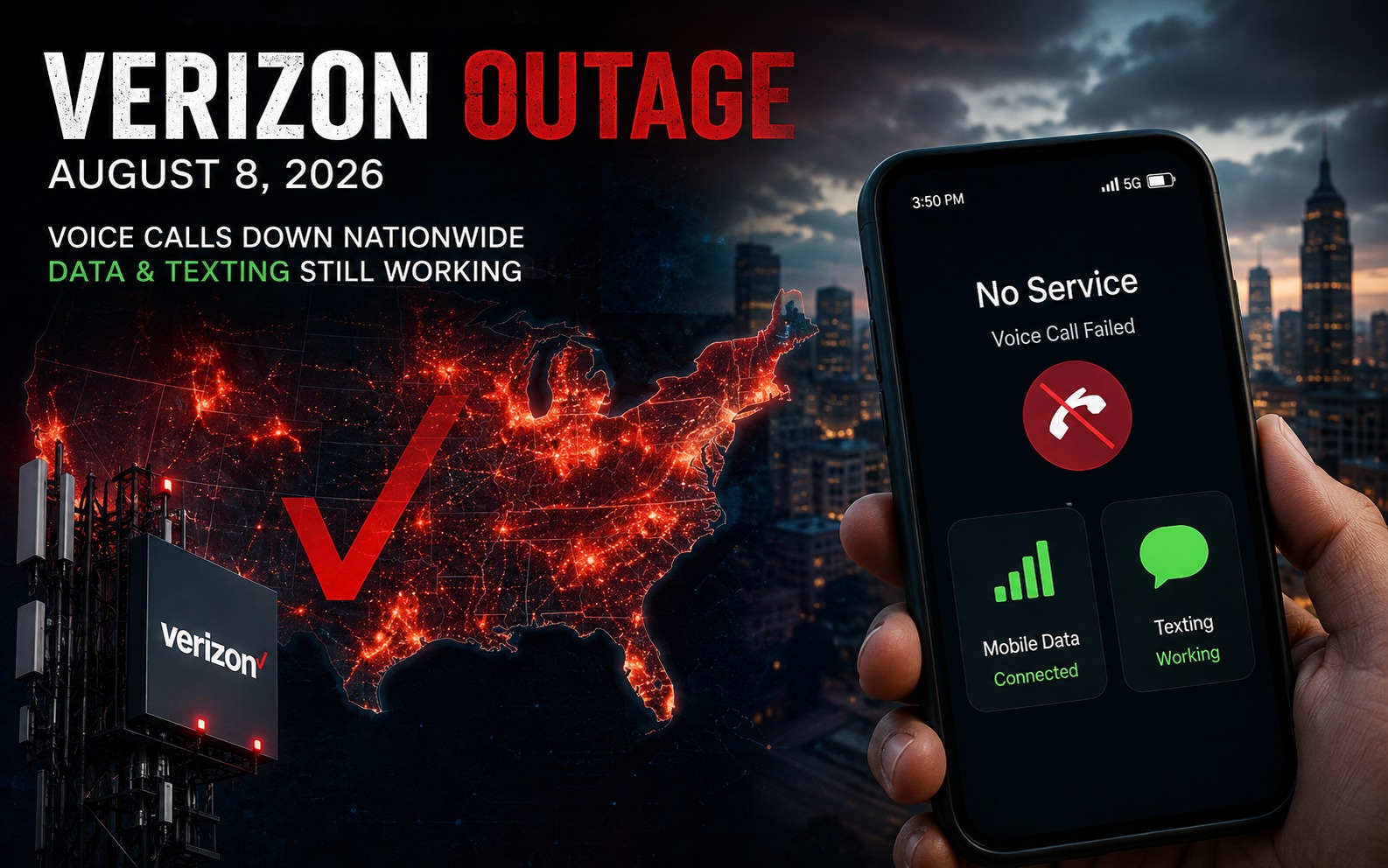
Key Details of the Verizon Outage August 2026
Wireless subscribers across the nation faced widespread calling disruptions during the Verizon Outage August 2026 on Saturday afternoon. Outage tracking platforms logged initial service complaints beginning around 3:50 p.m. EDT as calls suddenly dropped nationwide. Meanwhile, cellular data connections and mobile internet access remained fully functional for most affected wireless users. Monitoring systems received over 8,000 individual problem reports within twenty minutes of the initial system onset. Total complaint submissions spiked past 13,000 reports as the voice disruption expanded significantly later that afternoon. Consequently, millions of mobile users experienced unexpected limitations when attempting routine cellular voice communications.
Many mobile virtual network operators reliance on primary carrier towers led to shared service impacts everywhere. Specifically, subscribers using Visible, US Mobile, and Spectrum Mobile experienced identical voice connectivity failures. Mobile device screens displayed instant failure notifications whenever customers attempted to make outbound telephone calls. Similarly, incoming calls failed to connect, leaving receiving phones silent during dialing attempts. Text messaging platforms operated normally because SMS traffic utilized completely separate cellular data channels. Verizon customer support confirmed an active voice service issue across affected regional network markets.
Geographic Scope and Operational Impact
Service disruptions affected major metropolitan areas across multiple key geographic regions throughout the afternoon. Furthermore, initial complaints concentrated heavily along densely populated corridors in the northeastern states. Affected regions expanded rapidly into southern and midwestern states within two full hours. Therefore, callers in New York, Texas, Florida, and Illinois reported persistent voice connection drops. Wireless subscribers in California and Washington state also documented intermittent voice calling network issues. Regional technical teams monitored network switches as automated traffic rerouting mechanisms responded to spikes.
Local public safety departments issued rapid public advisories regarding vital municipal emergency communication channels. Additionally, public safety officials recommended texting 911 if emergency phone calls failed to connect. Residents connected to Wi-Fi networks successfully dispatched digital messages throughout the voice disruption. Indeed, mobile data access functioned properly despite severe limitations on standard voice call switching. Government agencies monitored system stability to ensure essential municipal emergency services remained fully accessible. Emergency response centers reported no major widespread communication failures during the temporary operational disruption.
Breakdown of Network Service Issues
Crowdsourced network monitoring metrics revealed a sharp contrast between voice and mobile data performance. Moreover, voice calling issues represented eighty percent of total customer problem submissions. Mobile broadband internet services experienced minimal degradation during the peak incident period. Wireless home internet subscribers accounted for ten percent of logged customer reports. Diagnostic tracking tools categorized the event as a major voice gateway disruption. Telecommunications analysts noted that cellular data channels handled internet browsing without interruption.
Network engineers monitored system performance while automated traffic management systems isolated faulty gateways. However, status indicators showed steady service restoration starting around six p.m. EDT. Subsequently, call completion success rates returned toward baseline levels across major impacted markets. Engineering teams confirmed normal voice traffic routing across all affected regional switches by evening. Customers reported successful test calls after toggling airplane mode or restarting their mobile devices. Network operations centers maintained active telemetry monitoring throughout the night to verify stability.
Industry Context and Network Resilience
For example, this voice incident follows a separate nationwide network disruption from earlier in the year. Federal regulators launched inquiries after a previous software glitch caused a prolonged multi-hour outage. Modern mobile networks rely heavily on cloud-based virtual core software to manage calls. Accordingly, complex software updates can occasionally trigger unexpected routing anomalies across regional nodes. Industry experts emphasize that cloud architecture virtualization requires rigorous real-time fault isolation. Robust testing frameworks help prevent minor software anomalies from affecting primary voice subsystems.
Telecommunications providers regularly update network protocols to reinforce infrastructure resilience and software stability. Overall, swift public communication during service interruptions helps maintain subscriber trust across competitive markets. Major wireless operators continue investing in redundant gateway architectures to protect vital voice services. Service providers also refine automated failover mechanisms to manage sudden spikes in network traffic. Future infrastructure investments will focus on enhancing real-time anomaly detection across virtual core nodes. As a result, continuous software improvements will bolster long-term reliability for nationwide cellular communications.
Support Our Work
Help us keep creating and maintaining our projects. We appreciate your support!
Ways to contribute:
Shop via Affiliate LinksSupport us at no extra cost to you while you shop.
Support on Ko-fiBuy us a coffee to keep the engine running!





Leave a Reply