


Nvidia RTX Spark Laptop & the M6 MacBook Pro: Two Paths for Local AI
The RTX Spark Laptop vs. MacBook Pro M6 rivalry defines late 2026 portable computing. Nvidia partners began selling RTX Spark Windows laptops on October 16, 2026. Apple followed on November 6 with its 14-inch MacBook Pro M6. Furthermore, Nvidia launched compact RTX Spark desktops on November 18. Apple leads on entry price at $1,999 with standout battery life. In contrast, RTX Spark Laptop scales to 128GB unified memory for big AI models.
RTX Spark runs as a multi-vendor Windows 11 on Arm platform, not one laptop. Six brands sell Spark laptops today, and Acer and Gigabyte follow later. Meanwhile, the MacBook Pro M6 offers one chassis maxing out at 32GB RAM. Apple offers no M6 Pro or M6 Max chips in its lineup. Bloomberg reported Apple may skip M6 Pro chips, and Macworld noted 2027 rumors. Therefore, OLED touchscreens or 128GB capacities on macOS require M5 Pro or Max.
⚡ Late 2026 Launch & Silicon Architecture
📅 Oct – Nov 2026 RolloutRTX Spark Laptop vs. MacBook Pro M6: Specs and Pricing
Both chips combine CPU cores, graphics cores, and shared memory on one package. Apple builds the M6 on a 2nm process with 12 CPU and 12 GPU cores. Its silicon adds a Dual 16-core Neural Engine and up to 170 GB/s bandwidth. However, Nvidia builds a 3nm N1X superchip with MediaTek for Windows. Top N1X configurations pack 20 Grace cores, 6,144 Blackwell cores, and fifth-generation Tensor Cores. Moreover, Nvidia developer docs list 300 GB/s bandwidth and a 600 GB/s NVLink link.
Pricing creates an immediate split across these hardware configurations. Apple prices its base M6 laptop with 16GB RAM and 1TB SSD at $1,999. Adding 32GB RAM, a 4TB SSD, and nano-texture glass raises that laptop to $4,049. By comparison, $2,599 Spark laptops pack an 18-core chip and 24GB memory. Nvidia specs cap that 5,120-core entry chip at 32GB of unified memory. Full 128GB Spark laptops cost $5,899.99 from Microsoft or $6,999.99 from Asus. Similarly, compact RTX Spark desktops start at $4,499 from Asus.
💰 Hardware Pricing & Unified Memory Tiers
📈 $1,899 Edu to $6,999.99 MaxCPU Speed, Gaming Graphics, and Battery Endurance
Independent tests show each chip winning different processor benchmarks. PCMag tested the 14-inch M6 MacBook Pro against a $4,299 Surface Laptop Ultra. The M6 MacBook Pro won single-core Cinebench 2024, Geekbench 6.3, and Adobe Photoshop tests. Notebookcheck measured 221 single-core Cinebench 2024 points on desktop M6 silicon against Spark’s 130–131. Still, PCMag notes superior Mac mini cooling lets that desktop edge out the M6 laptop. Conversely, 20-core Spark laptops hit 1,673 multi-core points versus 1,468 on the M6 Mac mini. Spark beats the M6 MacBook Pro in multi-core Cinebench rendering and HandBrake 4K transcoding.
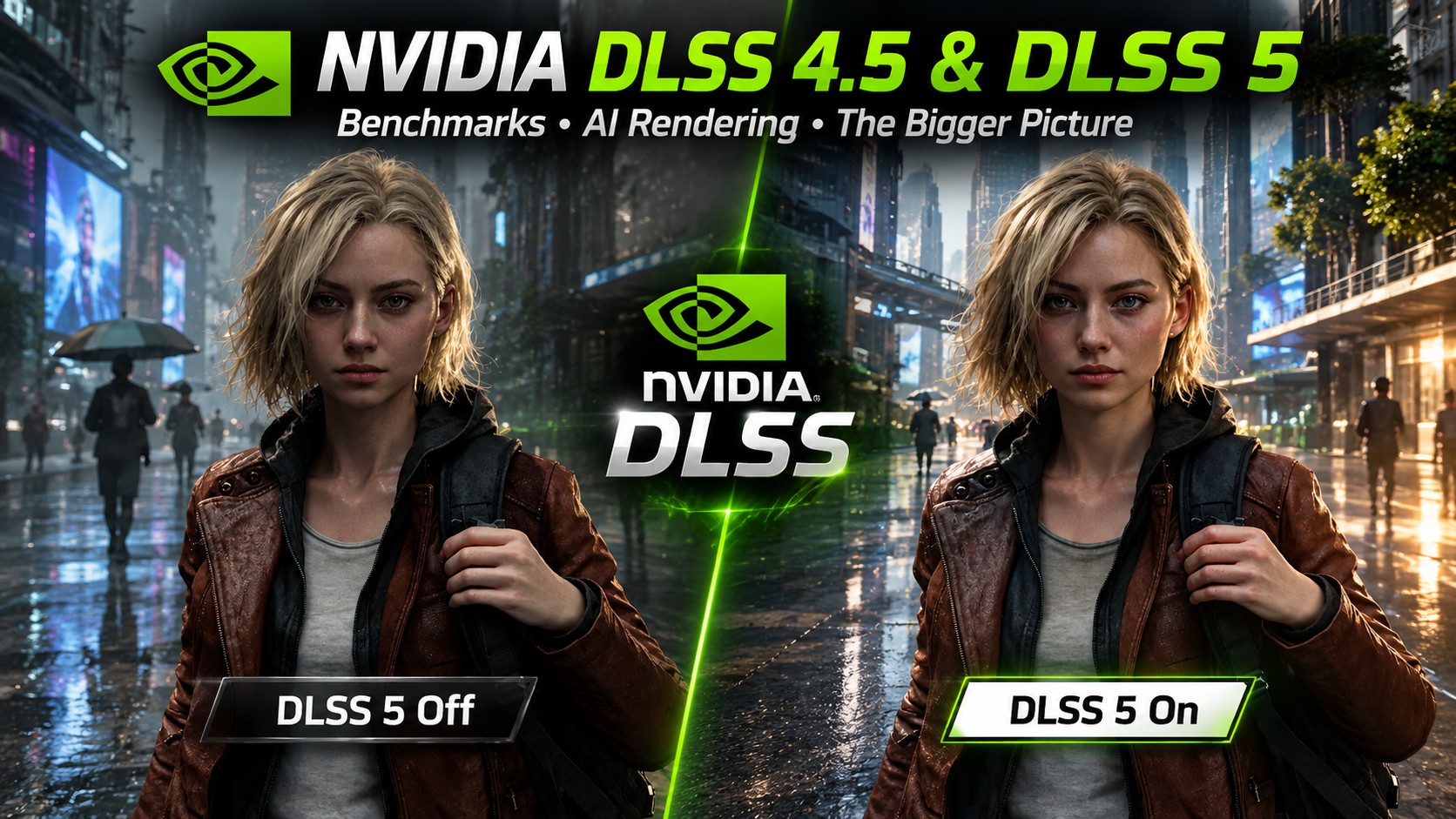
Graphics and battery tests widen the divide between these systems. Trackers show Spark doubling M6 scores in 3DMark Steel Nomad, 3,134 to 1,515. Micro Center hit 61.58 fps in 1440p Cyberpunk 2077 using low ray tracing and DLSS Balanced. In addition, Ultra settings with DLSS and 4x frame generation pushed rates to 151.20 frames. Nevertheless, Notebookcheck measured 20 percent 1080p emulation losses and stuttering in some Windows games. The M6 laptop managed 43 native frames at 1600p Ultra without ray tracing. On battery, M6 ran 29 hours 36 minutes in PCMag’s video rundown test. On the other hand, Spark logged 10 hours 15 minutes in Tom’s Guide’s web test.
📊 Real-World Benchmarks: CPU, Gaming & Battery
⚖ Lab Test ComparisonLocal AI Workloads and Memory Ceilings
Memory ceilings dictate which local AI models each laptop can load. Apple caps the M6 chip at 32GB RAM and 170 GB/s memory bandwidth. That ceiling blocks 70B-parameter models from fitting inside M6 memory entirely. Independent LLM benchmarks on the M6 MacBook Pro remain scarce across labs. Consequently, October tests on a 32GB M6 Mac mini provide our best reference. In LM Studio, a 35B mixture-of-experts model hit 63 to 69 tokens per second. A dense 27B model dropped to 11 or 12 tokens per second on English prose. Speculative decoding in Splash lifted 27B code output up to 68 tokens per second.
RTX Spark targets giant models through 128GB laptops with adjustable Windows memory splits. Users can raise the default 62.5GB GPU split up to 96GB inside Nvidia’s app. MindStudio ran a 120B MoE model at 65 tokens per second via llama.cpp. Indeed, unplugging the laptop kept that model generating at 65.9 tokens per second. Even so, hardware estimates put dense 70B speeds near 4 to 6 tokens per second. Artificial Analysis timed a 128GB Spark prototype 1.6x to 2.0x faster than M5 Pro. Nonetheless, The Register and StorageReview reported lockups or shutdowns during heavy stress loads. Apple’s M5 Max doubles Spark’s bandwidth at 614 GB/s for faster text decoding.
🧠 Local LLM Token Speeds & Memory Ceilings
⚡ Select a Model Size BelowCorporate Strategy, Acquisitions, and Industry Turmoil
Major deals and leadership upheaval reshaped Nvidia’s AI strategy in 2026. In December 2025, Nvidia licensed Groq technology and hired executives in a reported $20B deal. Additionally, Nvidia agreed in September 2026 to buy Hugging Face for $12.93 billion. U.S. antitrust regulators opened an inquiry into that Hugging Face deal in October. On desktops, Nvidia’s PAIR software routes home AI tasks across connected devices. Co-founder Jensen Huang resigned on November 12 amid personal scandals and an SEC China inquiry. Interim CEO Colette Kress backed open-source AI; Nvidia shares dropped 14.01 percent on November 20.
Apple answered with targeted software partnerships and strategic on-device AI acquisitions. Specifically, Apple used Google Gemini outputs to refine Foundation Models for Siri AI. Siri AI runs in beta inside macOS 27 Golden Gate under regional EU limits. Computerworld reports Apple purchased startup Liquid AI to compress future on-device models. Across the industry, rising memory costs hit every computer maker hard. For example, Gartner projects memory shortages will drive 2026 PC prices up 17 percent. As a result, Apple CEO Tim Cook warned buyers about rising component expenses.
🌐 2026 Industry Shakeup, M&A & Memory Inflation
📰 Corporate & Supply Chain ContextChoosing the Right Machine Today
Overall, each buyer profile points cleanly toward one distinct computing platform. Choose the MacBook Pro M6 for daily coding, Photoshop work, and travel. Its $1,999 entry price and multi-day video endurance outlast heavier Windows workstations. Instead, Mac creators needing 128GB memory or PROLED displays should pick M5 Max.
Pick an RTX Spark laptop to run 70B or 120B local models right on Windows. For instance, native CUDA developers gain high-memory Windows workflows without paying cloud fees. Smart buyers should check Arm64 Python tools and game anti-cheat compatibility upfront. Testing your workload on rented cloud DGX Spark hours helps confirm memory needs. Thus, shoppers avoid paying $6,000 for unified memory tiers they never use. Ultimately, Apple commands mobile efficiency, and Nvidia leads in portable AI memory capacity.
🎯 Buyer Decision Guide: Match Your Workflow
✔ Interactive SelectorSupport Our Work
Help us keep creating and maintaining our projects. We appreciate your support!
Ways to contribute:
Shop via Affiliate LinksSupport us at no extra cost to you while you shop.
Support on Ko-fiBuy us a coffee to keep the engine running!


Leave a Reply