
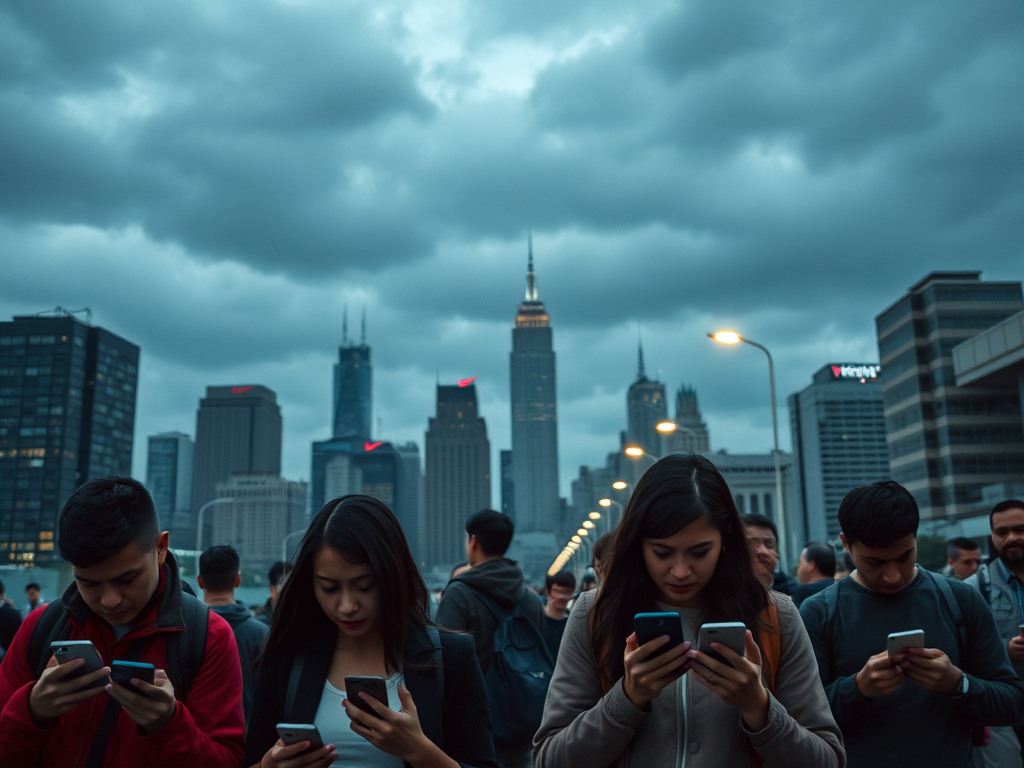
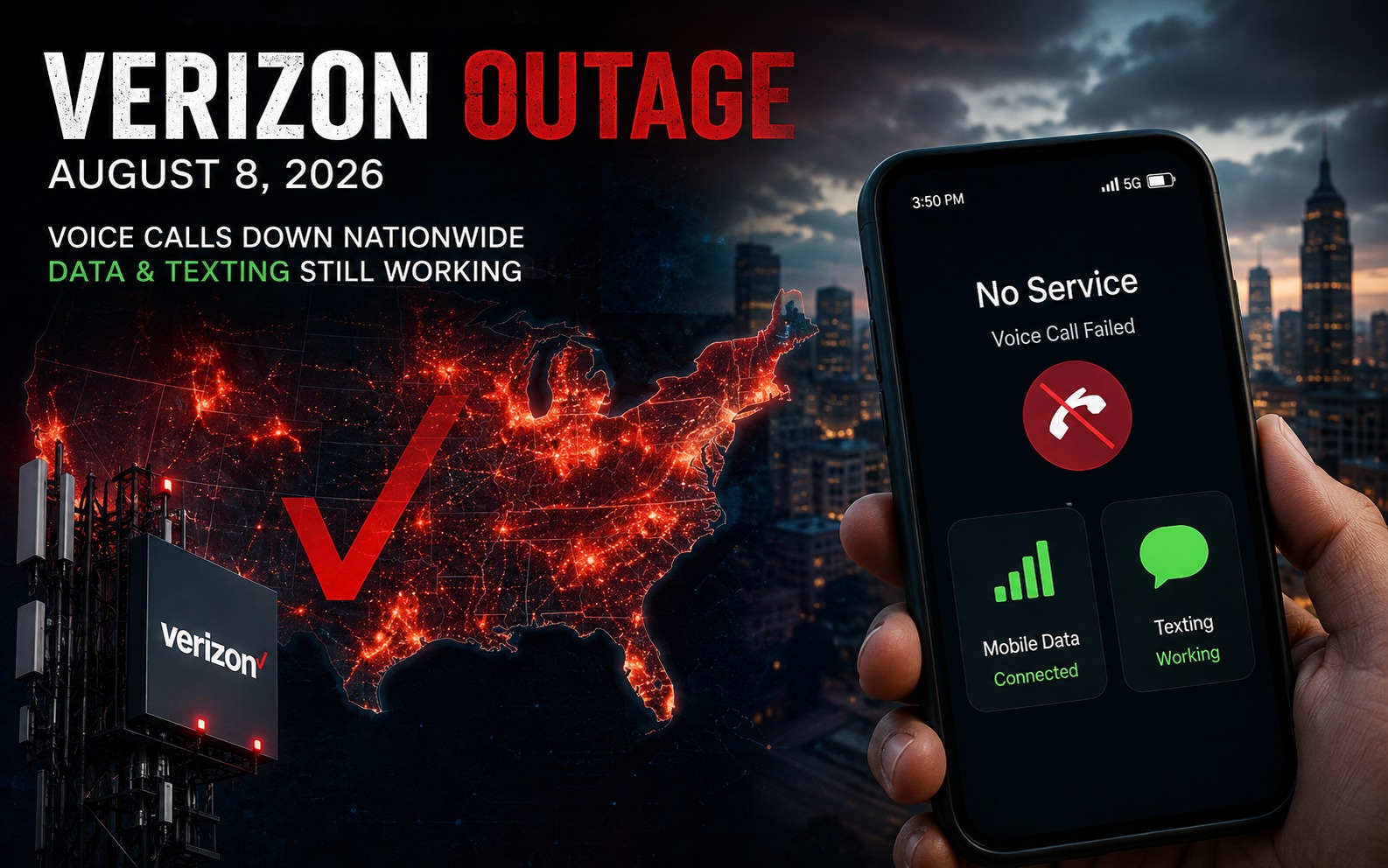
On Wednesday, January 14, 2026, millions of Verizon Wireless customers across the United States experienced a massive network failure: the Verizon Outage. This disruption began around noon Eastern Time and lasted for approximately ten hours. During this period, users found their mobile devices stuck in “SOS mode.” This meant they could not make calls, send texts, or access mobile data.
While the company has officially declared the issue resolved, the incident has raised significant questions about network reliability. Below is a comprehensive explanation detailing the timeline, impact, and aftermath of this major telecommunications event.

The Sudden Silence: How the Verizon Outage Began
The day started normally for most Verizon subscribers. However, everything changed shortly before noon. Suddenly, thousands of people noticed their signal bars disappearing. In their place, a small “SOS” icon appeared on iPhones. Android users saw similar indicators of a total signal loss.
Initially, many people thought the problem was local. They assumed a nearby cell tower had failed. Soon, social media platforms like X and Threads were flooded with complaints. Reports came in from New York, Chicago, and Los Angeles. It became clear that this was a national crisis.
According to Downdetector, the surge in reports was nearly instantaneous. Within fifteen minutes, the platform recorded over 178,000 concurrent reports. At its peak, some estimates suggested that over 1.5 million complaints were filed. This massive spike indicated a catastrophic break in standard cellular connectivity.
Verizon remained silent for the first hour of the crisis. Eventually, the company posted a brief statement on social media. They acknowledged the issue and stated that engineers were working on a fix. Nevertheless, the lack of specific details frustrated many users who relied on their phones for work.
Technical Chaos: The Meaning of SOS Mode
When a phone enters “SOS mode,” it means the device cannot authenticate with its home network. However, it can still connect to other available towers for emergency calls. This feature is designed to save lives during disasters. During this outage, it served as a grim reminder of how much we depend on mobile links.
Verizon customers could not use their 5G or LTE data. Consequently, they could not access navigation apps or mobile banking. Business professionals lost the ability to join remote meetings. Parents could not reach their children at school. The disruption highlighted the vulnerability of our modern digital infrastructure.
Furthermore, the outage impacted Verizon’s home internet services in some areas. This double blow left many households completely disconnected from the outside world. While some users could use Wi-Fi calling, others found that service unreliable as well. The scale of the failure was simply unprecedented for the company in recent years.
Interestingly, Verizon’s MVNOs, like Visible, seemed less affected initially. Some users on these sub-networks reported continued service. However, the majority of the primary Verizon customer base was left in the dark. This discrepancy led to technical debates among experts online.
The Response: Verizon Struggles to Restore Order
Throughout the afternoon, Verizon’s engineering teams worked non-stop. The company issued several updates via its official news channels. They apologized for the “huge inconvenience” and promised a fast resolution. Yet, the recovery process was agonizingly slow for those waiting for a signal.
By 4:00 p.m. ET, the outage was still very active. Verizon stated that teams were “fully deployed” on the ground. They emphasized that their top priority was getting everyone back online. Meanwhile, competitors like T-Mobile and AT&T took the opportunity to reassure their own customers.
T-Mobile issued a statement confirming their network was operating normally. They noted that their users might struggle to reach Verizon customers. AT&T followed suit with similar messaging. These “jabs” from competitors added a layer of corporate drama to the unfolding crisis.
Local government agencies also had to intervene. The New York City Emergency Management office warned residents about potential 911 issues. They advised people to use landlines or find a police station in an emergency. This elevated the outage from a mere annoyance to a public safety concern.
Recovery and Resolution: A Long Night for Engineers
As evening approached, some users finally saw their signal bars return. However, the progress was not uniform across the country. A person in Boston might have service while someone in Philadelphia remained disconnected. This “patchwork” recovery is common in large-scale network restorations.
Finally, at approximately 10:20 p.m. ET, Verizon declared the outage resolved. The company posted a final update on X. They thanked customers for their patience during the ten-hour ordeal. They also provided a crucial piece of advice for those still experiencing issues.
Verizon encouraged everyone to restart their devices immediately. Restarting a phone forces it to re-authenticate with the network. This simple step helped thousands of people regain their connection. For others, toggling “Airplane Mode” on and off also did the trick.
Despite the restoration of service, the cause remained a mystery. Verizon did not provide a technical explanation for the failure. Experts speculated about potential software bugs or hardware malfunctions. Some even questioned if a cyberattack had occurred. However, Verizon later stated there was no evidence of malicious activity.
Compensation and the Path Forward
To appease their angry customer base, Verizon promised account credits. They stated that details would be shared directly with affected users. This move was seen as a necessary step to prevent a mass exodus to other carriers. Many customers had already expressed their intention to switch providers.
The company’s reputation has certainly taken a significant hit. This was the first major outage since late 2024. That previous incident had already drawn the attention of the FCC. It is likely that federal regulators will investigate this latest failure as well.
Moving forward, Verizon must prove that its network is truly reliable. They have invested billions in 5G technology over the last few years. Events like this suggest that the core infrastructure may still have weak points. Connectivity planning has now become a hot topic for both businesses and individuals.
For now, the digital world has returned to its usual rhythm. Phones are ringing and data is flowing once again. But for ten hours on a Wednesday in January, the silence was deafening. It reminded us all how fragile our connected lives truly are.
Quick Facts About the Verizon Outage
| Detail | Information |
| Date | January 14, 2026 |
| Duration | Approximately 10 hours |
| Peak Reports | ~260,000 (Downdetector) |
| Status | Resolved (as of Jan 15) |
| Resolution | Restart device for service |
| Compensation | Account credits promised |
Ultimately, this event serves as a reminder of our digital dependence. When the network fails, daily life grinds to a halt. While service is now back, the reputational damage may linger. Verizon must now prove that its network remains the most reliable in America.
Source Links for Further Reading About Verizon Outage
- Verizon outage cause: What we know | Mashable
- Verizon says outage resolved after customers across the U.S. lost service | CBS News
- Verizon declares outage over after 10 hours | First Coast News
- Verizon outage: With service restored, here’s everything that’s happened | TechRadar
- Verizon Says It’s Resolved Massive Outage Across US | CNET
Get more interesting tech news here.




Leave a Reply