
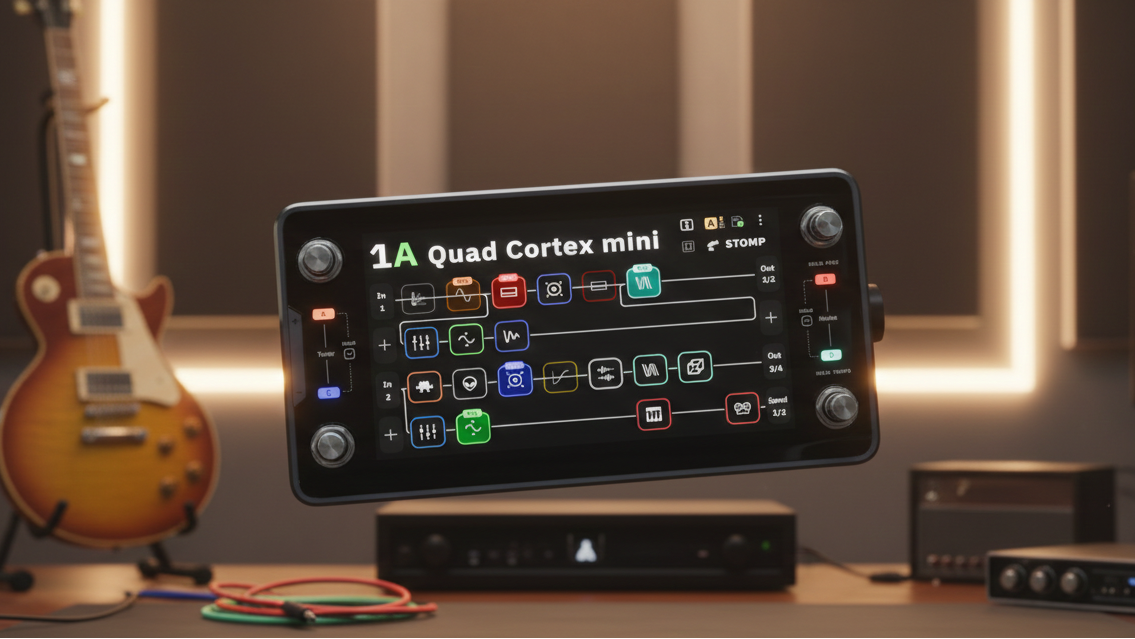
The music industry experienced a massive shift at NAMM 2026. Neural DSP officially unveiled the long-awaited Quad Cortex Mini. This compact device packs immense power into a small frame. It brings flagship performance to musicians everywhere. Many experts believe this release redefines the portable modeling market. The unit delivers the same high-quality audio as the original. It features the same processing architecture as the full-sized version. This new modeler weighs only 1.5 kg. It measures approximately 22.8 x 11.8 x 6.5 cm. Thus, it fits easily into any backpack or gig bag.

A New Era of Portability
Neural DSP remains a leader in digital guitar technology. Consequently, the Quad Cortex Mini has generated significant excitement. This device targets traveling musicians and studio professionals. It removes the need for heavy, traditional amplifiers. Furthermore, the unit features a beautiful 7-inch multi-touch display. This screen allows for fast and intuitive editing. Users can drag and drop signal blocks with ease. Because of its size, it integrates perfectly into existing pedalboards. It serves as a comprehensive rig for any stage.
Key Specifications of Quad Cortex Mini
The following table highlights the primary hardware details:
| Feature | Specification |
| Weight | 1.5 kg (3.3 lbs) |
| Dimensions | 22.8 x 11.8 x 6.5 cm |
| Display | 7″ High-Brightness Multi-Touch |
| I/O | USB-C, MIDI, XLR, TRS Send/Return |
| Processing | Full Quad Cortex Architecture |
Powerful Internal Technology
The Quad Cortex Mini does not compromise on sound. So, it utilizes the legendary Neural Capture technology. This system creates digital replicas of physical gear. You can capture your favorite boutique amplifiers at home. Then, you can take those exact tones on tour. The device supports both Neural Capture V1 and V2. This ensures the highest accuracy for dynamic gear. Specifically, it handles compressors and fuzz pedals exceptionally well. The unit comes preloaded with over 2,000 factory captures.
Additionally, the device includes a massive virtual library. It offers more than 90 amplifiers and 100 effects. Users also receive over 1,000 cabinet IRs. Because the software is consistent, presets move freely between units. You can sync your sounds using the Cortex Cloud. This ecosystem ensures a seamless transition for current users. Truly, the “mini” tag only refers to the physical size.
Integrated Software Updates
Surprisingly, the launch coincides with the release of CorOS 4.0.0. This update provides full support for the new hardware. It also introduces several new virtual devices. For example, the Nordic Concert Hall reverb adds cinematic depth. The Studio Plate 70 offers vintage, musical decay. Moreover, the Phase Doctor utility helps align stereo signals. These tools enhance the creative experience for every player. The interface adjusts automatically to the hardware type. Therefore, the workflow remains efficient on both large and small screens.
Connectivity and Routing
The back panel offers impressive flexibility for its size. It includes an instrument/microphone combo input. This input provides phantom power for condenser microphones. Furthermore, it features balanced XLR outputs for professional mixers. The USB-C interface supports 16 channels of audio. Consequently, it doubles as a powerful studio recording hub. You can record and re-amp guitars without extra boxes. This makes it an ideal tool for modern DAW workflows.
Why the Quad Cortex Mini Matters
However, many guitarists found the original unit too large for fly dates. However, the Nano Cortex lacked a screen and deep editing. The Quad Cortex Mini solves these specific problems. It bridges the gap between extreme portability and full control. Even though it is small, it remains roadworthy. The unibody housing consists of rugged anodized aluminum. It also features locking power connectors for extra security. This prevents accidental power loss during a live performance.
“Size shouldn’t dictate what a professional rig is capable of.” — Francisco Cresp, Neural DSP CPO.
Quad Cortex Mini Comparison with Siblings
Furthermore, understanding where this fits is crucial for buyers. The flagship model remains the choice for complex routing. It offers more physical footswitches for complex live sets. On the other hand, the Nano is for the minimalist. The Mini sits right in the “Goldilocks” zone. It provides the screen that players missed on the Nano. Yet, it retains the power that defines the brand.
- Flagship: Best for massive touring rigs.
- Mini: Best for pedalboards and desktop studios.
- Nano: Best for simple, ultra-portable capture playback.
Neural DSP has priced the unit at €1299. This price reflects its high-end professional capabilities. While it is an investment, it replaces many expensive pedals. It also saves money on airline weight fees for touring. Most retailers expect shipping to begin in February 2026.
Sources for Further Reading
- Neural DSP Official Announcement
- Guitar World NAMM 2026 Report
- Andertons Comparison Guide
- MusicRadar Feature Article
- Sweetwater Product Overview
Neural DSP Quad Cortex Mini Deep Dive
This video provides an in-depth look at the new hardware and demonstrates the updated CorOS features in a real-world setting.






Leave a Reply