
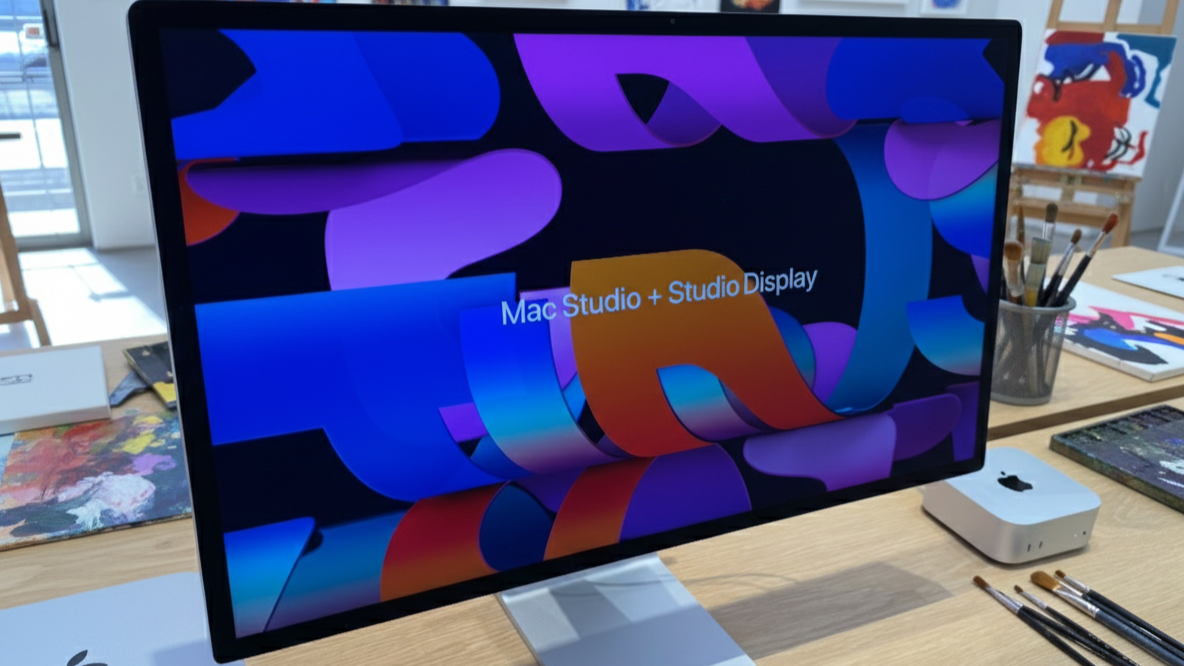
In the ever-evolving landscape of high-end desktop technology, few peripherals command as much attention as the Apple Studio Display. Since its debut in 2022, this monitor has served as the gold standard for creative professionals within the macOS ecosystem. However, as we move through February 2026, the tech community is buzzing with fresh reports about its successor. According to recent sightings in Chinese regulatory databases, a new model number—A3350—has officially surfaced. This discovery suggests that a significant refresh is not just a distant dream but an imminent reality.
Industry experts like Mark Gurman from Bloomberg have recently pointed to a launch window in the first half of 2026. Because shipping times for the current model are slipping into late March, speculation is reaching a fever pitch. This narrative will dive deep into the technical leaks, the potential for 120Hz ProMotion, and what the A19 chip might do for your desk setup.

The Regulatory Spark: A New Model Appears
Everything changed in mid-January when a mysterious filing appeared in a Chinese regulatory database. This specific document described a “high-performance LCD display” under a previously unknown model number. While Apple is notoriously secretive, these filings usually precede a product launch by roughly three to four months. Consequently, many analysts believe we are looking at the foundational paperwork for the Apple Studio Display 2.
Interestingly, the filing explicitly mentions LCD technology rather than OLED. While some enthusiasts hoped for an OLED transition, Apple seems to be sticking with its reliable liquid crystal roots for now. However, this does not mean the screen will be a simple carbon copy of the 2022 version. Instead, the “high-performance” label suggests that the internal backlighting is getting a massive overhaul. You can find more detailed coverage of these regulatory findings at MacRumors.
By opting for LCD over OLED, Apple can maintain color accuracy without the risk of pixel burn-in. Professional editors often leave static UI elements on screen for hours at a time. Therefore, an advanced LCD panel with Mini-LED backlighting might actually be the superior choice for longevity.
Apple Studio Display Refresh Rates: The 90Hz vs. 120Hz Debate
Perhaps the most debated feature of the upcoming Apple Studio Display is the refresh rate. For years, Mac users have begged for ProMotion to make its way from the MacBook Pro to the desktop. Recent leaks from internal builds of iOS 26 have provided some conflicting, yet fascinating, clues. While many expected a full 120Hz capability, a newer rumor suggests Apple might cap the display at 90Hz.
Why would Apple choose such an unusual number like 90Hz? The answer likely lies in the complexities of Thunderbolt bandwidth and power efficiency. Because a 5K resolution requires immense data throughput, pushing 120Hz without compression is a technical challenge. Even so, 90Hz would represent a 50% improvement over the current 60Hz standard. This change would make scrolling through long documents feel significantly smoother.
On the other hand, some code strings still point toward a variable refresh rate that hits the 120Hz mark. If Apple utilizes the latest Thunderbolt 5 standard, the bandwidth limitations might finally vanish. Regardless of the final number, the jump away from 60Hz is the most requested upgrade in the lineup’s history.
The A19 Chip: More Than Just a Brain
Inside the current Apple Studio Display, an A13 Bionic chip handles tasks like Center Stage and Spatial Audio. While that chip was powerful in 2022, it is starting to show its age in 2026. Reports indicate that the new version will jump several generations forward to the A19 chip. This 3nm powerhouse will likely transform how the monitor interacts with the connected Mac.
With the A19, we can expect a dramatic improvement in webcam image processing. The current 12MP camera has faced criticism for its grainy performance in low-light environments. Because the A19 features a much more advanced Image Signal Processor, those video calls will finally look professional. Furthermore, the new silicon could enable advanced AI-driven audio features that were previously impossible.
Imagine a monitor that can isolate your voice from background noise using local machine learning. The A19 chip would handle this processing without taxing your Mac’s main CPU. Consequently, your workstation remains fast while your audio remains pristine. This synergy between hardware and software is a hallmark of the Apple experience.
Mini-LED and the HDR Revolution
One of the biggest shortcomings of the original Apple Studio Display was its lack of true HDR support. While it is a bright and beautiful SDR monitor, it cannot compete with the Pro Display XDR’s contrast. However, rumors for 2026 suggest that Mini-LED backlighting is finally coming to the 27-inch model. This technology uses thousands of tiny LEDs to create local dimming zones.
By implementing Mini-LEDs, Apple can offer much deeper blacks and brighter highlights. This is crucial for creators who work with HDR video content for platforms like YouTube or Netflix. Specifically, the new panel might reach peak brightness levels of up to 1,600 nits for HDR peaks. This would put it on par with the high-end iPad Pro and MacBook Pro displays.
Moreover, Mini-LED technology allows for a much higher contrast ratio than traditional edge-lit LCDs. Instead of a uniform glow, the screen can turn off individual zones in dark areas. This results in an image that pops with life and realism. For a deep dive into how these display technologies compare, check out the analysis at Macworld.
Design Tweaks: If It Ain’t Broke…
When it comes to the physical appearance of the Apple Studio Display, don’t expect a radical departure. Apple typically keeps its industrial designs for at least two generations. The sleek aluminum enclosure and slim bezels are still considered modern by 2026 standards. However, we might see small refinements that improve the overall user experience.
Some sources suggest the stand might receive a slight update to allow for more height adjustment. Currently, customers have to pay a significant premium for the tilt-and-height-adjustable version. If Apple makes this standard, it would go a long way in satisfying long-term critics. Additionally, the cooling vents on the top might be redesigned for even quieter operation.
Even without a total redesign, the addition of new color options could be a possibility. We have seen Apple experiment with colors on the iMac and MacBook Air recently. A “Space Black” version of the Studio Display would look incredible next to the latest Mac Studio. Such a move would allow users to create a more cohesive and personalized aesthetic for their office.
Connectivity and Thunderbolt 5
As we look toward the future of the Apple Studio Display, we must consider the cables. The current model relies on Thunderbolt 3, which is sufficient for 5K at 60Hz. However, the 2026 Mac lineup is expected to lean heavily into Thunderbolt 5 technology. This new standard offers up to three times the bandwidth of its predecessor.
By supporting Thunderbolt 5, the new display could theoretically support even higher resolutions or refresh rates. It also means that the daisy-chaining capabilities of the monitor would improve significantly. You could plug in multiple high-speed SSDs or even a second monitor without hitting a data bottleneck. This makes the display a true hub for a professional workflow.
Furthermore, the three USB-C ports on the back are likely to receive a speed boost. Currently, they are limited to 10Gbps, but an upgrade to 20Gbps or higher is overdue. Because professionals use these ports for everything from RAID arrays to audio interfaces, speed matters. A faster hub means less time waiting for files to transfer.
The Camera: Solving the 2022 Pain Point
Let’s address the elephant in the room: the built-in webcam. When the first Apple Studio Display launched, the camera quality was a major point of contention. Apple attempted to fix it with software updates, but the hardware was the ultimate limiting factor. For the 2026 refresh, expectations for a high-quality sensor are sky-high.
Rumors suggest a new sensor with better light-gathering capabilities is finally on the way. When combined with the A19 chip’s neural engine, the “Center Stage” feature will become much more fluid. The camera will be able to track your movement with greater precision and less digital noise. This is essential for the hybrid work era where video calls are a daily necessity.
Additionally, we might see the inclusion of “Desk View” sensors that are better optimized for top-down shots. This would allow creators to show off their physical workspace or sketches during a presentation. By making the camera a standout feature, Apple can justify the premium price tag once again.
Audio Performance of Apple Studio Display: A Portable Concert
One area where the original monitor truly excelled was the six-speaker sound system. In 2026, Apple is expected to push this even further with improved driver designs. The goal is to provide a soundstage that rivals dedicated desktop speakers. Because the A19 chip will handle the heavy lifting, Spatial Audio will feel more immersive than ever.
The internal woofers will likely use force-cancelling technology to prevent the monitor from vibrating at high volumes. This allows for deep, rich bass without distorting the image on the screen. For most users, this means they can clear their desks of extra speakers and wires. It is a win for minimalism and audio quality alike.
Moreover, the microphone array is also slated for an upgrade. Apple’s “studio-quality” mics are already quite good, but the 2026 version aims for even lower noise floors. This ensures that your voice sounds natural and clear, even if you aren’t wearing a headset. For more on the evolution of Mac audio hardware, visit 9to5Mac.
Pricing and Market Positioning of Apple Studio Display
The big question on everyone’s mind is the cost of the new Apple Studio Display. The current model starts at $1,599, which is already a significant investment. With the addition of Mini-LED and a faster chip, some fear a price hike is inevitable. However, Apple needs to be careful not to cannibalize the sales of the Pro Display XDR.
Most analysts expect the starting price to remain around the $1,599 to $1,799 range. To keep costs down, Apple might offer the Mini-LED panel as a premium “Pro” tier of the Studio Display. This would allow them to keep a more affordable entry-level option for general office users. Regardless of the strategy, the value proposition remains tied to the seamless integration with macOS.
If you are a professional photographer or video editor, the price is often secondary to accuracy. The out-of-the-box calibration of Apple displays is legendary in the industry. Therefore, many will see the 2026 refresh as a necessary tool rather than a luxury purchase. The cost of entry is high, but the return on productivity is often higher.
Why 2026 is the Right Time for an Upgrade
You might wonder why Apple waited four years to refresh this specific product. The answer is likely related to the development cycle of the M5 series of chips. Apple prefers to launch its high-end peripherals alongside its most powerful computers. Because the M5 Mac Studio and Mac Pro are slated for 2026, the timing for a new display is perfect.
The current 2022 model has held its value remarkably well, but the industry has moved on. Competitors from Dell and Samsung are now offering 5K and 6K options with higher refresh rates. To maintain its dominance, Apple must prove that it can lead the market in display technology once again. The 2026 refresh is a statement that the Mac desktop is still a top priority.
Furthermore, the shift toward AI-integrated workflows requires more powerful local hardware. The A19 chip inside the monitor will act as a co-processor for various AI tasks. This unique approach allows Apple to offload specific workloads from the main computer. It is a clever way to extend the lifespan of the entire ecosystem.
Comparing the Options: Studio vs. XDR
If the 2026 Apple Studio Display gets Mini-LED, where does that leave the Pro Display XDR? That monitor has not been updated since 2019 and is desperately due for its own refresh. If the Studio Display gets too good, the XDR might lose its “Pro” status. Therefore, we should expect an even more powerful Pro Display XDR to arrive shortly after.
The XDR will likely move to a 7K resolution or adopt a massive 32-inch OLED panel. This would create a clear distinction between the “Prosumer” Studio line and the “Ultra-Pro” XDR line. For most people, the 27-inch Studio Display remains the sweet spot for size and performance. It fits on almost any desk while providing enough screen real estate for complex timelines.
Choosing between them will come down to your specific needs for brightness and size. If you work in a dimly lit color-grading suite, the XDR is still king. However, for the vast majority of designers and developers, the Studio Display is the smarter buy. The 2026 upgrades will only make that choice easier for the average buyer.
Environmental Impact and Sustainability
In 2026, Apple is pushing harder than ever toward its goal of becoming carbon neutral. We can expect the new Apple Studio Display to feature 100% recycled aluminum in the enclosure. This commitment to sustainability has become a core part of the brand’s identity over the last decade. Furthermore, the internal components will likely use recycled rare earth elements and tin.
Energy efficiency is another area where the new model will likely shine. The A19 chip is built on a highly efficient process, meaning the monitor will consume less power during standby. Over the course of several years, these small savings can add up for large studios with dozens of workstations. Apple is proving that high performance doesn’t have to come at the expense of the planet.
Even the packaging will likely be entirely fiber-based, continuing the trend of eliminating plastic wrap. While these details don’t affect the pixel count, they do affect the brand’s reputation. Many modern consumers consider the environmental footprint as much as the tech specs. It is a trend that Apple is leading with considerable success.
A Quick Glance at Rumored Specs of Apple Studio Display
To help you visualize the potential changes, here is a summary of what the rumors suggest for the 2026 model:
- Display Panel: 27-inch 5K LCD with Mini-LED backlighting.
- Refresh Rate: Variable ProMotion, likely 90Hz or 120Hz.
- Processor: Apple A19 chip for advanced system tasks.
- Camera: Upgraded 12MP sensor with improved low-light performance.
- Ports: Thunderbolt 5 support for massive bandwidth.
- Brightness: Peak levels reaching up to 1,600 nits in HDR mode.
These specifications would represent the biggest leap in Apple’s monitor technology in a decade. While we wait for Tim Cook to take the stage, the excitement continues to build. The future of the Mac desktop has never looked brighter, quite literally.
Apple Studio Display and Competitors: 2026 5K Monitor Comparison Table
When you put the rumored 2026 Apple Studio Display refresh against its current rivals, the competition looks surprisingly fierce. While Apple has long dominated the “Retina” market, brands like Samsung, Dell, and LG have spent the last few years closing the gap with aggressive pricing and specialized features.
Here is how the landscape shifts if Apple introduces the rumored Mini-LED and ProMotion upgrades this year.
| Feature | Rumored Studio Display (2026) | Samsung ViewFinity S9 | Dell UltraSharp U4025QW | LG UltraFine 5K (27MD5KL) |
| Panel Type | Mini-LED LCD | IPS LCD (Matte) | IPS Black (Curved) | IPS LCD |
| Resolution | 5120 x 2880 (5K) | 5120 x 2880 (5K) | 5120 x 2160 (5K2K) | 5120 x 2880 (5K) |
| Refresh Rate | 90Hz – 120Hz (ProMotion) | 60Hz | 120Hz | 60Hz |
| Peak Brightness | ~1,600 nits (HDR) | 600 nits | 600 nits | 500 nits |
| Connectivity | Thunderbolt 5 | Thunderbolt 4 | Thunderbolt 4 | Thunderbolt 3 |
| Build Material | Full Aluminum | Metal & Plastic | Premium Plastic/Metal | Heavy Plastic |
| Est. Price | $1,599 – $1,899 | ~$1,599 (Often $1,299) | ~$2,399 | ~$1,299 (Discontinued/Refurb) |
Final Thoughts: Should You Wait for the New Apple Studio Display?
If you are currently in the market for a high-end monitor, the decision is difficult. The existing Apple Studio Display is still a phenomenal piece of hardware by today’s standards. However, with the 2026 refresh just around the corner, waiting a few months might be wise. The addition of a high refresh rate alone is enough to justify the patience.
Imagine the frustration of buying a 60Hz monitor today only to see a 90Hz or 120Hz version launch in April. If you can hold off until the spring, you will likely get a much more capable device. Even if you don’t need the new features, the launch of a new model usually leads to discounts on the old one. Either way, the consumer wins by waiting for the official announcement.
The Apple Studio Display remains a vital part of the creative landscape. Whether you are editing the next blockbuster or just browsing the web, the quality of your screen matters. In 2026, Apple is poised to remind us why they are the leaders in this space. Stay tuned for the official event, which many expect will happen in just a few short weeks.




Leave a Reply