
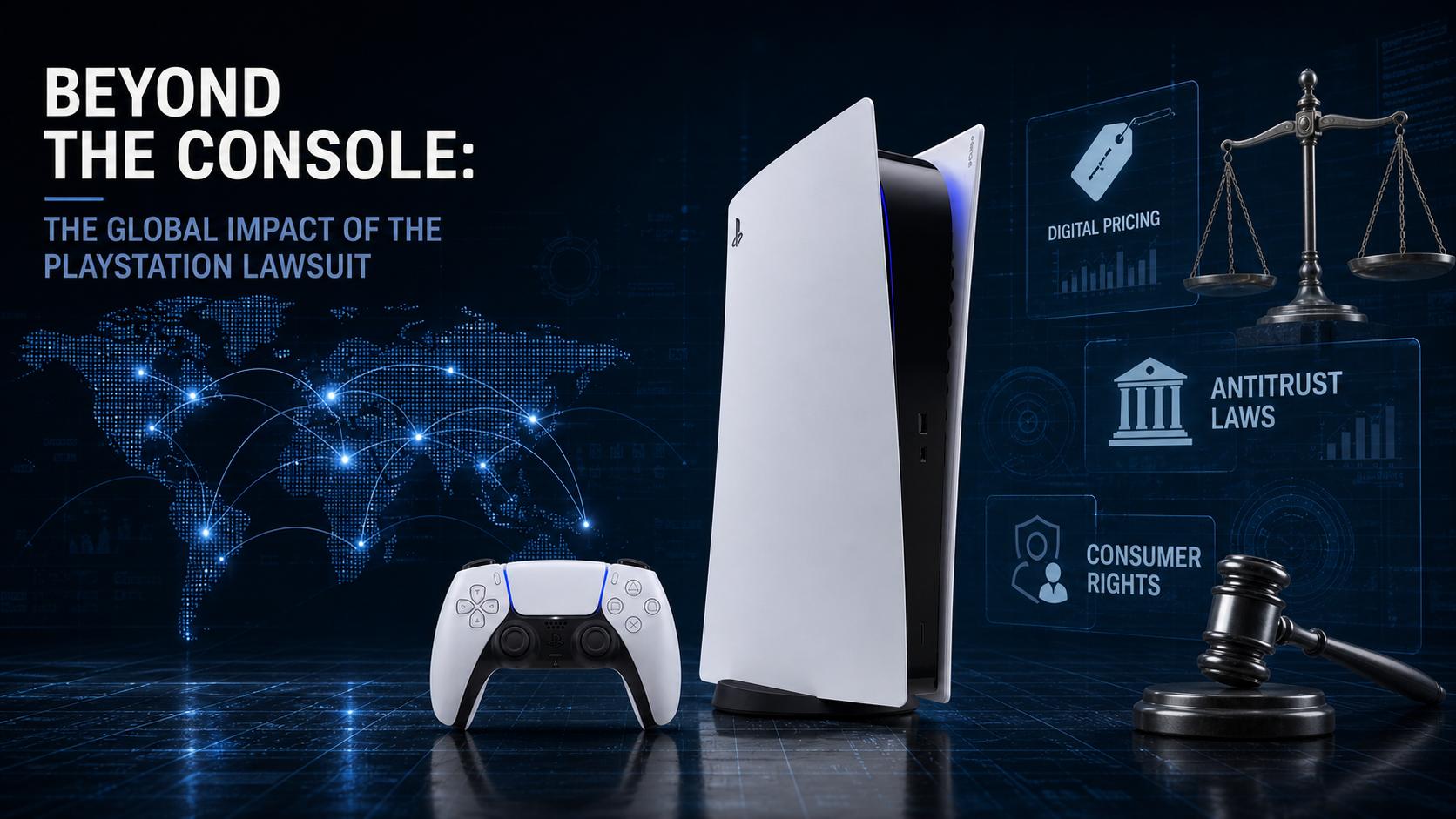
The digital gaming landscape is currently undergoing a significant legal transformation. This change is primarily driven by the Sony Playstation Lawsuit and similar antitrust actions. Regulatory bodies and consumer advocates are scrutinizing the control held by platform owners. Therefore, the outcomes of these trials will likely reshape digital distribution models. Millions of consumers worldwide are now awaiting potential compensation from these complex proceedings.

Legal experts suggest that these cases represent a pivotal shift in consumer rights. Previously, platform holders enjoyed near-total control over their digital ecosystems. However, the Sony Playstation Lawsuit challenges this long-standing industry norm. The allegations focus on excessive pricing and the suppression of market competition. Consequently, the following analysis explores the intricate details of these ongoing global disputes.
Origins of the Sony Playstation Lawsuit
The legal challenges against Sony Interactive Entertainment began several years ago. Specifically, consumer champion Alex Neill filed a claim in the United Kingdom in 2022. She accused the company of breaching competition law through its storefront. Furthermore, the claim suggests that Sony abused its dominant market position. This behavior allegedly resulted in higher prices for digital games and in-game content.
The claim represents approximately 12.2 million UK PlayStation users. These individuals allegedly overpaid for their digital purchases over many years. Notably, the claim period covers August 2016 to February 2026. The Competition Appeal Tribunal is now overseeing the 10-week trial. This tribunal specializes in complex competition law and collective consumer actions.
Legal Arguments and the Sony Playstation Lawsuit
The core of the legal dispute involves Sony’s exclusive control over software. Specifically, the claimants argue that Sony has a near monopoly on digital sales. This dominance allows the company to dictate retail prices without competition. Therefore, consumers have to pay what the claimants call “monopoly profits.” This situation allegedly harms millions of British households and their entertainment budgets.
Robert Palmer KC presented the opening arguments for the claimants in March 2026. He stated that Sony restricted the market to protect its profit margins. Specifically, the company charges a 30% commission to all video game publishers. This commission is significantly higher than those on competitive PC platforms. Consequently, developers often pass these costs directly to the final consumer.
The Sony PlayStation Lawsuit
A £5 billion challenge to digital market dominance.
Potential compensation pool for affected UK consumers.
Estimated number of PlayStation users in the claim.
The disputed cut taken on all digital store sales.
The Competition Appeal Tribunal Framework
The Competition Appeal Tribunal serves as the primary venue for these proceedings. This court handles opt-out collective actions under the Competition Act 1998. Under this framework, all affected persons are included by default. Therefore, users do not need to register individually to be part of the claim. Instead, they must proactively opt out if they wish to be excluded.
The tribunal issued the Collective Proceedings Order in early 2024. This order officially certified Alex Neill as the class representative. Sony attempted to block the case through multiple appeals and legal motions. However, the court ruled that the claim was strong enough to proceed to trial. Specifically, the trial focuses on whether Sony’s behavior constitutes an abuse of dominance.
Alex Neill and the Sony Playstation Lawsuit
Alex Neill is a prominent consumer campaigner and co-founder of Consumer Voice. She has dedicated her career to holding large corporations accountable for unfair practices. In this case, she acts on behalf of 12.2 million UK gamers. Her goal is to secure compensation for those who overpaid for digital content. Additionally, she seeks to bring an end to anticompetitive behavior in the industry.
The specialized litigation firm Milberg London LLP advises Neill. This firm has extensive experience in taking group action lawsuits against major companies. Furthermore, the legal action is funded by Woodsford, a leading litigation funder. This funding ensures that consumers can challenge a giant like Sony without financial risk. Ultimately, Neill believes that gamers have been “ripped off” for far too long.
Financial Scope of the UK Claim
The financial implications of the UK lawsuit are truly staggering. Specifically, the claimants are seeking up to £2 billion in total damages. This figure reflects the estimated overcharges across millions of transactions over ten years. Therefore, each individual gamer could be owed approximately £162 including interest. However, the exact amount will depend on the final ruling and individual spending.
The tribunal must first decide if Sony breached competition law before awarding damages. If successful, the compensation process will likely involve a complex distribution plan. Notably, the £2 billion figure is a revised estimate from earlier stages. The claim originally sought even higher amounts before the court narrowed the focus. Nevertheless, a victory would be a massive financial blow to Sony’s gaming division.
UK Trial Procedural Timeline
| Date | Legal Milestone | Outcome |
| August 2022 | Initial Claim Filed | Case commenced by Alex Neill |
| June 2023 | CPO Application Hearing | Tribunal reviewed class certification |
| January 2024 | Collective Proceedings Order | Case certified as a class action |
| August 2025 | Timetable to Trial | Court set dates for evidence exchange |
| February 2026 | Pre-trial Review | Final preparations for the main hearing |
| March 10, 2026 | Trial Commencement | 10-week hearing began in London |
Trial Procedural Timelines and Stages
The UK trial is structured to address complex economic and legal issues. The first week was designated as a reading week for the judges. Subsequently, the court began hearing evidence from both legal teams and expert witnesses. Specifically, the trial is expected to last until May 2026. The judges will then deliberate before issuing a final written judgment.
During the proceedings, Sony’s legal team argued that their model is justified. They claim that a closed system ensures security and privacy for users. Furthermore, they suggest that they operate in a highly competitive market against Microsoft. Conversely, the claimants argue that Microsoft and Nintendo are not true competitors for digital software. Instead, they believe Sony holds a distinct monopoly over its own console owners.
Lawsuit Timeline
Alex Neill files the collective action at the UK Competition Appeal Tribunal (CAT).
The CAT rules the £5B lawsuit can officially proceed to trial, rejecting Sony’s dismissal attempt.
Parties exchange internal documents regarding pricing strategies and market dominance.
US Regional Developments in the Sony Playstation Lawsuit
While the UK trial continues, a separate settlement has been reached in America. This case is known as Caccuri v. Sony Interactive Entertainment LLC. It focuses on Sony’s 2019 decision to stop selling digital game vouchers. Specifically, third-party retailers like Amazon were banned from selling these download codes. This move allegedly eliminated price competition from outside the official store.
Judge Araceli MartÃnez-OlguÃn granted preliminary approval for a $7.85 million settlement. This settlement aims to resolve the antitrust claims without further litigation. Approximately 4.4 million US PlayStation Network accounts are eligible for compensation. However, the court has not officially ruled that Sony broke any laws. Instead, Sony maintains its innocence while agreeing to the financial payout.
Caccuri v Sony and the Settlement Terms
The terms of the US settlement provide specific details for affected users. Specifically, the “Settlement Amount” totals $7,850,000 for all eligible class members. After legal fees and costs are deducted, the remainder will be distributed. Lead counsel plans to request up to 25% of the total for attorney fees. Furthermore, the named plaintiffs will receive small service awards for their efforts.
Eligible participants include those who bought certain games between 2019 and 2023. These games must have been previously available through game-specific vouchers. Interestingly, the compensation will mostly be distributed as PSN account credits. This means many users will receive store credit rather than cash. Therefore, the settlement effectively returns some money back to Sony’s own ecosystem.
Platform Fee Comparison
Digital Voucher Policies and the Sony Playstation Lawsuit
The controversy over digital vouchers is central to the US litigation. Before April 2019, players could buy digital codes from physical stores. These retailers often offered discounts, loyalty points, or special promotional deals. Therefore, consumers had choices beyond the fixed prices on the PlayStation Store. However, Sony ended this practice to consolidate all digital sales on its platform.
Plaintiffs argued that this policy change caused prices to rise significantly. Specifically, average prices for affected titles allegedly increased by at least $0.50. While this seems small, it totaled millions of dollars across the entire market. Consequently, the lawsuit accused Sony of violating the Sherman Antitrust Act. Sony defended the move as a way to streamline their distribution network.
Impact of the US Sony Playstation Lawsuit
The impact of the US settlement is largely symbolic for many players. Notably, the average payout estimation is around $1.78 per person. This amount is not enough to buy most modern digital games. However, legal experts believe the case sets an important precedent for digital markets. It signals that even platform holders must respect basic competition principles.
Critics of the settlement argue that the amount is far too low. They point out that Sony earned far more from its alleged monopoly. Nevertheless, the agreement allows Sony to move past this specific legal hurdle. Meanwhile, the July 2, 2026, deadline for opting out is approaching fast. Users who do nothing will be automatically bound by the final settlement terms.
Distribution of US Settlement Funds
The distribution process for the US settlement is designed to be automatic. Specifically, active PSN account holders do not need to file a formal claim. Sony will deposit the credits directly into their digital wallets. This process is going to begin no earlier than April 2025. However, final approval and any potential appeals must be resolved first.
Users with deactivated accounts face a slightly different process for receiving funds. They must contact the settlement administrator to provide their current contact details. These individuals may receive a physical check instead of account credit. The deadline to request a physical check is August 27, 2026. Overall, the goal is to reach as many affected consumers as possible.
US PSN Settlement Eligibility Criteria
| Criterion | Requirement Details | Source |
| Purchase Window | April 1, 2019 – December 31, 2023 | |
| Account Location | Must be a United States resident | |
| Game Type | Titles previously sold via retail vouchers | |
| Price Increase | Post-discount price rose by at least $0.50 | |
| Action Required | None for active PSN accounts |
The Dutch Foundation Collective Action
The legal pressure on Sony is expanding across the European continent. Specifically, a Dutch group called Massaschade & Consument filed a lawsuit in 2025. This group represents approximately 1.7 million Dutch PlayStation users. They allege that Sony is abusing its dominance in the Netherlands market. Furthermore, they claim that Sony’s prices are “excessively high” compared to costs.
The foundation argues that Sony’s digital-only console models exacerbate this problem. Owners of these consoles are fully locked into the PlayStation Store. Therefore, they have no alternative way to purchase and play games. The foundation seeks an injunction against these practices and financial compensation. Notably, this case mirrors many of the arguments found in the UK trial.
Market Dominance in the Netherlands Region
Market research in the Netherlands supports the claims of the consumer group. Specifically, the estimation says that Sony controls 80% of the Dutch console market. This massive share gives them significant power over developers and consumers. Consequently, the foundation refers to the price difference as a “Sony Tax”. This tax reportedly makes digital games 47% more expensive than discs.
The Dutch foundation is currently being funded by professional litigation firms. These include Omni Bridgeway and Augusta Ventures, which provide necessary legal resources. Therefore, the case is well-positioned to challenge Sony’s legal team in court. The first formal hearing is going to take place later this year. This outcome could send a powerful message to other European regulators.
Comparing the EU Sony Playstation Lawsuit
The various lawsuits across Europe share common themes and legal theories. Specifically, they all target the closed nature of the PlayStation ecosystem. These cases argue that digital storefronts should function like open markets. Therefore, third parties should be allowed to compete on the same platform. However, Sony continues to maintain that its system is both legal and beneficial.
The UK case is currently the most advanced of the European trials. Its outcome will likely influence the proceedings in the Netherlands and beyond. Furthermore, regulators in other countries are monitoring these developments closely. Notably, Apple recently lost a similar battle regarding its in-house App Store. This loss suggests that courts are becoming less tolerant of digital monopolies.
Technical Innovations of the PS5 Pro
Amidst these legal battles, Sony has launched the PlayStation 5 Pro. This console was released globally on November 7, 2024. It represents the most powerful hardware ever released by the company. Specifically, the Pro model features a GPU with 67% more compute units. This upgrade allows for much faster rendering and smoother frame rates.
The console aims at “deeply engaged players” who want the best visuals. Therefore, it targets a higher price point of $699.99 in the US. Notably, the PS5 Pro is an all-digital console by default. Users who want to play discs must buy an external drive separately. This shift toward digital-only hardware is a key factor in the ongoing lawsuits.
Digital Market Shift
Visualizing the decade-long transition from physical discs to digital downloads, which consolidated Sony’s control over pricing.
AI Integration and the Sony Playstation Lawsuit Context
The PS5 Pro introduces a new technology called PlayStation Spectral Super Resolution. This AI-driven upscaling provides super-sharp image clarity on 4K televisions. Specifically, it uses machine learning to add extraordinary amounts of detail. This innovation allows games to run at 60 frames per second with high resolution. Furthermore, it improves performance for over 8,500 backward-compatible PS4 titles.
However, the emphasis on digital performance links back to the lawsuits. As Sony pushes for better digital experiences, they also tighten their storefront control. Critics argue that this technical progress shouldn’t come at the cost of market freedom. Specifically, the “Pro” experience is currently only available through Sony’s digital infrastructure. Therefore, the console’s success ties to the very system being challenged in court.
Digital Rights Management and the Sony Playstation Lawsuit
Digital Rights Management, or DRM, remains a highly contentious topic in gaming. In early 2026, many PlayStation users reported a new DRM policy. It appeared that digital games required an online check every 30 days. This policy caused widespread panic among those with limited internet access. Furthermore, it sparked renewed debates about what it means to “own” a digital game.
Many players feared their library would become unplayable during outages. This concern was amplified by the lack of initial official communication. Consequently, online communities began investigating how the new system worked under the hood. They found that a “30-day validation countdown” was visible on some devices. This discovery led to an immediate and vocal backlash from fans.
The 30-Day License Verification Controversy
Sony eventually responded to the DRM controversy in late April 2026. Specifically, a spokesperson clarified that the process requires only a one-time check. Once a game is verified online, the license becomes permanent for that console. Therefore, players can continue to access their games offline after the initial step. This clarification aimed to quell fears about long-term access restrictions.
The system was allegedly introduced to combat a specific type of refund scam. Bad actors were allegedly buying games and ripping the license files before returning them. Notably, the new policy prevents this by issuing a temporary license first. Once the console verifies the purchase is legitimate, it converts it to permanent. However, the incident highlighted how fragile digital ownership can feel to consumers.
Dynamic Pricing Models on the Storefront
Reports have surfaced that Sony is testing dynamic pricing on its storefront. This practice involves showing different prices to different users for the same game. Specifically, retailers saw a title like Stellar Blade at various discount levels. Some users saw the game for $39 while others saw it for $20. This A/B testing is allegedly used to study price elasticity in different markets.
The determining factors for these prices are currently nebulous to the public. However, experts suspect they are based on account age and login habits. Sony has not yet publicly commented on these pricing experiments. Notably, the system appears to span over 190 titles across 70 regions. This lack of transparency is another point of concern for consumer advocacy groups.
Consumer Reactions to Pricing Experiments
The reaction to dynamic pricing among the gaming community has been negative. Many users took to social media to express their frustration and anger. Specifically, one Reddit user called the practice “illegal” and “unethical”. They argued that everyone should pay the same price for the same product. Furthermore, the practice makes it difficult for consumers to know if they are getting a fair deal.
Interestingly, the system appears to apply variable discounts rather than surcharges. This means no user is currently paying more than the standard retail price. Instead, sellers are offering deeper discounts to some “reluctant buyers” to encourage a sale. Nevertheless, the perceived unfairness continues to damage Sony’s reputation among loyal fans. Therefore, the company may face future legal challenges regarding pricing transparency.
Industry Impacts and the Sony Playstation Lawsuit
The ongoing legal battles are forcing Sony to adapt its corporate strategy. Specifically, the company is shifting from a hardware-maker to an IP leader. This move aims to reduce the risks associated with console hardware cycles. Furthermore, Sony is investing 2 trillion yen into its strategic expansion fund. This fund will be used to secure more content and direct-to-consumer platforms.
Sony’s “Fifth Mid-Range Plan” focuses on maximizing the value of its franchises. This includes expanding titles like The Last of Us into films and series. Notably, the company aims for its entertainment segments to deliver 60% of income. This diversified approach helps the company withstand potential losses from the lawsuits. However, the legal outcomes could still impact their digital revenue margins.
Lobbying Trends and Trade Policy
Sony is also active in the political sphere to protect its business interests. Specifically, the company disclosed $390,000 in lobbying spend for Q1 2026. This activity focuses on the impact of tariffs and industry regulations. Furthermore, they are engaging with Congress on issues like kids’ online safety. They design these efforts to shape the regulatory environment in their favor.
The tariff issue is particularly pressing for Sony’s hardware manufacturing division. Surging component costs and trade barriers have already forced price hikes. Therefore, lobbying is a necessary part of managing their global supply chain. Notably, the company has shifted some PS5 production away from China to mitigate risks. This proactive approach shows how external politics directly influence the gaming market.
Macroeconomic Pressures on Hardware Costs
Macroeconomic factors continue to challenge Sony’s hardware profitability in 2026. Specifically, inflation has driven up the cost of premium tech components. Additionally, the demand for AI chips has caused a shortage of certain memory types. These factors contribute to the high $750 price tag of the PS5 Pro. Furthermore, Sony must manage foreign exchange volatility across its global regions.
To offset these costs, Sony is pushing for more recurring digital revenue. This includes growing PlayStation Plus subscriptions and in-game transaction sales. Notably, the company saw a 20% growth in Plus subscriptions recently. However, this strategy relies heavily on the storefront that is under legal fire. Therefore, the company is caught between economic necessity and legal scrutiny.
Sony PS5 vs PS5 Pro Hardware Comparison
| Component | PS5 (Base/Slim) | PS5 Pro |
| GPU TFLOPS | 10.3 peak | 18.05 peak |
| Storage Capacity | 825GB – 1TB | 2TB SSD |
| Compute Units | 36 CUs | 60 CUs |
| Upscaling | Checkerboarding | AI-driven PSSR |
| Network Support | Wi-Fi 6 | Wi-Fi 7 |
| Optical Drive | Built-in or Modular | Sold Separately |
Addiction Litigation and Youth Protection
Beyond antitrust issues, Sony faces lawsuits related to video game addiction. These claims allege that the platform is designed to be dangerously addictive. Specifically, dozens of families argue that Sony failed to protect minor players. The lawsuits target titles like Fortnite, Roblox, and Minecraft on PlayStation consoles. Furthermore, they claim that addiction leads to severe mental health problems for children.
The plaintiffs in these cases seek to represent a national class of affected parents. They argue that Sony uses psychological tactics to keep kids playing for hours. Notable symptoms cited include outbursts of rage and poor school performance. However, some of these cases have been directed to mandatory arbitration. This legal maneuver can make it much harder for families to reach a jury trial.
Mental Health Claims and Arbitration
The use of arbitration clauses is a key defense strategy for Sony. Specifically, these clauses are often buried in the terms of service for PSN. They prevent users from joining large class-action lawsuits in many jurisdictions. Instead, disputes must be settled through private, individual arbitration hearings. This process often favors corporations over the average consumer.
However, some groups have successfully opted out of arbitration by sending letters. This allowed a few controller defect claims to move toward potential trials. Nevertheless, the broad use of arbitration remains a hurdle for those seeking accountability. Legal experts believe that upcoming legislation might limit these clauses for consumer protection. Overall, the battle over how and where users can sue Sony is far from over.
Strategic Shifts in Corporate Governance
Sony’s corporate leadership has seen significant changes in 2025 and 2026. Specifically, Hiroki Totoki was appointed as President and CEO of Sony Group. He is focusing on increasing shareholder value through business collaboration. Furthermore, the company is preparing for a partial spin-off of its Financial Services wing. This move is intended to simplify the company’s complex structure.
The goal is to focus more on “Kando,” or emotional involvement with products. This philosophy guides their decision to invest in high-quality entertainment IP. Notably, the company is targeting a 10% operating income margin across the group. This requires a careful balance between artistic creativity and financial discipline. Therefore, the company’s future depends on the success of this new leadership vision.
IP Monetization and Synergy Initiatives
Maximizing IP value is the cornerstone of Sony’s current growth model. Specifically, the company is creating “infinite realities” where virtual and physical worlds overlap. This includes using game assets to create films, theme parks, and location-based entertainment. For instance, Sony Pictures and Sony Music are working together on biopics and events. Furthermore, they are developing vehicles with Honda that function as mobile entertainment hubs.
The AFEELA car project is a prime example of this cross-segment synergy. It combines Sony’s sensors, gaming technology, and content into a single platform. Specifically, pre-orders for the vehicle are going to drive 2025-2026 growth. This project positions Sony as a software-as-a-service provider in the automotive market. Consequently, the company is no longer just selling gadgets to gamers.
Cross-Media Expansion and Live Services
Sony is also leaning heavily into the live service gaming market. Titles like Helldivers 2 and Destiny 2 have proven to be highly profitable. These games provide a steady stream of revenue through in-game purchases and updates. Furthermore, the company plans to launch new live service titles like Marathon in the near future. This strategy helps offset the high costs of developing traditional single-player epics.
However, the success of live services depends on a large and active user base. Therefore, Sony is expanding its PC and mobile presence to find new players. Notably, they aim to triple their active users on these platforms by 2026. This cross-platform approach is a direct response to the competition from Xbox Game Pass. Ultimately, Sony wants its games to be accessible anywhere a player might be.
Future Projections for the Sony Playstation Lawsuit
Late 2026 will likely decide the future of the Sony PlayStation lawsuit. The 10-week UK trial will conclude its testimony phase in May. Subsequently, a judgment could take several months to be drafted and released. In the US, the October fairness hearing will finalize the $7.85 million settlement. Therefore, the next six months are critical for millions of PlayStation users.
If Sony loses the UK case, they may have to pay billions in damages. This could lead to a massive restructuring of how the PlayStation Store operates. Specifically, the court might mandate allowing third-party storefronts on the console. Such a ruling would be a victory for consumer choice but a blow to Sony’s profits. Regardless of the outcome, the digital gaming market will never be the same.
Case Summary Data
| Category | Detail |
|---|---|
| Class Rep | Alex Neill (Consumer Rights Expert) |
| Defendant | Sony Interactive Entertainment (SIE) |
| Jurisdiction | United Kingdom (Competition Appeal Tribunal) |
| Class Members | UK PS Store users (Aug 2016 – Aug 2022) |
| Core Allegation | Abuse of dominant market position |
Key Financial Targets for Sony Group (FY2026)
| Metric | Target Value | Strategic Focus |
| Group Revenue | 13.2 Trillion Yen | Driven by Music and Games |
| Return on Equity | 15 Percent | Capital efficiency measure |
| Operating Margin | 10 Percent | Profitability across segments |
| Strategic Fund | 2 Trillion Yen | Mergers and IP acquisitions |
| Anime Growth | 17M+ Subscribers | Crunchyroll expansion |
| PC/Mobile Users | 3x Increase | Platform diversification |
In conclusion, the Sony Playstation Lawsuit is a multi-faceted battle for the future of entertainment. It encompasses legal disputes in several countries and involves millions of consumers. Furthermore, it is happening alongside massive technical shifts like the launch of the PS5 Pro. Sony is attempting to navigate these challenges through strategic diversification and IP focus. However, the shadow of litigation continues to loom over their digital empire. Consequently, the industry is watching closely as the final chapters of these legal sagas unfold.
Support Our Work
Help us keep creating and maintaining our projects. We appreciate your support!
How you can help:
Shop via Affiliate LinksSupport us at no extra cost to you while you shop via the link above.




Leave a Reply