
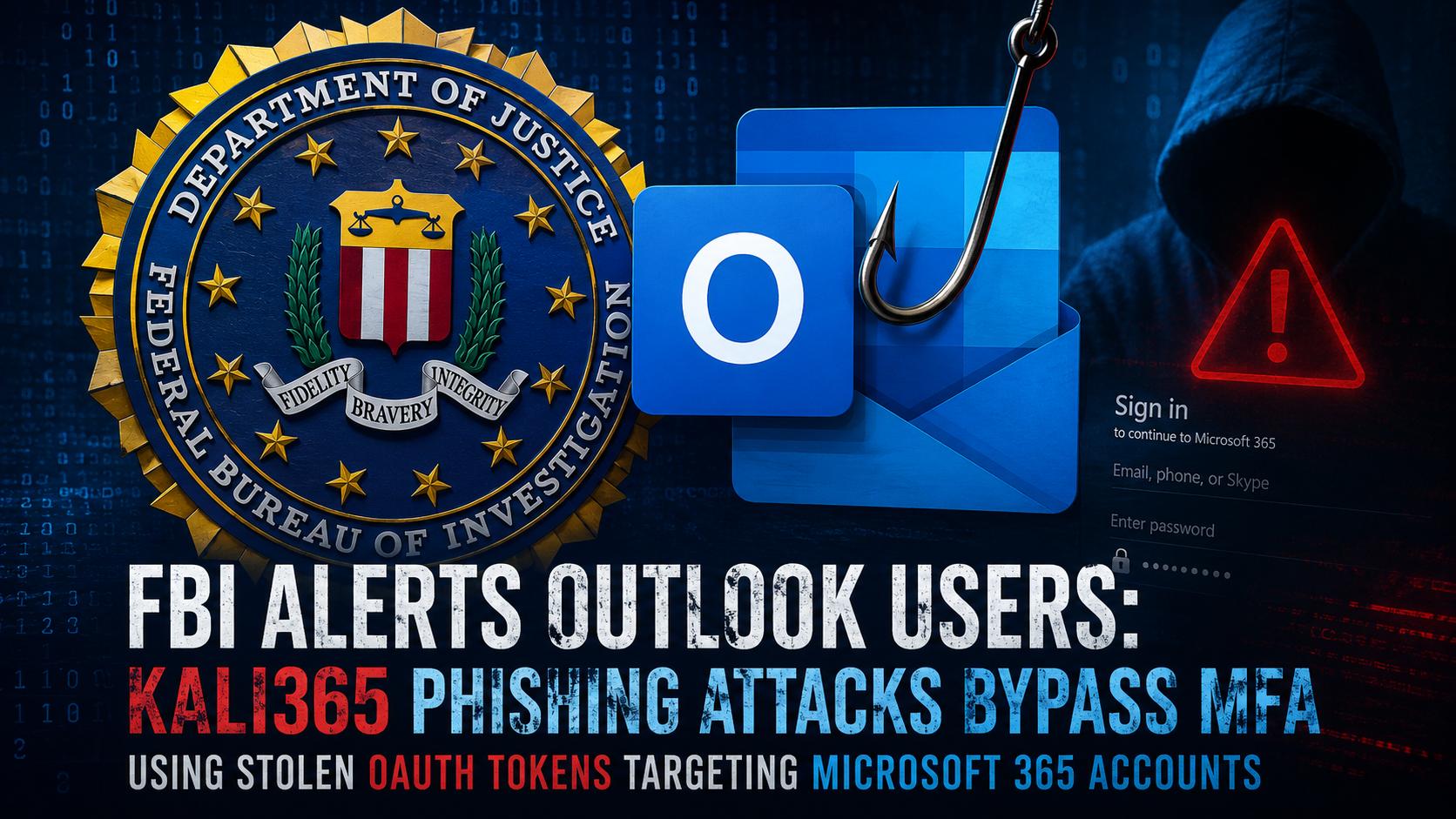

Understanding the Evolving Threat Landscape
Cybercriminals increasingly target complex authentication mechanisms instead of attempting to steal traditional corporate user passwords. Specifically, a new phishing-as-a-service platform called Kali365 facilitates widespread and highly automated account hijacking. The tool emerged in April 2026, quickly spreading across global Telegram channels. Defending security teams must adapt immediately to these passwordless vectors.
Consequently, the Federal Bureau of Investigation published an urgent national security advisory regarding this specific threat. Threat actors distribute the malicious subscription service primarily through secure Telegram channels. This development represents a highly significant professionalization of the broader global cybercriminal ecosystem. Modern corporate defenses must rapidly evolve beyond basic credentials.
Why the FBI Alerts Outlook Users
The federal warning specifically focuses on corporate users of Microsoft Outlook. Meanwhile, related collaborative services like Teams and OneDrive also face immediate compromise. Threat actors bypass multi-factor authentication entirely by hijacking legitimate active user sessions. They systematically obtain these administrative connections without intercepting any passwords.
Indeed, this technique allows low-skilled criminals to deploy highly convincing attacks at scale. The platform offers dynamic templates to mimic major brands like Adobe and SharePoint. Thus, victims easily fall for the clever deception because they trust the underlying Microsoft domain. Corporate security awareness training must address this specific authentication gap.
Deconstructing the Attack Chain
Attackers begin by sending deceptive emails impersonating file-sharing portals. This message contains a short alphanumeric device code and instructions to authenticate. Subsequently, the recipient navigates to the authentic Microsoft verification page. They enter the provided code, believing they are performing a standard verification.
However, this simple action unknowingly authorizes the attacker’s remote device to access the profile. The Kali365 platform immediately captures the resulting OAuth access and refresh tokens. These digital keys allow ongoing database entry without requiring further login challenges. The unauthorized session remains active until administrators manually revoke the token.
Commercialization and Scale of PhaaS Tools
Researchers at Arctic Wolf successfully accessed the Kali365 framework. They discovered that the tool operates on a subscription pricing system. Namely, the platform provides three tiered options to accommodate different operational needs. It lowers the entry barrier for threat actors wanting quick campaign setups.
Furthermore, other platforms like Evil Tokens enable similar device-code phishing operations. Recent campaigns targeted hundreds of organizations across North America and Europe. Intruders frequently create stealthy inbox rules to hide their malicious activities. Therefore, traditional perimeter security remains insufficient against these persistent token-based threats.
Comparative Analysis of Phishing Threats
Organizations face distinct identity threats in the modern landscape. Device code phishing differs significantly from standard credential harvesting campaigns. For instance, traditional phishing requires capturing passwords, whereas device-code phishing steals active session keys. Understanding these operational differences helps IT leaders allocate defense resources effectively.
Additionally, the subscription cost of these platforms allows threat groups to scale easily. The table outlines active phishing-as-a-service configurations.
| Platform Name | Pricing Structure | Prime Target Applications | MFA Bypass Method |
| Kali365 | $250 to $2,000 | Outlook, Teams, OneDrive | OAuth Device Code Flow |
| Evil Tokens | Telegram Subscription | Microsoft 365 Suite | API Automation Hijacking |
Defenders must monitor these distinct indicators of compromise across their tenant environments. This proactive visibility ensures that teams can detect anomalies before token abuse occurs.
Implementing Conditional Access Policies
Defenders can secure environments by enforcing identity access controls. In particular, administrators should block device code flow through Microsoft Entra ID. This block stops unauthorized remote devices from requesting session codes entirely. Teams can restrict this feature to specific managed hardware.
Auditing existing usage patterns before applying these blocks prevents business disruption. Legacy devices like conference systems occasionally rely on this specific flow. Therefore, excluding emergency break-glass accounts protects organizations from accidental administrative lockouts. Robust policy implementation secures vulnerable accounts without compromising standard daily workflows.
Active Incident Response and Reporting
When compromises occur, structured incident response is necessary. Initially, defenders should immediately revoke all active sign-in sessions. This action effectively terminates the stolen OAuth refresh tokens. Administrators must analyze environmental logs for newly enrolled devices.
Furthermore, security teams must preserve all threat telemetry. This evidence includes deceptive emails, headers, and login locations. Organizations must report these incidents to the Internet Crime Complaint Center. Consequently, federal researchers can track systemic campaigns and disrupt criminal infrastructure.
Future Strategic Outlook
Enterprise defense strategies must transition toward phishing-resistant multi-factor authentication. For example, hardware security keys prevent session hijacking by binding logins to physical devices. Centralizing identity telemetry in centralized platforms improves detection speeds. Security leaders should constantly audit privileged role assignments.
Ultimately, relying on standard credentials leaves systems vulnerable to PhaaS kits. Threat actors continuously adapt strategies to exploit corporate workflows. However, proactive configuration changes can stop these automated attacks entirely. Adopting zero trust identity principles ensures long-term operational resilience.
Support Our Work
Help us keep creating and maintaining our projects. We appreciate your support!
Ways to contribute:
Shop via Affiliate LinksSupport us at no extra cost to you while you shop.
Support on Ko-fiBuy us a coffee to keep the engine running!





Leave a Reply