
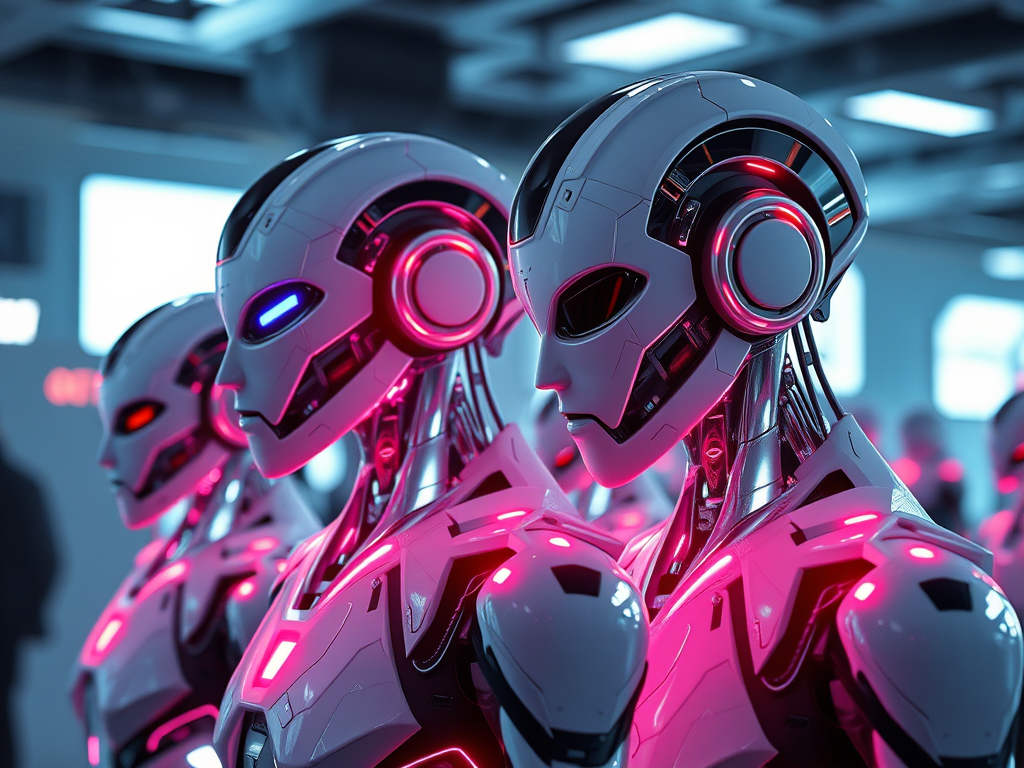
In early 2026, the digital landscape is undergoing a massive shift. We are witnessing the official dawn of the AI agents era. These systems no longer just talk. They act, solve and collaborate. For years, users treated AI like a search engine or a simple chatbot. Now, these tools have evolved into autonomous digital coworkers. This narrative explores the most recent breakthroughs that define this transformation today.

The Shift from Chatbots to Autonomous AI Agents
The transition began in earnest throughout 2025. Previously, large language models (LLMs) were “stateless.” They forgot every conversation once it ended. Today, that limitation is gone. Modern AI agents now possess persistent memory. As a result, this allows them to learn from every past interaction. They remember your preferences across different platforms. They understand the context of your long-term projects.
Industry experts call 2026 the year of “agentic AI.” This term describes systems that reason, plan, and execute. They do not wait for a human to prompt every single step. Instead, they take a high-level goal and break it down. For example, an agent can now plan a complex business trip. It negotiates prices with airlines. Also, it books hotels based on your loyalty points. Moreover, it even handles visa applications without your constant supervision.
Standard software is also changing to accommodate these agents. Anthropic introduced the Model Context Protocol (MCP) recently. This protocol creates a standard way for AI to talk to other apps. It acts like a universal translator for digital tools. Because of MCP, agents can now securely access your databases and spreadsheets. They can move data between your CRM and your email with ease. This connectivity makes them much more powerful than traditional software bots.
Breakthroughs in Memory and Self-Verification
Technological progress in early 2026 focuses on two key areas: memory and reliability. In the past, AI often hallucinated or made simple errors. Those errors would pile up in long workflows. Now, researchers have developed “self-verification” loops. An agent can now double-check its own work before moving to the next task. It acts as its own internal auditor. Consequently, this makes multi-step processes much more reliable for businesses.
Also, memory has moved beyond simple text storage. New “context engineering” allows agents to prioritize important information. They compress old data but keep essential insights. This mimics how the human brain functions. Because of this, a sales agent can remember a client’s specific concern from six months ago. It uses that detail to tailor a new proposal today. This deep personalization was impossible just twelve months ago.
Furthermore, we are seeing the rise of multi-agent systems. One agent rarely works alone anymore. Instead, specialized agents form digital teams. A “manager” agent might oversee “specialist” agents for coding or legal research. They communicate at machine speed to finish projects. This “digital workforce” model is currently reshaping corporate productivity levels globally.
Consumer Innovations: The Personal Super AI Agent
The consumer market is also seeing rapid changes. At CES 2026, Lenovo unveiled a “Personal AI Super Agent.” This system, known as Qira, lives across all your devices. It follows you from your laptop to your smartphone. It even integrates with your smart glasses and wearables. This creates a unified experience that feels like a constant companion.
On the other side, Google is also pushing the boundaries of “agentic commerce.” They recently launched Gemini Enterprise for Customer Experience. This platform allows retailers to deploy agents in just a few days. These agents manage the entire customer journey. They help you find products using natural language. Also, they process your payments securely. Furthermore, they even handle post-purchase support and returns. Major brands like Kroger and Lowe’s are already using this technology.
Moreover, the way we consume news is changing. Experts predict that AI will soon be the primary gateway to information. Instead of browsing websites, you will ask your agent for a summary. Your agent will pull data from multiple trusted sources. It will then present a narrative tailored to your interests. This shifts the focus from “breaking news” to “breaking verification.” Trust is now the most valuable currency in the digital age.
Enterprise Impact and the New Digital Workforce
In the corporate world, the impact is even more profound. Forrester predicts that 30% of enterprise vendors will soon support agentic protocols. This means your ERP and HR systems will soon run themselves. AI agents are moving from reactive tools to proactive decision-makers. They monitor supply chains in real-time. In addition, they detect risks before they become problems. They even suggest preventive actions to managers.
In fact, software development has reached a historic turning point. English is becoming the most popular programming language. Developers no longer spend all day writing syntax. Instead, they describe their goals to AI coding agents. These agents write, test, and deploy the code. This democratizes software creation for everyone. Now, a creative person can build an app without knowing Python or Java.
However, this power brings new security challenges. Agents often have broader permissions than human users. This can create “authorization bypass” paths if not managed. Security teams are now racing to build “agentic governance” frameworks. They must monitor what agents do at all times. They need to ensure that agents follow strict ethical guidelines. Transparency in AI reasoning is no longer optional.
The Future: Towards Fully Autonomous Systems
Where is this all heading? We are moving toward Level 4 autonomy. These are systems that set their own goals. They learn from their own successes and failures. They operate with almost no human input. While we are not fully there yet, the progress is swift. By 2028, Gartner expects 15% of work decisions to be autonomous.
The economic implications are staggering. Generative AI could add trillions to the global GDP annually. The AI agent market is growing at a rate of 46% each year. It will likely reach over $50 billion by 2030. So, companies that ignore this trend risk falling behind. Early adopters are already seeing shorter innovation cycles. They are reducing costs while increasing their output.
Finally, we must consider the human element. AI agents are not meant to replace us. They are designed to augment our abilities. They handle the repetitive and data-heavy tasks. This frees humans to focus on creativity and strategy. The future is a partnership between people and agents. Together, we can solve problems that were previously unsolvable.
Comparison: AI vs. AI Agents
In early 2026, the distinction between standard AI and AI agents has become the cornerstone of digital strategy. While traditional AI focuses on prediction and generation, AI agents focus on execution and autonomy. Standard AI waits for your command to produce a result, but an AI agent takes a goal and works until the job is finished.
The following table differentiates these two paradigms based on the latest 2026 industry standards.
| Feature | Standard AI (e.g., LLMs/Chatbots) | AI Agents (Agentic AI) |
| Core Nature | Reactive: It only acts when a user provides a specific prompt. | Proactive: It initiates actions and follows up to achieve a set goal. |
| Operational Loop | Linear: One input leads to one output (Request-Response). | Iterative: A “Sense-Plan-Act” loop that repeats until completion. |
| Decision Making | Suggestive: Provides information for a human to decide. | Autonomous: Makes choices and executes tasks independently. |
| Memory | Stateless: Often forgets the context once a session ends. | Persistent: Uses long-term memory to learn from past interactions. |
| Task Complexity | Single-step: Excels at summarizing, translating, or writing text. | Multi-step: Decomposes a large goal into many smaller sub-tasks. |
| Tool Usage | Limited: Requires human intervention to use external apps. | Integrated: Can natively use APIs, browse the web, and run code. |
| Reliability | Hallucination Risk: Can generate false info without checking. | Self-Verifying: Loops back to check its own work for errors. |
| Collaboration | Individual: Operates as a single standalone interface. | Synergetic: Works in “Multi-Agent” teams with specialized roles. |
Key Takeaway for 2026
Finally, Standard AI is a highly skilled consultant you talk to. Meanwhile, AI agent is a digital employee you delegate to. As we move further into 2026, the trend is shifting toward “Agentic Workflows” where humans act as supervisors rather than manual operators. This transition is expected to automate up to 15% of all corporate work decisions by 2028.
AI Agents vs AI Assistants: The Difference
This video provides a clear visual breakdown of how specialized agents differ from general AI assistants in real-world applications.
Sources for Further Reading About AI Agents
- AI agents: What happened in 2025 and the challenges for 2026
- 7 AI trends to watch in 2026 – Microsoft News
- 6 AI breakthroughs that will define 2026 – InfoWorld
- Lenovo Unveils Personal AI Super Agent at CES 2026
- The Future of AI Agents: Predictions for 2026 – Salesforce
Find more interesting news here.



Leave a Reply