
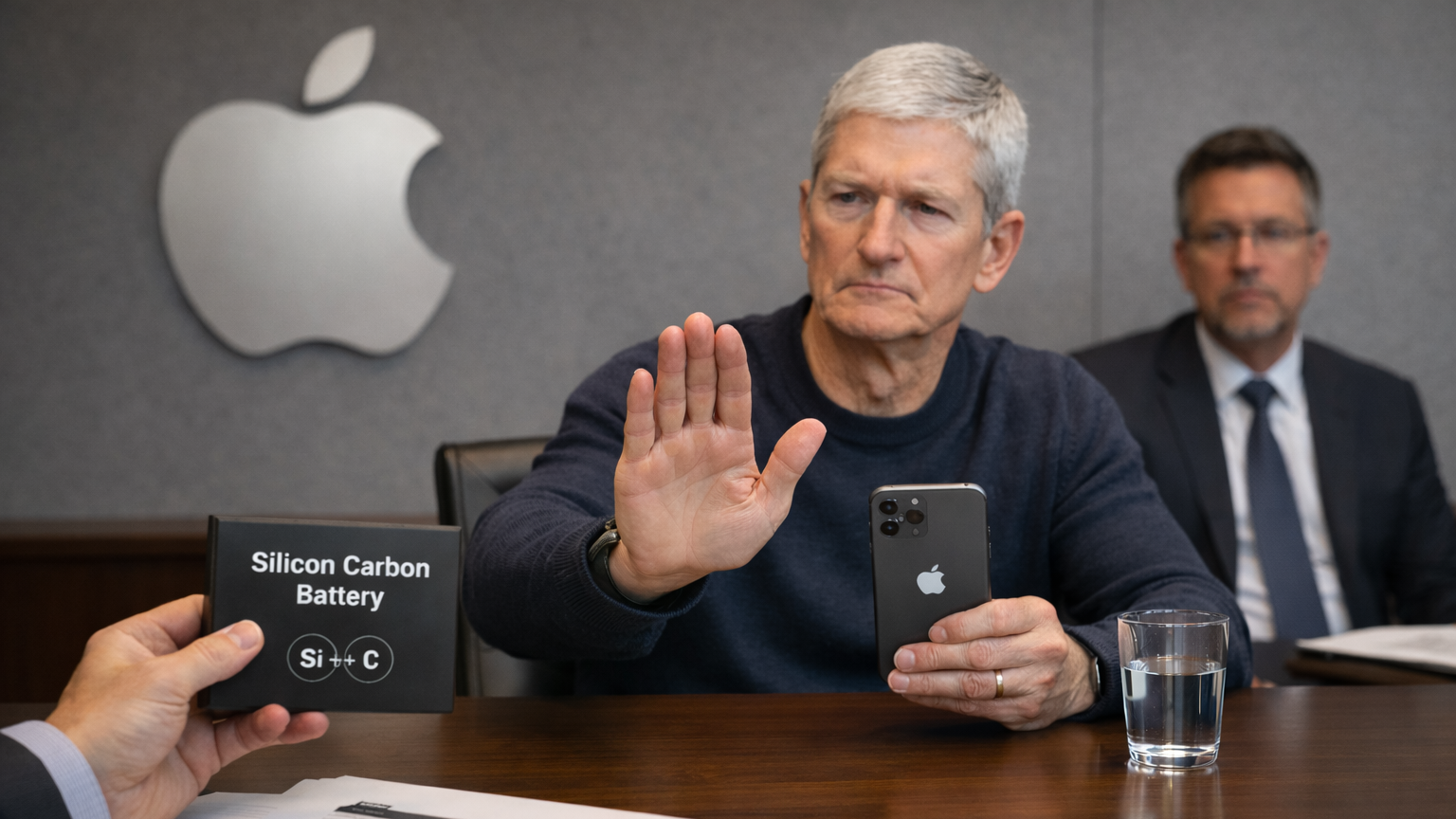
The tech world moves at a lightning pace. However, the batteries in our pockets feel stuck in the past. We hear rumors of silicon carbon battery constantly. These cells promise to double our phone life overnight. Yet, titans like Apple and Samsung still use old graphite. This delay puzzles many eager consumers. Why do the biggest companies wait? The answer involves physics, money, and extreme caution.

The Allure of the Silicon Carbon Battery Dream
Silicon is a miracle material for energy storage. It can hold ten times more lithium than graphite. Consequently, batteries could become much smaller and lighter. This change would allow for thinner, sleeker phone designs. Furthermore, silicon enables much faster charging speeds. You could charge your device in just minutes. Currently, companies like Honor and Xiaomi are already experimenting. They have released phones with massive 6,000mAh capacities. These “early adopters” are proving the technology works.
However, the “Big Two” remain surprisingly silent. Apple and Samsung prioritize long-term reliability over specs. They cannot afford a repeat of past disasters. One faulty battery launch can ruin a brand. Therefore, they watch from the sidelines very carefully. They let smaller rivals test the dangerous waters first. This strategy is a calculated move for survival.
The Physics of the “Big Bloat”
The primary hurdle is a matter of physical size. When silicon absorbs lithium, it expands dramatically. Specifically, the material can swell by 300 percent. Imagine a battery trying to triple its volume. This expansion happens inside a tightly sealed phone. Consequently, the internal pressure becomes absolutely immense. This stress can crack the battery’s delicate casing. It can also cause the screen to pop off.
Graphite does not suffer from this extreme swelling. It is stable and predictable over many years. Because of this, it remains the industry standard. Engineers have tried mixing silicon with carbon buffers. This “scaffolding” helps to manage the expansion. Nevertheless, the growth is still quite significant. Even a small bulge is unacceptable for flagships. A premium phone must stay perfectly flat forever.
The “Hard-Carbon” Scaffold Explained
Think of the scaffold as a rigid, sponge-like cage. In their flagship material, SCC55®, Group14 creates a porous carbon matrix first. This matrix is extremely strong and does not change shape. Using a process called Chemical Vapor Deposition (CVD), they then “infuse” amorphous silicon deep into the microscopic pores of this carbon cage.
- The Internal “Void Space”: The magic lies in the empty space left inside the pores. When you charge the battery and lithium ions rush in, the silicon expands inward into these pre-designed voids.
- Surface Protection: Because the silicon is tucked inside the carbon “rooms,” the exterior of the battery particle remains stable. The electrolyte (the battery fluid) never touches the expanding silicon directly.
- The Result: This keeps the Solid Electrolyte Interphase (SEI) layer from cracking. In traditional batteries, a cracked SEI consumes lithium and kills the battery. With the scaffold, the battery can survive over 1,500 to 3,000 cycles, which finally meets the standards of Big Tech.
Comparison of Mitigation Techniques
| Technique | How it Works | Key Benefit |
| Porous Scaffolds | Silicon is held inside a rigid carbon “sponge.” | Best for long-term cycle life (1,500+ cycles). |
| Yolk-Shell | A “yolk” of silicon inside a hollow carbon “shell.” | Allows maximum expansion room for the silicon. |
| Nanowires | Long, thin silicon “fingers” that can flex. | Excellent fast-charging but harder to mass-produce. |
| Carbon Coating | A thin skin of carbon around silicon particles. | Cheapest method but the skin often cracks over time. |
The Problem with Silicon Carbon Battery Premature Aging
Longevity is another major concern for global manufacturers. Silicon-carbon cells often degrade faster than traditional ones. They perform beautifully during the first few months. However, their capacity often drops sharply after a year. This “early life fade” is a dealbreaker. Most users now keep phones for five years. They expect the battery to last that long. Apple and Samsung must guarantee this extended durability.
If a battery dies early, complaints will soar. Warranty claims could cost billions of dollars globally. Therefore, the risk currently outweighs the energy benefits. Companies are waiting for more stable chemical formulas. They need silicon that stays young for 1,000 cycles. Until that happens, graphite will stay the king. Reliability is the most valuable feature they sell.
Supply Chain Nightmares and Costs for Producing Silicon Carbon Battery
Manufacturing these batteries is also incredibly difficult. Standard graphite lines are efficient and very cheap. In contrast, silicon-carbon requires advanced nanotechnology processes. These methods are much more expensive to scale. Big Tech needs millions of units every month. Currently, the supply chain cannot meet that demand. Specialized factories are still under construction worldwide.
“Scaling a large material technology takes a long time. There is no shortcut for quality.” — Rick Luebbe, CEO of Group14 Technologies.
Moreover, silicon-carbon material is sold at a premium. This extra cost would raise retail phone prices. Big Tech is wary of passing costs to users. They want the tech to be affordable first. Consequently, they wait for mass production to lower prices. It is a game of patience and economics.
Regulatory Hoops and Shipping Hazards
Safety regulations also play a hidden, massive role. Any battery over 20 watt-hours is “dangerous.” This classification makes shipping much more expensive. Most modern phones sit just below this limit. However, high-density silicon batteries easily cross it. This creates a logistical nightmare for global shipping.
Companies would need special “hazmat” labels for phones. They would face stricter rules on every airplane. These hurdles add complexity to a global business. Apple prefers one single, global shipping solution. They avoid regional “gymnastics” to save on costs. Silicon-carbon must fit into existing rules first.
Adoption Barriers for Silicon-Carbon Batteries
To understand why tech giants are taking a “wait-and-see” approach, we must look at the specific hurdles that keep silicon-carbon (Si/C) technology out of the mass-market flagship devices.
The following table summarizes the primary barriers preventing Big Tech from abandoning traditional graphite anodes in favor of silicon-carbon solutions in 2026.
| Barrier Category | Primary Challenge | Impact on Consumer Devices |
| Mechanical Stability | Volumetric Expansion (300%–400%) | Causes “phone bulge,” screen detachment, and internal component crushing. |
| Chemical Longevity | SEI Layer Instability | Constant expansion/contraction cracks the protective layer, leading to rapid “early life” capacity fade. |
| Safety Risks | Thermal Runaway Severity | High energy density means more violent reactions and flammable gas release during failures. |
| Manufacturing | Production Scalability | Requires complex nanotech and CVD processes that are 3–5x more expensive than graphite. |
| Logistics | Regulatory Thresholds | High-density cells can exceed 20Wh, triggering “Dangerous Goods” shipping labels and high costs. |
| Global Strategy | Supply Chain Immaturity | Lack of localized, high-volume silicon suppliers makes a global launch (millions of units) risky. |
The 2026 Turning Point?
Despite the delays, the tide is finally turning. Recent reports suggest the iPhone 18 Pro Max might change things. It could be the first to feature silicon-anode tech. This would mark a massive shift for Apple. They have likely spent years perfecting the chemistry. By 2026, the technology may finally be mature.
We are entering a “verification year” for batteries. Industry leaders are testing semi-solid-state designs right now. These hybrids use silicon to boost energy safely. They offer a middle ground for cautious giants. If successful, your next phone will be revolutionary. We are on the edge of a breakthrough.
The Verdict on the Delay of Silicon Carbon Battery
Big Tech is not ignoring the future. Instead, they are waiting for the “gold standard.” They want the density without the dangerous swelling. They need the speed without the short lifespan. For now, graphite remains the “boring” but safe choice. It keeps your phone from bulging or dying.
Smaller companies will continue to push the limits. Their data helps the giants refine their designs. Soon, the benefits will finally outweigh the risks. At that point, the silicon revolution will begin. Until then, keep your charger close and wait. The best things really do take some time.
The future of power is definitely coming soon. It is just waiting for the right moment.




Leave a Reply