
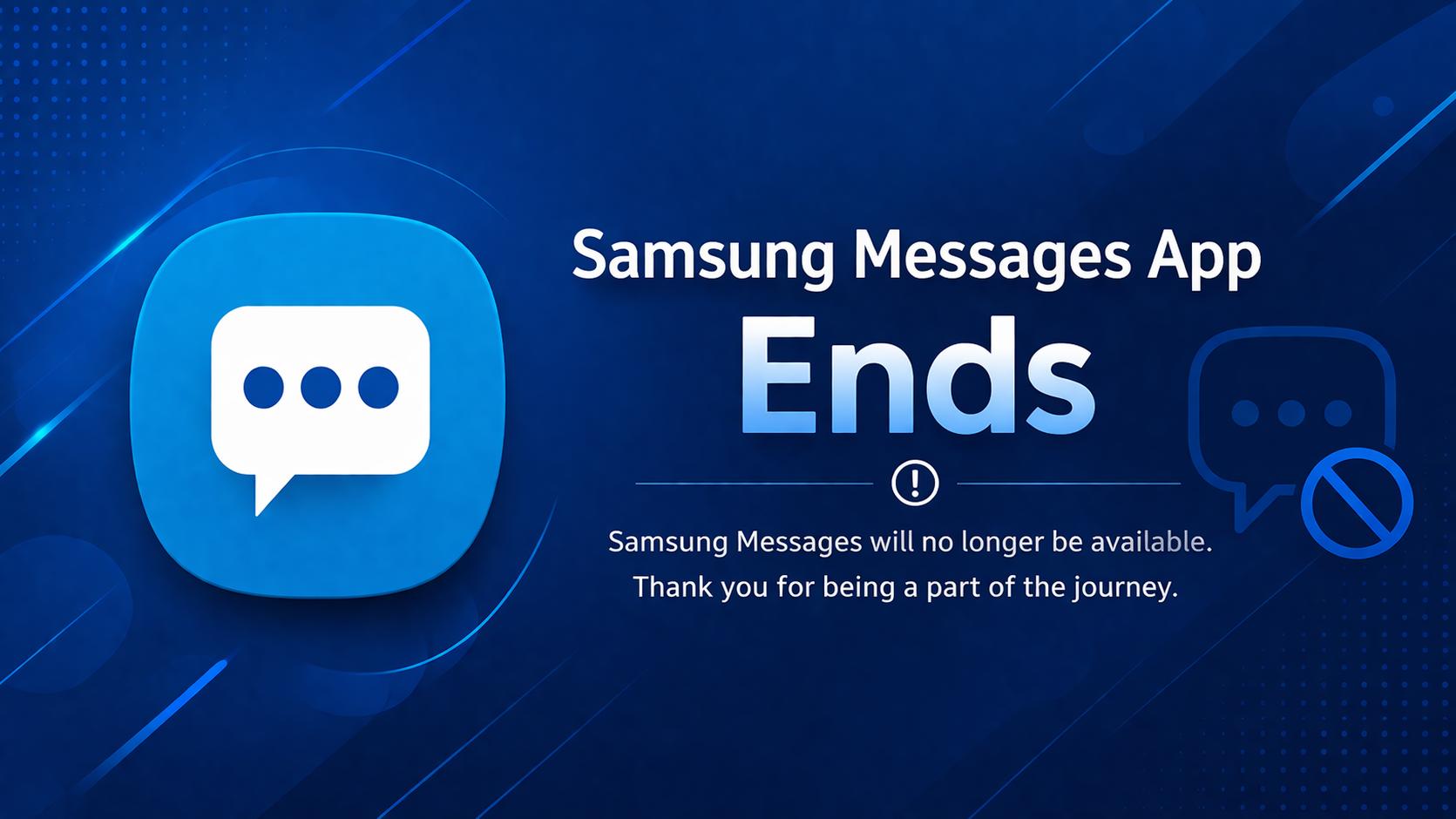
The tech world received a massive shock this morning. Specifically, Samsung officially announced the end of its native Samsung Messages App. This news confirms the rumors we heard for years. Consequently, millions of Galaxy users must now find a new home. The company published an “End of Service” notice on its website today.
Furthermore, this decision marks the final chapter for a decade-old legend. Most users expected this change after recent flagship launches. However, the definitive July 2026 deadline still feels incredibly heavy. Consequently, the “Purple Bubble” era is officially drawing to a close. Fans are already sharing their favorite memories of the app online.

A Decade of Messaging Memories
Initially, Samsung Messages App served as the backbone of the Galaxy experience. It launched alongside the earliest Android handsets from the South Korean giant. Therefore, it evolved alongside the famous “TouchWiz” and “Samsung Experience” interfaces. Users loved the way it integrated with the overall system.
Moreover, the app survived multiple major redesigns over the last fifteen years. It reached its peak visual form with the introduction of One UI. To illustrate, the app pioneered the “one-handed” reachability design. This feature placed conversation lists lower on the screen for easier access. Notably, this design philosophy eventually spread to the entire Android ecosystem.
The Irreplaceable Features We Loved
Samsung Messages offered unique features that many fans still cherish. For instance, the “Conversation Categories” tool allowed users to organize chats perfectly. You could separate work messages from personal family threads with ease. Surprisingly, Google Messages still lacks a direct equivalent to this functionality. Therefore, power users feel a genuine sense of impending loss.
Additionally, the app excelled at deep visual customization. Users could set unique wallpapers for every single individual chat room. Effectively, this made the messaging experience feel personal and intimate. Furthermore, you could even adjust the opacity of message bubbles. In contrast, Google’s offering feels much more clinical and standardized.
The Technological Shift Toward RCS
Why is Samsung finally pulling the plug on its own software? Primarily, the industry is moving toward Rich Communication Services, or RCS. Google currently leads the charge for this modern texting standard. Consequently, Samsung decided to stop fighting a redundant battle against Google. They want to provide a unified experience across all Android devices.
Moreover, RCS allows for high-quality media sharing and typing indicators. Samsung Messages supported these features through carrier-specific implementations. However, those old systems often broke when texting people on different networks. Thus, switching to Google’s Jibe platform solves these compatibility headaches. Ultimately, the move ensures that Galaxy users can text iPhone users better.

The 2024 Pivot Point
We can trace this current news back to July 2024. At that time, Samsung launched the Galaxy Z Fold 6. Surprisingly, that device did not include Samsung Messages as the default app. Instead, it shipped with Google Messages pre-installed for the first time. This move signaled a massive shift in company strategy.
Furthermore, the company began removing the app from its official Galaxy Store. Specifically, owners of the Galaxy S25 could not even download it manually. Therefore, the writing was clearly on the wall for a long time. Nevertheless, seeing the official “End of Service” date still feels surreal. It represents the death of a significant piece of Galaxy history.
The Impact on Global Regions
Interestingly, this transition did not happen everywhere at the same rate. The United States saw the fastest move toward Google Messages. In contrast, European and Asian markets kept Samsung Messages for much longer. However, the July 2026 deadline applies to all modern Galaxy devices globally. This global synchronization shows Samsung’s commitment to a single software path.
Additionally, different carriers had different levels of involvement in the app. Some providers pre-installed their own bloated versions of the messaging tool. Fortunately, the shift to Google Messages eliminates this carrier interference. Effectively, users will receive a cleaner and more consistent experience. Meanwhile, many long-term fans in Korea remain loyal to the original app.
User Outcry in the Community
The internet is currently buzzing with emotional reactions from Galaxy fans. For example, Reddit threads are filled with users mourning the app. Many people claim they will miss the specific “One UI” aesthetic. Specifically, they enjoy how the app matches the rest of their phone. Consequently, some users are even looking for ways to sideload the old app.
However, Samsung warns that sideloading will not work after the deadline. Once July 2026 hits, the app will stop sending regular texts. Therefore, users must migrate their data to Google Messages soon. Notably, the migration process is relatively simple for most people. Despite this, the emotional attachment to the “Purple Bubble” remains strong.
Security and the AI Advantage
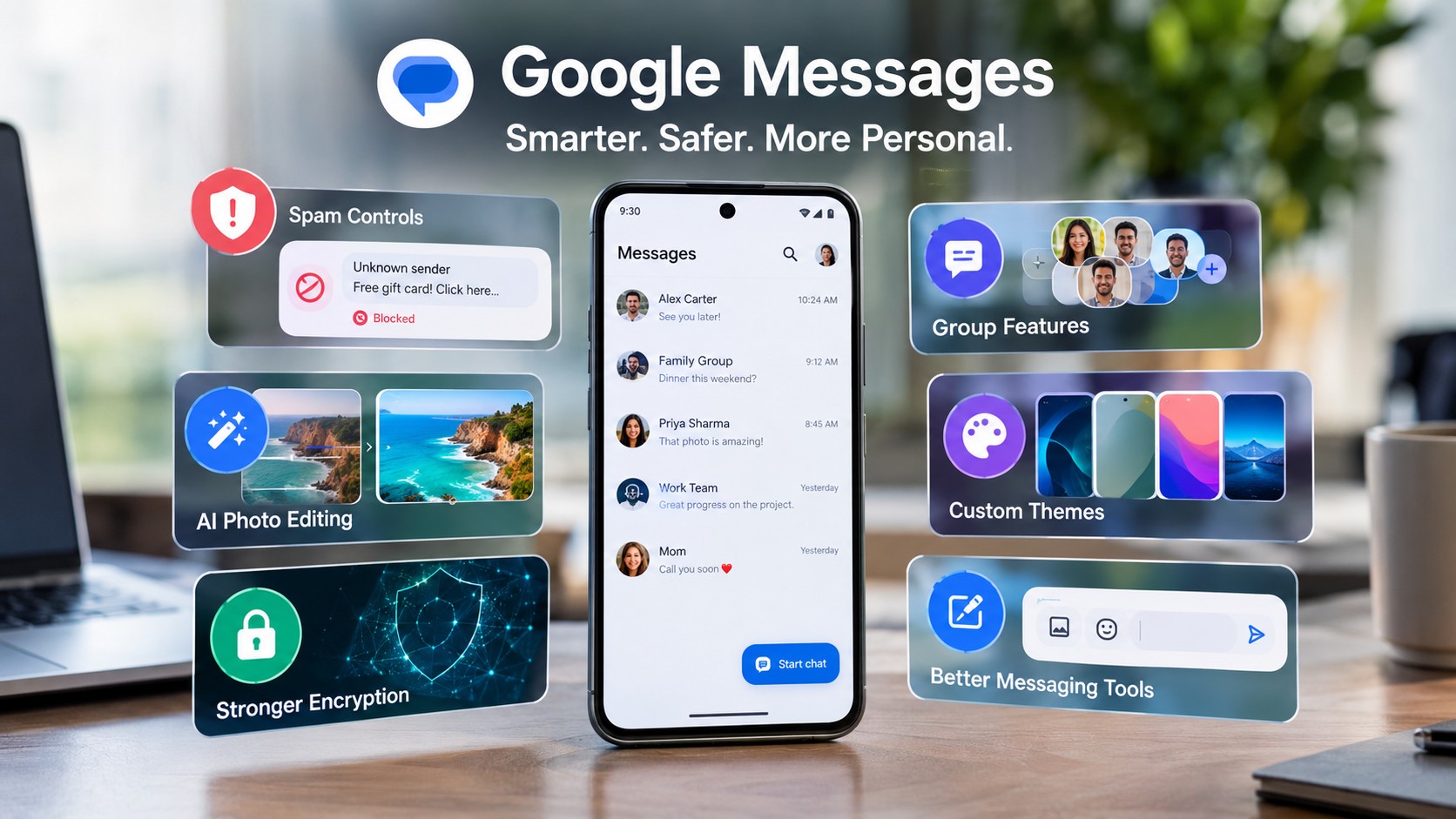
Samsung emphasizes that Google Messages offers superior security features. To illustrate, Google uses AI-powered scam detection to block suspicious texts. This system identifies malicious links before you even click them. Furthermore, Google Messages integrates directly with the Gemini AI assistant. This integration allows for smart replies and photo remixing.
Moreover, Google’s platform supports end-to-end encryption for group chats. Samsung Messages struggled to implement this consistently across different mobile carriers. Consequently, the switch actually makes your personal data much safer. Effectively, Samsung is prioritizing user security over its own legacy software. This trade-off seems necessary in the modern era of cyber threats.
The “Green Bubble” Connection
The legacy of Samsung Messages is also tied to the “Blue vs Green” war. For years, Android users felt excluded from the iMessage ecosystem. However, Google’s RCS push forced Apple to finally adopt the standard. Samsung realized that supporting Google was the fastest way to win this battle. Therefore, they sacrificed their own app for the greater good of Android.
Consequently, the legacy of Samsung Messages is one of quiet transition. It served as a bridge between the old SMS era and the new RCS world. Furthermore, it proved that Android manufacturers could build beautiful, functional software. Ultimately, its retirement signifies a more collaborative future for mobile tech. Thus, the app dies so that the ecosystem can finally thrive.
How to Prepare for the Switch
Fortunately, Samsung is making the transition as painless as possible. You should check your app for a specific migration notification today. Specifically, a prompt will guide you through the setup process. If you don’t see it, you can download Google Messages manually. Just make sure to set it as your default SMS app.
Additionally, most of your old conversations will transfer over automatically. Samsung has built a reliable tool to move SMS and MMS history. However, some custom wallpapers and categories might not survive the move. Therefore, you should take screenshots of any important organizational layouts. Effective planning will prevent any frustration during the July 2026 cutoff.
The Hardware Evolution Link
This software change also aligns with Samsung’s hardware goals. By removing the need to maintain a messaging app, engineers can focus elsewhere. For instance, they can spend more time optimizing the Galaxy Z Fold 7. Moreover, they can integrate AI deeper into the actual hardware sensors. Effectively, this move is about resource management for a tech giant.
Interestingly, the Galaxy S26 Ultra was the first phone built entirely without the app. Its interface feels faster and more streamlined without the redundant software. Consequently, new users might never even know that Samsung Messages existed. This “clean slate” approach helps Samsung compete better with the iPhone. Meanwhile, old-school fans will keep their memories of the purple icon.
A Detailed Look at the UI Differences
Let’s compare the two apps to see what is actually changing. Samsung Messages uses a very round, friendly design for its chat bubbles. In contrast, Google Messages uses the “Material You” design language. This means the app colors change based on your phone’s wallpaper. Therefore, both apps offer some level of visual customization for users.
However, the layout of the settings menu is vastly different. Samsung places most options under a simple three-dot menu icon. Conversely, Google uses a profile icon to house your account settings. This shift might confuse some older users during the first few days. Nevertheless, most people will adapt to the new layout very quickly. Fortunately, both apps support the popular “dark mode” that users love.
[Image comparing Samsung Messages UI and Google Messages UI side-by-side]
Samsung Messages App: The Legacy of Privacy Controls
Samsung Messages was famous for its robust “Private Share” integration. This feature allowed users to send files that would eventually expire. Consequently, it gave people more control over their sensitive digital information. Samsung has promised to bring similar features to the new Google experience. However, the exact implementation details remain a bit blurry for now.
Furthermore, the app had excellent spam filters that worked offline. Google’s filters rely heavily on cloud-based AI processing for results. While Google’s system is more powerful, some users prefer the local approach. Therefore, privacy advocates are watching this transition very closely. Effectively, Samsung must prove that the new app respects user data.
Why “Legacy” is the Right Word for Samsung Messages App Retirement
We call this a “legacy” because the app defined a generation. For many people, their first smartphone was a Galaxy S3 or S4. To illustrate, they learned how to text using that specific purple interface. Therefore, the app is more than just code and pixels to them. It represents a specific time in their digital lives.
Additionally, the app’s longevity is quite impressive in the tech world. Most software projects don’t last for fifteen continuous years. Samsung kept it alive through the transition from 3G to 5G. Effectively, it was a constant companion for millions of people worldwide. Thus, retiring it feels like saying goodbye to an old friend.
The Role of the Galaxy Watch
We must also consider how this affects the Galaxy Watch ecosystem. Older watches running Tizen OS might face some significant connectivity issues. Specifically, they may lose the ability to view full chat histories. In contrast, newer watches running Wear OS will sync perfectly with Google. Therefore, users with older hardware might need to upgrade their devices.
Furthermore, the Google Messages app on watches is quite advanced now. It allows for voice-to-text and emoji reactions with great accuracy. Surprisingly, it even supports viewing images directly on the small watch screen. Consequently, the transition might actually improve the experience for most wearable users. Ultimately, the goal is a seamless “multi-device” ecosystem for everyone.
The Future of Brand Identity
Some critics argue that Samsung is losing its unique identity here. By using Google’s app, the phone feels less like a “Samsung” product. However, the company argues that One UI still provides plenty of differentiation. Specifically, they can still customize the icons and themes of the phone. Thus, the core “Galaxy” feel will remain intact for the future.
Moreover, focusing on a unified Android experience helps the entire platform. If every brand used its own app, Android would remain fragmented. Consequently, Samsung’s move might encourage other brands to follow their lead. Effectively, we could see a future where every Android phone texts perfectly. This unified front is essential for taking on the Apple ecosystem.
Samsung Messages App: Final Thoughts on the Transition
The July 2026 deadline is approaching faster than most people realize. While the loss of Samsung Messages is sad, change is inevitable. Therefore, we should celebrate the legacy of the app while moving forward. It paved the way for the modern texting features we enjoy today. To illustrate, its focus on user experience changed the industry forever.
Ultimately, the “Purple Bubble” will always have a place in history. It represents the era when Samsung became the king of Android. However, the future belongs to open standards and cross-platform communication. Consequently, switching to Google Messages is the right move for the company. We invite you to share your own “Messages” stories below.
Summary of Samsung Messages App’s Retirement Timeline
| Date | Event | Status |
|---|---|---|
| July 2024 | Removal from Galaxy Z Fold 6 / Flip 6 | Completed |
| Jan 2025 | S25 series launches without the app | Completed |
| Jan 2026 | S26 series blocks manual downloads | Completed |
| April 2026 | Official “End of Service” announcement | Current |
| July 2026 | Full shutdown of messaging services | Upcoming |
Understanding the “Emergency Only” Mode
One important detail in the announcement involves emergency services. Samsung clarified that the app won’t be entirely deleted immediately. Specifically, it will remain on the phone to handle emergency texts. Therefore, you can still reach out for help in a crisis. This safety net shows that Samsung is being very responsible.
Additionally, your “Emergency Contacts” will still function through the old app. This ensures that critical life-saving features remain active during the transition. However, you cannot use this as a loophole for regular chatting. The app will simply block any non-emergency outgoing or incoming messages. Effectively, it becomes a specialized tool for safety rather than a social one.
Samsung Messages App: The Evolution of the “Smart” Inbox
Samsung Messages was one of the first apps to suggest actions. For instance, it could detect a date and offer a calendar link. To illustrate, it made managing your daily life much more convenient. Google Messages has taken this concept even further with its AI. Now, the app can summarize long threads using large language models.
Furthermore, the new app can even suggest appropriate emojis for your tone. This “Smart Reply” feature saves a lot of time during busy workdays. Consequently, most users will find themselves typing less and accomplishing more. Effectively, the legacy of the “Smart Inbox” continues in a more powerful form. Thus, the spirit of Samsung’s innovation lives on in the new software.
Reflections from Long-Term Samsung Messages App Users
We spoke to several fans who have used Galaxy phones since 2010. One user mentioned that the “Custom Background” feature was their favorite. Specifically, they liked having a picture of their cat in the background. Therefore, losing that specific visual touch feels like a personal loss. These small details are what built such a loyal user base.
However, another user noted that the app was getting quite buggy. Specifically, group chats with iPhone users often failed to load correctly. Consequently, they had already switched to Google Messages months ago for stability. This divide shows that the transition is a mix of nostalgia and practicality. Ultimately, most people agree that a working app is better than a pretty one.
The Final Word on Samsung Messages App’s Legacy
In conclusion, Samsung Messages is entering the digital hall of fame. It was a pioneer of design and a staple of mobile life. Therefore, we should not view its retirement as a failure. Instead, we should see it as a successful mission finally completed. It helped millions of people stay connected for over a decade.
Moreover, the transition to Google Messages represents a new beginning for Android. It promises a world where messaging is easy, secure, and universal. Consequently, the future of the Galaxy line looks brighter than ever before. We will miss the purple bubbles, but we embrace the new standard. Thank you for the memories, Samsung Messages.
How do you feel about the July 2026 deadline? Will you miss the “Purple Bubbles” on your Galaxy device?



Leave a Reply