

Silicon Revolution and Architecture
Apple will introduce the powerful A20 Pro system chip in its upcoming premium smartphone lineup, the iPhone 18 Pro and iPhone 18 Pro Max. Consequently, the tech sector anticipates a massive paradigm shift in consumer processing capabilities. TSMC manufactures this advanced silicon platform using its highly complex 2-nanometer process node. This specialized fabrication step brings a massive seventy percent increase in silicon wafer costs. Furthermore, the high production price limits these advanced processors only to high-end mobile models. This node adopts Gate-All-Around nanosheet transistors to replace the older, standard FinFET layouts. Nanosheets surround the channel completely to tighten control over active electrical currents.
💡 Gate-All-Around (GAA) nanosheets wrap the transistor channel completely to achieve ultimate latency reduction and maximum thermal protection through integrated internal graphene sheets.
Users will enjoy sustained performance during heavy gaming sessions or continuous photo processing. Specifically, the architecture delivers fifteen percent faster speeds than previous generations of processors. The system also reduces overall power consumption by up to thirty percent under high loads. Additionally, Apple packages this platform using innovative Wafer-Level Multi-Chip Module technologies. This packaging connects the chip dies directly without requiring extra substrate layers. This short physical distance between components eliminates latency and improves machine learning capabilities. An internal graphene thermal sheet helps manage heat dissipation throughout the system.
iPhone 18 Pro Max Recent Updates
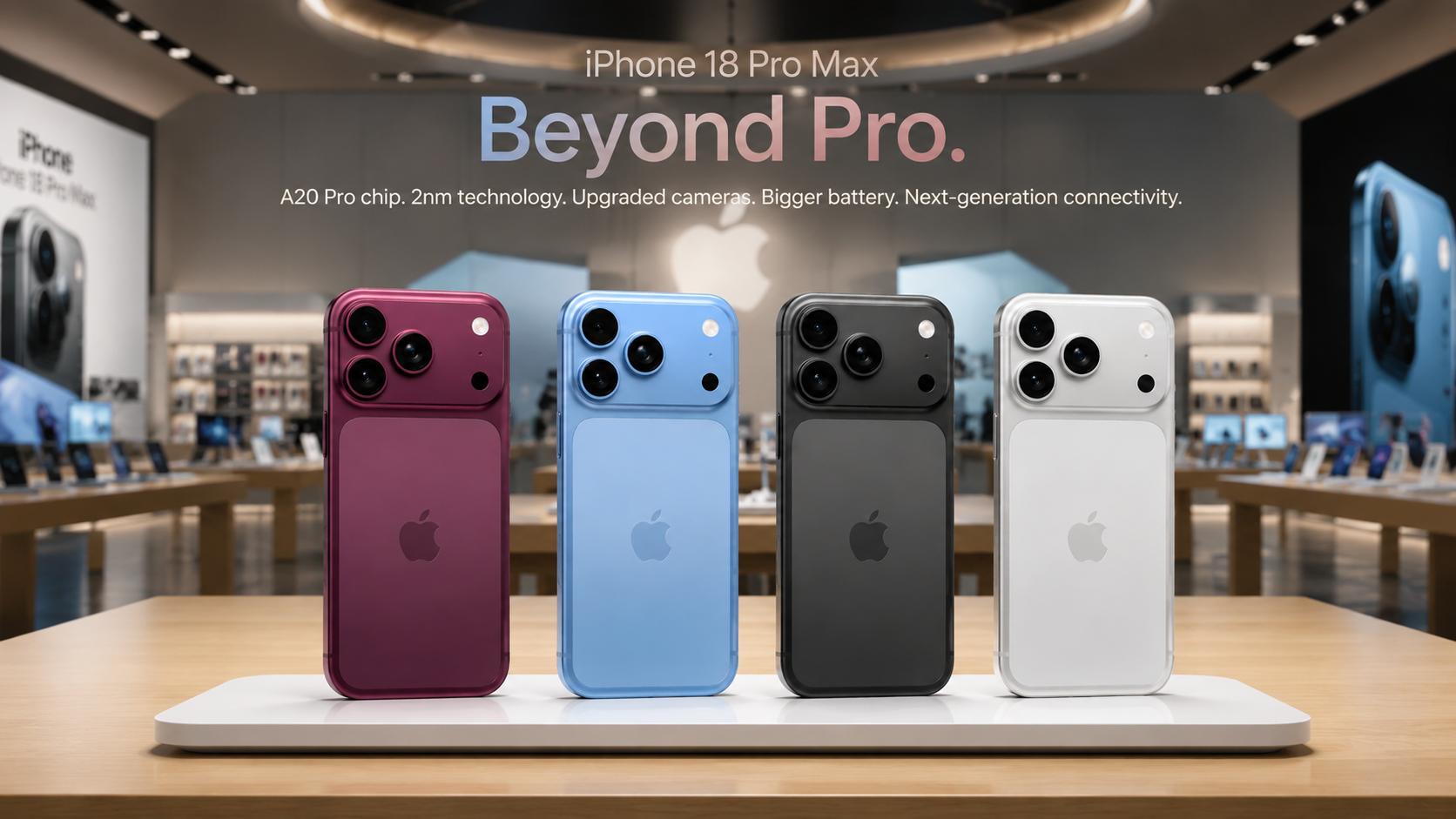
Leaked physical dummy models reveal a highly refined structural chassis for the flagship mobile. However, the overall back aesthetic maintains a design highly similar to older generations. The primary body utilizes premium anodized aluminum instead of heavier titanium structures. The device measures exactly 8.75 millimeters in thickness to match its physical predecessor. Conversely, some early engineering claims suggested a thicker frame to house a larger battery. Internal miniaturization allowed developers to keep the thin profile while adding power capacity. The overall unit weight will exceed 240 grams due to complex mechanical camera assemblies.
Consumers can select from a fresh palette of four distinct physical body colors. Meanwhile, a deep Dark Cherry shade serves as the headline signature option this year. This rich, wine-like hue replaces the older Cosmic Orange option for a classic look. Moreover, standard alternatives like Cloud Blue, Dark Gray, and classic Silver remain fully available. A redesigned frosted glass rear Ceramic Shield offers enhanced, secure MagSafe accessory support. The physical Camera Control button gets a simpler interface with complex swipe gestures removed. Solid-state haptic power and volume buttons mimic physical clicks through advanced Taptic Engines.
Display Technology and the Screen
The stunning 6.9-inch display retains its diagonal screen dimensions to preserve handling comfort. Therefore, developers focused their efforts on upgrading the underlying active panel technology. The mobile display utilizes advanced low-temperature polycrystalline oxide-plus screens for exceptional efficiency. Samsung and LG handle the primary industrial manufacturing duties for these complex panels. Alternatively, BOE failed to secure Apple certification due to persistent manufacturing yield issues. This updated panel architecture applies oxide materials directly to the primary driving thin-film transistors. This design gives the device incredibly fine current control over every individual pixel.
Display Notch Miniaturization
Extreme current control prevents annoying display flickering during low-light operation at night. Additionally, the display optimizes overall power delivery based on real-time on-screen movement. The physical Dynamic Island cutout area shrinks in width by approximately thirty-five percent. Moving the Face ID flood illuminator beneath the active display enables this size reduction. Subsequently, this engineering feat creates a slim floating dot to free up status bar space. Users can display more active notification details without blocking physical screen real estate. This development represents a massive step toward achieving a truly seamless display experience.
Core Specifications Parameters
| Hardware Metric | iPhone 18 Pro Max Parameter | Key Architectural Shift |
|---|---|---|
| System Processor | Apple A20 Pro (2nm Node) | Transitioning from FinFET to Gate-All-Around |
| Active Memory | 12GB LPDDR5X RAM | Integrated directly using WMCM packaging |
| Display Panel | 6.9-inch LTPO+ OLED | Driving transistors upgraded with oxide layers |
| Main Camera | 48-Megapixel Wide | Mechanical variable aperture added |
| Power Capacity | 5,100 to 5,200 mAh | Increased density inside thin profile |
| Wired Charging | 100W Fast Charging | Massive jump from old 27W charging bounds |
Next-Generation Camera Innovation
The flagship model introduces a revolutionary physical variable aperture system for its primary lens. Consequently, photographers can mechanically alter the lens opening to manage incoming light levels. This physical adjustment replaces traditional software-based algorithms to create authentic background bokeh. These complex mechanical components represent a fifty percent increase in baseline lens costs. Indeed, Sunny Optical will supply nearly half of these expensive camera lens assemblies. The main camera also adopts an advanced three-layer stacked image sensor from Samsung. This layout separates the active photodiodes and transistors into distinct, stacked physical layers.
Mechanical Photodiode Stack
Drag the slider to adjust the physical aperture opening of the 48-Megapixel Wide Primary Lens. Mechanical adaptation allows physical light optimization without digital over-sharpening.
This advanced stacked sensor structure doubles overall low-light capture speeds and dynamic range. Furthermore, the camera plateau thickness increases to 11.54 millimeters to house these components. The secondary telephoto camera gains a wider physical aperture to capture clearer portrait shots. The front-facing selfie camera upgrades to a sharper twenty-four megapixel resolution sensor. Likewise, these hardware upgrades focus on improving raw image quality over simple megapixel counts. The resulting image output delivers incredible detail without excessive digital sharpening artifacts.
Connectivity and Network Upgrades
The company is introducing its custom third-generation C2 modem chip to replace Qualcomm hardware. Accordingly, this transition provides Apple with greater control over hardware efficiency and system integration. The C2 modem provides advanced millimeter-wave 5G connectivity for ultra-fast download speeds. It also introduces a private “Limit Precise Location” option to protect user tracking. Meanwhile, this security setting masks exact coordinates from local carrier networks to maintain anonymity. This custom chip enables high-performance satellite communication features for messaging in remote areas. The NR-NTN standard allows users to browse internet web pages directly via satellite.
Silicon Power Architecture
Removal of structural physical SIM slots across international bounds allows expanded battery integration inside the original thickness envelope.
Custom Communications Baseband
The system also integrates the next-generation N2 chip for improved wireless connectivity. Subsequently, this silicon upgrade delivers faster Wi-Fi and Bluetooth data transfer speeds. Apple is fully phasing out physical SIM trays on many international models. This hardware omission frees up valuable internal space to help fit a larger battery. Indeed, the battery capacity jumps to an impressive range of 5,100 to 5,200 mAh. Charging speeds jump to 100W to refill eighty percent of the cell in twenty minutes.
Release Strategy and Market Impact
The launch of this flagship device marks a major change in Apple’s product release cadence. Specifically, Apple will split its annual smartphone launch into two separate calendar release events. The premium Pro models and the new foldable device will debut during mid-September. Conversely, standard entry-level models are delayed until spring of the following calendar year. This split timeline allows manufacturing facilities to focus on high-end device production early. This decision ensures early adopters receive their highly anticipated hardware upgrades without delay.
Strategic Dual-Event Launch Schedule
Apple is splitting its hardware rollouts into distinct biannual cycles to streamline assembly bandwidth.
Fall Event — Mid-September
Premium Pro series models and the highly anticipated foldable device make their unified debut.
Spring Cycle — Following Calendar Year
Baseline and entry-level non-pro modules release independently to capture intermediate markets.
$1,199 USD
Industry analysts predict a surprisingly aggressive baseline pricing strategy for the premium models. In contrast to Android makers raising prices, Apple plans to keep starting costs unchanged. The entry-level flagship will retail at a stable 1,199 dollars in the United States. Therefore, Apple plans to absorb higher memory and fabrication costs to protect overall market share. This decision will place significant pressure on competitors trying to raise their hardware prices. This dynamic platform positions Apple perfectly to dominate the mobile landscape for years.
Support Our Work
Help us keep creating and maintaining our projects. We appreciate your support!
Ways to contribute:
Shop via Affiliate LinksSupport us at no extra cost to you while you shop.
Support on Ko-fiBuy us a coffee to keep the engine running!






Leave a Reply