

Decoding the Modern Grocery Food Label
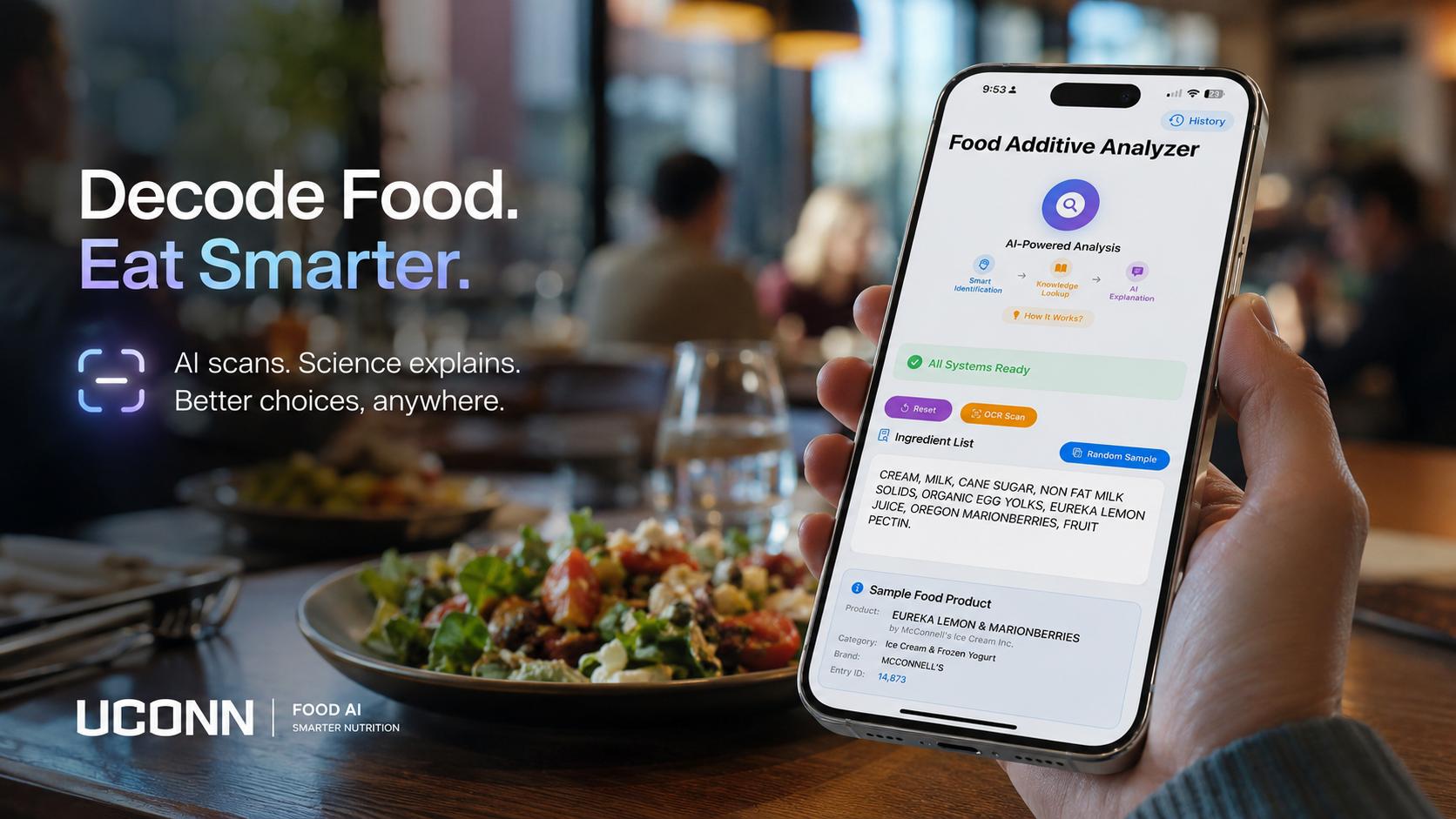
Modern grocery shoppers frequently face confusion when reading ingredient lists. Widespread online misinformation complicates their shopping decisions. Consequently, consumers struggle to identify which additives are safe. To address this challenge, researchers developed the Uconn Food Additive Lens App. Specifically, this tool translates complex chemical terms into plain English. Everyday consumers can now make fully informed dietary choices. They scan packaging labels directly in the store. This bridges the gap between science and public understanding. The software provides exceptional rapid clarity. Users receive accurate, science backed summaries.
This innovative solution emerged from a collaboration at the University of Connecticut. Yihang Feng developed the application during a summer research assistantship. He pursued a dual computer science and nutrition graduate degree there. Indeed, his advisors encouraged him to merge these fields. These mentors included professors Song Han and Yangchao Luo. Meanwhile, IAFNS funded this summer research assistantship. Their joint efforts culminated in a peer reviewed study in Digital Discovery. Thus, the software represents an exceptionally validated scientific resource.
The Uconn Food Additive Lens App
The system utilizes a unique three agent artificial intelligence setup to analyze grocery items. Each agent performs a specific task to deliver comprehensive nutritional clarity. Particularly, the first agent serves as a highly accurate food category classifier. This component classifies scanned items into one of 257 distinct categories. It achieves an impressive 87.2% top three classification accuracy during testing. Accordingly, the app understands the broad context of the product immediately. This contextual understanding enables more precise subsequent analysis of food ingredients. Users receive tailored explanations based on the product type.
This localized 3-agent orchestration pipeline processes grocery label images instantly without reliance on remote servers, translating raw ingredients to precise consumer insights.
The second agent functions as a hybrid additive identifier within the software. It combines database lookups with advanced artificial intelligence extraction models. Notably, this hybrid approach achieves a strong 0.757 F1-score during evaluations. It successfully isolates chemical additives from complex ingredient lists. Subsequently, the third agent acts as a dynamic explanation generator. This component translates chemical terms into accessible definitions. Shoppers can easily read these summaries on their phone screens. Furthermore, the app provides deep regulatory insights.
Evaluations display strong quality thresholds achieved during real-world scans of commercial consumer grocery items.
On Device Edge AI
Unlike many contemporary applications, this program runs entirely on device. The developer successfully integrated Meta’s Llama 3.2 3B model. However, running a massive model on phones requires extensive optimization. To achieve this, researchers quantized the model using 4-bit compression. This local compression successfully shrinks the final model size to 1.8 gigabytes. Therefore, the app operates completely offline without needing cellular data. Shoppers can scan labels even in deep basement grocery aisles. This offline capability guarantees instant, highly reliable grocery performance.
By utilizing 4-bit quantization, the model operates completely offline inside grocery aisles. The system guarantees local consumer data privacy.
On device computing provides a profound advantage for user data privacy. The developer collects no personal shopper information. Indeed, all scanning and analysis occur locally on the smartphone. This local processing ensures that private data remains secure. Additionally, the application achieves rapid generation speeds. It generates between 13 and 30 tokens per second. Testing showed highly stable processing speeds. Meanwhile, peak memory usage reached a manageable 2.36 gigabytes. This thermal efficiency prevents the device from overheating during use.
Verifiable Databases Grounding AI
Unlike generic nutrition tools, this software integrates verified databases. It avoids fabricated information through Retrieval-Augmented Generation. Specifically, the classifier contains 10,000 USDA foods. These databases offer a reliable scientific baseline. Moreover, the app incorporates over 4,000 FDA additives. It extracts definitions directly from the Code of Federal Regulations. This reliance on official sources prevents inaccurate nutritional claims. Consequently, shoppers receive verified facts instead of online rumors. They can trust these highly authoritative insights.
The local RAG pipeline maps ingredients directly to official government safety databases. This integration prevents generated misinformation.
To properly contextualize this tool, one must compare it with other options. The following table highlights the unique specifications of several popular applications.
Hence, this comparative data shows the diverse landscape of shopping assistants. It clearly highlights how each software tool targets a distinct user group. Thus, consumers can easily choose the optimal application that matches their specific goals.
Comparing Food Ingredient Applications
While many programs evaluate packaged items, their methodologies vary. For instance, Yuka grades products using numerical scores. However, Yuka heavily weights calories and macronutrients. This formula can rank processed items with additives too favorably. Yuka does not flag any common food allergens. Conversely, Trash Panda avoids numerical scoring completely. Instead, it evaluates ingredient quality using scientific studies. It flags harmful dyes and controversial seed oils. This approach directly helps consumers avoid toxic chemical ingredients.
This feature-by-feature evaluation outlines the architectural discrepancies and core focus fields among modern mobile nutrition assistants.
| Application Name | Offline System | Primary Operational Focus | Database Baseline |
|---|---|---|---|
| Food Additive Lens | Fully Offline | Regulatory additive standard analysis | Official FDA / USDA datasets |
| Yuka Food Scanner | Online Only | Overall product health grades | Independent private database |
| Trash Panda Scanner | Online Only | Flagging high-risk compounds | Proprietary nutritionist list |
| Swipe Campus Dining | Online Only | Student menu selection planning | UConn Campus Dining menu |
Meanwhile, the campus-focused Swipe Dining App serves a different niche. This student-led tool tracks UConn dining hall menus. Additionally, the program allows students to log caloric intake. Students can manage food allergies through instant profile flags. Thus, Swipe Dining optimizes meal planning for campus students. Conversely, the UConn food additive scanner targets retail shoppers. It prioritizes offline processing over online tracking.
Future Enhancements and Broader Impacts
The software’s development continues to progress at other institutions. Postdoctoral researcher Yi Wang has assumed control of updates. She previously co-authored the original UConn study. Currently, she works at Maryland. Her roadmap includes adding personalized user features. Specifically, she wants to customize analysis for health conditions. This adjustment will provide tailored warnings for diabetic users. Alternatively, the app could flag ingredients for cardiovascular goals. This phase represents a major shift toward customized nutrition.
Evaluating chemical additive risk values against nutritional density metrics demonstrates clear separation parameters between whole foods and synthetic, highly processed formulations.
This trajectory aligns perfectly with global health initiatives. Consequently, mobile technology acts as a tool for public education. It combats widespread nutritional misinformation. Shoppers no longer need to read dense scientific papers. Instead, they can verify ingredients directly inside local supermarkets. This direct access cultivates a healthy relationship with food. Ultimately, the software sets a standard for science communication.
Support Our Work
Help us keep creating and maintaining our projects. We appreciate your support!
Ways to contribute:
Shop via Affiliate LinksSupport us at no extra cost to you while you shop.
Support on Ko-fiBuy us a coffee to keep the engine running!





Leave a Reply